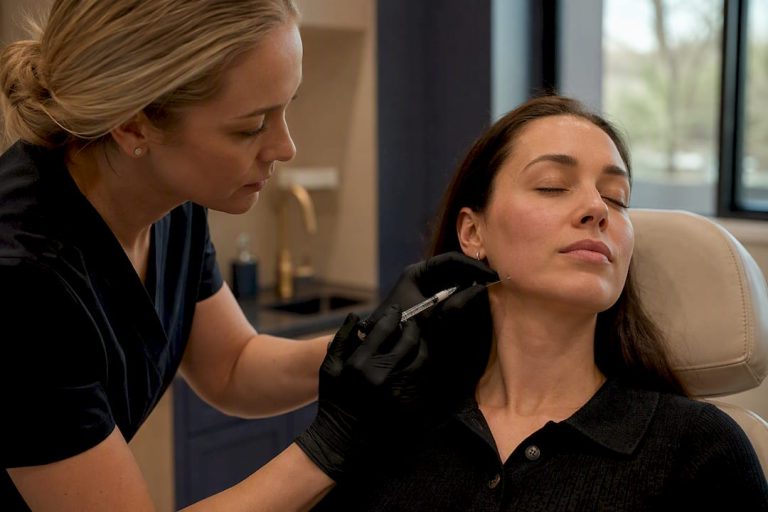
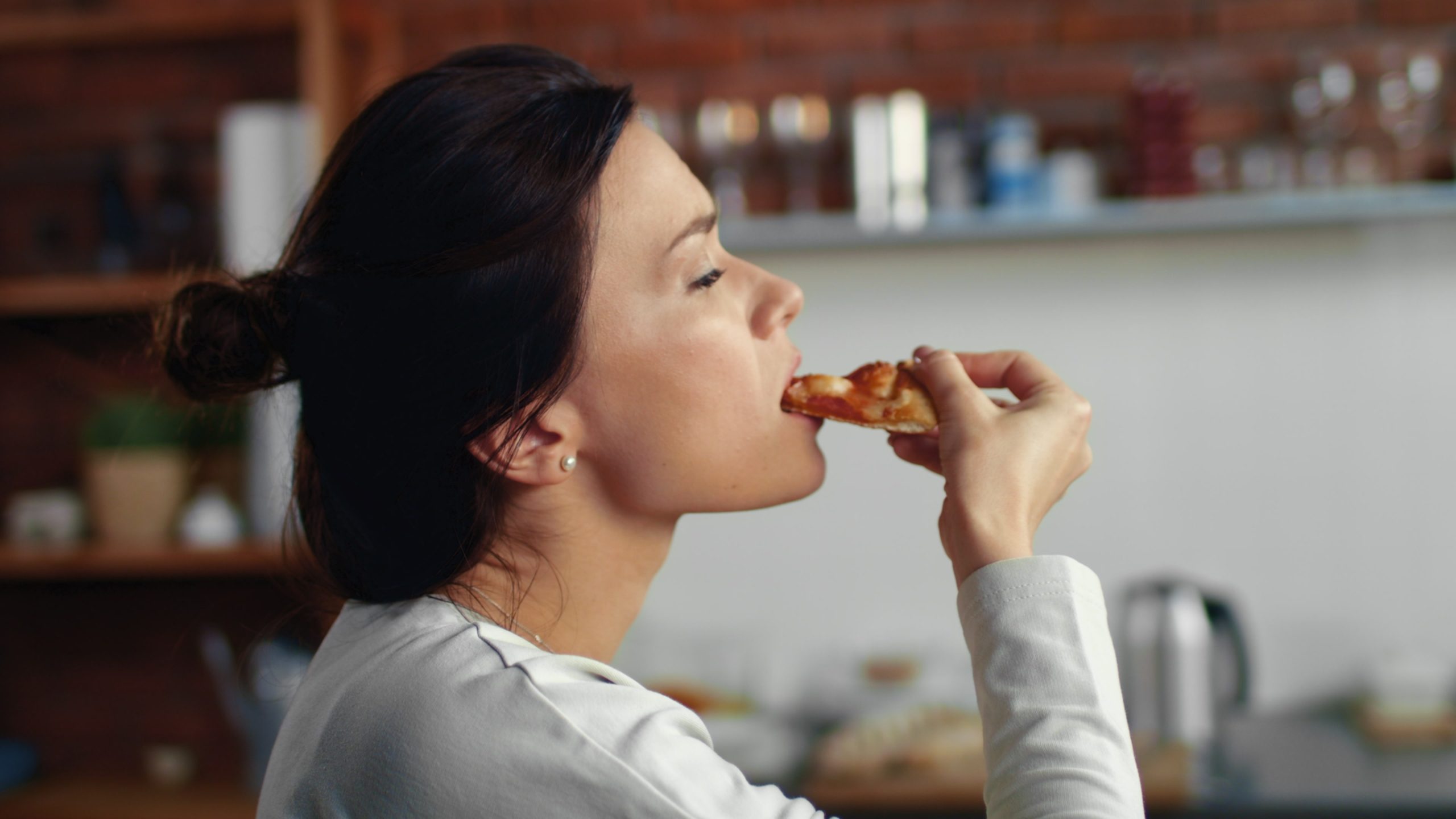
This is one of the first questions we hear in consults. People aren’t just thinking about looks or jaw tension. They’re thinking about real life. Steak nights. Chewing gum. Long dinners. Talking all day at work. So let’s answer it plainly, based on what we’ve seen in practice and what patients actually experience after treatment.
Yes, most people can still chew normally after masseter Botox. But the way chewing feels can change for a short period. Understanding what’s normal, what’s temporary, and what’s not expected makes all the difference in recovery confidence.
Chewing After Masseter Botox: What Feels Normal—and What Doesn’t
In our experience, chewing after masseter Botox usually feels different before it feels difficult. Patients often describe it as a “lighter bite” or a sense that their jaw muscles tire faster than usual. One client told us that chewing a bagel on day four felt fine, but finishing a full steak dinner took more effort than expected. That’s normal early on.
What feels normal in the first few weeks can include:
- Mild chewing weakness after masseter Botox, especially with tough foods
- Jaw fatigue after Botox toward the end of meals
- A softer bite when clenching
What doesn’t feel normal and should be checked:
- Sharp pain when chewing
- Sudden changes in how your teeth meet
- Difficulty opening your mouth
These are uncommon, but worth flagging early.
Does Masseter Botox Affect Chewing Strength? What Patients Should Know
Masseter Botox works by relaxing an overactive jaw muscle. That muscle is powerful. When we soften it, bite strength reduces slightly. That’s the goal for people who clench or grind.
Does masseter Botox affect chewing? Yes, temporarily, but not in a way that prevents normal eating for most patients. We’ve seen that people who had strong clenching habits notice the change more than those seeking subtle facial slimming.
According to clinical research on botulinum toxin and jaw muscles, bite force can decrease modestly in the first few weeks and then stabilize as surrounding muscles adapt. In everyday terms, you may chew slower, not worse.
Masseter Botox Recovery Explained: Eating, Chewing, and Jaw Function
Masseter Botox recovery is gradual. It doesn’t hit all at once.
Here’s what eating after masseter Botox usually looks like:
- Days 1–3: No major change, light soreness possible
- Days 4–14: Peak muscle relaxation, chewing weakness is most noticeable
- Weeks 3–6: Jaw muscles adapt, chewing feels more natural
- Months 2–4: Full benefit with improved comfort and control
This masseter Botox recovery timeline lines up closely with what we see in clinic, regardless of whether treatment was for grinding, TMJ tension, or facial slimming.
Jaw Fatigue After Masseter Botox: Is It Temporary or Permanent?
Jaw fatigue after Botox is temporary. We want to be clear about that.
The masseter muscle has been overworking for years in many patients. When it finally relaxes, it takes time for other chewing muscles to share the load. One patient compared it to switching from carrying groceries with one arm to using both. At first, it feels odd. Then it evens out.
Permanent chewing problems are not expected when treatment is done correctly and conservatively.
Will You Feel Chewing Weakness After Masseter Botox Treatment?
Some patients do. Not all. And when they do, it’s usually mild.
Chewing weakness after masseter Botox shows up most often with:
- Steak or jerky
- Dense breads
- Gum chewing for long periods
Soft foods, everyday meals, and normal talking are rarely affected.
Masseter Botox Side Effects: How It Impacts Chewing and Bite Strength
Masseter Botox side effects related to chewing are dose-dependent. That’s why injector experience matters.
In our clinic, we use a measured, anatomy-based approach. We’d rather undercorrect and adjust than overload the muscle and cause masseter Botox chewing problems that weren’t needed.
As Irene Soni, R.N., BScN, owner and founder of Beauty Shot Medical Clinic, explains: “Chewing changes are usually subtle when masseter Botox is done thoughtfully. Our priority is function first. A relaxed jaw should still work.”
Eating After Masseter Botox: Timeline for Normal Chewing
Most patients return to fully normal chewing within four to six weeks. Some sooner. Very few later.
We’ve treated clients in physically demanding jobs, people who talk all day, and those with long-standing bruxism. Almost all report that chewing becomes easier, not harder, once the jaw tension settles.
Can Masseter Botox Make Chewing Difficult? Realistic Recovery Expectations
It can make chewing feel different. It rarely makes chewing difficult long term.
If someone experiences ongoing difficulty, we reassess. Sometimes it’s a dose adjustment. Sometimes it’s muscle balance. Either way, it’s manageable.
Considering Masseter Botox? Here’s How It May Affect Chewing and Jaw Muscles
If you’re considering treatment, ask your provider about:
- Conservative dosing
- Gradual treatment plans
- Your specific chewing habits and diet
That conversation matters as much as the injection itself.
As Irene Soni puts it, “The best outcomes happen when patients know what to expect. When you understand how masseter Botox affects jaw strength, recovery feels reassuring instead of alarming.”
Beauty Shot Medical Clinic provides professional treatments using high-quality, medically approved products. While we strive for excellent results, individual experiences may vary. We encourage all clients to research their options, consult with multiple qualified professionals, and make informed decisions before undergoing any cosmetic procedure.
If you’re in Woodbridge or nearby and want honest guidance on masseter Botox recovery, chewing changes, or jaw tension relief, book a consultation with Beauty Shot Medical Clinic. We’ll walk you through what’s normal, what’s temporary, and what’s right for you—before you ever sit in the chair.
More Information: