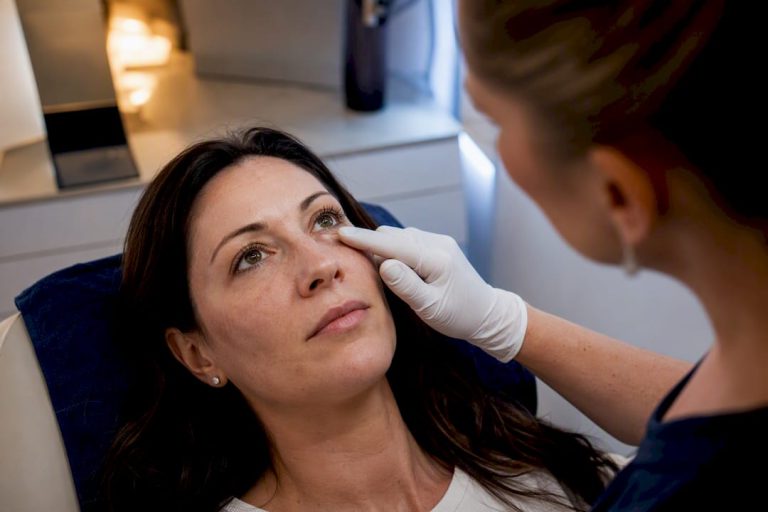

Temple filler restores volume lost to aging or genetics and can create a subtle lift through the brow and upper face, but it sits close to blood vessels that make placement unforgiving of guesswork. Clinical trials show high response rates, with most side effects limited to bruising and tenderness. The real variable isn’t the product. It’s whether your injector understands temporal anatomy well enough to avoid the vessels that make this region genuinely higher risk than a lip or cheek treatment.
TL;DR:
- Successful temple filler treatment depends heavily on the injector’s detailed knowledge of the complex vascular anatomy to avoid serious complications despite high efficacy rates.
- The safest and most effective injections typically target the interfascial plane, requiring precise technique and thorough understanding rather than merely choosing a specific filler product.
- Candidates should have noticeable hollowing affecting facial support or eye geometry and be in good health, with particular caution around active skin issues or recent medication use.
- Most results last at least 12 months, with smaller touch-ups often needed at 12 to 18 months, especially when placed in the optimal anatomical plane.
- Prioritizing an injector’s anatomical expertise and complication response plan is more important than brand or price when selecting a provider for temple filler.
What temple filler does: benefits and aesthetic effects
Hollow temples age a face faster than almost any other feature, and most people don’t realize that’s what they’re looking at when they say someone looks “tired” or “gaunt.” The temporal fossa, that soft depression at the side of your forehead between your eye and your hairline, loses fat and bone volume over time. When it hollows out, it pulls the brow down, sharpens the bony ridge above your eye, and makes the whole upper face look drawn rather than rested.
Restoring that volume does more than fill a dent. Because the temple connects structurally to the brow and the outer eye area, adding support there can lift the tail of the brow slightly and soften the transition between forehead and cheek. Patients often describe the effect as looking “less severe” or “more rested” rather than dramatically different, which is exactly the goal in a well-planned treatment. Nobody should walk out of a temple filler appointment looking like they’ve had “work done.” They should look like they slept better.
The clinical data backs this up more convincingly than most cosmetic claims. A multicenter randomized trial testing a hyaluronic acid filler for temple hollowing found that 80.4% of participants achieved significant improvement at three months, with responder rates holding through 13 months. That’s a high bar for a facial aesthetic treatment, and it held across a fairly large, controlled study population rather than a handful of case reports. Separate meta-analytic work pooling multiple studies found GAIS responder rates near 85% overall, with injected volume correlating directly with how much improvement patients saw.
What patients commonly report after treatment:
- A softer transition between the forehead and the side of the face, rather than a hollow “dip”
- A subtle lifting effect at the outer brow and upper eyelid area
- Improved support for glasses, which often slide or dig in when temples are hollow
- A more rested, less angular appearance without changing their fundamental facial shape
- Longer-lasting satisfaction than they expected, given the treatment’s relatively quick recovery
None of this means every hollow temple needs correction. Some patients have naturally angular temples that suit their bone structure fine. The point of temple filler isn’t to chase a universal ideal. It’s to correct volume loss that’s changed how a specific face reads, and to do it in a way that still looks like that person. If you’re weighing temple filler alongside other facial balancing work, it helps to understand how filler restores facial harmony across multiple areas rather than treating each zone in isolation.
Who is a good candidate, and who should wait
Temple hollowing shows up for a few different reasons, and knowing which applies to you helps set realistic expectations before you ever sit in a consultation chair. Age-related volume loss is the most common cause. As we get older, the fat pads and bone in the temporal region gradually shrink, a process that often starts earlier than people expect, sometimes in the mid-30s. Genetics plays a role too. Some people have naturally shallow temporal fossae from a younger age, regardless of weight or aging. Significant weight loss, whether from lifestyle changes or medical treatment, can also unmask temple hollowing that was previously camouflaged by fat volume elsewhere in the face.
Good candidates typically:
- Notice a visible hollow or shadow at the temple that affects how their glasses fit or how their face looks in photos
- Have realistic expectations about subtle, gradual improvement rather than dramatic transformation
- Are in good general health without active infection at the treatment site
- Are not pregnant or breastfeeding
- Have disclosed their full medication and supplement history, including blood thinners
Certain factors call for caution or a modified plan. Active skin infection near the temple, a history of unusual reactions to hyaluronic acid fillers, and certain autoimmune conditions all warrant a closer conversation before proceeding. Recent isotretinoin use is another one your injector needs to know about, since it can affect skin healing, and the safe window varies by individual. This isn’t about scaring anyone off treatment. It’s about making sure your injector has the full picture before a needle or cannula goes anywhere near your temple.
A thorough consultation should include a review of your medical history, current medications, and previous cosmetic treatments, plus a visual and hands-on assessment of your temporal anatomy specifically. Your injector should be checking for vessel visibility, tissue thickness, and any asymmetry between your left and right temple before recommending a volume or technique.
Pro Tip: Bring a recent close-up photo of yourself from five or ten years ago to your consultation. It helps your injector see exactly how much volume you’ve lost and plan a more precise correction, rather than guessing at what “natural” looked like on your face.
The anatomy that makes temple injections higher stakes
The temple isn’t a simple pocket of fat sitting under the skin. It’s a stack of distinct layers, and where a filler lands within that stack determines both how natural the result looks and how safe the procedure is. Working from the skin inward, you pass through the superficial temporal fascia, a layer of connective tissue that contains the superficial fat pad, then the deep temporal fascia, which splits into two layers enclosing a pad of fat, and finally the temporalis muscle itself, which sits on the bone.
That layered structure matters because each plane carries different risks and delivers different aesthetic results. Injecting too superficially can create visible lumps or irregular contour, since the skin over the temple is thin. Injecting too deep, near the periosteum covering the bone, can require larger volumes to achieve the same visual effect and carries its own risk of muscle-related lumps if the product disperses unevenly.
The bigger concern, though, is vascular. The temple houses several key blood vessels that an injector needs to identify and avoid:
- The superficial temporal artery (STA), which runs just under the skin and is often visible or palpable as a pulse near the hairline
- The zygomatico-orbital artery (ZOA), a smaller branch that crosses the temporal region and varies significantly in location between individuals
- The middle temporal vein (MTV), which sits within the fascial layers and can be a source of bruising if injured
What makes the temple genuinely “treacherous,” to borrow a phrase from the clinical literature on temple filler complications, isn’t just these named vessels. It’s that the vascular anatomy in this region varies more from person to person than in almost any other part of the face. Some patients have dangerous anastomoses, or connections, between the superficial temporal artery and vessels that supply the eye. If filler is inadvertently injected into one of these connected vessels, it can travel to a place it was never meant to go. An expert anatomy-based technique guide makes the point plainly: safety in this region depends far more on the injector’s anatomical knowledge and technique than on which filler brand sits in the syringe.
Given that variability, most experienced injectors favour the interfascial plane, the space between the superficial and deep temporal fascia, for the majority of temple treatments. This plane tends to sit above the deepest, most vessel-dense tissue while still providing enough structural support to lift the overlying skin naturally. A systematic review and meta-analysis comparing injection planes found that interfascial placement was associated with higher efficacy alongside a favourable safety profile, particularly at volumes of 1 to 1.5 mL per side. Deeper, periosteal placement isn’t wrong. It’s simply reserved for specific cases needing more structural volume, and it comes with its own trade-offs around required volume and injection precision.
What happens during a temple filler appointment
Most temple filler treatments follow a fairly consistent structure, though the specific technique your injector chooses depends on your anatomy and the amount of correction you need.
- Consultation and marking. Your injector examines your temple anatomy, sometimes palpating for the pulse of the superficial temporal artery, and marks safe entry points and the treatment area with a skin-safe pen.
- Anaesthesia. Most hyaluronic acid fillers used in the temple already contain lidocaine, which numbs the area as it’s injected. Some injectors also apply topical numbing cream beforehand for added comfort. General anaesthesia is never necessary for this treatment.
- Access point selection. Many injectors prefer a cannula, a blunt-tipped, flexible tube, over a sharp needle for temple work specifically. A blunt cannula is far less likely to pierce a blood vessel wall than a needle, which matters enormously given the vascular variability discussed above. Studies reviewing this technique commonly reference cannula gauges in the 18 to 21G range as a workable balance between control and safety.
- Injection technique. Depending on the goal, your injector might use a fanning motion, spreading small amounts of filler in a radiating pattern from a single entry point, or a retrograde microbolus technique, depositing tiny amounts of product as the cannula is slowly withdrawn. A supra-auricular entry point, just above and in front of the ear, is a common access route that lets the cannula reach the temple through the interfascial plane with less need to cross major vessels.
- Test injection and reassessment. Many injectors will inject a small amount, then pause to assess symmetry and contour before continuing. This staged approach reduces the risk of overcorrection and gives the injector a chance to catch any early warning signs.
- Immediate assessment and discharge. Once treatment is complete, your injector checks the area for symmetry, palpates for any unusual firmness, and confirms you’re not experiencing any concerning symptoms like severe pain or visual changes before you leave.
The entire appointment, from consultation through discharge, typically runs under an hour. There’s no downtime requiring you to lie flat or avoid driving yourself home, though most clinics recommend a brief period of stillness immediately after injection.
Pro Tip: Ask your injector directly which plane and technique they plan to use before treatment starts, and why. A confident, specific answer, referencing the interfascial plane or their reasoning for choosing needle versus cannula, is a good sign you’re in experienced hands.
Risks, complications, and how they’re managed
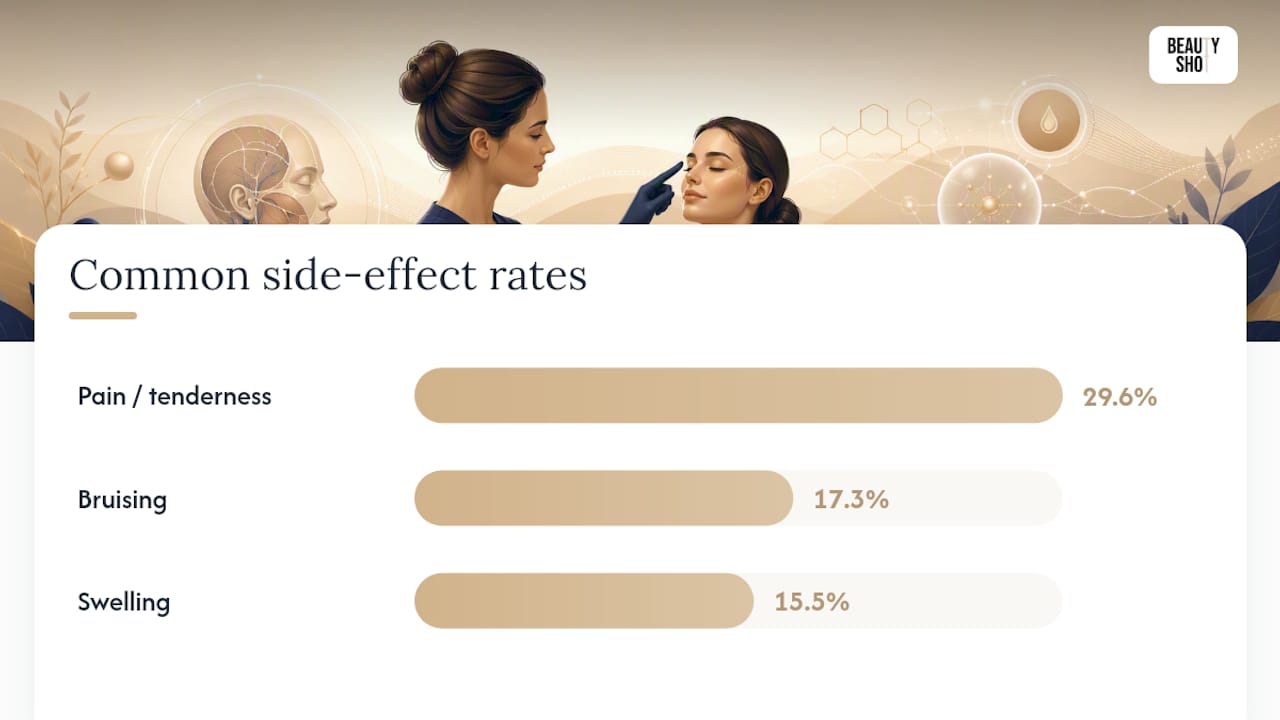
Most people who get temple filler experience nothing more dramatic than mild bruising. Aggregated data on facial filler procedures shows the most common side effects are pain or tenderness at the injection site (around 29.6% of patients), bruising (around 17.3%), and swelling (around 15.5%). These are expected, short-lived reactions to any injection, not signs that something has gone wrong.
Roughly 3 in 10 patients report some tenderness at the injection site, but serious vascular complications remain rare, underscoring how much the safety profile depends on technique rather than the treatment itself.
The complications that make the temple genuinely different from, say, lip filler are vascular, and while they’re uncommon, they’re serious enough to deserve a clear explanation. If filler is inadvertently injected into a blood vessel, or compresses one enough to cut off flow, it can block circulation to the skin or, in rare and well-documented cases, to structures connected to the eye. The mechanism is straightforward once you understand the anatomy: those dangerous anastomoses between temple vessels and vessels supplying the eye mean a vascular event in the temple isn’t always contained to the temple.
Signs your injector is trained to watch for, and that you should never ignore if you notice them yourself, include:
- Severe, disproportionate pain during or immediately after injection
- Blanching (whitening) or a dusky, mottled discoloration of the skin
- Any change in vision, even brief
- Skin that feels unusually cold or looks unusually pale in the treated area
Case reports on temple filler complications describe a consistent pattern: when skin necrosis or vascular compromise is caught early and treated promptly with hyaluronidase, an enzyme that dissolves hyaluronic acid filler, outcomes are generally good. The tissue recovers because the blockage is resolved quickly, before permanent damage sets in. That’s the entire reason time sensitivity matters so much here. Any injector working in the temple should stop immediately at the first sign of trouble, have hyaluronidase on hand and know how to administer it, and have a clear plan for urgent referral if a complication doesn’t resolve with immediate treatment.
This is also why an injector’s response protocol matters as much as their injection technique. Ask, during your consultation, what they would do if you experienced sudden blanching or pain. A vague answer is a red flag. A specific, rehearsed answer, involving immediate cessation, hyaluronidase, and a follow-up plan, tells you they’ve thought this through before they ever pick up a syringe.
Preparing for your appointment and caring for your temples afterward
A little preparation goes a long way toward reducing bruising and making sure your appointment goes smoothly.
- Review your medications and supplements with your injector beforehand. Blood thinners, certain supplements like fish oil and vitamin E, and even regular aspirin use can increase bruising risk. Don’t stop any prescribed medication without talking to your doctor first, but do disclose everything you’re taking.
- Avoid alcohol for 24 hours before your appointment. Alcohol thins the blood slightly and can increase bruising and swelling.
- Reschedule if you’re feeling unwell. Active illness, especially anything involving fever or infection, is a reason to postpone.
- Bring your questions and any reference photos to the consultation itself, not just the appointment. A rushed consultation right before treatment isn’t the time to raise concerns about your medical history.
- Apply ice intermittently for the first 24 to 48 hours after treatment to reduce swelling and bruising, but avoid pressing directly on the treated area.
- Skip strenuous exercise for about 24 hours. Elevated heart rate and blood pressure can worsen swelling and bruising in the treated area.
- Sleep with your head slightly elevated for the first night or two if swelling feels noticeable.
- Call your injector promptly if you notice severe pain, unusual discoloration, or any visual changes, rather than waiting to see if it resolves on its own.
Most bruising and swelling from temple filler resolves within 7 to 10 days, though mild residual swelling can linger up to two weeks in some patients. If you’re booking your first appointment, it’s worth reading through what to expect at a first filler treatment so the timeline feels less unfamiliar, and reviewing a general pre-appointment preparation checklist a few days ahead of time.
How long temple filler lasts, and when to consider a touch-up
Most hyaluronic acid fillers used for temple volumization show measurable benefit for 12 months or longer, based on clinical trial data tracking responder rates through 13 months post-treatment. That’s a longer track record than many people expect walking into their first consultation, though individual results vary based on metabolism, activity level, and how much correction was needed in the first place.
A few factors influence how long your results hold. The specific product’s rheology, essentially how firm or elastic the gel is, affects both how it sits in tissue and how slowly it’s metabolized. Firmer, more cross-linked gels generally last longer but require more precise placement to avoid a felt or visible ridge. The injection plane matters too: filler placed in the interfascial plane, well supported by surrounding fascia, tends to hold its position and volume more predictably than filler placed in looser, more mobile tissue.
Most patients return for a touch-up somewhere between 12 and 18 months after their initial treatment, often with a smaller volume than their first session since they’re maintaining rather than fully correcting. Repeated treatments in the temple carry the same safety considerations as the first, which is exactly why consistency with a single injector who knows your anatomy tends to produce better long-term results than switching providers each time. If you’re curious about how filler materials themselves are formulated to behave this way, how dermal fillers work breaks down the science in plain terms.
Why injector choice matters more than the product
I’ve spent over nine years as a cosmetic nurse injector, with a background in Sunnybrook Hospital’s medical and ICU units before moving into aesthetics. If there’s one thing that experience taught me, it’s that anatomy knowledge is what separates a good outcome from a dangerous one. My training through the Teoxane Academy, Clarion Medical, MD Codes, and mentorship under Dr. Mauricio and the Dr. Martins Training Center Canada all circled back to the same principle: know the structure underneath the skin before you ever place a needle or cannula near it.
When patients ask what to look for in a temple filler injector, I tell them to ask specific questions. What plane do they typically inject into, and why? What’s their protocol if a vascular complication happens? How many temple treatments have they performed, specifically, not just facial fillers in general? A confident, detailed answer tells you far more than a credential on a wall.
We document outcomes carefully, including a before and after gallery that reflects realistic, natural-looking results rather than dramatic transformations, because that’s genuinely the goal: a face that looks like a well-rested version of you, not a different person.
What actually matters here, and what gets overhyped
The conventional advice on temple filler spends too much time on before-and-afters and not nearly enough on the anatomy question that should come first: does this injector actually understand what’s underneath the skin they’re about to inject? The clinical data on efficacy is genuinely strong, responder rates in the 80% range aren’t a marketing exaggeration, but that data comes from controlled trials with experienced practitioners. It doesn’t automatically transfer to every provider offering the treatment.
What gets underdiscussed is how much injector judgment matters over product choice. Two injectors using the identical filler can produce very different safety outcomes based purely on plane selection and vessel awareness. I’d rather a patient ask three pointed anatomy questions in a consultation than compare five different filler brand names online.
Prioritize the injector’s technique and complication protocol first. Product brand and price come a distant second. If a provider can’t clearly explain their injection plane or their plan for a vascular event, that’s more informative than any before-and-after photo they show you.
— Felix
How Beauty Shot Medical Clinic approaches temple filler
Temple filler is one of the more technically demanding treatments in facial aesthetics, and that’s exactly why an anatomy-first, nurse injector-led approach matters. At Beauty Shot Medical Clinic in Woodbridge, every consultation starts with a real assessment of your temporal anatomy, not a generic treatment menu, so your plan reflects your face and your specific volume loss rather than a one-size approach. Irene Soni brings advanced training in Botox, fillers, MD Codes, and Allergan techniques to every temple consultation, with a consistent focus on subtle, natural results rather than dramatic change. If you’re ready to explore whether temple filler fits your facial balancing goals, visit the dermal fillers page to learn more about the process and book a consultation.
Sources
- Improvement in Temple Hollowing with VYC-20L Hyaluronic Acid Filler: A Multicenter Randomized Controlled Trial of Safety and Effectiveness
- PubMed indexed article reporting adverse event rates for facial filler procedures
- Filler Injection Between the Superficial and Deep Temporal Fascia and Diameter of Superficial Temporal Arteries for Temple Augmentation: A Systematic Review and Meta‐Analysis
FAQ
What does filler in the temples do?
Temple filler restores lost volume in the hollow area beside the eye, which softens the transition between forehead and cheek and can create a subtle lift at the outer brow.
Is temple filler high risk?
Temple filler carries a higher vascular risk than many other facial filler areas because of variable blood vessel anatomy, but serious complications are rare when an injector uses anatomy-based technique and appropriate injection planes.
Is it worth getting temple fillers?
For people with visible temple hollowing affecting how their face reads or how glasses fit, clinical trials show responder rates above 80% with results lasting a year or longer, making it a worthwhile option when performed by an experienced injector.
Do temple fillers make you look younger?
Temple filler can make a face look more rested and less hollow by restoring structural support to the brow and upper face, though the effect is meant to be subtle rather than a dramatic age reversal.