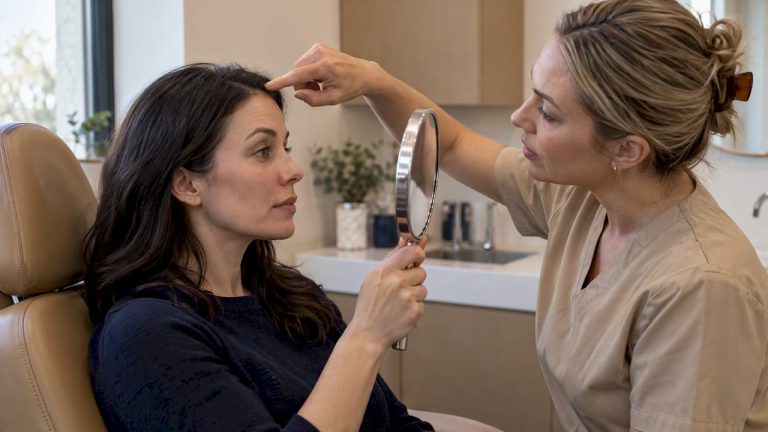
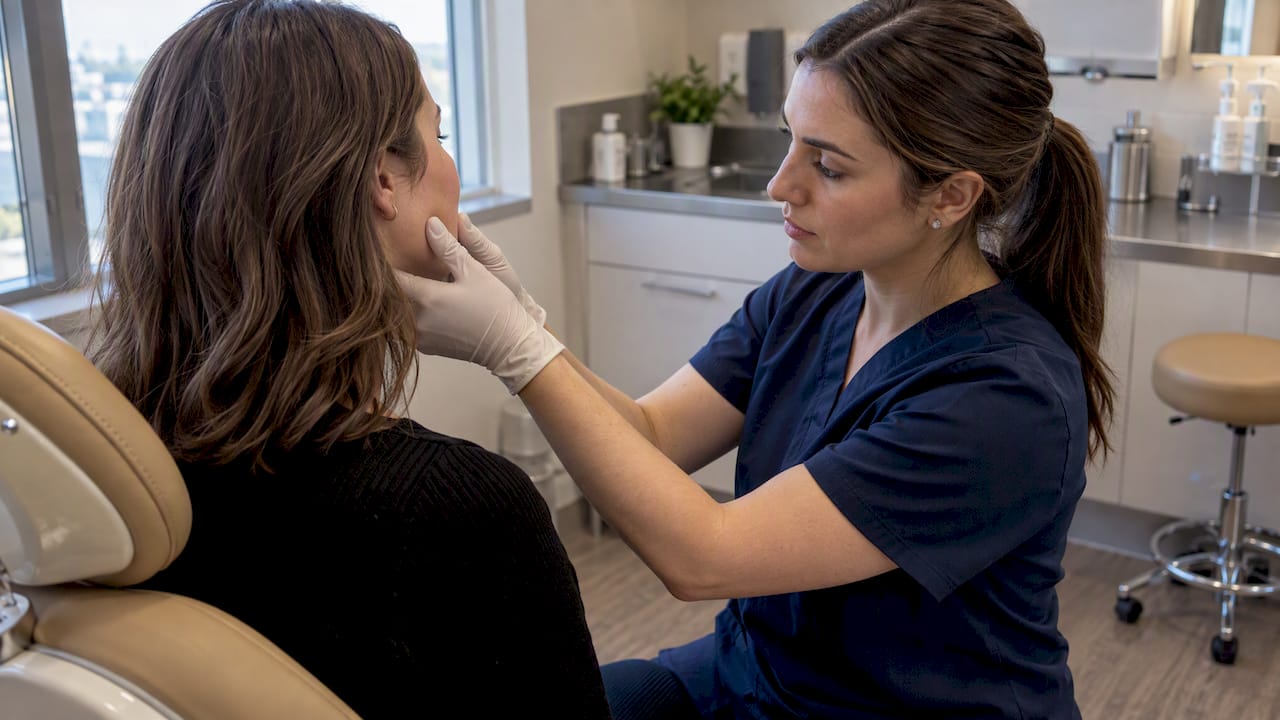
Yes, when an enlarged masseter muscle is the main reason your jaw looks wide, Botox can slim it by relaxing and gradually shrinking that muscle. The change is real but modest: clinical imaging studies measured peak reductions of roughly 25% to 31% in masseter size around week 11. Results are temporary, so we see the best outcomes when a qualified injector uses conservative dosing and reassesses before adding more.
TL;DR:
- Botox can reduce masseter size by about 25% to 31% around week 11, resulting in a modest narrowing effect.
- Results peak at approximately 11 weeks post-injection, with a typical reduction of around 5 millimeters in lower facial width by 90 days.
- Optimal candidates are people with jaw width caused mainly by muscle bulk, especially if they experience jaw tension or grinding, not those with bone or fat-related fullness.
- Repeated treatments increase muscle thinning and side effects like chewing fatigue, so spacing sessions carefully is recommended.
- Side effects are generally minor, with bruising and tenderness common, while serious complications like toxin spread are rare.
How masseter Botox reduces jaw width
Botulinum toxin type A works by blocking the release of acetylcholine at the nerve ending, which stops the masseter muscle from contracting as forcefully. Over the following weeks, the muscle fibres that once worked hard every time you chewed or clenched begin to thin from disuse, a process called atrophy. That gradual shrinkage, not an immediate melting away, is what narrows the lower face.
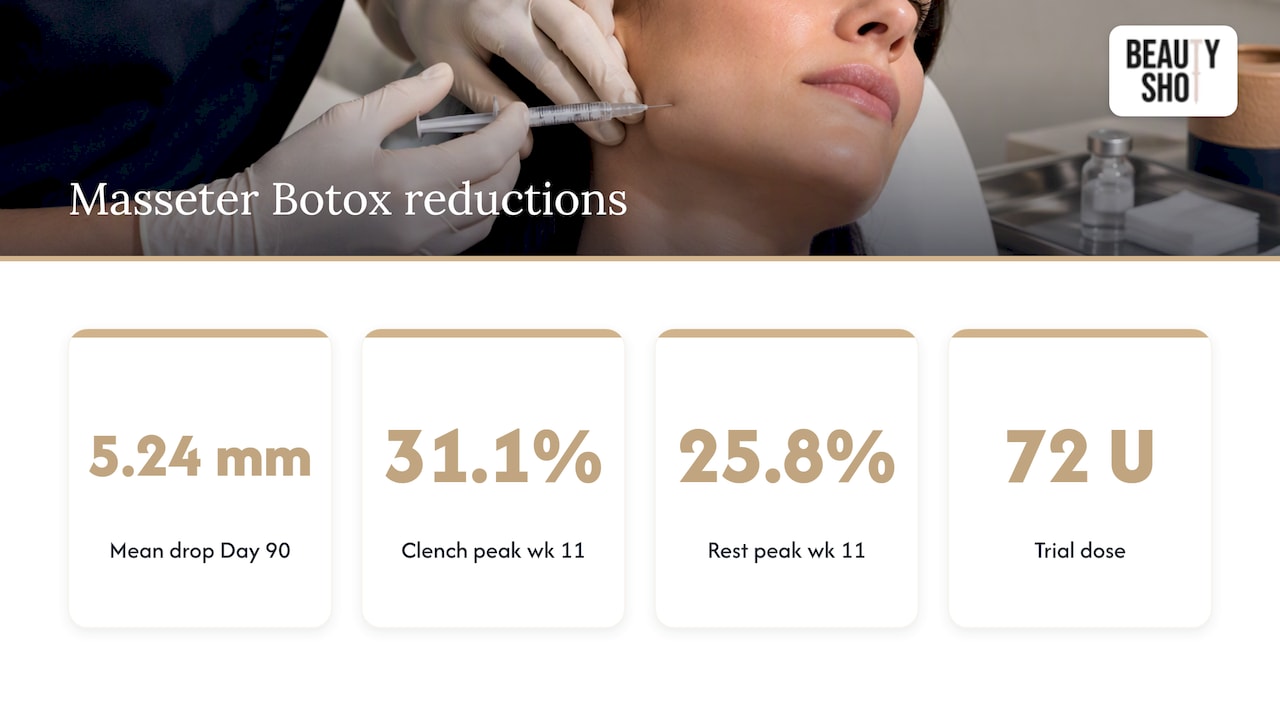
A multicentre trial program measured a mean lower-facial width reduction of about 5.24 millimetres at Day 90 with a 72 unit dose of onabotulinumtoxinA, with results holding through Day 180 for many participants. A separate imaging study found reductions of 31.1% during clenching and 25.8% at rest, peaking near week 11.
Single, conservative sessions tend to deliver a visible aesthetic benefit with a clean safety profile. A randomized trial comparing single and repeated injections found that repeated dosing increased muscle thinning further, but it also raised the rate of chewing-related side effects, which is part of why we favour a measured, step-by-step approach rather than maximizing the dose on day one.
What happens during your consultation and treatment
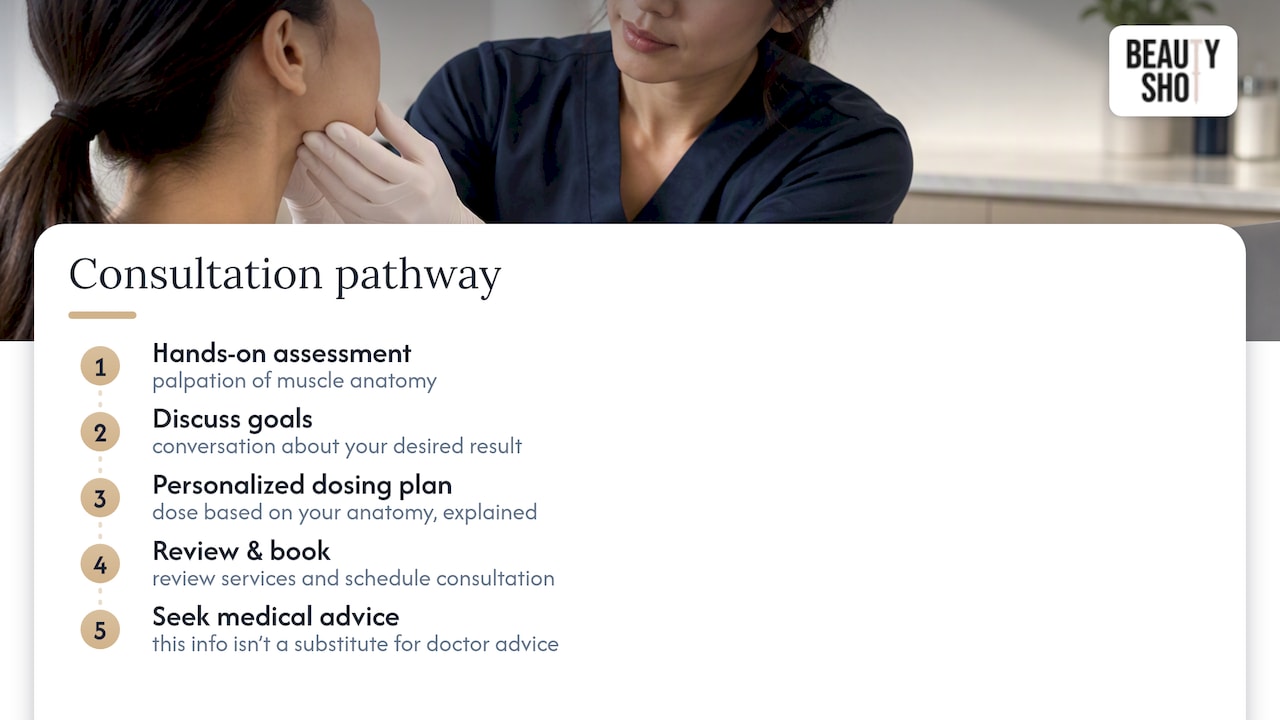
Your first visit is really an assessment, not just an injection appointment. We palpate the masseter at rest and again while you clench, take photos for your record, and review your medical history, including pregnancy status and any neuromuscular conditions, before anything is injected.
Dosing varies by protocol and product. Trial programs for onabotulinumtoxinA have used doses in the range of 48 to 96 units total, often split evenly between sides, while abobotulinumtoxinA (Dysport) requires a different unit conversion since the two products aren’t interchangeable unit-for-unit. Your injector chooses the dose based on muscle size, symmetry, and your goals.
A typical treatment plan looks like this:
- Palpation and photo documentation while you’re relaxed and while you clench.
- Review of health history and a conversation about realistic goals.
- Marking two to six injection points over the most prominent part of the muscle.
- A biphasic technique that places toxin at both a deeper and more superficial level, which helps prevent paradoxical bulging along the jaw edge.
- Quick aftercare instructions and a follow-up plan, often reviewed again at 8 to 12 weeks.
The appointment itself usually takes 15 to 30 minutes from start to finish, including the consultation portion.
Pro Tip: Ask your injector to show you where they feel the muscle thicken when you clench. Seeing it yourself makes the treatment plan much easier to understand.
When you’ll see change, and how long it lasts
Patience matters here. Some patients notice a softer jawline within one to two weeks as the muscle relaxes, but the full contouring effect takes longer to show up because it depends on muscle thinning, not just reduced contraction.
- Early signs: subtle softening around week one to two.
- Peak effect: most studies place the maximum reduction around week 11, with masseter size reductions of about a quarter at rest and nearly a third during clenching reported in imaging research.
- Lower-facial width: a separate trial measured a mean reduction of roughly 5.24 millimetres by Day 90, sustained through Day 180 for many participants.
- Maintenance: most of our patients return for a touch-up between three and six months, once the muscle gradually regains tone.
Every face responds a little differently, which is exactly why we check progress in person rather than promising a fixed result for everyone.
Who makes a good candidate, and when Botox isn’t the answer
Masseter Botox tends to work best for people whose jaw width comes from muscle bulk, not bone or soft tissue. You’re likely a good candidate if you can feel your jaw muscle tighten noticeably when you clench, especially if you also deal with jaw tension or teeth grinding.
- Good fit: a visibly or palpably hypertrophic masseter, often paired with bruxism or jaw clenching.
- Not the right primary treatment: jaw width caused mainly by bone structure, or fullness from fat and sagging skin, where dermal fillers for the cheeks, chin, or jawline may be a better complement.
- Screening checks: pregnancy or breastfeeding, certain neuromuscular disorders, a prior reaction to botulinum toxin, and expectations that don’t match what muscle relaxation can realistically achieve.
A thorough consultation sorts out which category you fall into before any plan is set.
Side effects, functional risks, and what longer-term data shows
Most side effects from masseter Botox are minor and local. According to Botox’s own product monograph, injection-site pain, tenderness, and bruising are the most commonly reported reactions, while systemic spread of the toxin causing symptoms like difficulty swallowing or speech changes is rare. If you ever notice those systemic symptoms, treat it as urgent and seek care right away.
Chewing fatigue is a more specific concern with this muscle. A randomized trial on repeated masseter injections reported masticatory adverse effects in a small percentage of patients, and that rate rose with repeated dosing rather than a single session.
- Local and common: pain, bruising, mild swelling at the injection site.
- Uncommon but function-related: temporary chewing fatigue, more likely after repeated treatments than a first session.
- Rare and serious: toxin spread causing swallowing or speech difficulty, which needs prompt medical attention.
Longer-term bone changes are where the evidence gets more nuanced. A longitudinal imaging study found decreased bone volume at the mandibular gonial angle in patients who received repeated BoNT-A injections over time, though the sample was small. By contrast, larger onabotulinumtoxinA trials found no clinically significant drop in mandibular bone density after one or two treatments within a year. We read this as a reason to space treatments thoughtfully and avoid unnecessary repeat dosing rather than a reason for alarm.
Aftercare and recovery: what to do in the first few days
Recovery from masseter Botox is simple, but a few habits in the first 24 hours help the toxin settle where it’s meant to work.
- Avoid rubbing or massaging the treated area for the rest of the day so the product stays put.
- Skip strenuous exercise, alcohol, and heat exposure (hot yoga, saunas) for about 24 hours.
- Expect mild bruising or tenderness, which usually fades within a few days to a week.
- Watch for any trouble swallowing, breathing, or speaking and contact your clinic or seek medical care immediately if that happens.
Most patients return to normal activities the same day, with only the injection sites needing a little extra care.
How we plan and personalize your masseter Botox treatment
Every face we treat gets assessed the same careful way: we palpate the masseter at rest and on a firm clench, check for asymmetry between the two sides, and confirm you can chew and speak comfortably before settling on a plan.
- We start conservative and adjust at your follow-up rather than chasing a dramatic result on day one.
- We keep before-and-after photos so you can see realistic change over your own treatment course, not someone else’s.
- We’ll walk you through dose, number of injection points, expected timeline, and cost before you decide anything.
Pro Tip: Bring a list of questions to your consultation, things like expected timeline, number of units, and when a follow-up makes sense, so nothing gets glossed over.
Balancing a slimmer jaw with normal chewing function
A slimmer jawline only matters if your bite, your smile, and your ability to eat comfortably stay exactly as they should. That’s the balance we aim for with every patient: enough relaxation to soften the muscle, never so much that chewing feels different. A careful assessment before treatment protects that balance far more than any injection technique on its own.
— Felix
How Beauty Shot Medical Clinic can help you achieve a slimmer jawline
We provide Botox and Dysport treatments with personalized plans based on each patient’s muscle anatomy rather than a standard dose for everyone. A consultation starts with the same hands-on assessment described above: palpation, a conversation about your goals, and a dosing plan you understand before you agree to it. If a slimmer, more balanced jawline is something you’ve been considering, you can review our Botox and Dysport services and book a consultation to see what a personalized plan looks like for your face.
This article is general information, not a substitute for advice from a qualified doctor. Consult a qualified healthcare professional about your own circumstances before acting on anything here.
FAQ
Can you slim your jawline with Botox?
Yes, when masseter muscle bulk is the main reason your jaw looks wide, Botox can relax and gradually shrink that muscle to create a softer contour. It works less reliably when the width comes from bone structure or excess fat, where fillers or other approaches may fit better.
What is the downside of jawline Botox?
The main downsides are that results are temporary, usually lasting three to six months, and that repeated treatments carry a higher chance of chewing fatigue than a single session, according to a randomized trial on repeat masseter injections. Some small studies have also reported bone changes at the jaw angle with repeated dosing over time, which is why spacing treatments matters.
Can Botox fix a saggy jawline?
Botox addresses muscle bulk, not loose or sagging skin, so it won’t tighten skin that has lost elasticity. If sagging is your main concern, a combination approach using dermal fillers for the jawline or chin is often discussed alongside or instead of Botox.
How much does jawline Botox cost?
Pricing depends on your dose and treatment plan, so it’s best confirmed during a consultation rather than quoted generically. You can review our injectable services or ask directly during your visit for a cost specific to your anatomy and goals.
Sources
- Toxin study reporting masseter size reduction and timing
- Randomized clinical trial on single vs multiple BoNT‑A injections for masseter hypertrophy
- OnabotulinumtoxinA treatment for masseter muscle prominence (Aesthetic Surgery Journal analysis)
- Botox product monograph and safety information (AbbVie Canada)