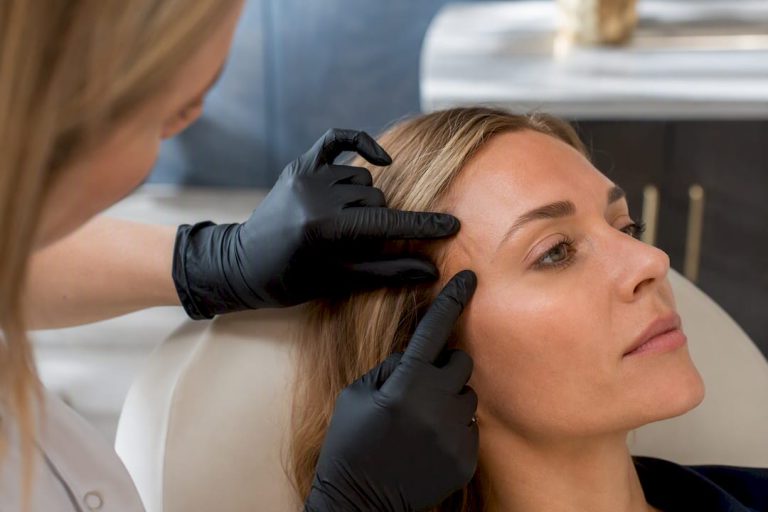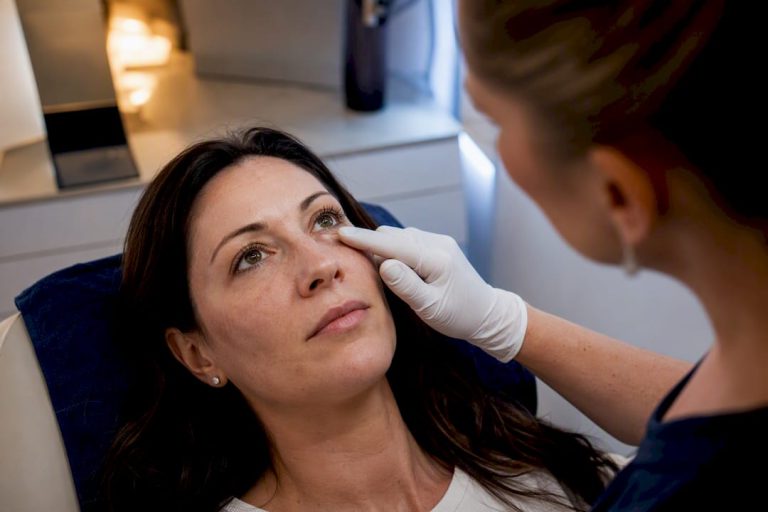
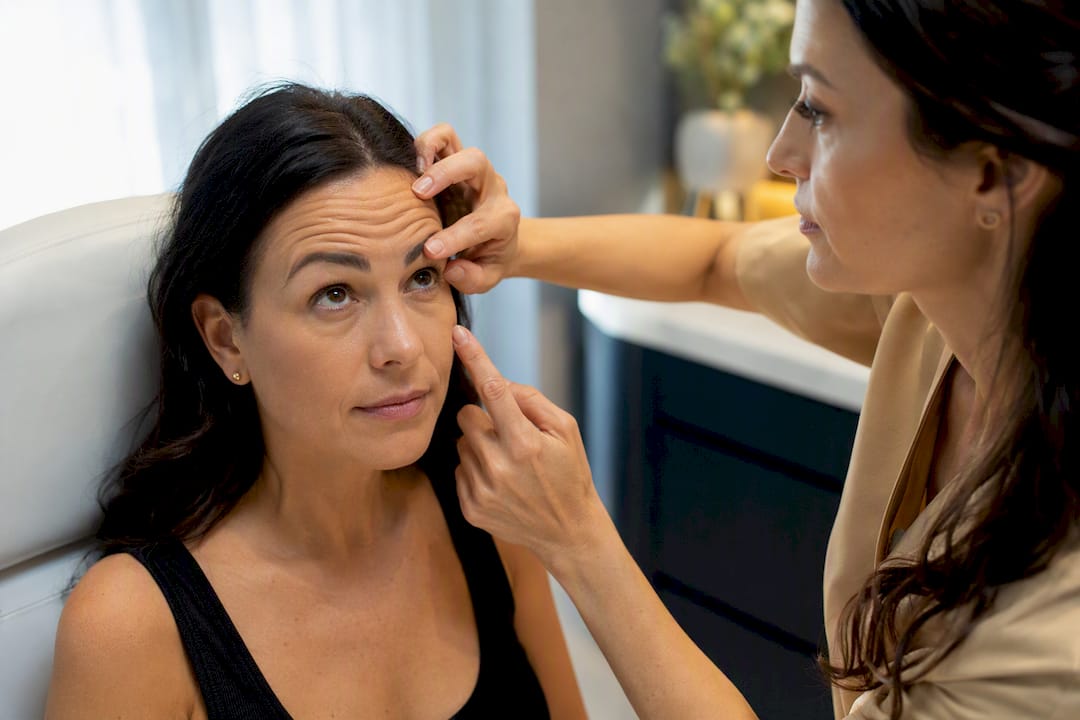
Forehead Botox works by temporarily relaxing the frontalis muscle, softening the horizontal lines that form when you raise your brows. Results typically last for several months, with onset starting within days and full effect visible by about two weeks. Whether it looks natural or leaves you frozen depends almost entirely on the injector’s skill, dosing philosophy, and understanding of your individual anatomy.
TL;DR:
- The number of units needed for forehead Botox varies widely based on individual muscle strength, forehead anatomy, and treatment goals, making personalized mapping essential.
- Proper injector training and a thorough face assessment are crucial to achieving natural results and avoiding a frozen or heavy-lidded appearance.
- Results develop within one to two weeks and typically last three to four months, requiring regular retreatment for ongoing softening of lines.
- Common side effects include temporary bruising and swelling, while rare risks involve eyelid drooping or toxin spread, emphasizing the importance of choosing qualified practitioners.
- Preparation and aftercare practices, such as avoiding alcohol, blood thinners, and vigorous activity, help optimize results and minimize side effects.
How does forehead Botox work?
Botulinum toxin type A, the active ingredient in Botox Cosmetic, blocks the nerve signals that tell the frontalis muscle to contract. Less contraction means fewer creases when you lift your brows or express surprise.
The frontalis is the only muscle that raises your brows. It works against a set of brow depressors, including the corrugators and procerus, that pull them down. This tug of war is exactly why I never quote a single “correct” dose over the phone. Two people with identical horizontal lines can need very different treatment plans depending on how strong their frontalis is, how much they rely on it to hold their brows up, and whether their brow depressors are already doing more of the work.
A few things I always assess before touching a needle:
- How high the brows sit at rest and how much lift comes from frontalis activity alone
- Whether the forehead lines are dynamic (only visible with movement) or have started to etch in at rest
- The balance between frontalis strength and brow depressor strength
- Facial asymmetry, since most faces have one side that moves more than the other
That mapping is why forehead Botox units for lines vary so widely between patients, and why a friend’s “recipe” rarely translates well onto your own face.
Who is a good candidate for this treatment?
You are generally a good candidate if you are an adult with dynamic forehead lines, meaning creases that show up when you raise your brows but soften or disappear at rest, and your goal is a subtle, refreshed look rather than a completely flat forehead.
A few things rule people out or require extra caution:
- Pregnancy or breastfeeding
- Neuromuscular conditions such as myasthenia gravis
- Active skin infection at or near the injection site
- Certain medications, including some antibiotics and blood thinners, that can affect how the toxin behaves or increase bruising risk
This is why every consultation starts with a full medication and health history review, not just a quick look at your forehead. Supplements count too. Fish oil, vitamin E, and certain herbal blends can all increase bruising, so I would rather know about them before we start than deal with a surprise afterward.
What happens during a forehead Botox appointment?
A proper consultation is not just “how many units do you want.” It starts with watching your face move, taking baseline photos, and mapping the frontalis and glabella together so the whole upper face stays balanced rather than treating the forehead in isolation.
Pro Tip: Ask your injector to show you their mapping process on a mirror before they inject. If they can’t explain why they’re placing dots where they are, that’s worth pausing on.
Forehead-only treatments commonly fall in the 8 to 20 unit range, though this varies with muscle strength, brow position, and how much softening you actually want. The appointment itself is quick:
- Discuss goals and review medical history
- Map muscle activity and mark injection points
- Administer the injections, which takes only a few minutes
- Review aftercare instructions before you leave
Most patients describe the discomfort as brief, closer to a series of quick pinches than pain. According to BOTOX® Cosmetic’s own guidance, some patients notice early changes within a day or two, with full results generally settling in by around 10 to 14 days. That follow-up window matters. It’s when we assess symmetry and decide whether a small touch-up is needed.
What are the risks and side effects of forehead Botox?
Most side effects are minor and temporary. Bruising, mild redness, a headache, or a bit of swelling at the injection sites are the most common, and they typically resolve within a few days.
The risks that deserve real attention are rare but worth knowing:
- Eyelid ptosis, or drooping, if the product migrates or is placed too close to the brow
- Toxin spreading beyond the treated area, which in rare cases can affect swallowing, speech, or breathing
Health Canada notes that incorrect forehead injections can, in rare instances, cause drooping eyelids, and it recommends treatment only from qualified providers who follow the product monograph closely. If you ever notice difficulty swallowing, slurred speech, or breathing changes after treatment, seek medical attention right away rather than waiting it out.
The best prevention is straightforward: choose a trained injector, start with a conservative dose, and follow aftercare instructions closely. You can read more about common side effects and when to worry if you want a deeper breakdown before your appointment.
How much does forehead Botox cost?
Pricing almost always comes down to a simple formula: number of units multiplied by the price per unit. When you’re comparing quotes, always ask exactly how many units are being recommended and which product is being used, since Botox, Dysport, and other neuromodulators aren’t priced or dosed identically.
To give you a sense of scale, here’s how unit ranges typically shift with treatment goals:
- Baby Botox (very subtle softening, often for prevention): lower unit counts
- Forehead-only treatment: commonly 8 to 20 units
- Full upper-face balancing (forehead, glabella, and crow’s feet together): higher total units
What actually moves the final price includes the provider’s training and experience, your geographic market, whether the forehead is treated alone or bundled into a broader upper-face plan, and whether a follow-up touch-up is included in the original quote or billed separately.
How should you prepare and take care of yourself afterward?
A little preparation goes a long way toward a smooth outcome. If you have an event or photos coming up, plan your first treatment two to three weeks ahead so you have time to see the full result and address any adjustments.
- Disclose every medication and supplement to your injector beforehand, including anything that thins blood
- Avoid alcohol and blood-thinning supplements like fish oil or vitamin E for a day or two before your appointment if your provider advises it
- After treatment, avoid rubbing or massaging the area for the rest of the day
- Skip lying flat and intense exercise for about 24 hours to reduce the chance of product migration
- Watch for bruising or swelling, which is normal, and contact your provider if you notice drooping or anything that feels off
Minor side effects like bruising or mild swelling usually settle within a few days on their own. If you want a full pre-appointment checklist, preparing for your Botox session walks through it step by step, and general post-treatment care guidance reinforces the same basic principle: protect the area and let it settle undisturbed for the first day.
What results should you actually expect?
Forehead Botox softens the appearance of lines when you move your face. It does not erase every trace of a crease, especially one that has been etched in for years, and understanding that distinction upfront prevents disappointment.
Full effect shows up around 10 to 14 days after treatment, and results generally last three to four months, though this varies by individual metabolism, muscle strength, and dose. A sensible long-term plan looks like this:
- Book regular re-treatment on a schedule your injector recommends based on how your muscles respond
- Expect small dose adjustments over time rather than a fixed number forever
- Start conservative on your first visit, then titrate up slightly if more softening is desired
- Consider combining Botox with filler or skin-quality treatments if lines have become static at rest, since Botox alone can’t fully address lines that no longer depend on movement
Why the injector you choose matters more than the units
Anatomy training is what separates a natural result from a heavy, frozen forehead. A skilled injector maps frontalis activity against brow depressor strength before ever picking up a needle, because over-relaxing the frontalis can drop brow support and create an unwanted heavy-lidded look.
That means:
- Pre-screening for contraindications and reviewing your full medication history
- Documented consent that walks through realistic outcomes, not guarantees
- A planned 10 to 14 day follow-up to assess symmetry and adjust if needed
- Clear, written aftercare so you’re never guessing what to do once you get home
Ask any provider about their specific injectable training, how they assess brow balance, and what their follow-up policy looks like. You can also see how this approach shapes results in practice through natural-looking Botox techniques.
A note from Irene
I want every patient to leave still looking like themselves, just a little more rested. Forehead Botox, done conservatively, can soften lines without touching your ability to raise an eyebrow or show surprise. If you’re curious how your own anatomy would respond, that’s exactly what a consultation is for.
— Felix
Book a forehead Botox consultation
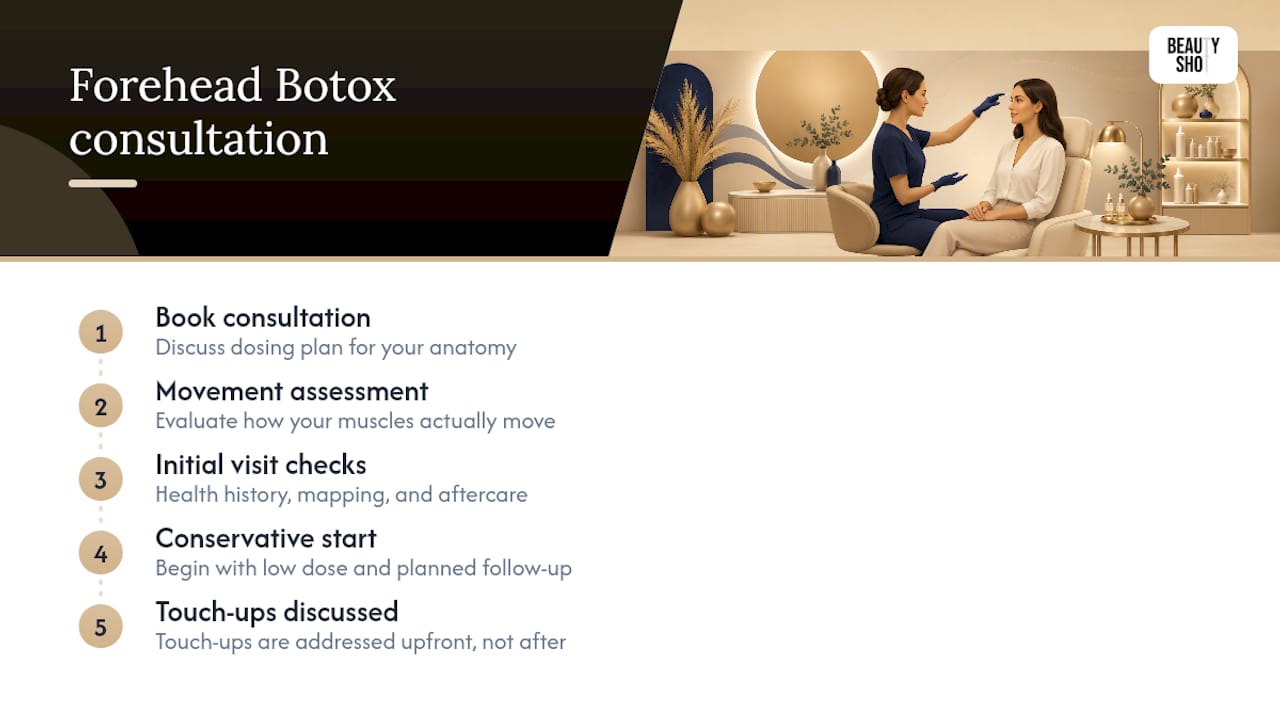
Treatment plans start with how your muscles actually move rather than a generic unit count copied from someone else’s chart. Every consultation includes a movement assessment, honest discussion of what’s realistic for your face, and a conservative starting dose with a planned follow-up to fine-tune results. First visits walk through your health history, mapping, and aftercare before a single injection happens, and touch-ups are discussed upfront rather than as an afterthought. If you want to understand the science behind the treatment before booking, Botox’s journey from toxin to beauty treatment is a good place to start, or reach out directly to schedule your consultation and discuss a dosing plan built around your own anatomy.
This article is general information, not a substitute for advice from a qualified doctor. Consult a qualified healthcare professional about your own circumstances before acting on anything here.
Sources
- DailyMed – BOTOX® Cosmetic product information
- Cosmetic injections – Health Canada
- BOTOX® Cosmetic — common questions & answers
FAQ
Is it good to do Botox on the forehead?
For adults with dynamic horizontal lines who want subtle softening, forehead Botox is generally a safe, well-studied option when administered by a qualified injector using conservative, personalized dosing.
How long does Botox last on the forehead?
Results typically last three to four months, though duration varies based on your dose, muscle strength, and individual metabolism.
What does 10 years of Botox look like?
A decade of consistent, conservative treatment tends to show slower progression of dynamic lines and often allows for gradual, small dose adjustments rather than dramatic changes, since the goal is maintaining natural movement, not eliminating it entirely.
What do I wish patients knew before their first Botox appointment?
Full results take about 10 to 14 days to appear, so avoid judging the outcome too early, and always book your first treatment two to three weeks before any event or photos in case a small touch-up is needed.