

Dermal fillers are injectable gels that restore facial volume and smooth wrinkles by physically lifting tissue and attracting water into the skin. They work through two mechanisms: immediate mechanical volumization, where the gel occupies space beneath the skin, and biochemical activity, where certain formulas stimulate collagen or bind moisture. As of Q1 2026, over 3.4 million filler treatments are performed annually in the US alone, making them the second most popular non-surgical aesthetic treatment available. Understanding how dermal fillers work helps you make confident, informed decisions about your care.
What are the main types of dermal fillers and how do their mechanisms compare?
The four main categories of facial fillers each work differently, and choosing the right one depends on the area being treated and the result you want.
Hyaluronic acid (HA) fillers are the most widely used. Hyaluronic acid is a sugar molecule found naturally in the skin that holds water. When injected, HA gel physically fills depressions and attracts moisture to the treatment area, creating immediate volume. HA fillers are also reversible with hyaluronidase, an enzyme that dissolves the product if needed. That reversibility makes them the safest starting point for most patients.
Calcium hydroxylapatite (CaHA) fillers are denser and firmer than HA. They provide structural support in areas like the cheeks and jawline, and they also stimulate collagen production over time. CaHA fillers should generally be avoided in the lips and dynamic perioral areas because their rigidity can cause unnatural movement and muscle distortion.
Poly-L-lactic acid (PLLA) fillers are biostimulators rather than direct volumizers. They trigger the body’s own collagen production gradually. Results appear over 3–4 months and can last two years or longer. PLLA suits patients who want gradual, natural-looking improvement rather than an immediate change.
Collagen-based fillers are less common today but remain an option for patients seeking a natural protein-based product. Their longevity is generally shorter than HA or PLLA options.
| Filler type | Primary mechanism | Reversible | Best suited for |
|---|---|---|---|
| Hyaluronic acid | Volume + hydration | Yes, with hyaluronidase | Lips, cheeks, under eyes, lines |
| Calcium hydroxylapatite | Structural support + collagen | No | Cheeks, jawline, hands |
| Poly-L-lactic acid | Collagen biostimulation | No | Temples, cheeks, gradual correction |
| Collagen-based | Direct volume replacement | No | Fine lines, superficial correction |
Pro Tip: If you are new to fillers, HA-based products are the most forgiving option. They can be adjusted or dissolved if the result is not exactly what you expected.
How do dermal fillers physically restore volume and improve skin quality?
Modern filler treatment is better understood as structural restoration rather than simply filling lines. The gel occupies physical space beneath the skin, lifting tissue that has lost its underlying support. This is why well-placed filler can improve the appearance of the entire mid-face, not just a single wrinkle.
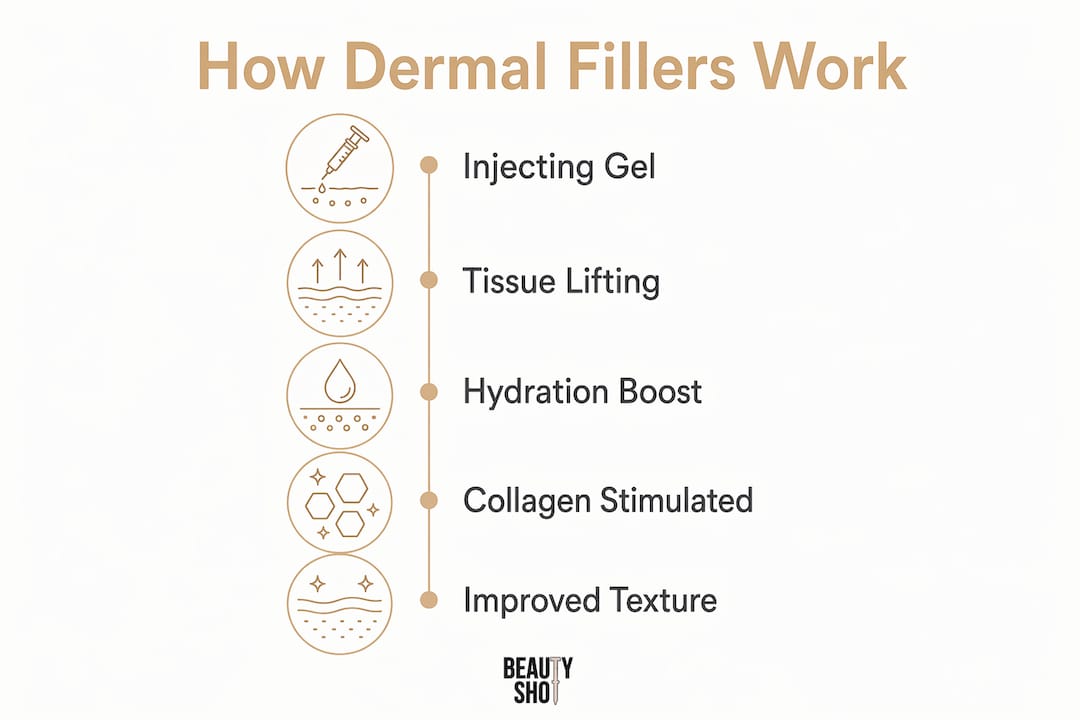
Hyaluronic acid goes further than mechanical volume alone. Its water-binding capacity enhances tissue hydration well beyond what any topical moisturiser can achieve. The result is skin that looks plumper and more luminous from within.
Over time, certain fillers also stimulate collagen and elastin production. This secondary benefit improves skin texture and elasticity gradually, which is why patients often notice their skin looks better even after the filler itself has partially broken down.
The technical properties of the gel also matter. Cross-linking chemistry influences filler firmness, longevity, and how it behaves in different facial zones. A higher G prime (the measure of gel firmness) suits structural areas like the cheeks. A softer, more cohesive gel suits delicate areas like the lips or under-eye hollows.
Key factors that affect how filler behaves in the skin:
- Injection depth: Deeper placement supports bone and fat pad loss; superficial placement smooths fine lines.
- Facial movement: High-movement areas like the lips break down filler faster due to mechanical stress.
- Vascularity: Areas with greater blood supply metabolise filler more quickly.
- Cross-linking density: More cross-linking generally means a firmer, longer-lasting product.
Pro Tip: Ask your injector about the G prime of the product they plan to use. A firmer filler in a soft area like the lips can feel unnatural and restrict movement.
What factors influence dermal filler results, safety, and longevity?
Filler longevity varies significantly by product type and placement. HA fillers typically last 6–12 months, while PLLA biostimulators can last two years or longer. Lips tend to break down filler faster than cheeks because of higher vascularity and mechanical stress. That means lip filler often needs refreshing more frequently than cheek or jawline filler.
Safety outcomes depend heavily on technique and product selection. PLLA products carry a 1–2% risk of nodule formation when injected incorrectly. That risk drops significantly in the hands of a trained, experienced injector who understands the correct dilution, injection plane, and post-treatment massage protocol.
Key safety and longevity considerations:
- Reversibility: HA fillers can be dissolved with hyaluronidase if a complication arises or the result needs adjustment. PLLA and CaHA fillers cannot be reversed.
- Injection technique: Needle placement in the wrong tissue plane increases the risk of bruising, asymmetry, and vascular complications.
- Product choice: Using a firm structural filler in a dynamic area increases the risk of unnatural results and discomfort.
- Provider training: Complications are significantly less common when treatment is performed by a clinician with formal training in facial anatomy and injectable techniques.
- Realistic expectations: Fillers restore facial balance, not a completely different face. Patients who understand this tend to be more satisfied with their results.
The primary goal of dermal fillers is to refresh facial volume and balance lost through age-related structural changes. Patients who approach treatment with that understanding consistently report better satisfaction than those expecting dramatic transformation.
How are dermal filler treatments performed and what should patients expect?
A typical filler appointment at a medical clinic follows a clear, predictable process. Knowing what to expect reduces anxiety and helps you prepare.
- Consultation and assessment. Your injector reviews your facial anatomy, discusses your goals, and recommends a product and placement plan. This step is not optional. A good injector will decline to treat if the plan does not suit your anatomy.
- Pre-treatment preparation. The skin is cleansed and a topical numbing cream is applied. Most HA fillers also contain lidocaine, which numbs the area during injection.
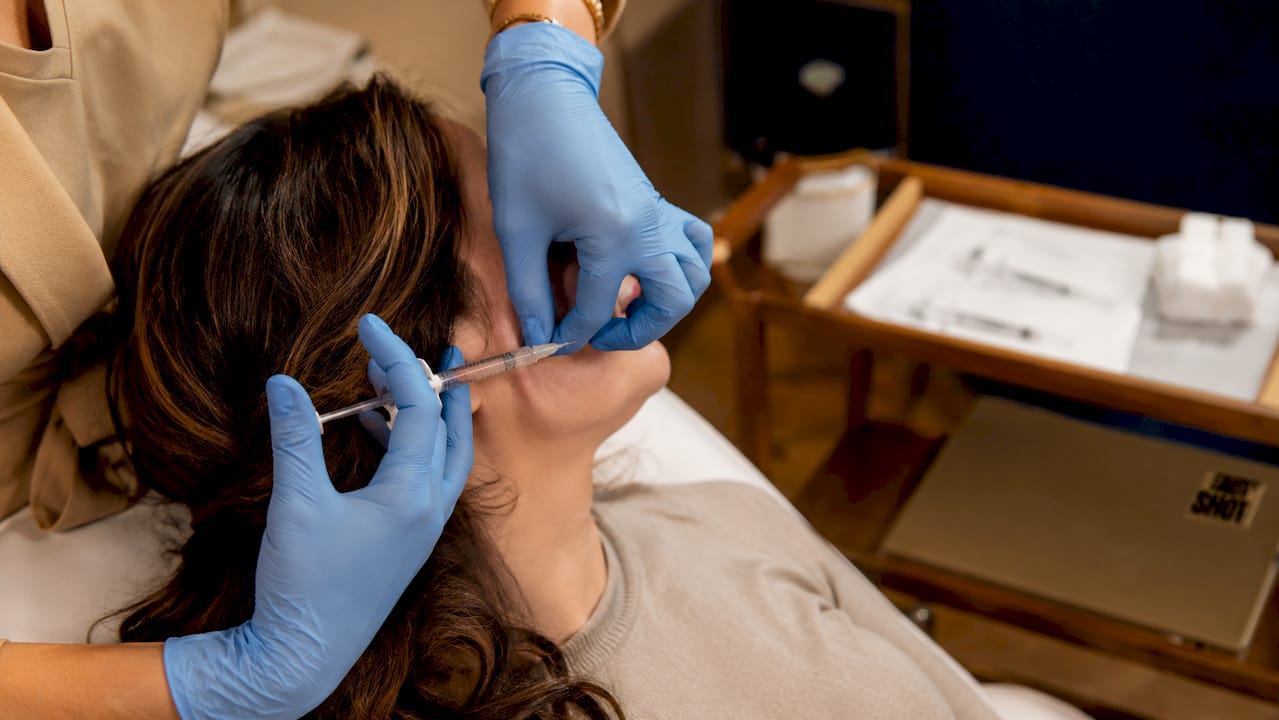
- Injection. Your injector uses either a fine needle or a blunt-tipped cannula depending on the area. Cannulas reduce bruising risk in vascular zones. Needles allow more precise placement in defined areas like the lip border.
- Moulding and assessment. The injector gently shapes the product and checks symmetry in real time. Small adjustments happen during the appointment, not after.
- Aftercare guidance. You receive specific instructions: avoid strenuous exercise for 24 hours, skip saunas and direct heat, and do not massage the area unless instructed. Swelling is normal and typically peaks at 24–48 hours.
With HA fillers, results are visible immediately, though mild swelling can temporarily make the area look fuller than the final outcome. With PLLA, results appear gradually over 3–4 months as collagen builds. A follow-up appointment at two weeks is standard practice to assess symmetry and address any concerns.
Key takeaways
Dermal fillers restore facial volume and improve skin quality through mechanical volumization, hydration, and collagen stimulation, with results and longevity varying by filler type, placement, and provider skill.
| Point | Details |
|---|---|
| Filler type determines mechanism | HA fillers add immediate volume; PLLA builds collagen gradually over 3–4 months. |
| Reversibility is a safety advantage | HA fillers can be dissolved with hyaluronidase; CaHA and PLLA cannot be reversed. |
| Placement affects longevity | Lips break down filler faster than cheeks due to movement and vascularity. |
| Provider skill reduces risk | PLLA carries a 1–2% nodule risk with incorrect technique; trained injectors reduce this significantly. |
| Goal is restoration, not transformation | Fillers refresh facial balance and structure, not a dramatically different appearance. |
What I have learned after years of treating patients with fillers
I have been injecting fillers for over nine years, and the single biggest shift in my practice has been moving away from treating individual lines toward treating the face as a whole structure. Early in my career, patients would point to a specific fold and ask me to fill it. That approach often left them looking slightly off, even if the line was technically smoother. The face does not age in isolated spots. It loses volume in layers, and the skin follows.
What I find works best is assessing facial harmony before touching a syringe. Where has volume been lost? What is pulling the face downward? Often, adding support to the cheeks softens the nasolabial folds without placing a single drop of filler there directly. That is the kind of result that looks natural because it is working with anatomy rather than against it.
I am also honest with patients about what fillers cannot do. They restore what has been lost. They do not stop the ageing process, and they are not a substitute for good skincare, sun protection, or, when appropriate, other treatments like Botox. The patients I see who are most satisfied are those who view fillers as one part of a considered approach to their skin health, not a single fix.
My advice: choose your injector based on their clinical background and their willingness to say no when a treatment is not right for you. That restraint is a sign of skill, not limitation.
— Felix
Dermal filler treatments at Beautyshotmedicalclinic
Beautyshotmedicalclinic in Woodbridge, Vaughan offers dermal filler treatments performed by an advanced cosmetic Registered Nurse with over nine years of clinical experience, including formal training in MD Codes, Allergan techniques, Teoxane Academy, and Clarion Medical protocols. Every treatment begins with a thorough facial assessment to build a personalised plan focused on natural, balanced results. If you want to understand what fillers can realistically do for your face, the injectable cosmetics guide on the Beautyshotmedicalclinic website is a strong starting point before booking your consultation.
FAQ
How do dermal fillers work to smooth wrinkles?
Dermal fillers physically lift and fill the tissue beneath a wrinkle, reducing its depth. Hyaluronic acid fillers also attract water, which plumps the skin from within and softens lines further.
How long do dermal fillers last?
HA fillers typically last 6–12 months, while PLLA biostimulators can last two years or longer. High-movement areas like the lips break down filler faster than less active zones like the cheeks.
Are dermal fillers safe?
Dermal fillers are safe when administered by a trained clinician using appropriate products for each facial zone. HA fillers carry an added safety advantage because they can be dissolved with hyaluronidase if a complication occurs.
What is the difference between HA fillers and PLLA fillers?
HA fillers provide immediate volume and are reversible. PLLA fillers are biostimulators that trigger gradual collagen production over 3–4 months and cannot be dissolved once injected.
Can dermal fillers look natural?
Yes. When treatment focuses on restoring facial proportions rather than filling individual lines, results look refreshed and balanced rather than overdone. Provider skill and product selection are the two biggest factors in achieving a natural outcome.
Recommended
- How do dermal fillers work to restore facial volume and smooth wrinkles? – Beauty Shot | Botox Fillers Woodbridge Vaughan
- How long do dermal fillers last and when do you need a refill? – Beauty Shot | Botox Fillers Woodbridge Vaughan
- Dermal Fillers in Woodbridge | Beauty Shot Medical Clinic
- Lip fillers vs. dermal fillers: What’s the difference and which is right for you? – Beauty Shot | Botox Fillers Woodbridge Vaughan