
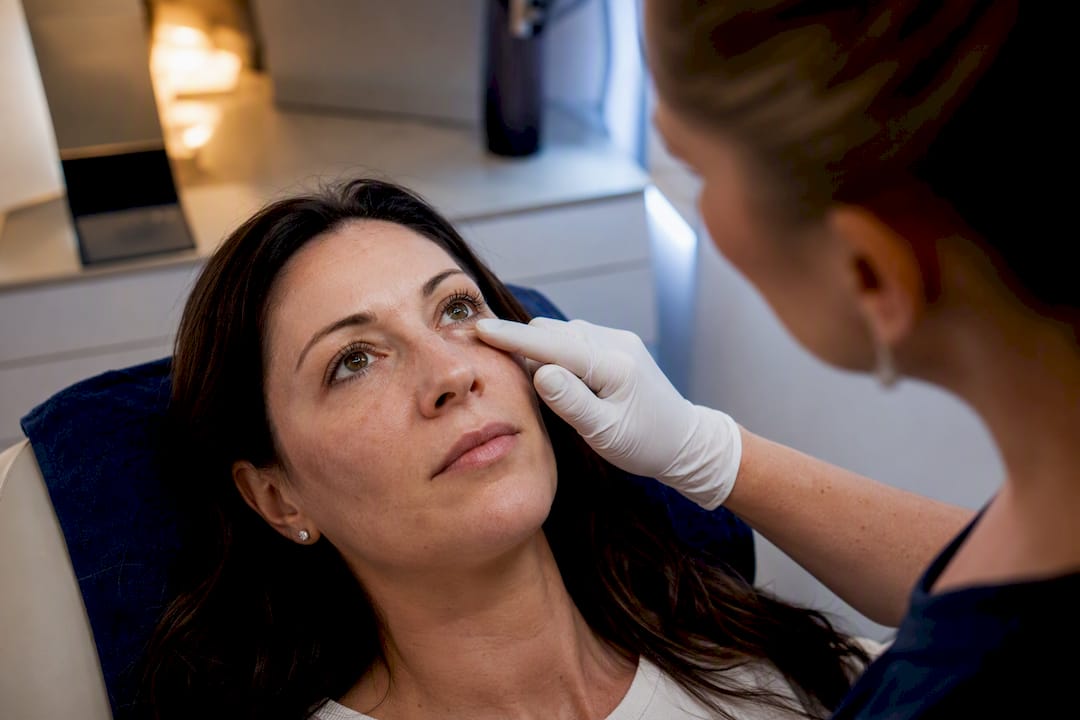
Tear trough filler can soften hollows and shadowing under the eyes for patients with genuine volume loss, and in the right hands, results look rested rather than “done.” It is also one of the more technically demanding injectable treatments because of how close the area sits to delicate blood vessels, so the outcome depends heavily on injector experience. Not everyone is a good candidate. Patients with visible eye bags, thin fragile skin, or pigment-driven dark circles often need a different approach altogether.
TL;DR:
- Successful tear trough filler requires precise technique, deep placement along the bone, and experience to avoid vascular risks and Tyndall effect.
- The ideal candidate has a true volume deficit with firm, elastic skin, while those with prominent fat herniation or loose skin are less suited.
- Results usually last nine months to a year and a half, with staged treatments reducing swelling and improving final outcomes.
- Cost varies based on injector expertise, product choice, and follow-up inclusions, so always confirm specific details before proceeding.
- Reversal with hyaluronidase is always available if complications or unsatisfactory results occur, emphasizing the importance of proper product and technique.
What is tear trough filler and how does it work?
The tear trough is the shallow groove running from the inner corner of the eye toward the cheek, where skin is thinnest and support structures are minimal. Hollowing here usually comes from a combination of bone remodelling, fat pad loss beneath the muscle, and thinning skin that lets the underlying purple‑blue vessels show through, which is what creates that shadowed, tired look regardless of how much sleep you’re getting.
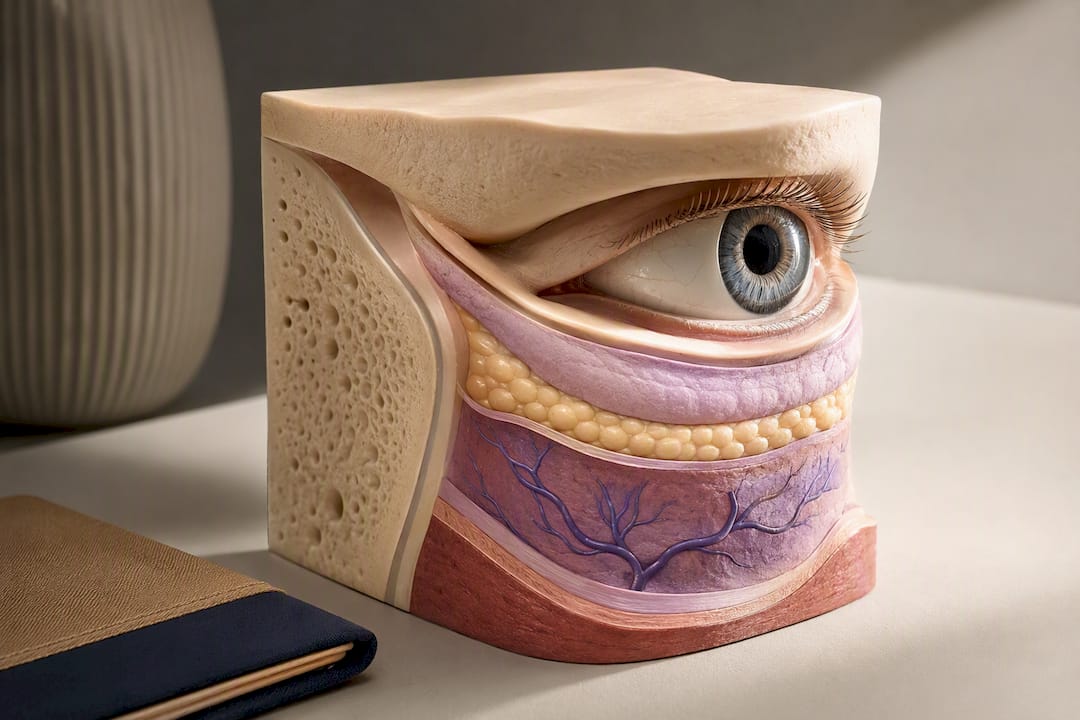
Hyaluronic acid filler works by physically replacing lost volume, sitting deep against the bone to lift the hollow back into line with the cheek. That’s different from what polynucleotide injections do. Those improve skin quality, thickness, and elasticity through a regenerative effect rather than adding bulk, and clinicians increasingly combine HA volumizers with polynucleotides when a patient needs both structural lift and better skin texture.
Product choice matters enormously in this area:
- Low-G’ (soft), low-hydrophilicity HA fillers are recommended for the periorbital region because they attract less water after injection.
- Thicker or more hydrophilic products can swell over time and cause a bluish discolouration under thin skin, known as the Tyndall effect.
- The right product for a cheek is often the wrong product for the tear trough, even from the same manufacturer’s line.
How safe is tear trough filler, really?
Bruising, mild swelling, and temporary lumpiness are common and usually resolve within a week or two. Tyndall effect, where filler placed too superficially reflects light and casts a bluish tint, is one of the more frequent aesthetic complaints specific to this area, and it’s why depth of placement matters as much as product choice.
The rare but serious risks are what set the tear trough apart from most other filler sites. Vascular occlusion happens when filler is injected into or compresses a blood vessel, and in the worst cases this can affect vision because of how close periorbital vessels connect to the ophthalmic artery. Nodules and low-grade infection are also possible, particularly with larger volumes or less experienced technique.
Fact: Health Canada maintains a list of adverse reactions associated with dermal fillers and specifically cautions that some HA products are not indicated for periocular use at all, which makes checking the product label part of an informed consultation, not an afterthought.
Clinics reduce risk through a few concrete measures:
- Deep injection along the bone, away from the superficial vascular plane.
- Small, staged aliquots rather than one large deposit.
- Cannula use in many cases, since a blunt tip is less likely to pierce a vessel wall than a sharp needle.
- Hyaluronidase kept on-site, with a documented protocol for reversing filler quickly if a vascular event occurs.
Some permanent or semi-permanent fillers, including PMMA-based products like Bellafill, carry specific cautions against periocular use, and that distinction alone rules certain products out of this treatment area entirely.
Are you a good candidate for tear trough filler?
Candidacy depends far more on your specific anatomy than on age or how tired you feel. The ideal candidate has a true volume deficit from bone or fat loss, medial hollowing that follows the orbital rim, and skin with enough elasticity to drape smoothly once support is restored.
- Good candidates typically show a clear hollow you can trace with a finger, minimal skin laxity, and no visible fat bulge when looking straight ahead.
- Poor candidates for filler alone often have visible eye bags from fat herniation, loose or crepey skin, noticeable fluid retention that shifts through the day, or dark circles that are mostly pigment rather than shadow.
- Before booking, be ready to discuss your full health history, any blood thinners or supplements, previous filler or surgery in the area, and what result you’re actually hoping to see.
A thorough consultation should include a pinch test and a push test on the lower eyelid, since patient selection is consistently identified as the strongest predictor of outcome in this treatment, more so than the product or brand used.
What happens during a tear trough filler appointment?
A proper consultation starts with photos, a visual and manual assessment of your lower eyelid, and an honest conversation about whether filler, polynucleotides, or a referral for surgical evaluation fits your anatomy best. This is also where consent is documented, including the specific product name, expected volume, and the risks unique to this area.
On treatment day, the area gets marked while you’re upright, since hollows and shadows shift once you lie back. A topical anaesthetic numbs the skin, and the injector chooses an entry point, often just below the hollow, that allows a cannula to glide along the correct plane with minimal tissue disruption.
- Product goes in as micro-aliquots, tiny deposits placed and checked before adding more.
- Many injectors use cannula technique here specifically because it lowers the odds of piercing a vessel compared to a sharp needle.
- Consensus guidance supports staged dosing and safe injection planes as core safety practices for this region.
- A full session usually runs 30 to 45 minutes, and many injectors intentionally under-correct on the first visit.
Pro Tip: Ask your injector whether they plan to review your results at three to four weeks before adding more product. Filler settles and hydrates over that window, and a staged top-up avoids the overfilled, puffy look that comes from correcting too aggressively on day one.
What results look like and how long they last
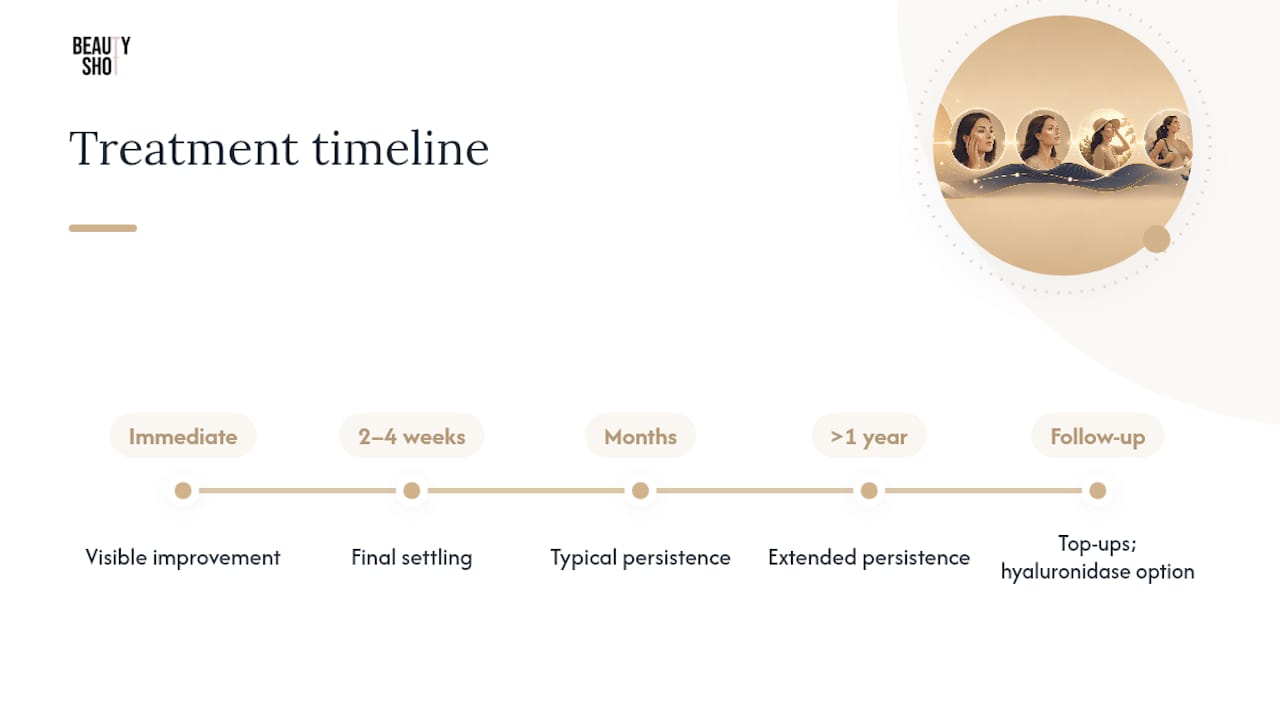
You’ll see improvement immediately after treatment, but the final result takes shape over two to four weeks as swelling resolves and the filler settles against the bone. Small aliquots placed conservatively tend to swell less in that early window than a single large deposit, which is part of why staged treatment has become standard practice.
Fact: Restoring cheek and midface support before or alongside direct tear trough volumization reduces contour irregularities and oedema, according to treatment algorithms built around this region.
In the periorbital area, HA filler typically lasts several months to over a year, though thinner skin and higher metabolic turnover can shorten that for some patients. Repeat treatments are usually planned as small top-ups rather than starting from zero, and reversal with hyaluronidase remains an option any time the result doesn’t sit right or a complication develops.
What does tear trough filler cost, and why does the price vary?
Cost depends on injector experience, the specific product used, total volume required, and whether follow-up visits are bundled into the initial fee. An injector with deep anatomical training and a strong tear trough portfolio typically charges more than a general aesthetics provider, and that difference in price often reflects real difference in risk management.
A price that looks unusually low for this specific area is worth questioning rather than celebrating, since it may signal an inexperienced injector, a diluted or off-label product, or no plan for follow-up at all.
Before booking, confirm:
- The exact product name and brand being used.
- The volume included in the quoted price and what a top-up would cost separately.
- Whether hyaluronidase is stocked on-site in case of a vascular event.
- Whether a follow-up assessment is included or billed as an additional visit.
What are the alternatives to tear trough filler?
Filler isn’t the right tool for every under-eye concern, and a good consultation should say so plainly when that’s the case.
- Polynucleotide skin boosters improve skin thickness, texture, and crepiness without adding volume, which suits patients whose main issue is fragile, thin skin rather than true hollowing. Early case series report mild to moderate improvement in skin smoothness and pigmentation, though the sample sizes involved are small and larger studies are still needed.
- Lower blepharoplasty is the definitive surgical option when fat herniation or excess skin is the primary issue, since filler cannot resolve a bulging fat pad and can sometimes make it look more pronounced.
- Topical treatments, lasers, or pigment-targeted therapies address dark circles caused by melanin or vascular pigmentation, which is a colour problem, not a volume problem, and filler will not fix it.
Some patients benefit from sequencing: a course of skin boosters first to improve tissue quality, followed by conservative filler once the skin can support it well.
How should you take care of your under-eyes after treatment?
Healing well matters as much as the injection itself, and most of the work happens in how you treat the area over the following days.
- Apply cold compresses in short intervals for the first 24 to 48 hours to limit swelling and bruising.
- Sleep with your head slightly elevated for a few nights, and skip strenuous exercise, sauna, or extended sun exposure for 48 to 72 hours.
- Expect mild bruising and puffiness for several days to about a week. Arnica gel and gentle icing can help it resolve faster.
- Book your review appointment for around three to four weeks out so any residual swelling has settled before deciding whether a top-up is needed.
When is under-eye filler an emergency?
Most healing is uneventful, but certain symptoms mean you need to contact your injector or seek emergency care immediately rather than waiting it out.
- Severe, escalating pain that gets worse rather than better in the hours after treatment.
- Skin that turns unusually pale or white (blanching) and stays that way, or a mottled, lace-like purple pattern known as livedo reticularis.
- Any sudden change in vision, blurring, or vision loss.
Fact: Interdisciplinary consensus guidance outlines vascular compromise protocols that include stopping injection immediately, dissolving the filler with high-dose hyaluronidase, and arranging urgent ophthalmology referral when vision is affected.
Reputable clinics keep hyaluronidase, batch-number records, and a time-stamped emergency protocol on file specifically so they can act within minutes, not hours. This is also why thorough, documented informed consent matters medicolegally, not just ethically. You should know the risks were disclosed and recorded before you ever sat in the chair.
How do you choose a qualified injector for this treatment?
The tear trough rewards experience more than almost any other filler site, so vetting your injector matters more here than it might for a smoother, safer area like the cheek.
- Ask specifically how many tear trough cases they’ve performed, not just how many years they’ve been injecting overall.
- Confirm they have formal anatomical training in the periorbital region and can explain why they’d choose cannula or needle for your particular anatomy.
- Ask whether hyaluronidase is kept on-site and whether they have a written emergency protocol, including photo documentation and batch-number traceability for every syringe used.
- Be cautious of clinics offering steep discounts on this specific treatment, refusing to discuss risk in detail, or unable to show real before-and-after examples of tear trough work.
Beauty Shot Medical Clinic’s approach to under-eye filler
I’m Irene Soni, a Registered Nurse and the founder of Beauty Shot Medical Clinic, the tear trough is one of the areas I’m most careful with. My approach is deliberately conservative: small staged aliquots, a follow-up built into the plan, and a willingness to say “not yet” or “not this treatment” when someone’s anatomy calls for something other than filler.
Every injectable at Beauty Shot Medical Clinic is performed by an advanced cosmetic Registered Nurse, and my training runs through MD Codes, Allergan technique, and the Teoxane Academy, among other programs, with a nursing background from Sunnybrook Hospital’s medical and ICU units. If you want to see how conservative, anatomy-led treatment actually looks, our before and after gallery shows real staged results, not overcorrected extremes.
— Felix
Ready to talk about your under-eyes?
If hollowing under your eyes has been bothering you, the safest next step is a real consultation, not a guess based on photos online. A reputable medical aesthetics clinic offers a personal assessment where your anatomy is discussed honestly, including whether filler, a skin booster, or a referral elsewhere makes more sense for you. Unlike a rushed, volume-driven injection mill, every plan should be staged and reviewed, with hyaluronidase and a documented safety protocol always in place, because the tear trough deserves that level of care. You can explore our dermal filler services to see what a personalized treatment plan involves, or book a consultation directly to get a clear, judgment-free answer about whether under-eye filler is right for you.
This article is general information, not a substitute for advice from a qualified doctor. Consult a qualified healthcare professional about your own circumstances before acting on anything here.
Sources
FAQ
How long does tear trough filler usually last?
Hyaluronic acid filler in the tear trough typically lasts nine months to a year and a half, though thinner skin and faster metabolism can shorten that window for some patients.
How much does tear trough filler cost?
Price depends on injector experience, product brand, total volume, and whether follow-up visits are included, so cost varies significantly by clinic and patient anatomy rather than following one fixed rate.
Is tear trough filler likely to migrate?
Migration is uncommon when a properly selected, low-hydrophilicity HA product is placed deep against the bone in small aliquots, though it becomes more likely with excessive volume, superficial placement, or an unsuitable product choice.
What are the biggest risks of tear trough filler?
Common effects include bruising, swelling, and Tyndall discolouration, while rare but serious risks include vascular occlusion and, in extreme cases, vision changes, which is why anatomical expertise and on-site hyaluronidase matter so much.
Can tear trough filler be reversed?
Yes, hyaluronic acid filler can be dissolved with hyaluronidase if the result isn’t right or a complication occurs, which is one reason HA remains the preferred product class for this area over permanent fillers.