
Botulinum toxin A, better known by the brand name Botox, works for most people with dynamic crow’s feet, and the clinical evidence backs that up. Pivotal trials using 24 units in the lateral canthal lines showed meaningful improvement in most patients within days, with a median response lasting around four months according to trial data. It’s generally safe in trained hands, with side effects that are usually mild and short-lived. The rest of this guide walks through how it works, what the appointment looks like, what can go wrong, and how to choose someone qualified to do it.
TL;DR:
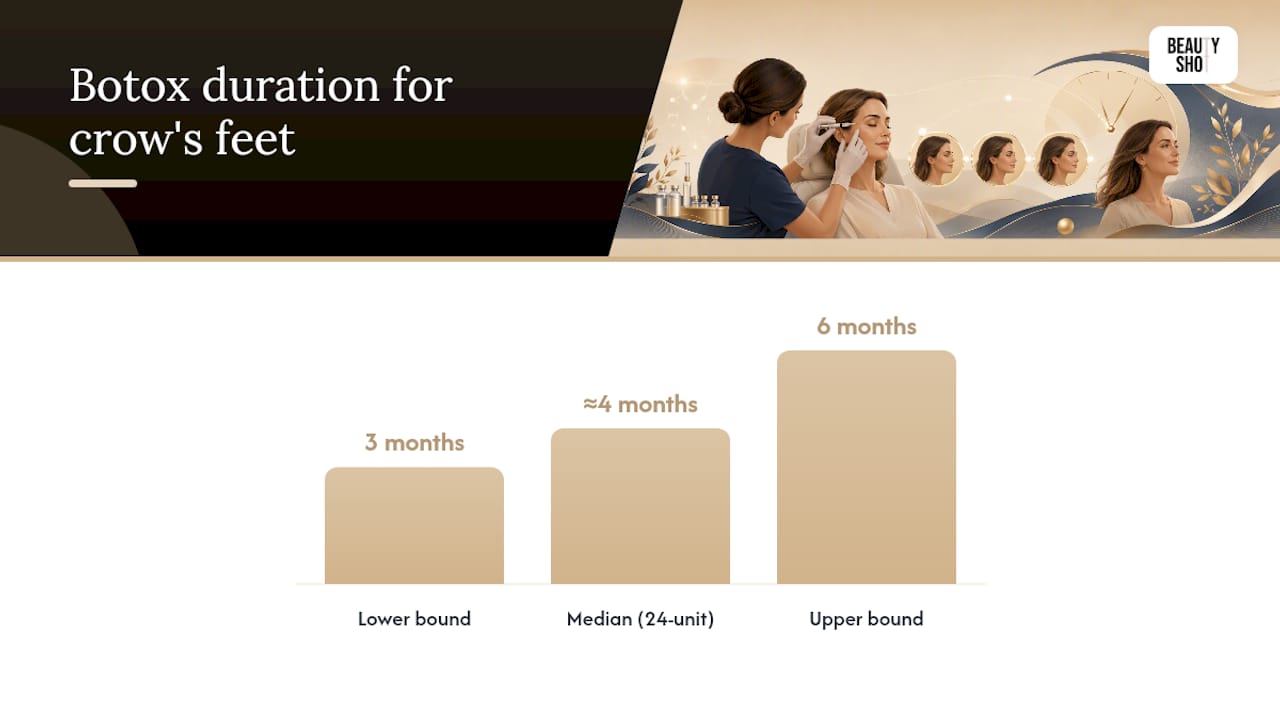
- Most people see noticeable softening of crow’s feet within two to seven days, with full results generally lasting around four months; individual factors may extend or shorten this duration.
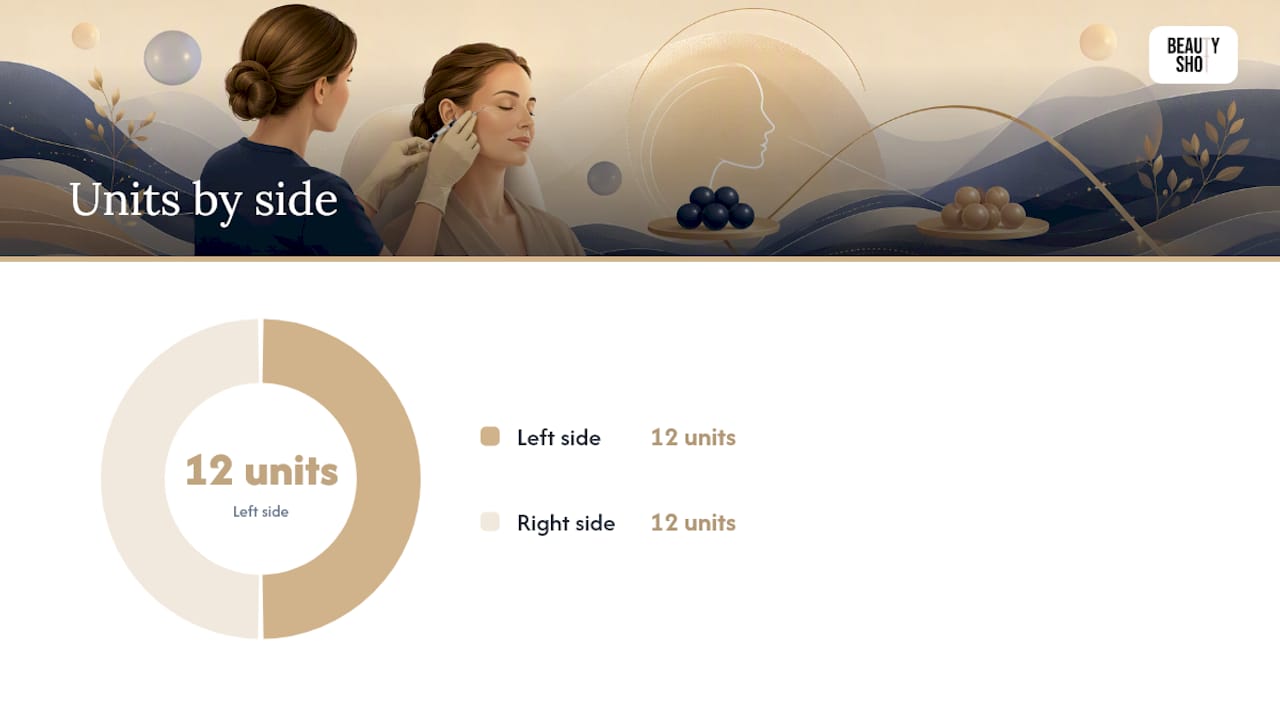
- A standard dose of 24 units split into three injection points per side is common, but the exact amount should be tailored to the muscle strength and wrinkle pattern of each patient.
- Side effects are usually mild and short-lived, with bruising being most common, while eyelid drooping and unwanted muscle weakness are rare but require careful injection technique.
- Candidates should have dynamic lines that appear mainly when smiling or squinting, and treatment is avoided during pregnancy, active infections, or in those with neuromuscular disorders.
- Choosing an injector with specialized training in periocular anatomy and an individualized, anatomy-led approach significantly reduces risks and produces more natural, balanced results.
What to expect during a crow’s feet Botox appointment
Your first visit isn’t just about injections. A proper consultation starts with a close look at your face at rest and in motion. I ask patients to smile, squint, and laugh naturally so I can see exactly how the orbicularis oculi muscle (the ring of muscle circling your eye) creates those fan-shaped lines at the outer corners. That distinction matters: dynamic lines only show up with movement, while static lines are visible even when your face is relaxed. Botox treats the dynamic component. Deep static lines etched into resting skin may need a combination approach, which is worth discussing openly rather than promising results injections alone can’t deliver.
Once we’ve mapped your pattern, treatment typically follows a straightforward sequence:
- Cleanse the treatment area and mark injection points based on your unique muscle activity.
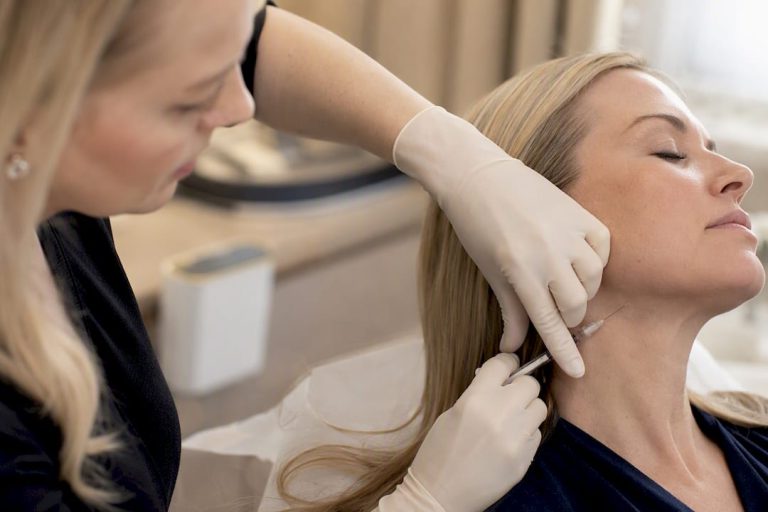
- Inject small amounts of product at (often three points per side, targeting the lateral orbicularis oculi).
- Apply gentle pressure if needed and review post-care instructions before you leave.
- Book a follow-up check, typically at the two-week mark, to assess symmetry and effect.
Trial protocols commonly used 24 units total across the lateral canthal lines, split across three sites per side. That figure comes from clinical dosing research and prescribing guidance, not a fixed rule I apply to every patient. Your muscle strength, the depth of your lines, and how much softening you want all factor into the final plan. Someone with a strong, expressive smile and pronounced dynamic lines may need a different pattern than someone with finer lines and a more subtle wrinkle pattern.
The goal is always to soften the fan lines without flattening your smile. Overtreating the lateral orbicularis oculi can make a smile look stiff or asymmetrical, which is why conservative, anatomy-led dosing matters more than chasing a specific unit count. You’ll typically start noticing softening within two to seven days, with the full effect visible by around two weeks.
Pro Tip: Bring a recent photo of yourself smiling naturally from a few years ago. It gives your injector a helpful reference point for how your crow’s feet pattern has changed, and helps set a realistic, personalized goal for treatment rather than a generic one.
How Botox reduces crow’s feet and what the research shows
Botulinum toxin A works by blocking a specific step in muscle communication. Nerve endings normally release a chemical messenger called acetylcholine to trigger muscle contraction. Botox cleaves a protein called SNAP-25, which nerve cells need to release that messenger. Without it, the signal doesn’t get through, and the orbicularis oculi muscle temporarily relaxes. Less contraction around the eye means less crinkling when you smile or squint. The effect is temporary because nerve endings eventually regenerate the machinery needed to release acetylcholine again, which is why results fade over months rather than lasting forever.
The clinical evidence for this is stronger than for many cosmetic treatments. Two large multicentre randomized controlled trials, involving 1,362 subjects total, tested onabotulinumtoxinA at 24 units for crow’s feet and measured outcomes using the Facial Wrinkle Scale, a standardized tool that grades wrinkle severity at rest and at maximum smile. Responder rates (patients rated as having no or mild wrinkles at maximum smile) were significantly higher with treatment than placebo at day 30, and the median duration of response, for people who did respond, was approximately four months.
A few things are worth understanding about that data:
- The four-month figure is a median across responders, meaning half saw effects last longer and half shorter.
- Duration correlated with how “improved” patients felt: those who rated themselves as very much improved reported longer perceived benefit than those with modest improvement.
- The trials used a fixed, protocol-driven dose. In practice, dosing is individualized, which can shift both effect size and duration in either direction.
It’s worth being clear-eyed here: multiple botulinum toxin type A preparations exist internationally, and their underlying mechanisms are broadly similar. Outcome differences between products tend to come down to formulation, dosing, and, most of all, injector technique rather than one brand being categorically superior to another. That’s a point I’d rather you hear plainly than have implied through marketing.
How long do crow’s feet Botox results actually last?
Most patients can expect their results to last somewhere between three and six months, with the median trial duration landing around four months for the standard 24-unit dose. That’s a solid, evidence-backed range to plan around, though it’s a median, not a guarantee, and your own timeline could land anywhere on that curve.
A handful of factors shift how long your results hold:
- Dose delivered. Higher doses within a safe range tend to correlate with longer measured duration, which is one reason dose-ranging studies found the 24-unit dose outperformed lower doses on median duration.
- Injection precision. Product placed accurately into the target muscle fibres works more predictably than product distributed loosely across the area.
- Muscle strength and use patterns. Someone with a strong, highly active orbicularis oculi (frequent squinting, expressive smiling) may metabolize the effect faster than someone with milder muscle activity.
- Individual metabolism. Just like any injected protein, your body’s processing speed varies, and this is part of why identical doses produce different timelines in different people.
- Treatment history. Patients who have had consistent treatment over time sometimes report the muscle “remembers” being relaxed, though this is more anecdotal than firmly established in the clinical literature.
There’s also a subjective piece worth naming honestly. Perceived duration and measured duration aren’t identical. In the pivotal trials, patients who reported feeling “very much improved” also reported longer perceived benefit than those who felt only “improved.” That’s not because the toxin itself lasted longer in their tissue. It’s more likely that a stronger initial result gives you more room before the softening becomes noticeable again. This is part of why I aim for a result that looks natural and complete from day one, rather than an undertreated outcome, since research suggests higher initial satisfaction tends to track with longer perceived benefit.
On maintenance: the safest approach is to return when you notice movement returning, not on a rigid calendar. Re-treating too frequently, before the muscle has had a chance to fully recover its baseline activity, isn’t necessary for most patients and doesn’t meaningfully extend results. For more detail on what drives longevity and how to plan your maintenance schedule, our clinical guide to Botox duration covers the topic in more depth.
What are the side effects of Botox for crow’s feet?
Most side effects from crow’s feet Botox are mild, local, and short-lived. Bruising at the injection site is the most common complaint, followed by mild swelling and occasional headache. These typically resolve within a few days without any intervention beyond an ice pack and patience.
Eyelid oedema, or swelling around the eyelid, deserves specific mention because it’s the only adverse event that occurred in at least 1% of trial patients treated for crow’s feet in the pivotal studies. It’s uncommon, but not rare enough to ignore, and it’s one reason precise injection depth and placement near the eye matter so much.
Less common but more serious complications include:
- Eyelid ptosis (drooping), which can occur if product migrates toward the levator muscle that lifts the eyelid. It’s temporary, resolving as the effect wears off, but it’s the complication patients worry about most, and rightly so.
- Unwanted weakness in nearby muscles, which can subtly change how your smile or brow moves if injection points aren’t carefully chosen relative to your individual anatomy.
- Systemic spread of toxin effect, a very rare but serious risk noted in the product’s prescribing information, which carries a boxed warning about this possibility.
Reducing these risks comes down to a few consistent practices: conservative dosing near the orbital rim, precise anatomical landmarking before the needle ever goes in, and a thorough health history that screens for neuromuscular conditions like myasthenia gravis. Patients on blood thinners are also flagged during consultation, since anticoagulant use raises bruising risk and sometimes warrants a conversation with your prescribing doctor before treatment.
Pro Tip: If you notice any drooping, asymmetry, or unusual heaviness in the days after treatment, contact your injector rather than waiting it out. Most concerns are minor and manageable, but early follow-up lets your provider assess whether it’s expected settling or something that needs monitoring.
If you want a deeper breakdown of what’s normal versus what warrants a call to your provider, this guide to common Botox side effects walks through the full timeline.
Who is a good candidate for crow’s feet Botox?
If you’re an adult noticing lines that appear mainly when you smile or squint, and you’d like them softened without altering how your face moves, you’re likely a reasonable candidate. The best outcomes tend to go to people with primarily dynamic lines rather than deep grooves that persist at rest, since Botox targets muscle activity rather than the skin itself.
There are situations where treatment isn’t appropriate:
- Pregnancy or breastfeeding. Botox hasn’t been adequately studied in these populations, so it’s avoided as a precaution.
- Active infection at or near the injection site. Treatment is postponed until it clears.
- Known allergy to any component of the product, including the botulinum toxin protein itself or other formulation ingredients.
- Neuromuscular disorders such as myasthenia gravis or Lambert-Eaton syndrome, which require careful evaluation and often specialist input before proceeding.
- Recent facial surgery in the treatment area, where tissue is still healing and anatomy may be temporarily altered.
Certain medications also warrant a conversation at consultation, including some antibiotics and muscle relaxants that can theoretically potentiate the toxin’s effect. None of this is meant to be alarming. It’s simply why a thorough health history matters more than a quick, transactional appointment.
Past treatments matter too. If you’ve had under-eye filler, a previous brow lift, or blepharoplasty (eyelid surgery), your injector needs to know. These procedures change the underlying support structure and muscle behaviour around the eye, which affects how and where Botox should be placed to get a natural, balanced result.
How to choose a qualified injector for crow’s feet Botox
The area around the eye is unforgiving of guesswork. This is thin, delicate skin sitting close to muscles that control both your smile and your eyelid, so injector experience matters more here than almost anywhere else on the face.
Look for an injector with documented, advanced training specifically in periocular anatomy, not just general injectable certification. Nurse injectors with structured training through recognized programs, alongside appropriate physician oversight where required, tend to bring a more anatomy-first approach to treatment planning.
A short list of questions worth asking at consultation:
- What specific training have you had in treating crow’s feet, and how long have you been doing it?
- How do you decide on injection points and unit count for my particular pattern?
- What happens if I experience drooping or asymmetry, and what’s your follow-up process?
- Can I see before-and-after photos of patients with a similar facial structure to mine?
- What’s your policy on touch-ups if the result isn’t quite symmetrical?
Red flags are usually easy to spot once you know to look. A price that seems unusually low compared to others in your area often means diluted product or an inexperienced injector. Reluctance to explain the anatomy behind their approach, or a setting that doesn’t feel like a proper clinical environment, are both worth walking away from. Trustworthy providers are transparent about product sourcing, have a clear plan for handling complications, and build follow-up care into the treatment rather than treating it as optional. If you’d like a closer look at how a proper consultation should unfold, our guide to what a Botox consultation involves covers what to expect step by step.
Aftercare and recovery after crow’s feet Botox
Recovery from crow’s feet Botox is minimal, but a few simple habits protect your results and lower your risk of complications. In the first 24 to 48 hours:
- Avoid rubbing or massaging the treated area, since pressure can encourage the product to migrate from its intended spot.
- Skip strenuous exercise, saunas, and hot yoga for a day or two, as increased blood flow and heat can affect how the product settles.
- Sleep with your head slightly elevated if you notice any swelling, which helps it resolve faster.
You’ll typically notice softening beginning within two to seven days, with the full effect visible by around two to four weeks. That’s the point where your follow-up appointment matters most, since it’s the best time to assess symmetry and decide if any minor touch-up is needed.
Contact your injector promptly if you notice increasing droop rather than improvement, weakness spreading beyond the treated area, or any difficulty breathing or swallowing. These are uncommon, but they’re the signs that warrant a call rather than waiting it out. For the full aftercare routine, including product recommendations that support healing, this aftercare guide has the complete breakdown.
What do realistic crow’s feet Botox results look like?
Before-and-after photos can be genuinely useful, but only if you know what you’re looking at. The most meaningful comparison isn’t your face at rest. It’s your face at maximum smile, since that’s where dynamic crow’s feet actually show up. A photo taken with a neutral expression tells you very little about whether treatment worked.
When evaluating your own results or reviewing a provider’s portfolio, a few things matter:
- Compare photos taken with the same expression, lighting, and angle both times, since inconsistent conditions can make a mediocre result look better (or worse) than it is.
- Look for softened lines with preserved movement, not a completely frozen outer eye area, since natural expression is usually the better outcome.
- Pay attention to symmetry between both sides rather than just overall smoothness.
Most patients report satisfaction with subtle, natural-looking softening rather than complete immobility around the eyes. A frozen, expressionless result around the eyes tends to look more obviously “done” and can make a smile appear disconnected from the rest of the face. If your results feel uneven or don’t match what you discussed at consultation, raise it with your injector. A reasonable touch-up window, usually within the first two weeks, is standard practice for fine-tuning symmetry.
Why clinic experience and anatomy-first planning matter
Safety with crow’s feet Botox comes down almost entirely to injector skill and anatomical knowledge, not the product itself. Research on treatment technique consistently points to the same conclusion: experienced injectors who map each patient’s individual crow’s feet pattern (upper radiating, lower cheek extension, or a mix of both) produce more natural results with fewer complications than a one-size-fits-all approach.
At Beauty Shot Medical Clinic, every treatment plan starts with that kind of individualized assessment rather than a fixed unit count applied to everyone who walks through the door. Injections are performed by an advanced cosmetic Registered Nurse trained specifically in periocular technique, with follow-up built into every treatment so symmetry and healing can be properly reviewed. That anatomy-led, conservative approach is deliberate. It’s the difference between a result that looks refreshed and one that looks obviously altered.
A nurse injector’s take on crow’s feet Botox
After years of injecting around the eye area, I’ve come to believe the best crow’s feet result is the one nobody notices as “Botox.” It’s the friend who says you look well-rested, not the one who asks what you had done. That means resisting the temptation to chase complete stillness and instead aiming for a softened, natural movement that still looks like you, just a little less tired around the eyes. Safety and facial balance come before any unit count on a chart. If you’re considering treatment, come in with your questions. An honest consultation, where your anatomy and your goals actually shape the plan, is worth more than any promise of a fixed outcome.
— Felix
Book a crow’s feet Botox consultation at Beauty Shot Medical Clinic
Beauty Shot Medical Clinic performs crow’s feet Botox treatments with an advanced cosmetic Registered Nurse injector, using the same anatomy-led, conservative approach described throughout this guide. Every plan starts with a real assessment of your muscle pattern and goals, not a standard unit count applied to every patient who books in. If you’re in Woodbridge, Vaughan, or the surrounding area and want to understand your options before committing to anything, learning more about how Botox works is a reasonable first step, followed by booking a consultation where your specific crow’s feet pattern and expectations are discussed openly. There’s no pressure to move forward the same day. It’s simply an opportunity to ask questions, see what a personalized plan would involve, and decide from there.
This article is general information, not a substitute for advice from a qualified doctor. Consult a qualified healthcare professional about your own circumstances before acting on anything here.
Sources
- Duration of Clinical Efficacy of OnabotulinumtoxinA in Crow’s Feet Lines: Results from Two Multicenter, Randomized, Controlled Trials – PMC
- Botox (onabotulinumtoxinA) mechanism of action – PMC
- OnabotulinumtoxinA for Treatment of Moderate to Severe Crow’s Feet Lines: A Review
- BOTOX Cosmetic prescribing information (high‑value safety and dosing reference)
FAQ
Does Botox really work for crow’s feet?
Yes. Pivotal clinical trials found significantly higher responder rates with onabotulinumtoxinA than placebo at day 30, with most responders seeing improvement that lasted a median of about four months.
What is the fastest way to reduce crow’s feet?
Botox is generally the fastest non-surgical option for dynamic crow’s feet, with initial softening visible within two to seven days and full effect by around two weeks. For static lines that persist at rest, a filler or combination approach may work better, and comparing Botox and filler can help clarify which fits your specific lines.
How long do Botox crow’s feet results last?
Most patients see results last between three and six months, with a median trial duration of roughly four months at the standard 24-unit dose. Individual factors like muscle strength, dose, and metabolism all influence where you fall in that range.
Where should Botox not be injected for crow’s feet?
Botox should be kept away from the levator muscle that lifts the eyelid and away from the orbital bone’s inner edge, since product migrating into these areas can cause temporary eyelid drooping. Precise, conservative placement by an injector trained in periocular anatomy is the main safeguard against this.