Short answer: we recommend avoiding alcohol for about 24 hours before and after your Botox appointment. The main reason is bruising and bleeding risk at the injection sites, not a risk of the product “moving” once it’s in the muscle, which is rare. If you notice new or worsening trouble breathing, swallowing, or speaking after treatment, that needs urgent medical attention right away.
TL;DR:
- Avoid drinking alcohol for at least 24 hours before and 24 to 48 hours after Botox to minimize bruising and bleeding risks at the injection sites.
- Alcohol does not cause the toxin to migrate but can interfere with clotting and mask early warning signs, complicating post-treatment assessment.
- Most side effects like bruising or mild swelling resolve within days, but breathing or swallowing difficulties require immediate medical attention.
- During recovery, patients should refrain from rubbing the treated areas, intense exercise, and alcohol to support optimal results and reduce complications.
- Personalized advice from a qualified injector is essential, especially for those on blood thinners or with bleeding risks, to tailor aftercare properly.
How alcohol affects Botox outcomes and why bruising is the main concern
Alcohol widens blood vessels and temporarily affects how well your platelets clump together to stop bleeding. That combination means a tiny injection that would normally cause no visible mark can turn into a small bruise, or make an existing one larger and slower to fade. This is the real, practical concern with drinking around your appointment, not some dramatic shift in results.
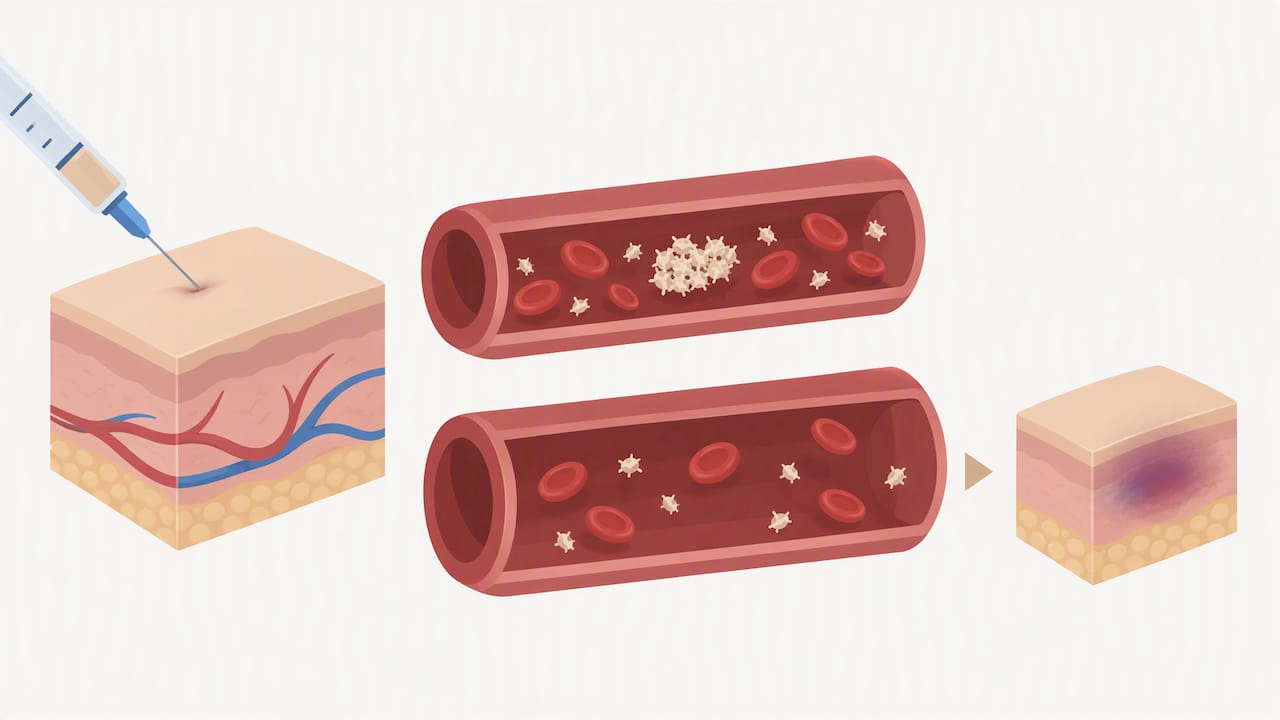
A separate worry we hear often is whether alcohol makes Botox “spread” or “migrate” to unwanted areas. The botulinum toxin acts locally at the injection site and doesn’t typically travel through the bloodstream to affect distant muscles, and there isn’t good clinical evidence that alcohol changes that. The myth likely persists because people notice unrelated asymmetry or settling of the product and look for an explanation.
There’s a third, quieter issue: alcohol can blunt your ability to notice early warning signs, and it can make it harder for us to assess your skin and muscle response accurately at a follow-up. Being clear-headed in the days around treatment helps both of us catch anything unusual early.
- Alcohol’s effect on vessels and platelets raises bruising and swelling risk at injection sites.
- Botulinum toxin works locally in the muscle; alcohol hasn’t been shown to cause it to migrate.
- Drinking can mask symptoms you’d otherwise notice and report to your injector.
A 2025 multicentre study of 5,014 patients reported an adverse-event rate of 5.99% using only a 10-minute precaution protocol, suggesting that extensive post-injection restrictions may matter less than once assumed, though the retrospective design has limits.
Clear timing guidance: recommended windows before and after treatment
We keep this simple on purpose, because simple rules are the ones people actually follow.
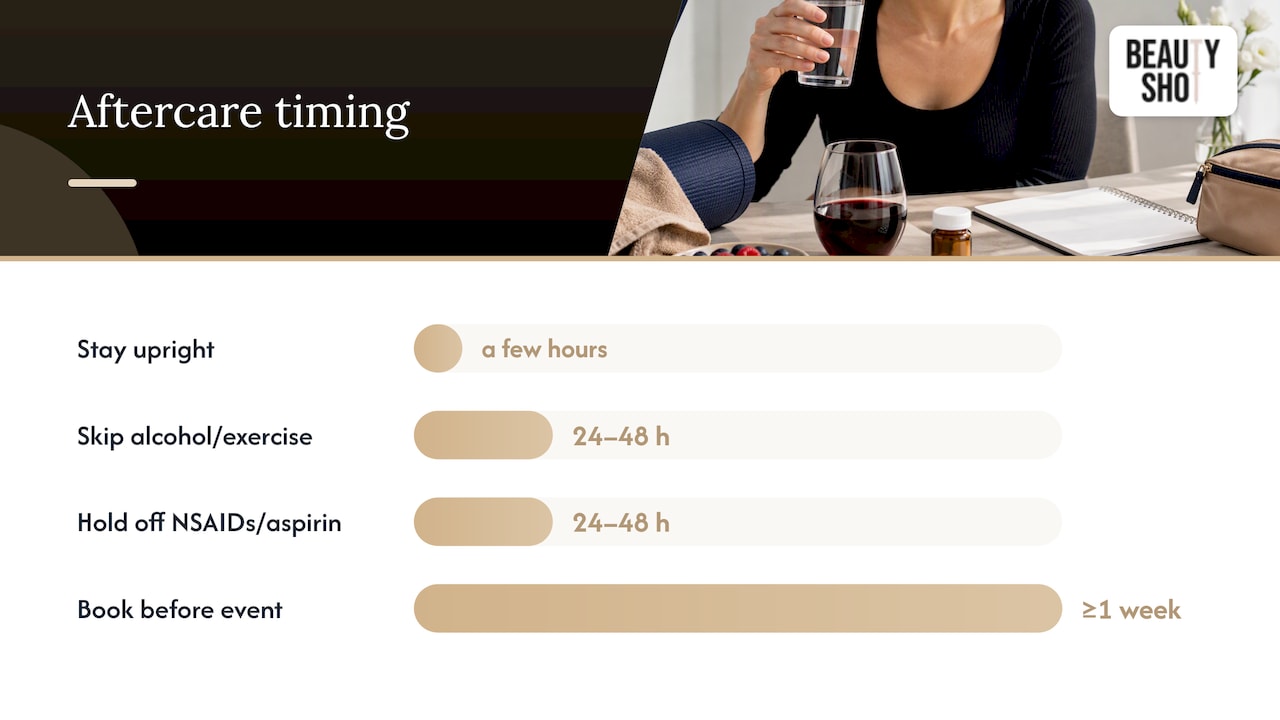
- Skip alcohol for 24 hours before your appointment, so your blood is clotting normally when the needle goes in.
- Avoid alcohol for 24 to 48 hours after injections, giving bruising and swelling time to settle before you add a vasodilator back into the mix.
- If you’ve already had a glass of wine the night before and your appointment is still on, mention it. We’ll check the injection sites more carefully and may adjust technique.
Some sources suggest a shorter 6 to 12 hour window is enough, but we find 24 hours easier to remember and plan around, especially before a weekend event.
Pro Tip: If you’re on blood thinners or have a bleeding disorder, talk to both your prescriber and your injector before changing anything, including alcohol habits, around your appointment.
Risks and red flags: what to expect and when to get urgent help
Most people sail through Botox with nothing more than a pinprick mark. A few notice small bruises, mild puffiness, or tenderness at the injection site for a day or two, and these settle on their own with basic care.
What we want you watching for is different and far less common. According to Health Canada’s guidance on cosmetic injections, recognized risks include bruising, a drooping eyelid, headache, and, rarely, spread of the toxin’s effect beyond the treated area. Any new or worsening difficulty breathing, swallowing, or speaking after treatment is a sign to seek medical attention immediately, not something to wait out at home.
- Small bruises or mild swelling: expect them to fade within several days; cold compresses help.
- Transient tenderness at the injection site: usually resolves without any treatment.
- A large, expanding bruise or unexpected muscle weakness: contact your injector and photograph the area so we can track changes.
- Breathing, swallowing, or speech difficulty: this needs urgent medical care, not a wait-and-see approach.
If anything feels off, trust that instinct and call. We would always rather hear from you early than have you second-guess a symptom for days.
Practical aftercare steps we recommend to reduce bruising and support results
Good aftercare is mostly about giving your skin a quiet 24 to 48 hours to settle. None of it is complicated, but the small details add up.
- Stay upright for a few hours after your appointment and avoid rubbing or massaging the treated areas, which can encourage the product to spread beyond where we placed it.
- Hold off on NSAIDs and aspirin around your appointment when it’s medically safe to do so, since both can thin blood further; never stop a prescribed anticoagulant without talking to your prescriber first.
- Skip intense exercise, saunas, steam rooms, and heavy alcohol for the first 24 to 48 hours, and plan any photo-worthy events a few days out from your appointment rather than the same evening.
Our aftercare guide walks through product and routine adjustments in more detail if you want a fuller checklist to follow at home.
Pro Tip: If you know you have a wedding or big event coming up, book your Botox at least a week ahead so any minor bruising has time to resolve before the cameras come out.
What the evidence and official guidance say
The research base here is smaller than most patients expect, which is part of why conservative advice has stuck around. Health Canada treats cosmetic injections as medical procedures with real, if uncommon, risks, and it recommends choosing a qualified professional and disclosing anything that affects bleeding. HealthLink BC notes that injected botulinum toxin typically begins softening wrinkles within about 72 hours and that effects commonly last three to four months, information that helps you judge whether a bruise or a lingering line is still “settling in” or worth a call.
- Health Canada lists bruising, drooping eyelid, headache, and rare systemic spread among known risks of cosmetic injections.
- HealthLink BC confirms the toxin acts locally and flags breathing, swallowing, or speech trouble as urgent symptoms.
- A narrative review of botulinum toxin complications found that injector technique and avoiding clot-impairing agents matter more for bruising risk than most everyday patient behaviours.
Newer retrospective data suggests the strictest long-term restrictions some clinics still hand out may not be necessary, but these studies have real limitations and haven’t replaced the value of a short, sensible precaution window.
Nurse injector perspective: how we advise and personalize aftercare
During your consultation, we ask about medications, bleeding history, and any events you have coming up, because that context changes our advice. Someone on daily aspirin for a heart condition gets different guidance than someone with no bleeding risk factors at all. We’d rather tailor the plan to you than hand out a generic printout. If you’re ever unsure whether a drink is fine or a bruise is normal, call us. We’ll triage over the phone and tell you honestly whether you need to come in.
— Felix
Beauty Shot Medical Clinic: booking and personalized aftercare support
We know that the small details around alcohol, timing, and aftercare matter as much as the injection itself, and that’s exactly where a qualified nurse injector earns her keep. Every Botox and Dysport treatment is performed by an advanced cosmetic Registered Nurse who walks you through medication disclosure, checks the injection sites before you leave, and gives you a personalized aftercare plan instead of a one-size-fits-all handout. If you’re ready to book or just want to ask a question first, visit our Botox and Dysport services page to get started.
This article is general information, not a substitute for advice from a qualified doctor. Consult a qualified healthcare professional about your own circumstances before acting on anything here.
FAQ
What happens if you drink alcohol after having Botox?
Drinking alcohol soon after Botox mainly raises your risk of bruising and swelling at the injection sites, since alcohol widens blood vessels and affects clotting. It doesn’t cause the toxin to move to other muscles, but it can make bruises larger and slower to heal.
Can I have one glass of wine the night before Botox?
It’s best to avoid alcohol for about 24 hours before your appointment to keep your blood clotting normally during injections. If you’ve had a drink the night before, mention it at your consultation so your injector can check the treatment area more carefully.
What not to do 24 hours after Botox?
Avoid alcohol, intense exercise, saunas or steam rooms, and rubbing or massaging the treated area for the first 24 to 48 hours. These all encourage bruising, swelling, or unwanted spread of the product before it settles.
What can mess up Botox?
Rubbing or massaging the treated area, intense heat, and blood-thinning substances like alcohol, NSAIDs, or aspirin can all increase bruising and swelling, which may affect how your results look while healing. The toxin itself works locally in the muscle, so these factors affect comfort and appearance during recovery rather than the treatment’s actual effectiveness.
Does drinking alcohol reduce how long Botox lasts?
There’s no strong evidence that occasional alcohol use after your injections shortens how long the results last, which typically runs about three to four months according to HealthLink BC. The bigger concern with drinking too soon after treatment is bruising and swelling, not reduced longevity.
Sources
- Cosmetic injections – Health Canada
- Botulinum toxin (Botox) | HealthLink BC
- Are post-care recommendations following upper-face botulinum toxin treatment scientifically necessary? A retrospective study based on 5000 patients
- Management of complications following botulinum toxin facial injections: a narrative review