Most antibiotics do not interact with Botox or Dysport. A few classes can strengthen the muscle-relaxing effect of botulinum toxin, and the infection you are being treated for matters as much as the pill itself. Tell your injector the name of the antibiotic, what it is for and when you started it. We can then decide together whether to treat now or wait.
This guide is written in the voice of Irene Soni, R.N., BScN, owner of Beauty Shot Medical Clinic in Woodbridge, Vaughan. It covers which antibiotics are flagged, what to do if you need one after your appointment, and how to prepare so you feel calm and well informed.
TL;DR
- Common antibiotics such as amoxicillin, cephalosporins and doxycycline have no known interaction with Botox, according to KORA Aesthetics and the cautions in the Canadian product monograph.
- The Canadian monograph names aminoglycosides, spectinomycin, polymyxins, tetracyclines and lincomycin as drugs that may potentiate botulinum toxin. It advises caution, not an absolute ban.
- Health Canada advises against injectable cosmetic treatments when your skin is inflamed or infected.
- If you start an antibiotic after Botox, call your injector and tell your prescriber about the injection. Do not stop a prescribed course on your own.
- Always share your full medication list at the consultation, including the reason you were prescribed an antibiotic.
Do antibiotics affect Botox?
For most people, no. Botox works by blocking the signal between a nerve and the muscle it controls, so the treated muscle relaxes. An antibiotic that fights bacteria in your sinuses, throat or skin usually has nothing to do with that signal.
The concern is a narrow one. Some drugs also interfere with nerve-to-muscle signalling. If you combine them with botulinum toxin, the effect can add up. The Canadian Botox Cosmetic product monograph (AbbVie Canada, February 2025) states that the effect of the toxin may be potentiated by aminoglycoside antibiotics, spectinomycin, polymyxins, tetracyclines, lincomycin or other drugs that interfere with neuromuscular transmission.
This is a caution rather than an absolute contraindication. It means your injector should know what you are taking so the plan can be adjusted if needed.
What potentiated actually means
Potentiated means stronger or longer-lasting than expected. In practice, the worry is more muscle weakness than intended. For cosmetic work in the forehead or around the eyes, that could mean a heavier, more frozen feel than we planned. In rarer cases, it could mean weakness spreading beyond the treated area.
That is why we never treat the antibiotic question as a formality. It is a quick question with a real safety purpose.
Which antibiotics are flagged
The Canadian monographs for the neuromodulators we use list the same families of drugs. Here is how they line up.
| Antibiotic group | Examples | What the sources say |
|---|---|---|
| Aminoglycosides | gentamicin, tobramycin, neomycin, streptomycin, amikacin, kanamycin | Named in the Botox Cosmetic and Dysport Aesthetic monographs; patients should be observed closely if combined |
| Polymyxins | polymyxin B, colistin | Named in the monographs as agents that may potentiate the toxin |
| Tetracyclines | tetracycline, and related drugs | Named in the monographs as a caution class |
| Lincomycin | lincomycin | Named in the monographs |
| Spectinomycin | spectinomycin | Named in the monographs |
| Most others | amoxicillin, cephalosporins, doxycycline | No known interaction reported by KORA Aesthetics |
Two points help put this table in perspective.
First, aminoglycosides such as gentamicin and amikacin are most often given by injection or infusion for serious infections. A British Dental Journal article from February 2022 points to gentamicin, amikacin, tobramycin and neomycin as the ones that may exaggerate the effects of botulinum toxin. That is not the antibiotic most people pick up from a pharmacy for a sinus infection.
Second, “tetracyclines” is a class name, and drug names inside a class can be confusing. If you are not sure which family your prescription belongs to, ask your pharmacist. Pharmacists are well placed to answer that question in a minute or two.
Should you postpone Botox if you are on antibiotics?
The antibiotic is only half of the picture. The other half is why you need it.
Health Canada’s guidance on cosmetic injections says not to get injectable cosmetic treatments if your skin is inflamed or infected. It also tells you to speak with your doctor about how Botox Cosmetic could interact with other medications you take.
In my chair, I think about it in three situations.
- You are on a common antibiotic for a minor, resolving infection and feel well. The medication itself is not usually the issue. We review the drug and your symptoms, and many patients carry on with their appointment.
- You are on an antibiotic from one of the flagged groups. We pause and look at the drug, the dose and the reason. We may recommend waiting, or we may ask your prescriber or pharmacist for guidance.
- You feel unwell, have a fever, or have an infection near the treatment area. We reschedule. Botox is elective, so there is no cost to waiting until you are well. A skin infection, a cold sore flare or active acne near the injection sites are all reasons to wait.
Sometimes the simplest advice is the best advice: if you are unwell enough to need antibiotics, give yourself time to recover first. Your appointment will still be there.
How long should you wait?
The monographs and the sources I reviewed do not give one fixed waiting period after antibiotics. Anyone who quotes you a single number for all antibiotics is going beyond what the evidence says. The right interval depends on the specific drug, how long you took it and the condition it treated.
What I do is simple. For a flagged antibiotic, I want you to have finished the course and for your prescriber or pharmacist to confirm the drug has cleared your system before we treat. For a common antibiotic with no known interaction, the main question becomes whether you have recovered from the illness.
What if you need antibiotics after Botox?
This happens more than people think. You have your treatment on Tuesday, and on Friday your doctor prescribes an antibiotic for a sore throat or a urinary tract infection. Here is what I tell patients.
- Do not panic. If your antibiotic is a common one, such as amoxicillin or a cephalosporin, there is no known interaction to worry about.
- Tell your prescriber you recently had Botox. Mention the date and the product. They can choose an antibiotic that suits you, or confirm the one they selected is appropriate. Medical News Today advises telling your doctor about Botox before you start antibiotics so they can consider alternatives if needed.
- Call us. We can note it on your chart and tell you what to watch for.
- Take your antibiotic as prescribed. Never stop a course early because of a cosmetic treatment.
- Watch for unusual symptoms. Mild forehead heaviness is common in the first days after treatment. Trouble swallowing, speaking or breathing is not.
On that last point, HealthLink BC explains that serious problems from toxin spreading can cause swallowing and breathing difficulties, and that they can appear anywhere from hours to weeks after an injection. Health Canada also says to seek immediate medical care if you have swallowing, speech or breathing difficulties after Botox Cosmetic. Go to emergency or call 911. Do not wait for a callback from the clinic.
If you are curious about what is normal in the days after treatment, our guide to common Botox side effects and when to worry walks through it. Our Dysport aftercare guide covers the first 48 hours.
Other medications and care worth mentioning
Antibiotics are one item on a longer list. At every consultation, I ask about:
- Prescription medications, including any antibiotics, muscle relaxants or drugs for nerve or muscle conditions
- Over-the-counter medications and supplements
- Allergies, especially to antibiotics
- Recent illness, dental work or skin concerns near the treatment area
- Other treatments you are having, including wellness therapies
That last point deserves a note. If you use other wellness or recovery treatments, such as hyperbaric oxygen or IV drips, mention them too. A look at hyperbaric vs IV therapy can help you understand what each involves, and it gives you the right words when your injector asks what else you are doing for your health.
It is also worth knowing that medication history matters beyond the toxin itself. A 2025 case report described a 35-year-old woman who developed an urticaria-like reaction after botulinum toxin injections that followed an antibiotic for a respiratory infection. It is a single case, and it does not mean this will happen to you. It does show why a careful medication review belongs in every consultation.
Why a nurse-led assessment matters
Cosmetic injectables are medical procedures. The College of Registered Nurses of Saskatchewan describes them as higher-risk and says an assessment must be completed before neuromodulator treatment to determine whether the plan is appropriate. It lists inadequate client assessment and failure to recognize adverse reactions among the causes of adverse events.
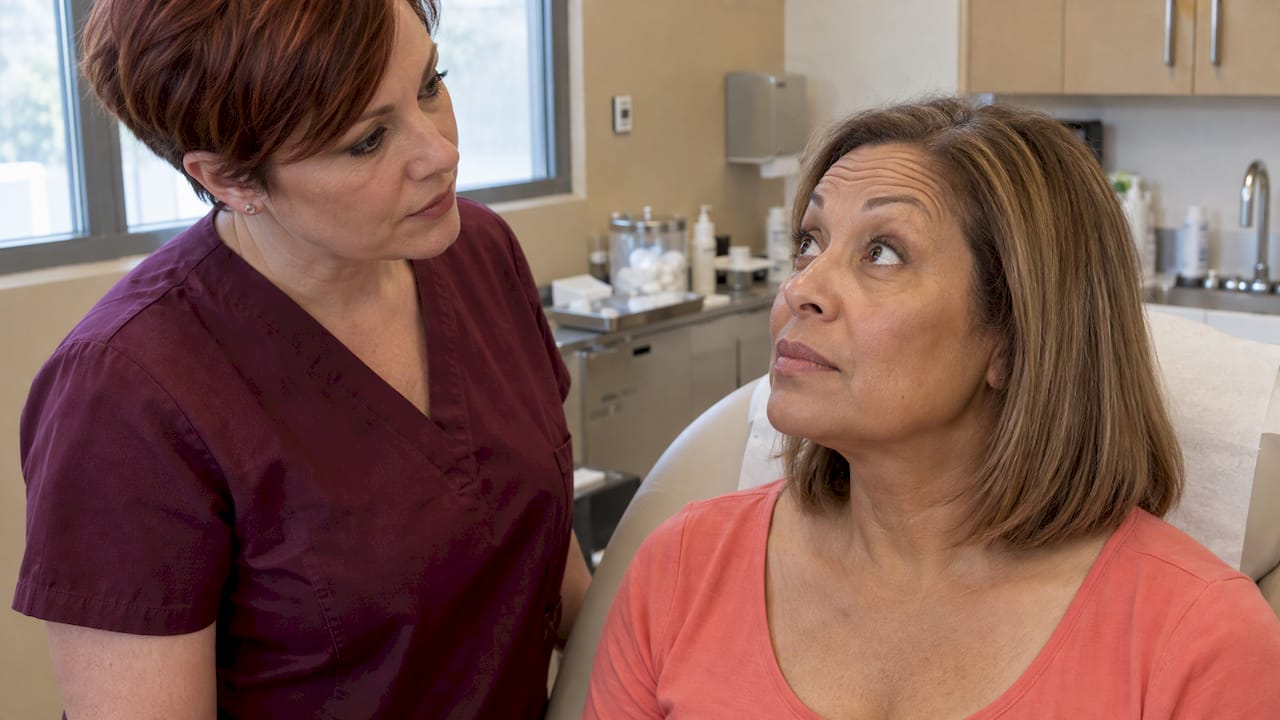
That is the standard I hold myself to in Ontario, too. A real assessment includes your medication list, your recent health and what you want to change. It is not a quick form at the front desk.
When you are choosing an injector, ask who will be doing the injecting and how they review medications. Our guide on questions to ask during a Botox consultation gives you a list to bring.
Our perspective
At Beauty Shot, I perform every injectable treatment myself, as a Registered Nurse with more than nine years of injecting experience and a Sunnybrook Hospital Medical/ICU nursing background. That background shaped how I think about medications. Before I think about the lines on your forehead, I want to know what is going on in your body.
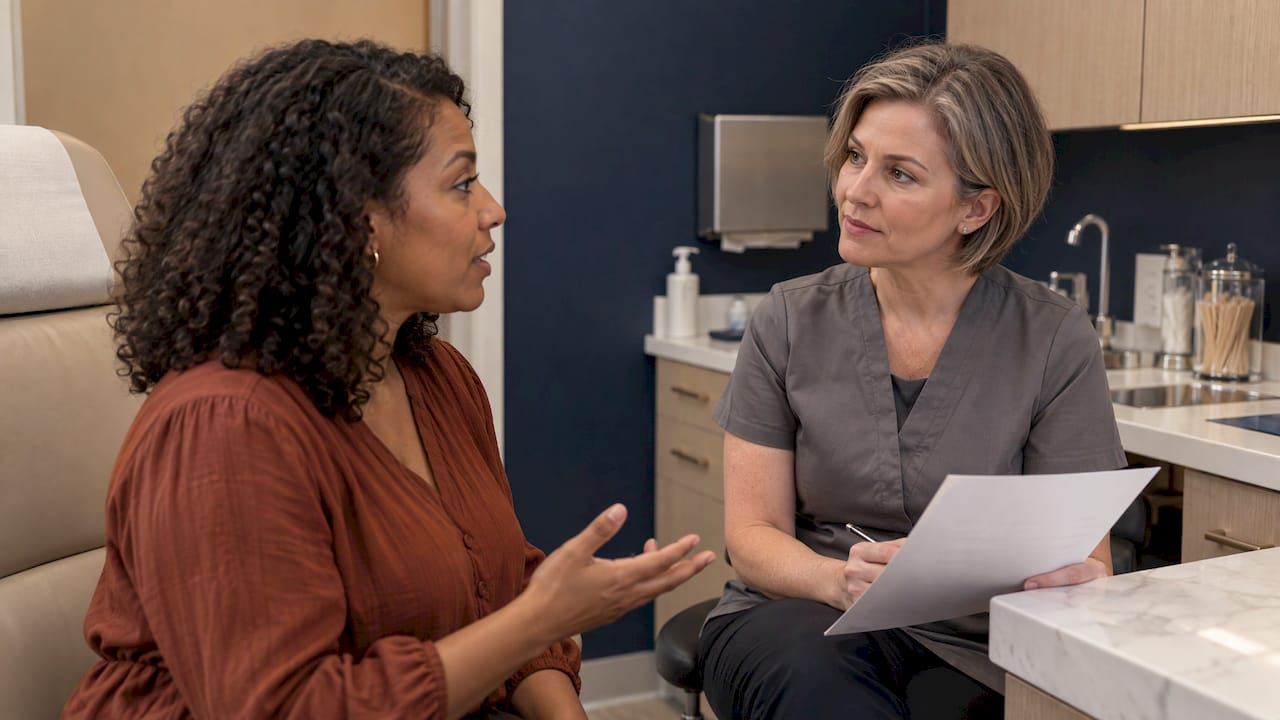
When a patient tells me they are on an antibiotic, I do not see a reason to turn them away, and I do not see a box to tick. I see a conversation. Which antibiotic? For what? Since when? Most of the time the answer is reassuring, and we go ahead. Sometimes the right answer is to wait a week or two, and I would always rather have that conversation than rush a treatment.
My approach is the same for Botox, Dysport and fillers: individualized plans, a gentle technique and results that look refreshed rather than overdone. Our goal is that you look like yourself, and that you feel safe and informed the whole way through. I do not promise outcomes, and I do not pressure anyone to book. If waiting is the safer choice, we wait.
Felix
Book a consultation in Woodbridge
If you are planning Botox or Dysport and you take an antibiotic, or may need one soon, bring the details to your consultation. We offer Botox and Dysport for expression lines, along with a lip flip and dermal fillers. Every plan starts with a medical review, and every injection is done by an advanced cosmetic Registered Nurse. Pricing is discussed at your consultation.
Preparing for your appointment
A little preparation makes the visit smoother.
Do:
- Write down the name of any antibiotic, the dose and the date you started
- Note the reason you were prescribed it
- Bring a list of other medications and supplements
- Tell us about any allergies
- Reschedule if you have a fever, a skin infection or feel unwell
Don’t:
- Stop a prescribed antibiotic to make your appointment
- Assume that all antibiotics are the same
- Guess at the drug class. Ask your pharmacist if you are unsure
- Leave out a recent illness because it seems minor
If you want to understand the steps of the visit itself, read how the Botox injection process works. For general reading on risk and evidence, see the safety of Botox.
FAQ
Can I get Botox while taking antibiotics?
Often yes, but it depends on the antibiotic and on why you are taking it. Common antibiotics such as amoxicillin have no known interaction, while aminoglycosides and a few other classes are flagged in the Canadian monographs. Tell your injector the drug name and the condition so we can decide together.
Can I take antibiotics after Botox?
Yes, if your doctor prescribes them, take them as directed. Let your prescriber know you recently had Botox, and call your injector so we can note it. Seek emergency care right away if you have trouble swallowing, speaking or breathing.
Do antibiotics make Botox wear off faster?
The sources I reviewed do not describe antibiotics shortening the effect of Botox. The documented concern runs the other way: a few classes may strengthen it. If your results feel different from usual, tell us at your follow-up.
Which antibiotics should I mention first?
Name any antibiotic you take, but pay special attention to gentamicin, tobramycin, neomycin, streptomycin, amikacin, kanamycin, polymyxins, tetracyclines, lincomycin and spectinomycin. These are the groups the Canadian monographs list as cautions. Your pharmacist can tell you which group your prescription belongs to.
Should I reschedule if I am being treated for an infection?
Usually, yes. Botox is elective, and Health Canada advises against injectable cosmetic treatments when skin is inflamed or infected. Waiting until you have recovered is the simplest and safest plan.
Sources
- Botox Cosmetic product monograph, AbbVie Canada
- Dysport Aesthetic product monograph, Health Canada Drug Product Database
- Cosmetic injections, Health Canada
- Cosmetic injectables practice expectations, College of Registered Nurses of Saskatchewan
- Botulinum toxin (Botox), HealthLink BC
- Botox hidden dangers, British Dental Journal
- Botox and interactions: other drugs, alcohol, and more, Medical News Today
- Urticaria-like hypersensitivity reaction case report, Dove Medical Press