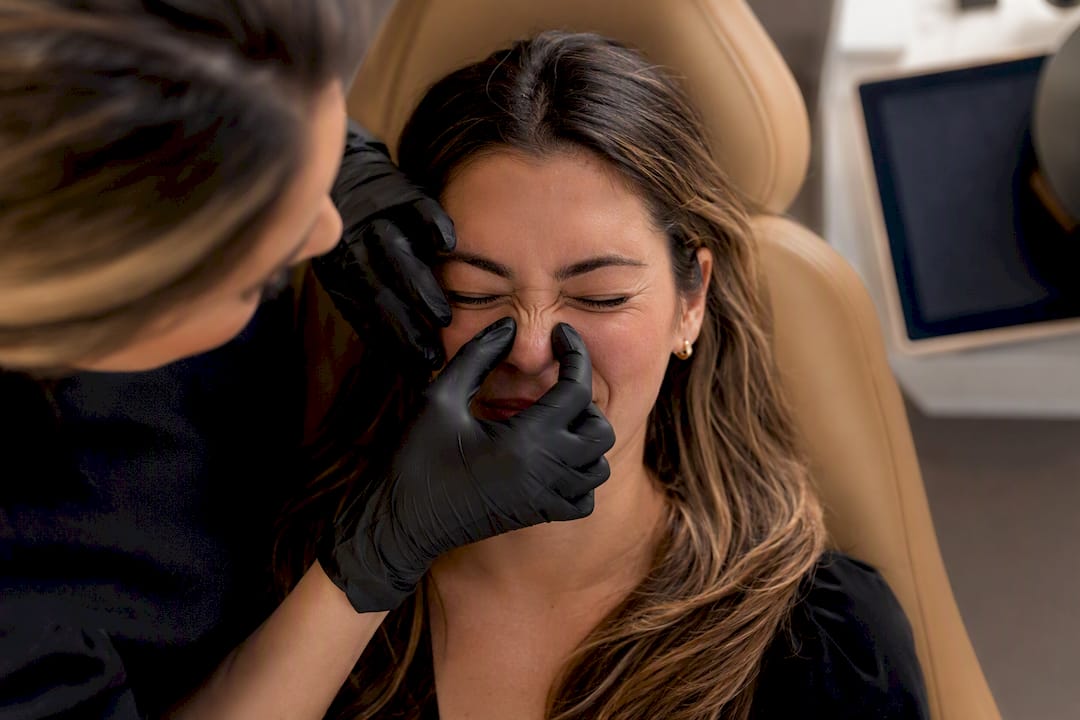
Botox works well for bunny lines when injected at the muscle borders instead of directly into the visible crease. Most patients see the diagonal lines soften within days, with full effect by around two weeks and results typically lasting several months. The main thing to watch for is placement too low or too deep, which can cause upper lip heaviness. An experienced injector who maps your movement first avoids that risk almost entirely.
TL;DR:
- Botox treatment for bunny lines typically uses 1 to 4 units per injection point, with a total dose of around 4 to 10 units for effective results.
- Precise placement along the muscle borders and superficial injection at specific landmarks reduces the risk of lip heaviness and other side effects.
- Full softening of bunny lines begins within days, with the maximum effect visible by two weeks and lasting about three to four months.
- Static lines often persist longer and may require supplementary skin treatments, especially if etched into the skin over years.
- An experienced injector who maps muscle activity and employs conservative, anatomy-focused dosing achieves the most natural and predictable results.
What causes bunny lines: the anatomy behind those nose creases
Bunny lines are the diagonal creases that appear across the bridge of your nose when you scrunch it, laugh hard, or squint into the sun. The main culprit is the transverse nasalis, a muscle that runs across the nasal bridge and contracts every time you wrinkle your nose. Three other muscles play supporting roles: the levator labii superioris alaeque nasi (LLSAN), the procerus between your brows, and the medial fibres of the orbicularis oculi around your eyes.
Here’s what surprises most patients during a consultation: the crease you see in the mirror often sits over a muscle-free zone. Cadaver and imaging studies describe this as the muscle-free “bunny triangle”, a small patch of connective tissue bordered by the nasalis, procerus, and orbicularis oculi. Inject directly into that crease, and you may miss the muscle doing the actual work.
A few things determine how your lines behave and how they respond to treatment:
- Dynamic lines appear only when you scrunch your nose and usually respond very well to Botox.
- Static lines remain visible even at rest, often because repeated muscle contraction over years has etched the crease into the skin.
- Static lines sometimes need a longer-term plan that pairs muscle relaxation with skin-focused treatments.
How does Botox smooth bunny lines?
Botulinum toxin works by blocking the release of a neurotransmitter at the motor endplate, the junction where a nerve signal tells a muscle to contract. Without that signal, the treated muscle fibres relax, and the skin above them stops folding into a crease. This is the same mechanism behind Botox everywhere else on the face. What changes for bunny lines is precision, because the muscles involved are thin, close together, and sit near far more consequential structures like the upper lip elevators.
Anatomical studies recommend a border-targeted approach rather than injecting the crease itself. Practically, that means:
- Ask the patient to scrunch the nose so the injector can watch the muscle fire in real time.
- Mark the active borders of the nasalis where it crosses key facial landmarks, not just where the skin folds.
- Inject at the muscle margins, keeping the depth superficial to limit spread into neighbouring tissue.
One data point worth knowing: anatomical guidelines recommend around 2 units per point at the crossing of the horizontal line at the opinion and the vertical line at the medial Xanthus, a specific landmark intersection rather than a general “somewhere on the bridge” approach. This kind of anatomy-first planning is what separates a predictable outcome from a guess.
What are typical bunny lines Botox units and injection technique?
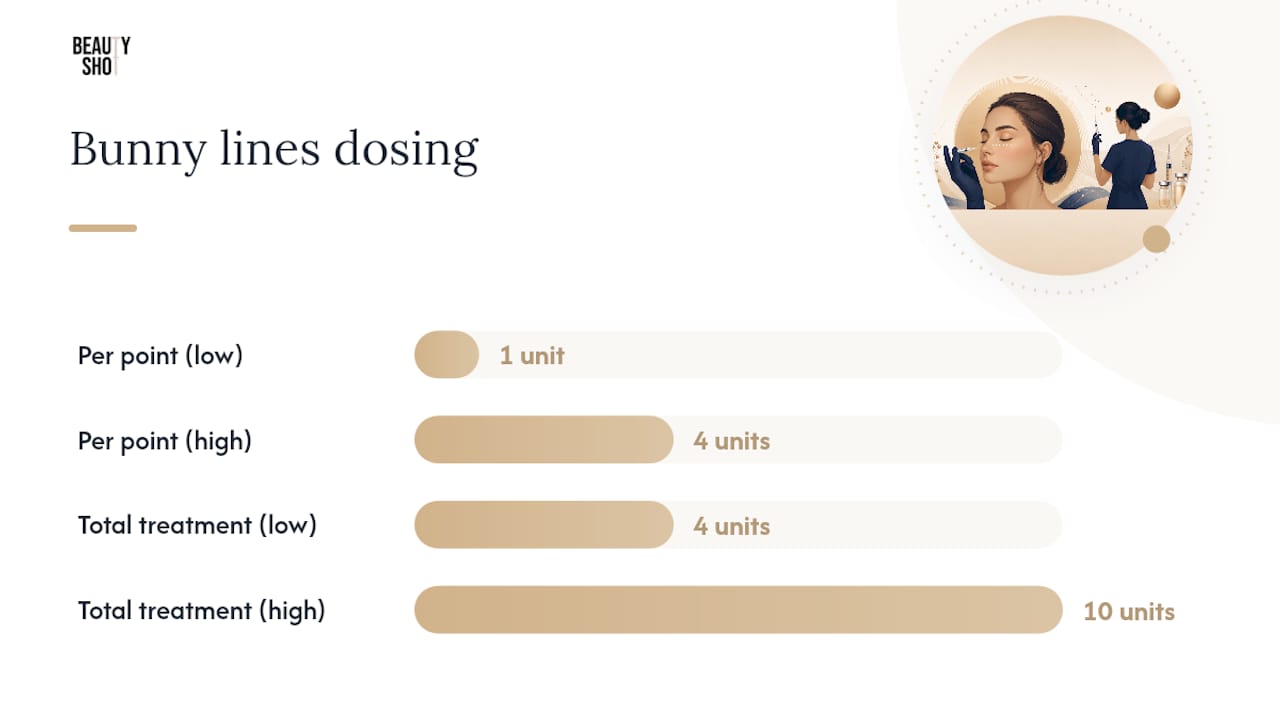
Dosing for bunny lines is intentionally small, and it should be. Reported ranges across clinical reviews commonly fall around 1 to 4 units per point, with total treatment doses often landing somewhere in the 4 to 10 unit range for onabotulinumtoxinA equivalents. Because different botulinum toxin products aren’t dosed on a one-to-one basis, your injector will adjust the plan to the specific product used and to how strong your nasalis muscle is when you scrunch.
A few technique principles matter more than the exact number:
- Injections are placed superficially and high, along the lateral border of the nasalis, away from the lip elevators below.
- Depth matters as much as location. Going too deep near the base of the nose raises the risk of affecting muscles that lift the upper lip.
- Conservative dosing is the rule, not the exception, for this area.
Pro Tip: Ask your injector about scheduling a two-week review. Bunny lines respond beautifully to a “start low, then fine-tune” approach, and a quick touch-up after the toxin has fully settled is far safer than adding more units on day one.
What happens during treatment and afterward?
A bunny lines appointment is quick, usually 15 to 30 minutes including consultation and mapping. Here’s what the visit typically looks like:
- Your injector reviews your goals and examines your nose at rest and while animated to identify active muscle borders.
- Micro-doses are injected at the mapped points, often four to six injection sites total.
- You may notice small redness marks or pinpoint bruising immediately after, both of which usually fade within a day or two.
Full effect builds gradually. Expect initial softening within a few days, with the complete result visible within about two weeks. Aftercare is simple: avoid rubbing or massaging the treated area, skip strenuous exercise for 24 hours, and call your clinic if you notice unusual swelling, drooping, or asymmetry beyond mild bruising. Our Botox aftercare guide covers the full list of do’s and don’ts if you want to review it before your appointment.
What are the risks of Botox for bunny lines?
The most characteristic risk in this area is upper lip ptosis, a temporary heaviness or drooping of the upper lip. It happens when toxin diffuses downward into the LLSAN or other lip elevator muscles, almost always from an injection placed too low or too deep. It’s functional, not permanent, and resolves on its own as the toxin wears off, but it’s uncomfortable and avoidable with the right technique.
Rarer complications include diplopia (double vision) and visible asymmetry, both linked to toxin spreading beyond the intended muscle. Clinical case reviews document these outcomes specifically in the nasal region, which is part of why anatomy knowledge matters more here than in larger, more forgiving areas like the forehead.
The mitigation strategy is consistent across the literature:
- Superficial placement, kept well away from the upper lip elevators.
- Small, conservative volumes rather than a single large dose.
- An experienced injector who maps muscle activity before injecting, not after.
Peer-reviewed dosing reviews consistently flag deep or low placement as the common thread behind these complications, which is precisely why border targeting exists as a technique in the first place. If you want a broader picture of what’s normal versus what warrants a call to your clinic, our overview of common Botox side effects walks through the full spectrum.
How long do bunny lines Botox results last?
Onset follows a predictable pattern: softening begins within days, and full effect typically settles in by around two weeks, with clinical duration commonly running three to four months. A few things shape how long your results hold and how well they perform:
- Dynamic lines respond more completely than static ones, since there’s active muscle contraction to interrupt.
- Static lines etched into the skin at rest may need an adjunctive treatment alongside Botox to see full improvement.
- Repeat sessions are usually scheduled around the three to four month mark, once movement starts returning.
Over repeated treatments, some patients notice the muscle softens enough that touch-ups can be spaced further apart. Your injector should always adjust the dose to your response rather than defaulting to a higher number each visit.
Who is a good candidate for bunny lines Botox?
Good candidates have visible dynamic bunny lines when they scrunch their nose, generally good skin health, and realistic expectations about a temporary, maintenance-based treatment. It’s not the right fit for anyone who is pregnant or breastfeeding, has a neuromuscular condition, or has had an unusual reaction to botulinum toxin before.
If your lines are static, deeply etched, or paired with volume loss around the nose and cheeks, Botox alone may only get you partway there. Combining it with dermal filler or skin resurfacing can address the texture and volume components Botox isn’t designed to fix. Anyone with significant nasal asymmetry or a history of eyelid surgery should flag that during consultation, since it changes the injection plan.
How does an experienced injector plan safe, natural bunny lines treatment?
At Beautyshotmedicalclinic, every bunny lines treatment starts with mapping: you’ll be asked to scrunch your nose so we can trace the active muscle borders before a single unit is placed. Micro-dosing at those borders, paired with a two-week review, is standard practice, never a large dose upfront followed by guesswork.
All injectable treatments at Beautyshotmedicalclinic are performed by an advanced cosmetic registered nurse, and the goal is always the same: subtle, balanced movement that looks like you, not a frozen nose or a heavy lip. Natural results come from anatomy-first planning, not from maximizing units.
What patients should really prioritize with bunny lines treatment
The biggest misconception I see is that more units mean better results. For an area as small and anatomically layered as the nose, that logic backfires. Overtreating the nasalis doesn’t just reduce lines, it removes the natural crinkle when someone laughs, and clients often say later that it made their face look “off” without being able to say why.
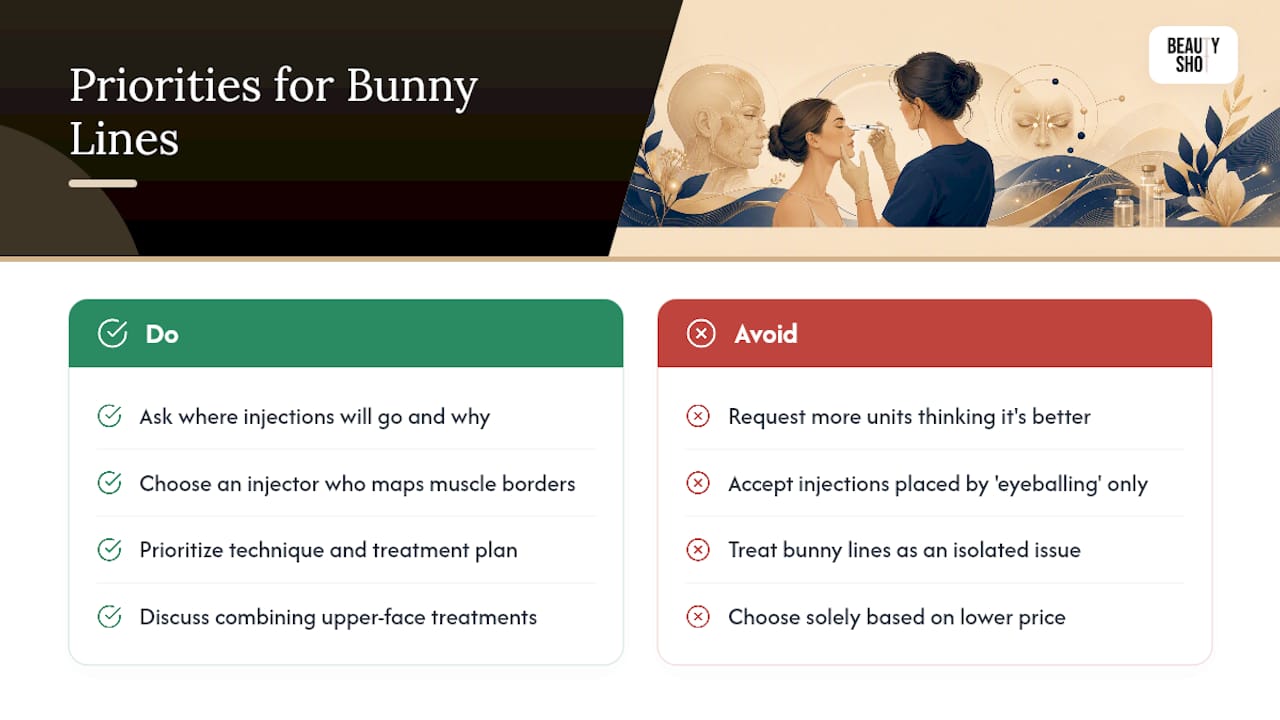
The other underestimated factor is how much technique matters more than product here. Two injectors using the identical toxin can produce very different results depending on whether they mapped your muscle borders or simply eyeballed the crease. If you remember one thing from a consultation, let it be this: ask where the injections are going and why, not just how many units. For a treatment area this precise, the plan matters more than the price.
Your consultation is also the right time to ask how a treatment plan for bunny lines might work alongside other areas you’re considering, like an eyebrow lift with Botox or general facial balancing, since the upper face often benefits from being planned together rather than treated as isolated problem spots.
— Felix
Ready to book bunny lines treatment with a nurse injector?
Beautyshotmedicalclinic offers medically guided injectable treatments performed entirely by an advanced cosmetic registered nurse, which means the anatomy mapping and conservative dosing described throughout this article aren’t an add-on service, they’re the standard approach for every bunny lines appointment. The first visit usually includes a consultation to assess nasal movement, discuss goals, and build a dosing plan specific to muscle strength, followed by a review to fine-tune results if needed.
If you’re ready to see what a personalized plan looks like for your bunny lines, or you want to understand how injectables fit your broader facial goals, our injectable cosmetics guide walks through what to expect before you book. From there, scheduling a consultation is the simplest next step toward softer, natural-looking results.
Sources
Technical claims in this article draw on anatomical injection guidelines from Toxins (2022), dosing and safety data from a nasal region BoNT review, border-targeting technique from the Journal of Cosmetic Dermatology, and complication reporting from a clinical case review.
This article is general information, not a substitute for advice from a qualified doctor. Consult a qualified healthcare professional about your own circumstances before acting on anything here.
- Anatomical guidelines and injection points for nasal region wrinkles (Toxins, 2022)
FAQ
What does Botox do for bunny lines?
Botox relaxes the nasalis muscle and its neighbouring contributors so the diagonal creases across your nose bridge soften or disappear when you scrunch your face, with full effect visible by about two weeks.
Is it normal to still see bunny lines after Botox?
Some residual movement is normal, especially if your injector chose a conservative starting dose, which is intentional since a touch-up at the two-week mark is safer than overtreating on the first visit. Static lines etched into resting skin may also remain more visible than dynamic ones.
Is Botox for bunny lines worth it?
For dynamic bunny lines, most patients find it worthwhile, since results are visible within days and typically last three to four months with a quick, low-dose treatment. Static lines paired with volume loss may need filler or resurfacing alongside Botox for a fuller result.
Do bunny lines go away on their own?
Dynamic bunny lines that only appear with movement don’t go away permanently without treatment, since they’re caused by ongoing muscle contraction. Botox interrupts that contraction temporarily, while static lines at rest often require additional treatments to fully soften.