Bruising after lip filler is common and usually temporary. Apply a cold compress right away, avoid blood thinners and alcohol for the first day or two, and contact your injector if you notice severe pain, pale or cool skin, or discolouration that keeps spreading. We’ll walk you through why it happens, what to expect day by day, and exactly when a bruise needs more than patience.
TL;DR:
- Bruising usually peaks on days two or three, then fades; contact your injector if it worsens after day three or remains prominent beyond two weeks.
- For 24 to 48 hours, use wrapped cold packs for 10 to 15 minutes, elevate your head during sleep, and avoid alcohol and strenuous exercise.
- Do not stop prescribed blood thinners without your prescriber’s advice; ask before using arnica, vitamin K cream, or bromelain, which may affect bleeding or healing.
- If lip color takes more than two seconds to return after gentle pressure, or you develop fever, pus, warmth, or spreading redness, contact your injector promptly.
Why bruising happens after lip filler
Your lips carry a dense network of small blood vessels packed into a small amount of tissue, which is part of what gives them their natural colour and fullness. It’s also why they bruise more easily than, say, your cheek. Any needle passing through that tissue has a chance of nicking a tiny vessel, and when that happens, blood leaks into the surrounding tissue and shows up as a bruise.
Some of this is simply anatomy we can’t change. Other factors are procedural, and this is where technique matters. A slower injection speed, careful needle or cannula placement, and precise depth all reduce the odds of disrupting a vessel. We tend to favour techniques that respect the natural path of the lip’s vasculature rather than forcing product through tissue quickly.
Your own health picture plays a role too. A few things that raise your personal risk:
- Blood thinning medications or supplements, including daily aspirin, fish oil, or vitamin E
- Thinner or more fragile skin, which can come with age or certain skin conditions
- A history of easy bruising or previous cosmetic procedures in the same area
- Recent alcohol use, which can widen blood vessels and increase bleeding
None of this means you did anything wrong if you bruise. It simply means some people are more prone to it than others, and that’s worth mentioning at your consultation so we can plan around it together.
How long lip filler bruising lasts, day by day
A lip filler bruise tends to follow a fairly predictable pattern, even though everyone heals at a slightly different pace.
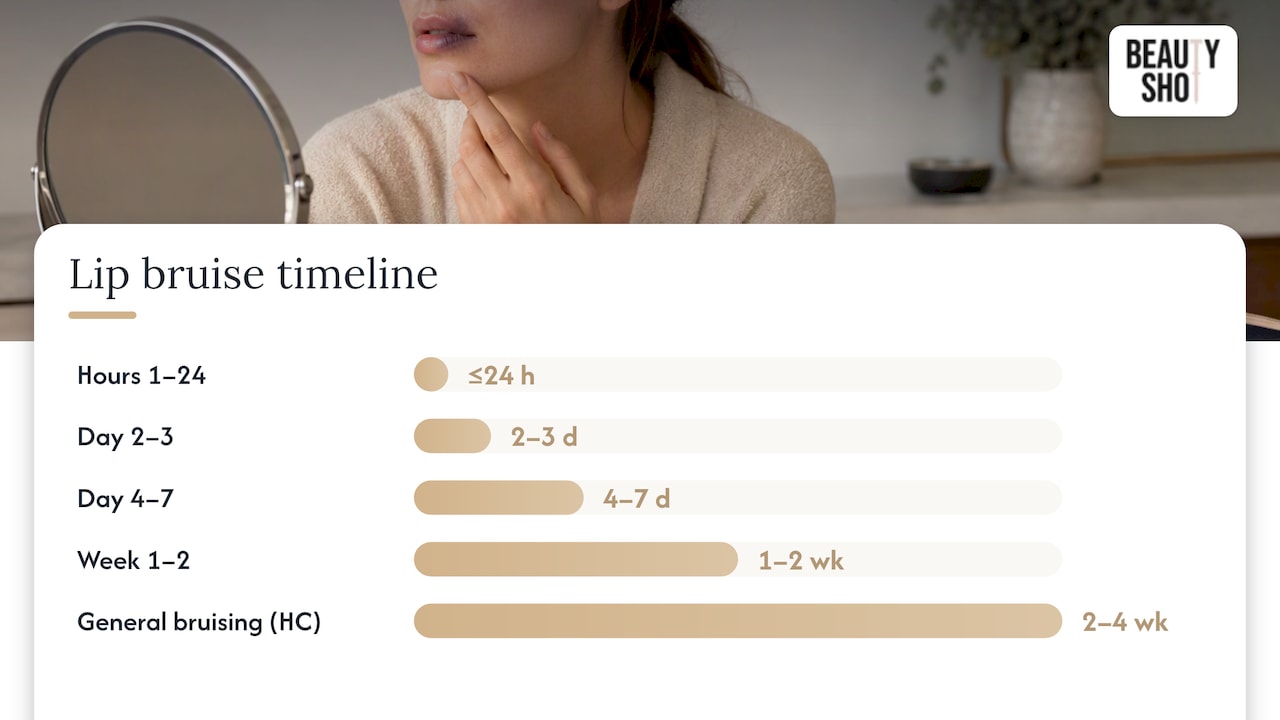
- Hours 1 to 24: The bruise appears, often looking reddish or purple, and swelling usually overlaps it, which can make the area look more dramatic than it will in a day or two.
- Day 2 to 3: This is typically when bruising and swelling peak, with colour deepening toward purple or blue before it starts to shift.
- Day 4 to 7: The bruise usually begins fading through green and yellow tones as your body reabsorbs the blood, and swelling continues to settle.
- Week 1 to 2: Most lip bruises are gone or nearly invisible by this point.
Health Canada’s guidance on cosmetic injections notes that bruising is a recognized and generally temporary side effect of filler procedures, with general bruising often taking 2 to 4 weeks to clear. Because the lip area is so vascular, bruises there tend to move through their colour stages and resolve a bit faster than bruises on less blood-rich tissue.
If a bruise isn’t following this arc, meaning it’s getting darker or more painful after day 3 rather than fading, or it’s still prominent well past two weeks, that’s worth a call to your injector rather than waiting it out.
First 24 to 48 hours: practical home care that actually helps
What you do in the first two days has more influence on how quickly a bruise resolves than anything you try later.
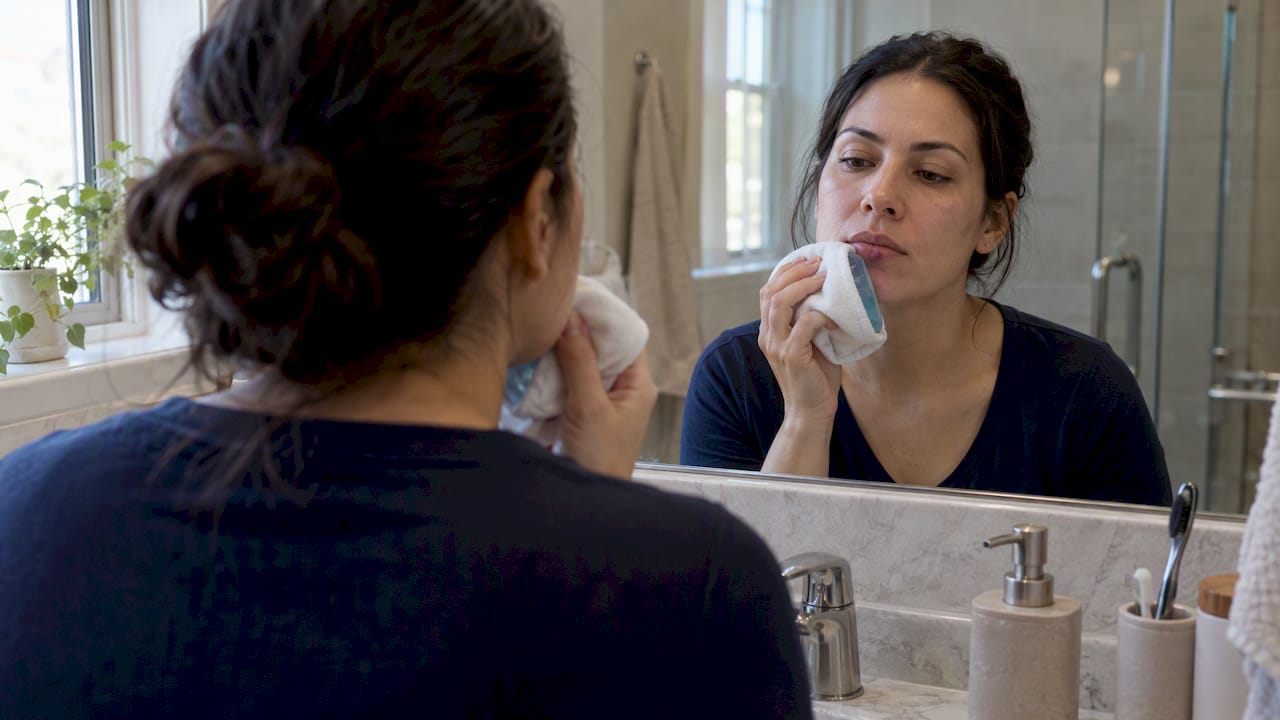
Cold compresses are your best early tool. Wrap ice or a gel pack in a clean cloth, never apply it directly to skin, and hold it gently against the area for 10 to 15 minutes at a time, a few times in the first day. Pressing too hard can bruise the tissue further, so keep the touch light.
Sleeping with your head slightly elevated for the first night or two helps limit fluid and blood pooling in the lip tissue, which can reduce both swelling and the visible spread of a bruise.
A few things to avoid in the first 24 to 48 hours:
- NSAIDs like ibuprofen or naproxen, which thin the blood and can worsen bruising
- Aspirin, unless it’s prescribed and you’ve been told not to stop it
- Alcohol, which widens blood vessels and increases bleeding into tissue
- Vigorous exercise or anything that raises your heart rate and blood pressure significantly
- Dental work or facial massages booked too close to your appointment
If you’re on a prescribed blood thinner, never stop it on your own. Mention your upcoming treatment to the prescriber ahead of time so you can plan together, and our alcohol timing guidance walks through the 24 to 72 hour window in more detail.
Gentle lymphatic massage is sometimes used to help move along swelling, but it should only be done if your injector has specifically shown you how and confirmed it’s appropriate for your healing stage. Done too early or too firmly, it can actually worsen bruising rather than help it.
Pro Tip: Keep your head elevated for sleep the first two nights, even if it feels unnecessary. Gravity does a surprising amount of the work in limiting bruising.
For a fuller walk-through of what to expect hour by hour, our clinic-backed day by day gum contouring recovery timeline covers the full first week.
Remedies that may help, and what the evidence actually shows
Plenty of products claim to speed up bruise healing, but the evidence behind most of them is modest rather than dramatic.
- Arnica, taken orally or applied as a gel, is widely used after filler treatments, and an expert consensus panel on filler complications lists it among practical measures that may help reduce ecchymosis, alongside cold compresses and careful injection technique, according to consensus recommendations published in a leading aesthetic surgery journal.
- Vitamin K cream is sometimes recommended for a short course after treatment, and the same consensus guidance supports limited use for managing bruising, though results vary from person to person.
- Aloe vera can soothe irritated skin but has little specific evidence for bruise resolution, so treat it as comfort care rather than a fix.
- Bromelain, an enzyme supplement from pineapple, is sometimes taken orally for bruising, but because it can have a mild blood-thinning effect, it’s worth checking with your provider before starting it, especially close to your appointment.
Most bruises resolve with simple measures alone. HealthLinkBC’s guidance on filler injections points to cold compresses, and when advised by your injector, topical agents like arnica or vitamin K, as the standard conservative approach, with your provider’s input before adding anything new.
For bruising that lingers well beyond the usual window, a clinician may suggest a vascular laser treatment, such as pulsed dye or KTP laser, which can speed the breakdown of trapped blood pigment in stubborn cases. This isn’t a first step, but it’s an option worth knowing about if a bruise is unusually slow to clear.
One safety note: Health Canada has warned that needle-free dermal filler devices are not authorized for use in Canada and may carry additional risk, including unpredictable bruising and tissue injury. Always confirm that the product and device used on you are properly authorized.
Red flags: when a bruise might signal something more serious
Most bruising is simply bruising, but a small number of cases involve a vascular occlusion, where filler compresses or blocks a blood vessel. This is rare, but it’s urgent, and recognizing it early matters.
- Escalating, out-of-proportion pain that gets worse rather than better over the first hours or days is one of the earliest warning signs.
- Pale, dusky, or cool-feeling skin in or around the lip, especially if it’s spreading rather than staying put, can indicate the tissue isn’t getting enough blood flow.
- Delayed capillary refill is another sign worth knowing: press gently on the lip and release, and if the colour takes longer than about two seconds to return, or the pattern looks mottled and net-like (known as livedo reticularis), that’s a signal to call your injector right away.
- Signs of infection after the first day, including increasing warmth, spreading redness, pus, or fever, can also point to a complication rather than ordinary healing, and HealthLinkBC notes that worsening pain or spreading redness one to three days after treatment warrants prompt medical assessment.
If you notice any of these signs, stop any massage you’ve been doing and contact your injector immediately rather than waiting to see if it improves. A clinical guideline on managing hyaluronic acid filler-induced vascular occlusion emphasizes that early recognition and prompt treatment with hyaluronidase, the enzyme that dissolves hyaluronic acid filler, meaningfully improves outcomes. Time matters here more than almost anywhere else in aftercare, so when in doubt, call rather than wait.
Lowering your bruising risk before your next appointment
A little preparation before your appointment goes a long way toward a smoother healing process.
- Review your medications and supplements with your prescriber well ahead of time, and never stop a prescribed blood thinner without medical guidance.
- Ask your injector about their technique, including whether they use a needle or cannula for your treatment area, and confirm the product’s labelling and Health Canada authorization.
- Ask what their emergency protocol looks like if a vascular issue is suspected, including whether hyaluronidase is kept on hand.
- Avoid alcohol and intense exercise for at least 24 hours before and after your appointment.
- Schedule your treatment with a buffer of one to two weeks before any big event, giving bruising and swelling time to fully settle.
Our step-by-step aftercare guide covers this preparation in more detail if you’re planning ahead.
Covering a healing bruise without hiding warning signs
A green or yellow-based colour corrector, applied before your regular concealer, neutralizes most bruise tones more effectively than concealer alone. Choose gentle, non-comedogenic products, and apply with a light patting motion rather than rubbing, since rubbing can irritate still-healing tissue.
Hold off on aggressive exfoliants, retinoids, or any skin-penetrating treatments, including facials or peels, until the area has fully healed. These can worsen irritation or interfere with recovery.
One important caution: don’t use makeup to mask a bruise that’s also showing red-flag signs like spreading pallor or unusual firmness. Covering it up can delay you or anyone else noticing a problem that needs prompt attention, so if something looks off, assess it honestly before you reach for concealer.
What we do when bruising or complications appear
All injectable treatments are performed by an advanced cosmetic registered nurse, and the approach to aftercare reflects that training. When a patient calls about bruising, we ask for clear, well-lit photos taken in natural light, along with a description of pain level, how it’s changed since treatment, and any colour or temperature changes.
If what we see falls within the normal range, we talk through simple home care and check in again. If there’s any suspicion of vascular compromise, we treat it as urgent, and hyaluronidase is part of our emergency protocol when indicated. We verify every product’s labelling and Health Canada authorization before it’s ever used, and we keep emergency equipment on hand as a standard part of how we practise, not an afterthought.
If you’re unsure whether what you’re seeing after a treatment with us is normal, reach out. We’d rather look at a photo and reassure you than have you wait through worry at home.
A nurse’s honest take on lip filler bruising
Most of what alarms people about lip filler bruising is the look of it, not the risk. A deep purple lip at 48 hours can feel like a crisis when it’s actually right on schedule. The real work of aftercare isn’t fighting every bruise into disappearing overnight. It’s knowing the small number of signs that separate ordinary healing from something that needs a phone call tonight rather than tomorrow.
If you take one thing from this: trust the timeline for colour and swelling, but never talk yourself out of calling when pain, pallor, or spreading discolouration don’t fit that pattern. Early calls cost nothing. Delayed ones occasionally cost a lot.
— Felix
How we support you through bruising and healing
If a bruise isn’t settling the way you’d expect, or you’d simply like a professional set of eyes on it, we’re glad to take a look. An assessment visit with us includes a review of your healing, conservative care guidance, and hyaluronidase when it’s clinically indicated. When you reach out, include your treatment date, clear photos, and a description of pain or colour change so we can respond quickly.
Explore our dermal filler and lip treatment services or book a consultation through our services page to get started.
This article is general information, not a substitute for advice from a qualified doctor. Consult a qualified healthcare professional about your own circumstances before acting on anything here.
FAQ
How long does lip filler bruise for?
Most lip filler bruises peak around 24 to 72 hours and fade substantially within one to two weeks, though the exact pace varies by person. Health Canada notes general filler bruising can take 2 to 4 weeks to fully resolve, but the lip’s rich blood supply often means bruises there clear a bit faster.
What are the first signs of lip fillers gone wrong?
Early warning signs include pain that keeps escalating rather than easing, skin that looks unusually pale, dusky, or feels cool, and a mottled, net-like discolouration pattern. Clinical guidance on vascular occlusion stresses that these signs call for immediate contact with your injector rather than a wait-and-see approach.
How can I get rid of lip filler bruises quickly?
Cold compresses in the first 24 to 48 hours, head elevation while sleeping, and avoiding blood thinners and alcohol give you the biggest head start. Some practices also support short-term use of arnica or vitamin K cream, though consensus guidance notes the added benefit varies and your provider should weigh in before you start anything new.
What’s the worst day after lip fillers?
Day 2 or 3 is typically when bruising and swelling look their most dramatic, as both peak around this point before starting to fade. This is a normal part of the healing arc rather than a sign something has gone wrong, provided pain is stable or improving rather than worsening.
Is it normal for a lip filler bruise to spread?
A bruise can shift slightly as blood moves through tissue during healing, but it shouldn’t expand rapidly or come with increasing pain. If it does, HealthLinkBC advises prompt medical assessment rather than waiting for it to settle on its own.
Sources
- Health Canada — Cosmetic injections
- HealthLinkBC — Filler injections
- Guideline for the management of hyaluronic acid filler‑induced vascular occlusion (PMC)
- Treatment of soft tissue filler complications: expert consensus recommendations (Springer)