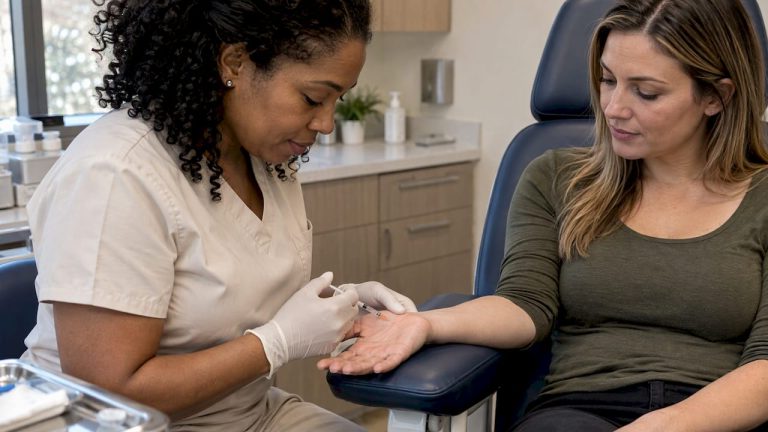
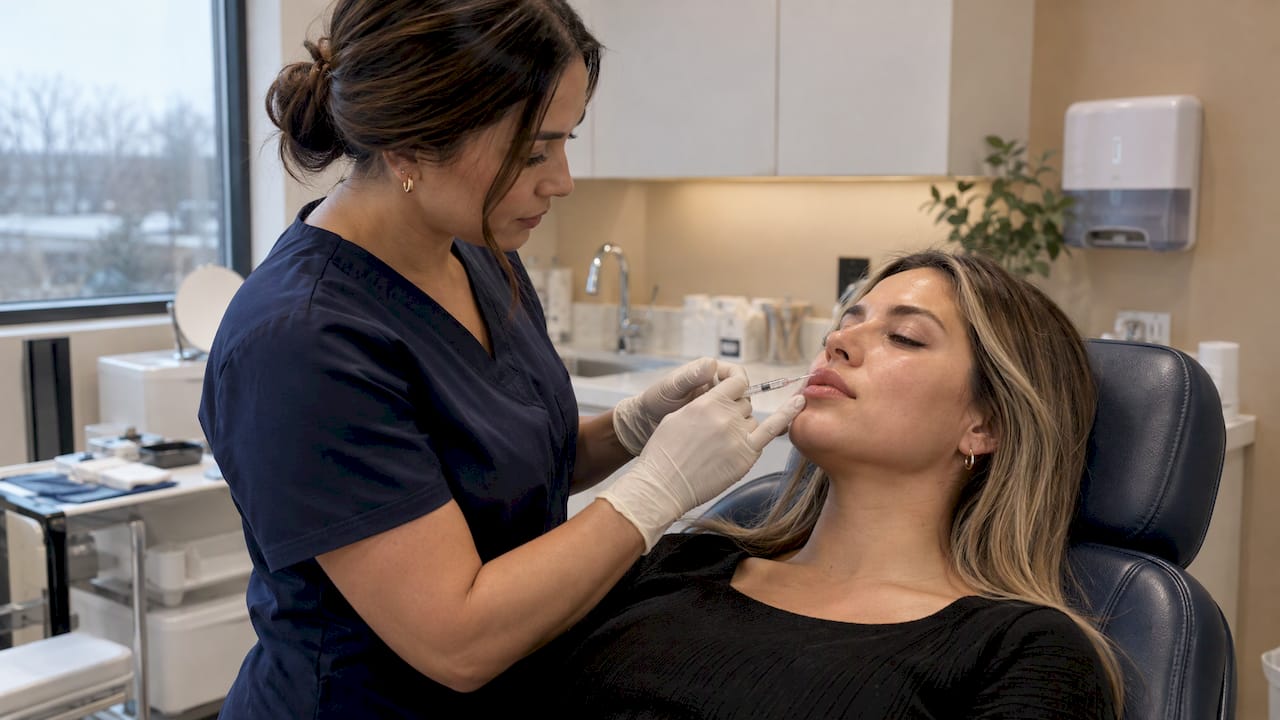
Yes, lip filler can sting, but for most people the discomfort is brief, mild to moderate, and manageable with the right numbing and a gentle technique. The lips are a sensitive area, so you will feel something. What you feel is usually quick pinches, pressure and a little stinging, not lasting pain. A well-planned appointment with a Registered Nurse injector is designed to keep it that way.
If you are booking your first lip filler appointment in Woodbridge, Vaughan, Maple, Kleinburg or Concord, this guide covers what to expect minute by minute, how numbing works, what soreness afterwards is normal, and which symptoms mean you should call for help.
TL;DR
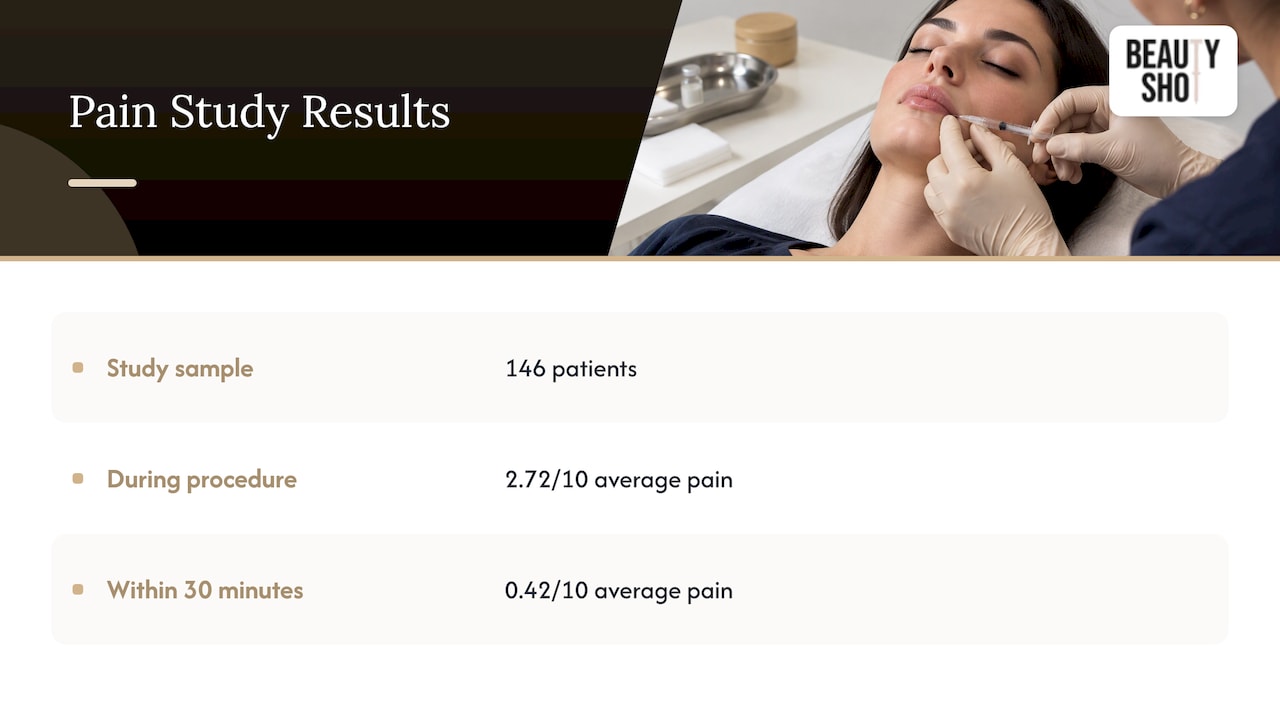
- Expect quick pinches, pressure and stinging during treatment. One study of lip augmentation with a lidocaine-containing filler rated procedure pain as mild, about 2.7 out of 10.
- Numbing (a topical cream, ice, a lidocaine-containing filler or a local anesthetic injection) is a standard part of reducing lip discomfort.
- Tenderness, swelling and some bruising after treatment are common and usually settle within days, up to about two weeks.
- Pain that is severe, getting worse, or comes with skin colour changes or vision problems is not normal and needs urgent attention.
- Preparing well (no alcohol, checking blood-thinning medicines with your provider, eating beforehand) makes the appointment more comfortable.
So, does lip filler hurt?
The honest answer is that it varies from person to person. Pain sensitivity differs, and so do expectations. A 2020 consensus paper on facial aesthetic injections notes that individuals vary in pain sensitivity and that anxiety or expecting pain can change the whole experience of treatment.
In a German study of 146 patients who had lip augmentation with a lidocaine-containing hyaluronic acid filler, pain during the procedure averaged 2.72 on a 0 to 10 scale, and it fell to 0.42 within 30 minutes. That is one study of specific products, not a promise for every patient, but it matches what most people describe: a short-lived, mild-to-moderate sensation.
What the lips have going for them is a rich supply of nerve endings. That is why they feel every pinch more than your cheek would. It is also why numbing is taken seriously for this area.
What lip filler actually feels like, step by step
Knowing the sequence takes much of the worry out of it. Our guide to what happens during a lip filler procedure walks through the whole visit. Here is the sensation side of it.
Before the injections
If a numbing cream is used, it may feel cool or slightly tingly. Ice may also be used. The American Academy of Dermatology notes that before filler you may have ice, an anesthetic applied to the skin, or a nerve block, and that lips often call for a nerve block, while hands generally do not need anesthesia.
During the injections
You may notice:
- A quick pinch as the needle or cannula enters.
- Pressure or a stretching feeling as the gel is placed.
- Stinging or burning for a few seconds. The AAD says you may feel a stinging or burning sensation as filler is injected.
- More sensitivity near the lip border and the centre of the upper lip, where shaping often takes several small placements.
A session itself is short. HealthLink BC says filler treatment takes about 15 minutes, although a full consultation and planning make the appointment longer.
Right after
The lips often feel full, tight and a little tender. Numbness fades over the next hour or two, and that is when tenderness becomes more noticeable. Swelling is expected. HealthLink BC says you can expect some pain, redness, swelling and possibly itching, with swelling lasting up to 36 hours.
How lip numbing works
Numbing is the biggest lever on how comfortable you are. There are several layers, and an injector may combine them.
Topical numbing cream
A topical anesthetic is applied to the lips and left to take effect. A study of 5% lidocaine cream applied to the skin, vermilion and mucosa of the lips for 20 to 30 minutes found it produced reliable anesthesia for lip filler injections without complications. The consensus paper by Goodman and colleagues also recommends topical anaesthesia particularly when treating the lips.
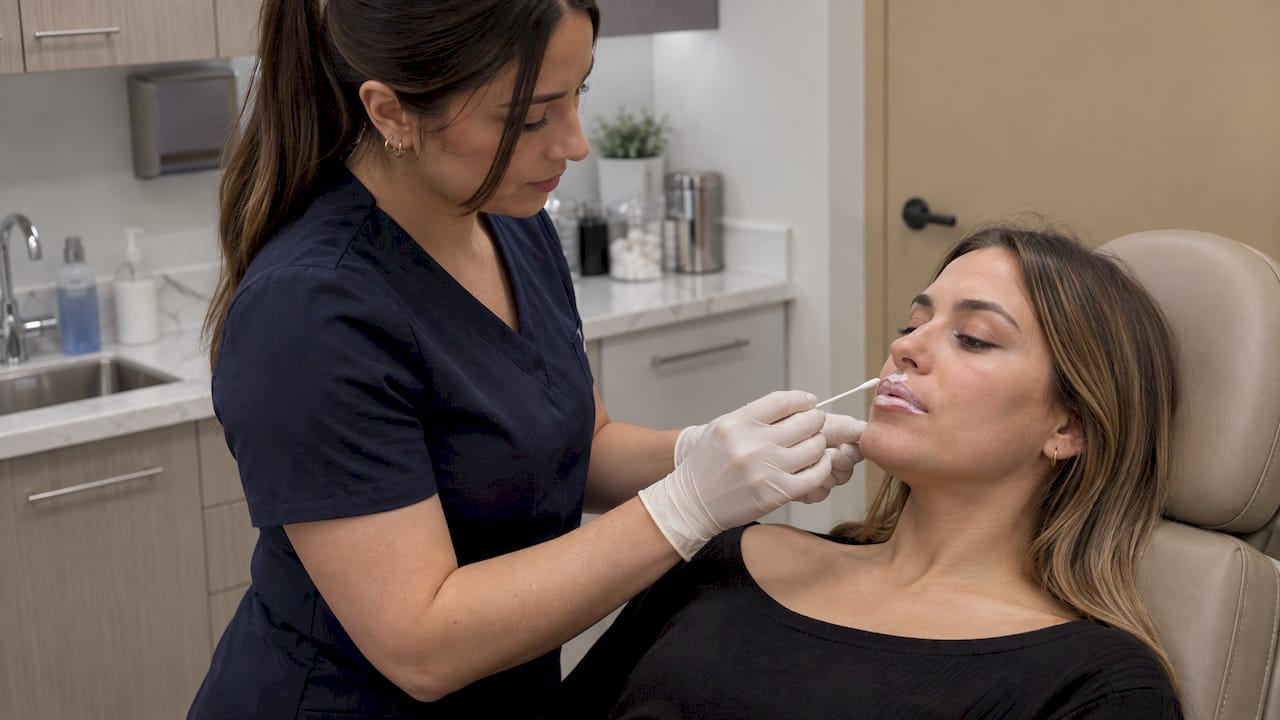
Timing matters: cream needs to sit long enough to work, so arrive on time and expect to wait. We explain the details in numbing cream for lip filler: what to know before you book.
Lidocaine in the filler itself
Many hyaluronic acid fillers are made with a small amount of lidocaine blended in, so the area keeps numbing as the gel is placed. This is the type of product assessed in the German lip study mentioned above, where procedure pain was low and brief.
Local anesthetic injections (nerve blocks)
For some patients, a small injection of local anesthetic numbs the lip more deeply. In a split-face comparison of 48 patients, a Diepenbrock and colleagues study reported that 77% found nerve-block injections less painful than topical gel alone, though the block itself involves extra needle sticks, which is why preferences differ. Hyaluronic acid filler pain is highly individual, and the right choice depends on your comfort, your treatment plan and your injector’s assessment.
A 2020 consensus paper describes placing small amounts of anesthetic in the lip tissue rather than using classical nerve blocks for lip treatment. Which approach is used is a clinical decision made together at your consultation.
Comfort extras
The same consensus paper notes that vibration devices and distraction such as guided breathing, music or conversation can help. Simply talking through each step with your injector keeps many patients calmer.
What affects how much it hurts
Two patients can have the same treatment and describe it differently. These are the main factors.
| Factor | Why it matters |
|---|---|
| Your pain sensitivity and anxiety | Expectation of pain can raise how painful it feels. |
| Numbing method | Cream, ice, lidocaine in the filler and local anesthetic each work differently. |
| Injection technique and tool | A 2012 study of 95 patients found blunt-tip microcannula injections scored 3 (mild) versus 6 (moderate) for hypodermic needles, with less bruising. |
| How much is placed and where | A conservative amount, built gradually, means fewer injection points. |
| Your preparation | Caffeine, an empty stomach, and a rushed day can all make you feel more on edge. |
| The injector’s experience | A calm, anatomy-informed hand reduces unnecessary passes. |
The amount of filler also changes the experience. Most patients doing a first, natural-looking lip enhancement do not need a lot, which is covered in how many syringes for lips and how to choose the right lip filler amount.
How to prepare so it hurts less
A few practical steps make a real difference. Our full list is in how to prepare for your filler appointment.
- Skip alcohol beforehand. HealthLink BC advises avoiding alcohol before a filler injection. Our 24 to 72 hour alcohol rule explains the timing around treatment.
- Talk to your provider about blood-thinning medicines. HealthLink BC lists aspirin, other NSAIDs and vitamin E as medicines to stop before filler to reduce bleeding and bruising. A 2018 expert consensus suggests stopping such products 7 to 10 days before treatment, but not without consulting the treating physician. If a doctor prescribed a medicine for you, ask before you change anything.
- Eat beforehand and sleep well. A steady blood sugar level helps you feel less light-headed and less tense.
- Arrive without makeup on your lips, and allow time for numbing.
- Tell us about cold sores, allergies and anything you take. This is part of a safe treatment plan.
- Plan your week. Avoid booking right before an event, and avoid planning travel in the days afterwards where you could not reach care quickly.
- Say so when something hurts. Pausing to re-numb or adjust is normal and welcome.
What soreness after lip filler is normal
After the numbness wears off, expect a tender, full feeling that may be worse when you press on the lips, smile widely or eat something hot or crunchy.
The American Academy of Dermatology says minor side effects such as redness, swelling, tenderness and occasional bruising tend to clear within 7 to 14 days. Health Canada lists pain, bruising, redness and swelling among the adverse reactions reported for dermal fillers, many of them temporary.
Here is what typically helps:
Do
- Use a cold compress gently, with a cloth between the ice and your lips, in short sessions.
- Sleep with your head slightly raised the first night.
- Keep your lips moisturized.
- Avoid strenuous exercise for 24 hours, as the 2020 consensus paper advises.
- Eat softer foods if the lips feel tender.
Don’t
- Press, rub or massage the lips unless your injector has told you to.
- Drink alcohol in the first day or more.
- Have facials, heat treatments or saunas in the first few days.
If you bruise, it is usually a cosmetic nuisance rather than a worry. Our nurse injector aftercare for lip filler bruising explains what is typical and when to call.
Pain that is not normal: when to get help
Most discomfort fades. Some symptoms do not fit that pattern and need prompt attention.
- Pain that is getting worse instead of better. HealthLink BC says to call your doctor if symptoms worsen 1 to 3 days after treatment, as it could be an infection.
- Severe, disproportionate pain with white or dusky skin. A 2018 expert consensus describes pain and skin colour changes as the two main signs of vascular occlusion, where filler blocks a blood vessel. Arterial occlusion causes immediate, severe pain with white spots.
- Visual changes, eye pain or double vision. The 2020 consensus paper says patients should be told that ocular pain, double vision or blindness can signal a serious event, and that occlusion can appear up to 72 hours after treatment.
These complications are rare, but they are time-sensitive. If you have vision changes, call 911 or go to the nearest emergency department. For severe pain, colour change, fever or worsening redness, contact your injector right away, and your doctor or emergency care if you cannot reach them. Do not wait to see whether it passes. Treatment of a vascular event works best when it starts quickly, which is why injector training and a clear aftercare plan matter. Our overview, are lip fillers safe, covers the risks in more detail.
The AAD also warns that serious side effects are more likely when the injector lacks adequate medical training, and advises never having filler in a non-medical setting such as a spa, salon or someone’s home.
A nurse injector’s view on lip filler comfort
We never want you to white-knuckle an appointment. Comfort is part of safe treatment, because a relaxed patient can tell us what they feel, and that helps us place filler carefully.
At Beauty Shot Medical Clinic, every injectable treatment is performed by an advanced cosmetic Registered Nurse with more than nine years of injection experience. We build an individualized plan for each patient, with a focus on subtle, natural-looking results rather than a lot of product in one visit. A measured plan generally means fewer injection points and a gentler experience.
Lips are small, but they sit inside a face with its own proportions. We look at facial balance first, talk through what you want to change, and keep you in the conversation the whole time. If something stings more than you expected, tell us. We would rather pause than push on.
Our aim is for you to look refreshed, confident and still like yourself, and that begins with a calm, honest consultation.
Felix
Booking a lip filler consultation in Woodbridge
If lip filler pain is the thing holding you back, a consultation is the place to settle it. You can talk through your comfort concerns, your medical history and what you would like to achieve before any treatment is decided. Our dermal filler services include lips and peri-oral lines, and a lip flip with Botox or Dysport is another option patients ask about when they want a subtle change. Not sure which suits you? Our guide to choosing the right lip filler for your desired look is a good starting point, and you can see everything we offer on our services page.
FAQ
Does lip filler hurt more than other fillers?
The lips are usually one of the more sensitive areas, which is why they are often numbed more thoroughly than, for example, the cheeks. The AAD notes that lips often require a nerve block, while hands generally do not need anesthesia. Sensation still varies from person to person.
Is numbing cream enough for lip filler?
For many patients a topical cream, sometimes combined with ice or a lidocaine-containing filler, gives good comfort. Research on lip injections shows cream applied for 20 to 30 minutes can produce reliable lip anesthesia, and some patients benefit from added local anesthetic. Your injector will recommend what suits your lips and your treatment plan.
How long does lip filler pain last?
The sharpest sensations last only while the injections are being placed. Tenderness and swelling afterwards typically ease over several days, and minor side effects usually clear within 7 to 14 days. Pain that is increasing rather than easing needs a call to your provider.
Can I take something for pain after lip filler?
Before treatment, aspirin, other NSAIDs and vitamin E are usually avoided because they raise the chance of bruising, per HealthLink BC. Ask your injector which pain relief is right for you before and after your appointment, particularly if you take other medication or have a medical condition.
Is it normal for lips to hurt a few hours after filler?
Mild soreness once the numbness wears off is common. Strong, escalating pain, pale or dusky skin, or any vision change is different and needs urgent care, as described in the section above.
Sources
- Cosmetic injections, Health Canada
- Filler Injections, HealthLink BC
- Fillers: FAQs, American Academy of Dermatology
- Facial aesthetic injections in clinical practice, consensus paper (2020)
- Five Percent Lidocaine Cream Applied Simultaneously to the Skin, Vermilion, and Mucosa of the Lips (2005)
- Filler injections with the blunt-tip microcannula (2012)
- Hyaluron Filler Containing Lidocaine for Lip Augmentation
- Treatment of Soft Tissue Filler Complications: Expert Consensus (2018)
- Patient Preference for Preprocedural Anesthetic Prior to Hyaluronic Acid Filler Injections (2017)