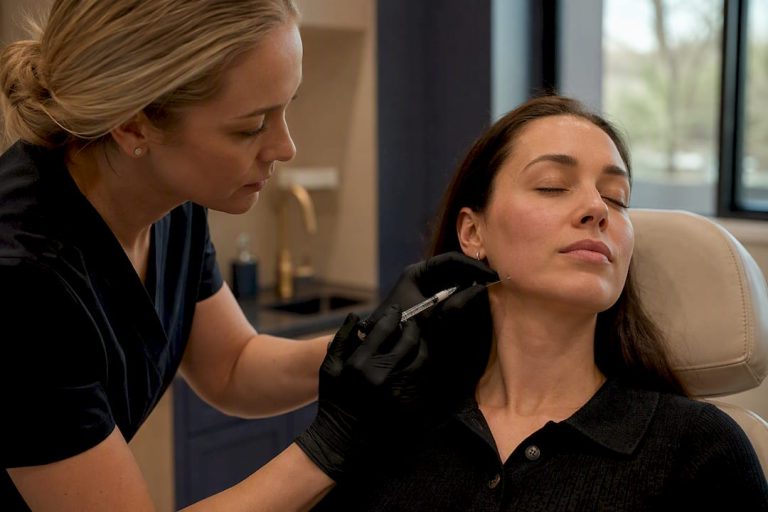

A Botox treatment areas checklist is a structured guide to the facial and neck injection sites where botulinum toxin can safely reduce dynamic wrinkles and reshape facial contours. The standard industry term is “botulinum toxin treatment mapping,” though most patients and clinics use “Botox treatment areas checklist” interchangeably. Whether you are considering your first session or refining an existing plan, knowing which areas respond best to Botox, what dosing to expect, and where extra caution is needed helps you walk into your consultation with confidence. This guide covers every major injection site, from the forehead and glabella to the masseter and neck bands, with typical unit ranges and safety considerations for each.
1. Common Botox treatment areas checklist: the standard injection sites
The FDA-approved Botox sites are the forehead, glabellar lines (frown lines), crow’s feet, and platysmal neck bands. These areas are the foundation of any treatment plan and the safest starting points for first-time patients.
Here is what to expect at each site:
- Forehead lines: Targets the frontalis muscle. Typical dosing ranges from 10 to 30 units, depending on muscle mass and line depth. Results last 3 to 4 months.
- Glabellar lines (frown lines): The corrugator and procerus muscles create the “11” lines between the brows. Standard dosing is 20 to 25 units. This is one of the most requested areas for botox treatment.
- Crow’s feet: The orbicularis oculi muscle fans out from the outer eye corners. Dosing runs 12 to 24 units across both sides. The goal is softening, not complete elimination, to preserve natural expression.
- Platysmal neck bands: Vertical cords along the neck caused by the platysma muscle. Dosing ranges from 20 to 50 units and results can last 4 to 6 months with proper technique.
- Masseter (jaw slimming): Though off-label, this is one of the most popular botox application areas. Dosing is 30 to 60 units per side. Results last 4 to 6 months and can visibly slim the lower face.
Pro Tip: If you have a strong frontalis muscle from years of brow-raising, your injector may start conservatively at 10 to 15 units and adjust at your two-week follow-up. Under-treating is always safer than over-treating on the first visit.
First-time patients typically need 20 to 60 total units across all areas combined. That range reflects how much individual muscle strength and facial anatomy vary from person to person.
2. Off-label Botox injection sites: what you need to know
The FDA approves Botox for four cosmetic areas, but experienced injectors regularly treat additional sites with excellent safety records when proper technique is applied. These off-label areas require a higher level of anatomical knowledge and clinical judgement.
Common off-label areas for botox treatment include:
- Lip flip: 4 to 8 units placed in the orbicularis oris muscle just above the upper lip. The lip gently rolls outward for a fuller appearance without filler.
- Bunny lines: Diagonal lines on the nose bridge caused by the nasalis muscle. Typically 4 to 8 units. A subtle but effective refinement.
- Chin dimpling: 2 to 6 units into the mentalis muscle smooth an “orange peel” chin texture.
- Lower eyelid: A very small dose (2 to 4 units) can reduce fine lines below the eye, but this area carries higher risk of bruising and requires precise placement.
- Brow lift: Strategic placement above the lateral brow can create a subtle arch lift without surgery.
The lower face demands particular caution. Lip and mouth muscles are directly involved in speech and eating, so any diffusion of product beyond the intended site can temporarily affect these functions. This is not a reason to avoid these areas. It is a reason to choose your injector carefully.
Pro Tip: For off-label sites, always ask your injector about their specific training in that area. At Beautyshotmedicalclinic, Irene Soni’s advanced training in Allergan techniques and MD Codes means off-label treatments are planned with the same rigour as standard sites.
You can read more about Botox safety research to understand how clinical evidence supports these treatments when performed correctly.
3. Safety zones every patient should understand
Knowing where Botox should not be placed is as important as knowing where it should go. Injections must stay at least 1 to 1.5 centimetres away from the orbital rim and superior eyebrow line. This distance prevents the product from diffusing into the levator palpebrae superioris, the muscle that lifts the eyelid. If that muscle is affected, temporary eyelid drooping (ptosis) can occur.
This is not a rare complication when safety zones are ignored. It is a predictable outcome of poor technique. Experienced injectors use facial mapping to identify these boundaries before a single unit is placed. The customised facial maps that come from a thorough consultation reduce risk and produce more natural-looking results than a generic injection pattern ever could.
Safety zones also apply to the masseter area, where injections placed too high can affect the zygomaticus major muscle and alter your smile. In the neck, injections placed too deep can affect swallowing. These are not reasons to fear Botox. They are reasons to value the consultation process.
4. How to choose the right botox areas for your facial anatomy
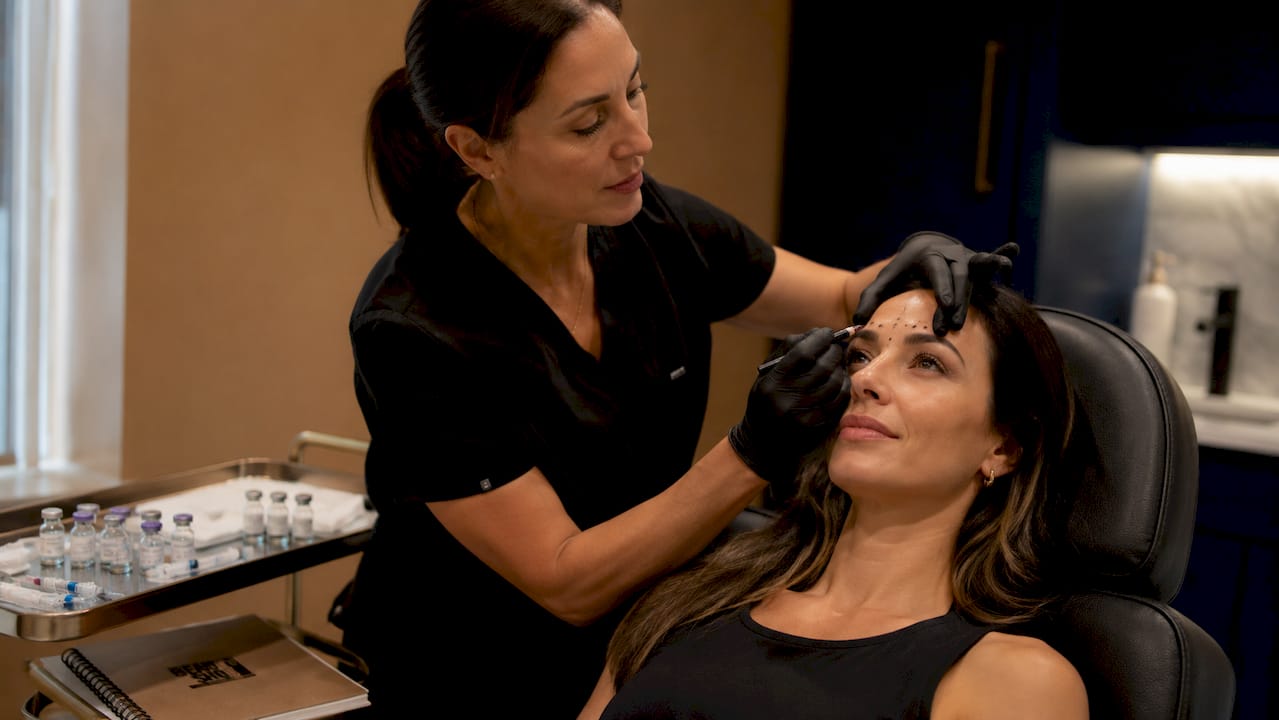
Choosing the right botox treatment areas is not a menu selection. It is a clinical assessment. Facial mapping with digital tools during consultation evaluates muscle strength, symmetry, and bone structure to guide both area selection and dosing.
Here is how a personalised treatment plan typically comes together:
- Dynamic vs. static wrinkle assessment: Dynamic wrinkles appear with movement and respond well to Botox. Static wrinkles are present at rest and may need dermal fillers in addition to Botox. Knowing the difference shapes the entire treatment plan.
- Muscle strength evaluation: A patient with a very strong corrugator muscle may need 25 units in the glabella where another patient needs only 15. Dosing is never one-size-fits-all.
- Symmetry mapping: Most faces have natural asymmetry. A skilled injector accounts for this and adjusts dosing on each side independently rather than applying identical units bilaterally.
- Bone structure and brow position: Patients with a naturally low brow position need conservative forehead dosing to avoid brow heaviness. This is a common oversight in cookie-cutter treatment approaches.
- Personal aesthetic goals: Some patients want complete line elimination. Others want subtle softening that still allows full expression. Both are valid. Your goals should drive the plan.
- Full-face vs. selective treatment: A full upper-face starting protocol (forehead, glabella, crow’s feet) suits most first-time patients. Selective single-area treatment works well for those with one specific concern.
Open communication with your injector about what you want to preserve, not just what you want to change, produces the most balanced outcomes. Preparing for your Botox session with clear goals in mind makes this conversation far more productive.
5. Botox treatment areas compared: units, duration, and outcomes
The table below summarises the most common botox injection sites with typical unit ranges, result duration, and key considerations. These figures reflect standard clinical ranges and will vary based on individual anatomy and injector assessment.
| Treatment area | Typical units | Result duration | Key consideration |
|---|---|---|---|
| Forehead lines | 10 to 30 units | 3 to 4 months | Avoid over-treating to prevent brow heaviness |
| Glabellar lines | 20 to 25 units | 3 to 4 months | Most requested area; strong safety record |
| Crow’s feet | 12 to 24 units | 3 to 4 months | Softening only; preserve natural eye movement |
| Neck bands | 20 to 50 units | 4 to 6 months | Requires precise depth control |
| Masseter (jaw) | 30 to 60 units per side | 4 to 6 months | Off-label; gradual muscle reduction over sessions |
| Lip flip | 4 to 8 units | 2 to 3 months | Off-label; subtle volume effect without filler |
| Chin dimpling | 2 to 6 units | 3 to 4 months | Off-label; low dose, high precision needed |
One detail worth noting: Botox results are not immediate. Initial changes appear within 3 to 7 days, with full effects visible at 14 days. Areas like the jaw or neck may take 4 to 6 weeks to show their final result. This timeline matters when you are planning around an event or comparing results too early.
Different botulinum toxin brands also affect how you interpret unit counts. Botox, Dysport, and Xeomin have different potency formulations and are not interchangeable unit-for-unit. Xeomin typically uses a 1:1 ratio with Botox, while Dysport requires a different calculation. Always confirm which product your clinic uses when comparing quotes or dosing recommendations.
Combining Botox with dermal fillers can extend the visual effect of both treatments. Botox relaxes the muscle that creates the wrinkle, while filler restores volume in the area. Together, they address both the cause and the result. Learn more about combining these treatments to see if a combined approach suits your goals.
Key takeaways
A personalised Botox treatment plan built on facial mapping, correct dosing, and safety zone awareness produces the most natural and lasting results.
| Point | Details |
|---|---|
| Standard areas are safest starting points | Forehead, glabella, and crow’s feet are FDA-approved and well-studied for first-time patients. |
| Off-label areas need advanced skill | Sites like the lip flip, chin, and lower eyelid require precise technique to avoid functional side effects. |
| Safety zones prevent complications | Staying 1 to 1.5 cm from the orbital rim protects against eyelid ptosis in forehead and glabella injections. |
| Results take time | Full effects appear at 14 days for most areas; jaw and neck results may take up to 6 weeks. |
| Dosing is always individual | Muscle strength, symmetry, and personal goals determine units, not a standard formula. |
What I have learned after years of facial mapping
By Irene Soni, R.N., BScN, Beautyshotmedicalclinic
The most common mistake I see patients make before their first consultation is treating Botox like a checklist to complete rather than a conversation to have. They arrive with a list of every area they want treated, often influenced by social media, and expect a set number of units for each site. That approach almost always leads to over-treatment.
What I have learned after nine years of injecting is that the lower face is where the real skill lives. The upper face is forgiving. The forehead, glabella, and crow’s feet have well-established safety records and predictable outcomes. The lower face, including the masseter, lip, and chin, is where anatomy varies the most and where a few units in the wrong spot can change how someone speaks, smiles, or chews. I treat these areas conservatively and always build up over multiple sessions rather than dosing aggressively from the start.
I also want to be honest about timelines. Patients often expect to see their results within a day or two. For the upper face, you will notice changes by day three to five. For the jaw or neck, results can take four to six weeks to fully develop. Judging your results at one week and deciding the treatment did not work is one of the most common reasons patients over-correct at their follow-up. Wait the full two weeks for upper face and six weeks for lower face before drawing any conclusions.
The goal at every session is for you to look like yourself, just more rested and refreshed. If someone cannot tell you have had anything done, we have done our job well.
— Felix
See natural Botox results at Beautyshotmedicalclinic
Beautyshotmedicalclinic in Woodbridge, Vaughan offers personalised Botox consultations with Irene Soni, R.N., an advanced cosmetic nurse injector with nine years of experience and training through Allergan, Teoxane Academy, and Dr. Martins Training Center Canada. Every treatment begins with a detailed facial mapping assessment to identify the right areas, correct dosing, and safety boundaries for your anatomy and goals. The focus is always on subtle, age-appropriate results that leave you looking refreshed, not overdone. Browse the before and after gallery to see real client outcomes, or visit the clinic’s main page to book your consultation.
FAQ
What areas does Botox treat most commonly?
The most common Botox injection sites are the forehead, glabellar lines, crow’s feet, and platysmal neck bands. These are the four FDA-approved cosmetic areas with the strongest safety and efficacy data.
How many units of Botox do I need for my first treatment?
First-time patients typically need between 20 and 60 total units depending on which areas are treated and individual muscle strength. Your injector will assess your anatomy during consultation and recommend a starting dose.
Is Botox in the lower face safe?
Botox in the lower face is safe when performed by an experienced injector who understands the functional role of muscles in that region. Areas like the lip flip and chin require precise, conservative dosing to avoid affecting speech or eating.
How long does it take to see full Botox results?
Initial changes appear within 3 to 7 days, with full results visible at 14 days for most areas. The jaw and neck may take up to 4 to 6 weeks to show their final outcome.
Can I combine multiple Botox treatment areas in one session?
Yes. Most patients treat two to three areas in a single session. A full upper-face protocol covering the forehead, glabella, and crow’s feet is a common starting combination that addresses the most visible dynamic wrinkles at once.
Recommended
- Booking Your First Botox Treatment: A Step-by-Step Guide – Beauty Shot | Botox Fillers Woodbridge Vaughan
- Preparing for Your Botox Session: Tips for Best Outcomes – Beauty Shot | Botox Fillers Woodbridge Vaughan
- Preparing for Your Botox Session: Tips for Best Outcomes – Beauty Shot | Botox Fillers Woodbridge Vaughan
- Combining Botox with Other Treatments: What You Need to Know – Beauty Shot | Botox Fillers Woodbridge Vaughan