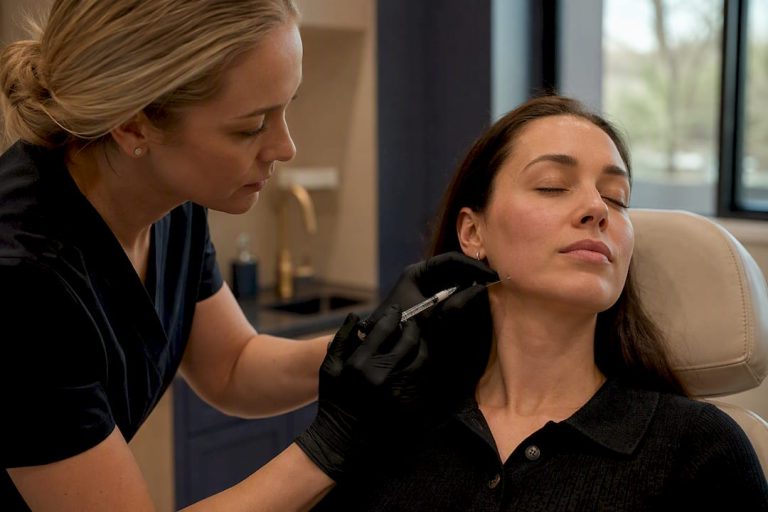
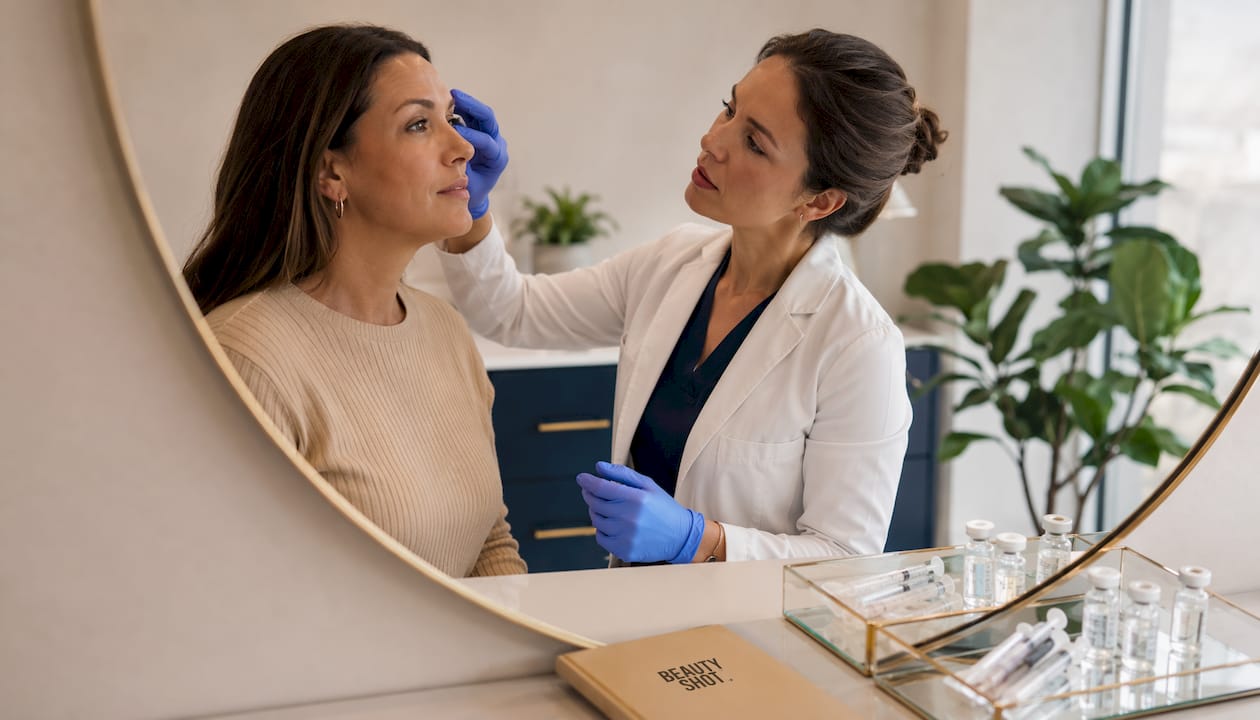
A Botox brow lift is a non-surgical cosmetic procedure that uses precise botulinum toxin injections to subtly elevate the eyebrows and open the eye area. Rather than cutting or repositioning tissue, it works by relaxing specific muscles that pull the brows downward, allowing the forehead’s natural elevator muscle to lift the brow position. The result is a refreshed, more alert appearance that still looks like you.
Here is what the procedure involves at a glance:
- What it is: A minimally invasive treatment using botulinum toxin to rebalance facial muscle tension around the brow
- Elevation achieved: A subtle lateral brow lift suited to mild-to-moderate brow descent
- Who it’s for: Adults with early brow drooping, mild hooding, or those wanting a subtle refresh without surgery
- Downtime: Minimal. Most patients return to their day immediately
- Results: Visible within 3–5 days, peaking around two weeks, lasting approximately 3–4 months
How does Botox actually lift the brow?
The lifting effect comes down to muscle balance. Your frontalis muscle runs across the forehead and pulls the brows upward. Working against it are several depressor muscles, including the orbicularis oculi, corrugator supercilii, and procerus, which pull the brows downward. When those depressors are selectively relaxed with botulinum toxin, the frontalis acts with less opposition and the brow naturally rises.
The key word here is selectively. Over-treating the frontalis itself leads to brow ptosis (drooping), which is the opposite of what you want. A skilled injector preserves frontalis tone while targeting only the muscles that are pulling the brow down. This is why technique and anatomy knowledge matter so much.
For a lateral brow lift specifically, the orbicularis oculi just below the outer brow is the primary target. According to StatPearls, weakening the superolateral orbicularis allows the frontalis to elevate the lateral brow unopposed, creating a gentle arch enhancement.
Key injection considerations include:
- Injection points: Typically 4–6 precise sites, depending on anatomy
- Safety zone: Injections into the frontalis should stay at least 1.5–2 cm above the brow to avoid unintended muscle relaxation
- Lateral vs. medial lift: Lateral elevation is most common; medial lift targets the corrugator and procerus via the glabellar complex
- Provider expertise: Incorrect placement can cause asymmetry or drooping, making injector skill the single most important variable
Who is a good candidate for a Botox brow lift?
The best candidates are adults with mild-to-moderate brow descent who want a subtle, natural-looking refresh. Younger patients tend to respond especially well because their skin still has good elasticity and the brow descent is not yet severe.
A useful screening tool is the manual brow lift test. When a practitioner gently lifts your brow with a finger and the hooded appearance improves, that suggests brow descent is the primary cause. If the hooding remains even with the brow lifted, excess eyelid skin is the issue and a surgical blepharoplasty would be more appropriate than Botox.
The procedure is not suitable for everyone. Contraindications include:
- Pregnancy or breastfeeding
- Neuromuscular disorders such as myasthenia gravis or ALS
- Active infection at or near the injection site
- Severe brow ptosis or significant excess eyelid skin requiring surgical correction
- Known allergy to botulinum toxin or its components
A thorough in-person assessment by an experienced injector is the only reliable way to confirm candidacy. No online quiz or photo consultation replaces that.
What to expect during and after the procedure
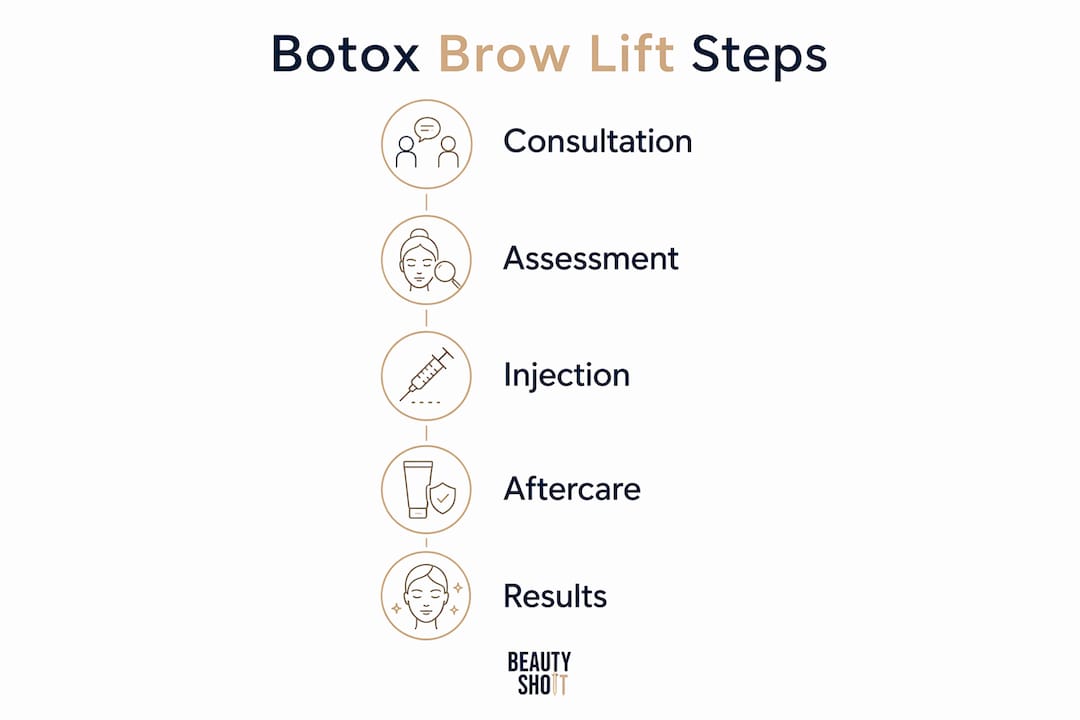
The appointment itself is brief. The procedure takes under 10 minutes and involves 4–6 small injections. Most patients describe the sensation as a series of brief pinches. Numbing cream is usually not needed, though it can be offered for patients who prefer it.
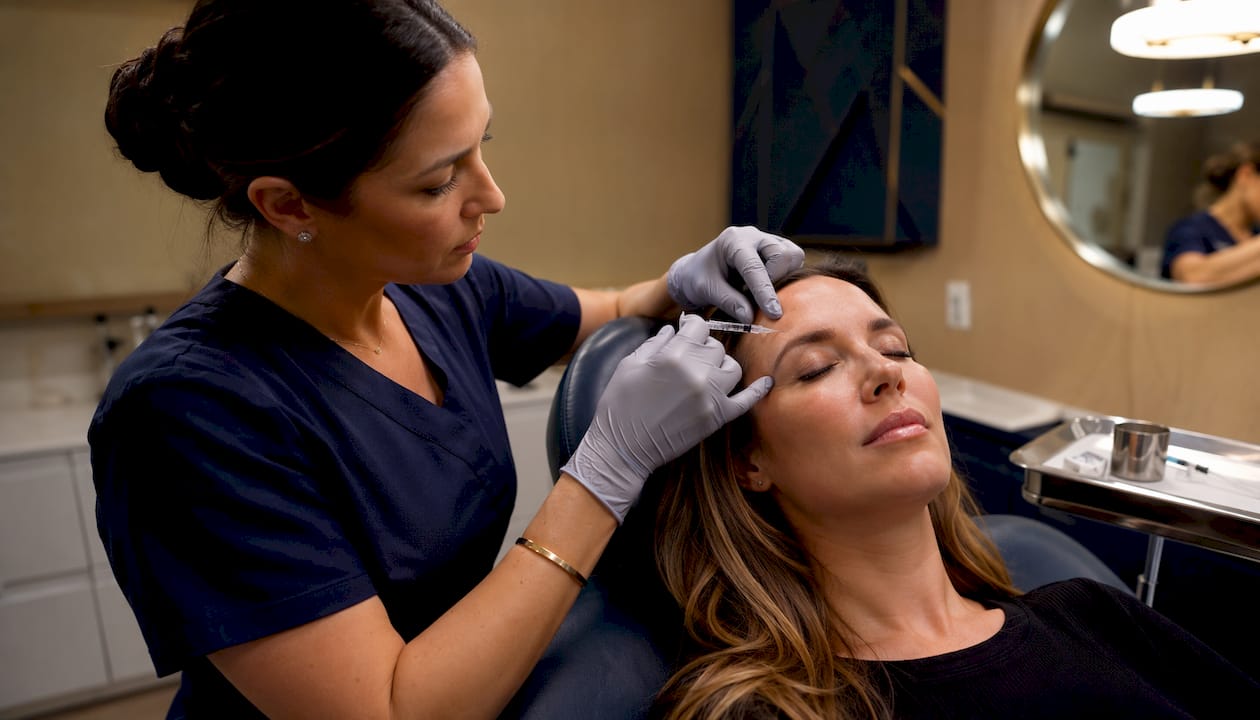
After the injections, you can go about your day normally. There is no surgery, no bandages, and no recovery period in the traditional sense.
Results timeline:
- Days 3–5: First signs of lifting begin to appear
- Week 2: Peak results are visible as the muscles fully respond
- Months 3–4: Effects gradually wear off as the botulinum toxin metabolises
Aftercare tips to follow for the first 24 hours:
- Avoid lying flat or bending forward for 4 hours post-treatment
- Skip intense exercise, saunas, and alcohol for the rest of the day
- Do not rub or massage the treated area
- Stay upright and keep the face relaxed
For a full breakdown of Botox aftercare practices, Beautyshotmedicalclinic has a dedicated guide worth reviewing before your appointment.
Botox brow lift vs. surgical brow lift: benefits and limitations
The right choice depends entirely on how much lift you need and what you are willing to commit to. Botox suits mild descent; surgery addresses more significant structural changes.
| Feature | Botox brow lift | Surgical brow lift |
|---|---|---|
| Elevation | Subtle, mild lift | More significant lift |
| Downtime | Minimal | Longer recovery period |
| Duration | Temporary | Long-lasting |
| Reversibility | Yes, reversible | Permanent |
| Cost | Lower per session | Higher upfront |
| Anaesthesia | None | General or local |
| Risks | Bruising, ptosis, asymmetry | Scarring, nerve damage, infection |
Botox brow lift advantages worth noting:
- No incisions, scarring, or anaesthesia
- Results are reversible
- Can be combined with other treatments for a more complete refresh
- Accessible option for patients exploring their choices
However, Botox cannot reposition tissue structurally or address deep wrinkles or significant skin laxity. As Dr. Lara Devgan, MD, noted via the American Society of Plastic Surgeons, surgical brow lifting addresses deeper anatomical changes that Botox simply cannot reach.
Risks and side effects you should know about
Botox brow lifts have a favourable safety profile when performed correctly, but no injectable treatment is without risk. A systematic review published in PMC found that the most common complication of botulinum toxin brow treatments was bruising, occurring in 1.7% of patients, with eyelid ptosis reported in 0.3%.
Common, temporary side effects include:
- Mild bruising or redness at injection sites
- Slight swelling or tenderness
- Headache in the first 24–48 hours
More significant risks to understand:
- Brow ptosis: Drooping of the brow caused by over-relaxing the frontalis or injecting too close to it. Avoided by respecting the 1.5–2 cm safety zone above the brow.
- Eyelid ptosis: Rare but possible if toxin migrates to the levator palpebrae muscle. Manageable with apraclonidine eyedrops until the effect wears off.
- Asymmetry: Can result from anatomical variation or uneven dosing. Correctable with a small touch-up.
- “Spock brow”: An overly arched lateral brow caused by imbalanced frontalis treatment. Corrected by adding a small amount of toxin to the overactive lateral region.
For a thorough overview of Botox side effects and when to seek follow-up, Beautyshotmedicalclinic covers this in detail.
A Canadian nurse injector’s perspective on brow lift best practices
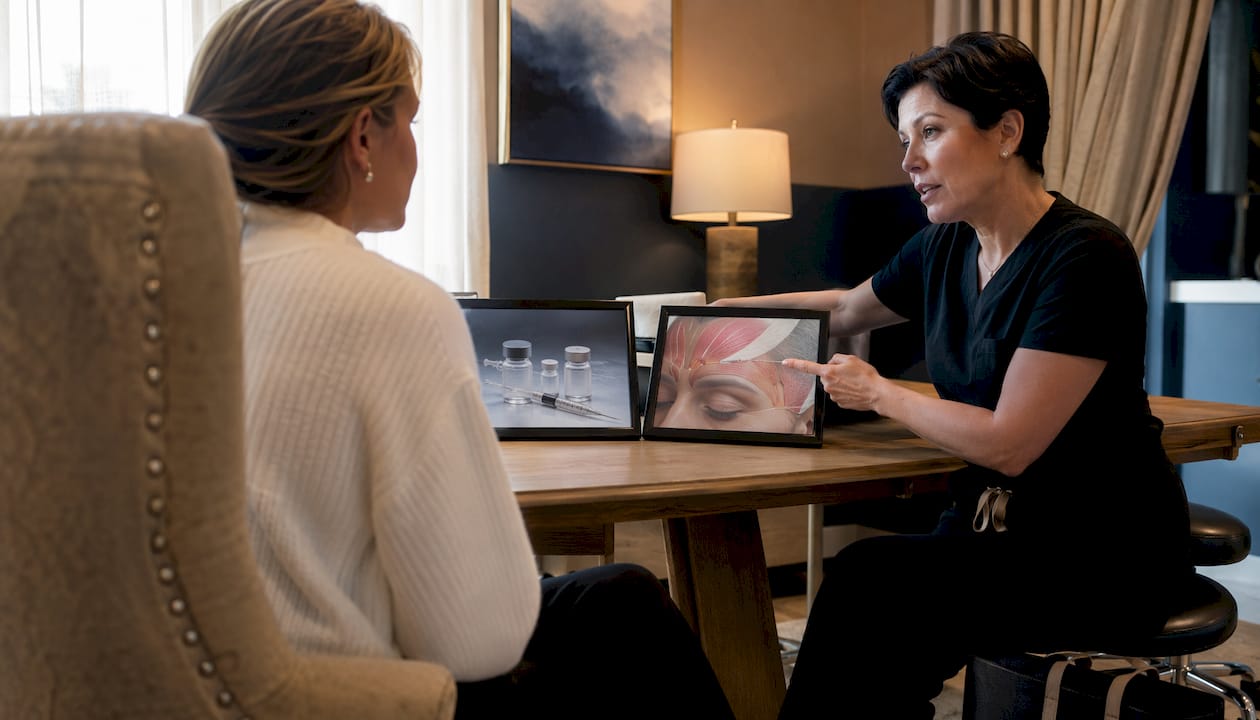
At Beautyshotmedicalclinic in Woodbridge, Vaughan, every brow lift consultation begins with a careful assessment of your individual muscle anatomy. No two faces are the same, and a cookie-cutter injection pattern is one of the fastest ways to end up with an unnatural result.
The muscle balance concept is central to everything. The frontalis is the only elevator of the upper face. Relax it too aggressively and the brow drops. The goal is to quiet the depressors just enough to let the frontalis do its job without interference, while preserving natural movement and expression.
What a thorough assessment covers:
- Resting brow position and degree of descent
- Dominant muscle patterns (total, medial, or lateral frontalis activity)
- Skin quality and degree of hooding
- Asymmetries that need to be factored into dosing
- Patient goals and whether Botox alone is sufficient
Irene Soni, R.N., BScN, brings over 9 years of advanced cosmetic nursing experience to every treatment, with training through Allergan techniques, Teoxane Academy, and Dr. Martins Training Center Canada. Her Sunnybrook Hospital Medical/ICU background means patient safety is always the first consideration, not an afterthought.
Brow lifting often works best as part of a broader facial refresh. Combining a brow lift with glabellar treatment, for example, softens the “11 lines” between the brows while simultaneously opening the eye area. For patients with volume loss at the brow bone or temples, combining Botox with other treatments can produce a more harmonious result than either treatment alone.
How much does a Botox brow lift cost in Canada?
Botox brow lift pricing in Canada varies by clinic, injector credentials, and the number of units required. Most brow lift treatments use a relatively small number of units compared to full forehead treatment, which keeps the cost accessible for many patients.
Clinics in Ontario and across Canada typically price Botox either per unit or per area. A brow lift targeting the lateral orbicularis and glabellar complex generally requires fewer units than a full upper face treatment. Prices per unit at medical aesthetic clinics in Ontario commonly range from $10–$15 per unit, though this varies by provider and location.
A realistic budget for a Botox brow lift in Canada falls in the range of $200–$400 per session, depending on the number of units used and whether additional areas are treated at the same appointment. Clinics that charge per area rather than per unit may price a brow lift as a standalone treatment differently, so always confirm pricing during your consultation.
Pro Tip: Ask your injector how many units are included in a quoted price and whether a touch-up is included if asymmetry appears at the two-week follow-up. Transparent pricing is a sign of a trustworthy clinic.
How to choose a qualified practitioner in Canada
Injector credentials matter more for a brow lift than for almost any other Botox treatment, because the margin for error around the orbital area is narrow. In Canada, Botox injections are a controlled act that must be performed by or under the supervision of a regulated health professional, typically a physician, nurse practitioner, or registered nurse with prescriptive authority.
When evaluating a provider, look for:
- Regulated health professional status: Confirm the injector is a licensed RN, NP, or physician in good standing with their provincial college
- Cosmetic-specific training: General nursing or medical training is not enough. Look for advanced cosmetic injection courses, manufacturer training (such as Allergan), and ongoing education
- Anatomy knowledge: Ask directly about their approach to the brow lift and which muscles they target. A confident, specific answer is reassuring; a vague one is not
- Before and after photos: Real patient results from the actual injector, not stock images
- Consultation process: A thorough injector will assess your anatomy, discuss realistic outcomes, and explain risks before recommending treatment
Beautyshotmedicalclinic’s before and after gallery shows real patient results from Irene’s practice, giving you a clear sense of the natural, refreshed outcomes she aims for.
How does a Botox brow lift compare to other non-surgical options?
Botox is not the only non-surgical route to a lifted brow. Several alternatives exist, each with different mechanisms, costs, and longevity.
Dermal fillers for brow lifting work by adding volume beneath the brow bone or at the temple to physically support and reposition the brow. A brow lift with fillers suits patients who have volume loss contributing to descent, rather than purely muscular pull. Results last 12–18 months on average and can be combined with Botox for a more complete correction.
Thread lifts use dissolvable sutures inserted under the skin to mechanically lift the brow. Results are more immediate and longer-lasting than Botox alone (typically 12–18 months), but the procedure carries a higher risk profile, including thread migration and puckering, and requires a more invasive technique.
Radiofrequency and ultrasound treatments such as Thermage or Ultherapy use energy to stimulate collagen production and tighten skin over time. These work best for mild skin laxity rather than true brow descent, and results build gradually over several months.
How they compare at a glance:
| Option | Mechanism | Duration | Best for |
|---|---|---|---|
| Botox brow lift | Muscle relaxation | 3–4 months | Mild descent, muscle-driven drooping |
| Dermal fillers | Volume support | 12–18 months | Volume loss at brow/temple |
| Thread lift | Mechanical lift | 12–18 months | Moderate descent, skin laxity |
| Radiofrequency/ultrasound | Collagen stimulation | 6–12 months | Mild skin laxity |
For many patients, the most natural result comes from a thoughtfully combined approach. Botox addresses the muscular component, fillers restore lost volume, and skin-tightening treatments improve overall texture. The right combination depends on your anatomy and goals, which is exactly what a proper consultation is designed to determine.
Key takeaways
A Botox brow lift works by relaxing the depressor muscles that pull the brows down, allowing the frontalis to lift the brow subtly, with results lasting a few months and minimal downtime.
| Point | Details |
|---|---|
| Mechanism | Relaxing depressor muscles lets the frontalis lift the lateral brow unopposed. |
| Elevation and duration | Expect 1–3 mm of lift, visible within 3–5 days, lasting 3–4 months. |
| Best candidates | Adults with mild-to-moderate brow descent who improve with the manual brow lift test. |
| Safety | Injecting at least 1.5–2 cm above the brow reduces the risk of ptosis and asymmetry. |
| Vs. surgery | Botox lifts 1–3 mm non-invasively; surgical options lift 5–15 mm with longer recovery. |
FAQ
Is a Botox brow lift better than surgical brow lift?
It depends on the degree of descent. Botox suits mild-to-moderate drooping with no downtime and reversible results, while surgery addresses significant tissue descent with longer-lasting, more dramatic correction of 5–15 mm.
How long does a Botox brow lift last?
Results typically last 3–4 months, with most patients scheduling maintenance treatments three to four times per year to sustain the effect.
What are the risks of a Botox brow lift?
The most common risks are temporary bruising (reported in 1.7% of patients), brow ptosis, eyelid ptosis, and asymmetry. These are minimised by choosing an experienced injector who respects the anatomical safety zones around the orbital area.
Is a Botox brow lift good for hooded eyes?
It can help when hooding is caused by brow descent. If the manual brow lift test shows improvement when the brow is physically lifted, Botox is likely to help. If excess eyelid skin is the primary cause, surgical blepharoplasty is the more appropriate option.
Recommended
- Eyebrow Lift with Botox: Achieving a Natural Look – Beauty Shot | Botox Fillers Woodbridge Vaughan
- Eyebrow Lift with Botox: Achieving a Natural Look – Beauty Shot | Botox Fillers Woodbridge Vaughan
- What Is Botox and How Does It Work for Wrinkle Reduction? – Beauty Shot | Botox Fillers Woodbridge Vaughan
- The Science Behind Botox: How Does It Work? – Beauty Shot | Botox Fillers Woodbridge Vaughan