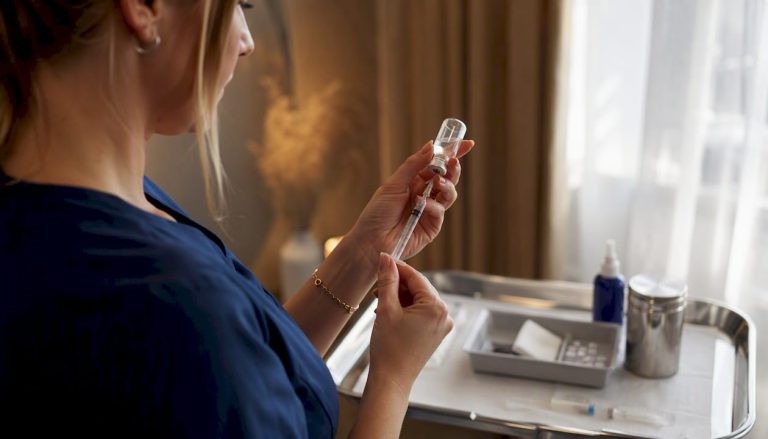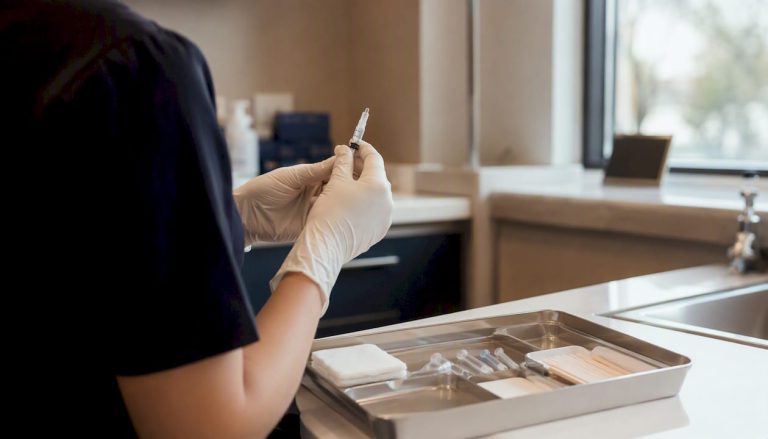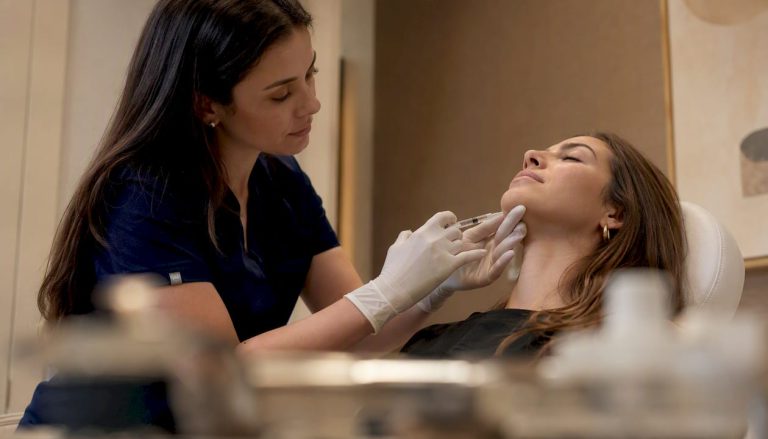
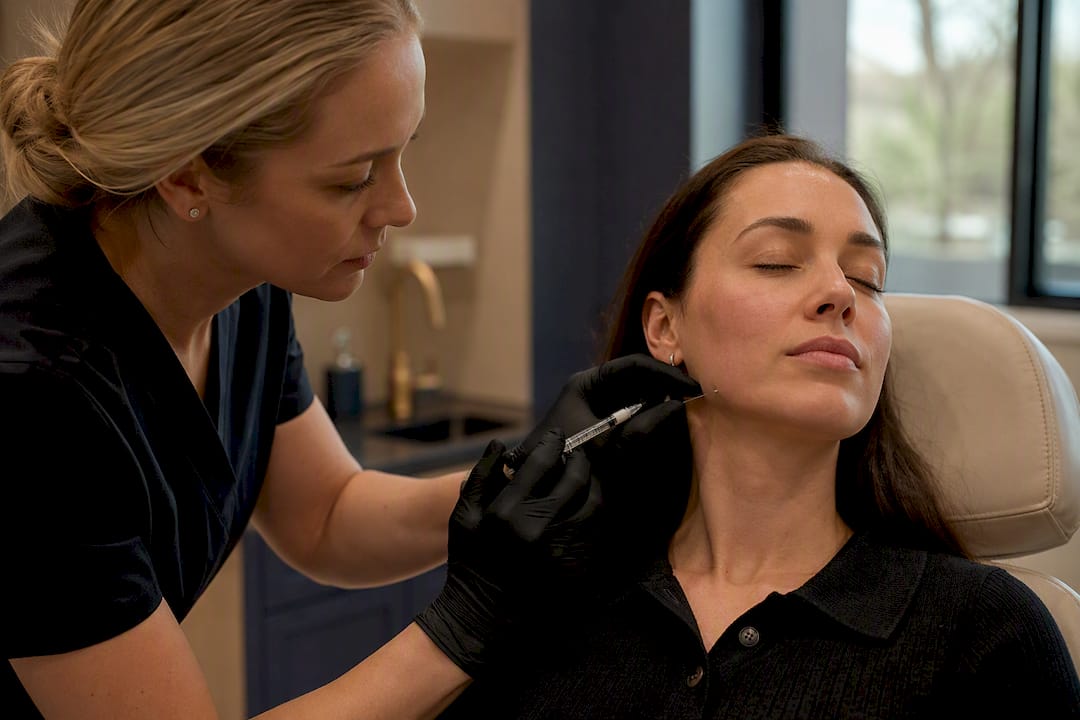
Masseter Botox is a purified form of botulinum toxin type A injected directly into the masseter, the thick chewing muscle at the back of your jaw, to calm overactivity that causes clenching, grinding, and a squared or bulky lower face. It works by relaxing the muscle rather than filling or cutting anything.
- Onset: reduced muscle activity within days
- Visible slimming: typically 6 to 8 weeks
- Duration: results commonly last 4 to 6 months
- Uses: cosmetic jaw contouring and therapeutic relief for bruxism or TMD symptoms
You still need a qualified injector who understands facial anatomy in depth. This is a deeper, more technical injection than a forehead or crow’s feet treatment, and dosing mistakes show up as chewing weakness or an uneven smile.
Key Takeaways
Masseter Botox relaxes an overactive jaw muscle to relieve clenching-related pain and, over months, gradually soften a bulky jawline, with results that depend heavily on conservative, individualized dosing.
| Point | Details |
|---|---|
| Mechanism | Botulinum toxin blocks nerve signals to the masseter, reducing contraction and causing gradual muscle atrophy. |
| Two distinct goals | Aesthetic jaw slimming and therapeutic bruxism/TMD relief use different dosing patterns and timelines. |
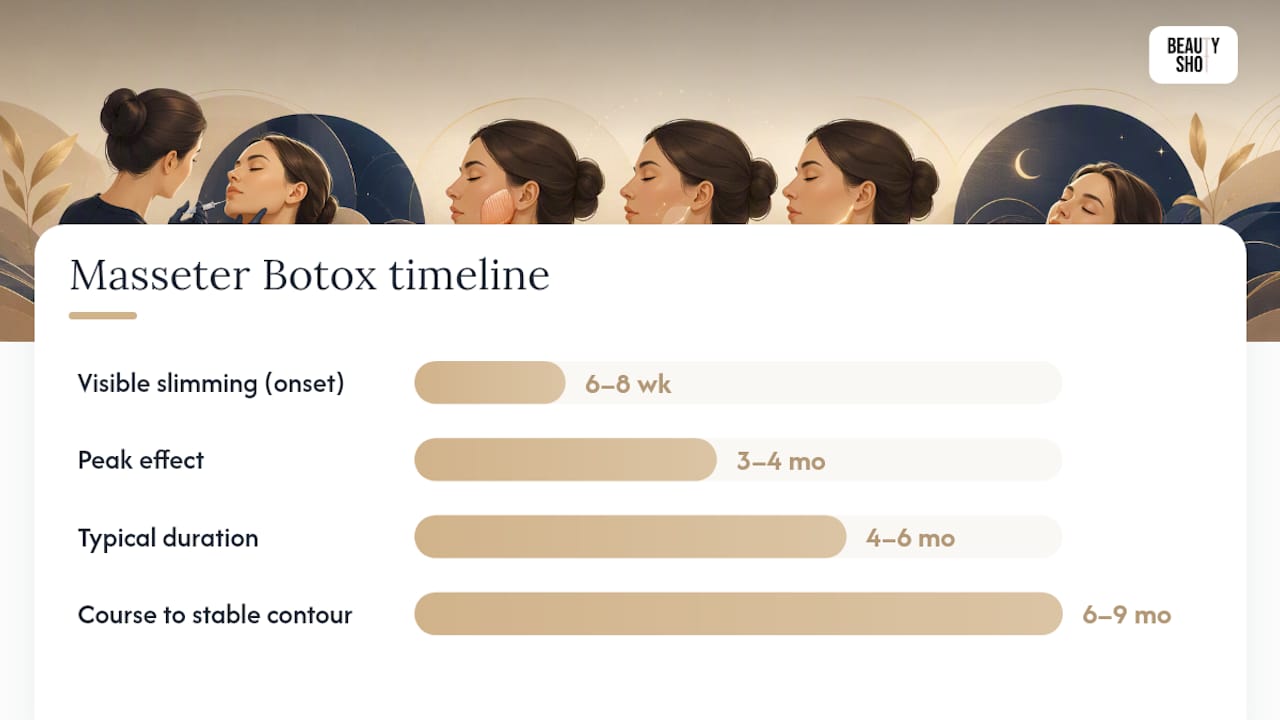
| Timeline | Activity drops within days; visible slimming appears at 6 to 8 weeks and peaks around 3 to 4 months. |
| Duration and upkeep | Results commonly last 4 to 6 months, with 2 to 3 sessions over 6 to 9 months to reach a stable contour. |
| Provider choice | Beautyshotmedicalclinic offers in-clinic treatment from an advanced cosmetic RN who tailors dose to your anatomy rather than a fixed protocol. |
What is masseter Botox and how does it work?
The masseter sits along your jawline, running from your cheekbone down to your lower jaw, and it does the heavy lifting every time you bite or chew. It has a superficial layer you can feel from outside and a deeper layer underneath. When someone clenches or grinds their teeth for years, that muscle can grow larger, similar to how a bicep grows from repeated use, giving the lower face a wider, squarer look.
Botulinum toxin type A blocks the release of acetylcholine at the neuromuscular junction, which stops the nerve signal that tells the muscle to contract. The masseter gradually weakens and, over weeks, shrinks through disuse, the same way a limb in a cast loses bulk.
Pro Tip: Masseter injections go deeper and use a higher concentration per site than the Botox used for forehead lines or crow’s feet. You’re not smoothing skin here. You’re aiming for gradual volume reduction in a muscle that sits well below the surface, which is why patience with the timeline matters so much.
- Two muscle bellies: superficial (visible bulk) and deep (bite force)
- Mechanism: nerve signal blocked, muscle activity drops, atrophy follows
- Goal: reduced clenching force and, over time, a softer jawline
Cosmetic jaw slimming versus bruxism and TMD relief
Patients come in for one of two reasons, and the goals shape everything from dose to timeline.
- Aesthetic goal: a softer, more oval jawline. Dosing tends to be moderate and consistent across sessions, and slimming unfolds gradually over months.
- Therapeutic goal: less jaw pain, fewer headaches, quieter grinding at night. Doses can run higher in some protocols, and relief from pain often shows up faster than any visible contour change.
Here’s a distinction I raise with almost every patient: bruxism is a behaviour, the actual clenching or grinding. TMD, or temporomandibular disorder, is a diagnosis involving pain and dysfunction in the jaw joint and muscles. Masseter Botox calms the muscle’s contribution to that pain. It does not erase the habit itself, which sometimes has stress, sleep, or bite alignment roots that need their own attention. Using Botox this way is considered off label in most jurisdictions, so a proper consultation and documented informed consent should always come before treatment. Our TMJ-focused guide breaks down what this treatment can and cannot resolve on its own.
What happens during a masseter Botox appointment?
A typical visit follows a predictable rhythm, and knowing the steps ahead of time takes a lot of the nervousness out of it.
- Consultation first. We review your medical history, take photos, and ask you to clench so we can feel exactly where your masseter sits and how developed it is.
- Marking and injection. Your provider marks safe injection points, usually two to three per side, staying clear of nerves and blood vessels, then uses a fine needle to deliver the toxin into the muscle belly.
- Quick appointment. The injections themselves take only a few minutes; the whole visit, with consultation, usually runs 20 to 30 minutes.
- Aftercare. Mild bruising or tenderness at the injection sites is common for a day or two. You can eat and talk normally right away, though chewing tougher foods may feel slightly different for the first week or two.
Most clinics book a follow-up around 4 to 6 weeks to check symmetry and add a small touch-up if one side is responding differently than the other.
Pro Tip: If you already grind at night, tell your injector. It changes where and how deep the product needs to go, and it affects how soon you might feel relief versus see contour change.
How much is used, and how long do results last?
Onset and duration follow a fairly consistent pattern across patients, even though the dose driving it can vary quite a bit by goal.
- Days 2 to 7: muscle activity starts dropping
- Weeks 6 to 8: visible jawline slimming begins
- Months 3 to 4: peak effect, both aesthetic and functional
- Months 4 to 6: results gradually fade, prompting maintenance
For therapeutic use in muscular TMD, a meta-analysis and RCT synthesis found that bilateral doses in the 60 to 100 unit range were linked to significant pain reduction at six months. Cosmetic contouring often uses a different pattern of distribution across more injection points rather than simply matching that same total. For jaw slimming specifically, research on masseter Botox timelines shows visible narrowing peaking around three to four months, with upkeep sessions roughly every four to six months after that.
Expect two to three sessions across six to nine months before your jawline settles into its final, stable contour. Our breakdown of how many units masseter Botox typically requires walks through how that number shifts based on your starting muscle size and your goal.
What are the risks and side effects of masseter Botox?
Most side effects are minor and temporary, but a few deserve real attention before you book.
- Mild bruising or swelling at injection sites
- Localized soreness for a day or two
- Temporary weakness when chewing tougher foods
- Slight, usually short-lived asymmetry in your smile
Less common but worth knowing about: paradoxical bulging, where the superficial fibres bulge outward because the deeper fibres were under-treated relative to the surface layer. A focused touch-up of the deeper muscle usually resolves it. There’s also an emerging conversation in the literature about whether repeated, high-dose masseter treatment over years might contribute to changes in the underlying jawbone. Coverage from NYU on this question is a fair summary: the signal exists, but the long-term evidence isn’t conclusive yet, which is exactly why conservative, spaced-out dosing matters more than chasing a fast result.
Masseter Botox isn’t appropriate for everyone. Pregnancy and breastfeeding, active infection at the injection site, certain neuromuscular disorders, and some medications are all contraindications your provider needs to screen for before treatment.
Pro Tip: Contact your provider right away if you notice trouble swallowing, drooping that doesn’t improve, or spreading weakness beyond the jaw. These are rare, but they warrant a same-day call, not a wait-and-see.
Who is a good candidate for masseter Botox?
You’re generally a strong candidate if you notice a palpable, obvious bulge when you clench your jaw, deal with bothersome grinding-related headaches or jaw pain, or want a softer lower-face shape and understand that the change builds gradually over months, not days.

You’re a poorer fit, or should pause and get further evaluation, if you already have chewing dysfunction, significant skin laxity along the lower face, very low body fat with little soft tissue support, or certain neuromuscular conditions. Pregnant or breastfeeding patients should wait.
If Botox isn’t the right fit right now, occlusal splints, physiotherapy, a dental review of your bite, and habit-focused counselling for bruxism are all worth exploring first, sometimes alongside injections rather than instead of them.
How do you choose a qualified provider?
The technique matters as much as the product. Ask about training specifically in masseter anatomy, not just general Botox certification, and whether your injector uses anatomy-guided or ultrasound-assisted placement when appropriate, a practice a 2025 review of BoNT-A for masseter hypertrophy associates with fewer complications like paradoxical bulging.
At consultation, ask directly:
- What dose and how many injection points do you plan to use, and why?
- What’s your follow-up and touch-up policy?
- Can I see real before-and-after results from your practice?
- How do you handle complications if they come up?
Be wary of anyone who guarantees a specific look, pushes an unusually large first dose, or skips a real conversation about the functional trade-offs of chewing muscle weakness.
What does the research actually show?
The evidence for TMD pain relief is genuinely solid, with the 60 to 100 unit bilateral dose range showing consistent, measurable pain reduction at six months, and objective myotonometry studies confirming real, measurable drops in muscle stiffness after treatment.
The bruxism picture is more mixed. A low-dose randomized trial using 10 MU per side found reduced nighttime muscle activity for about three months before symptoms crept back, while broader systematic reviews of BoNT-A for bruxism note real signals for less pain and fewer grinding events, but flag inconsistent study quality across the literature. Some pooled TMD analyses even found no significant difference versus placebo for certain functional outcomes, depending on dose and injection site. What’s still genuinely open: long-term structural effects on the jawbone, the ideal dosing schedule across repeated aesthetic sessions, and better objective testing after multiple rounds of treatment.
An injector’s honest take
I’d rather start conservative and adjust at the follow-up than overcorrect on day one. A personalized plan, built around your anatomy and your goals, beats any fixed formula every time.
Book a consultation that starts with your anatomy, not a formula
Plenty of places offer masseter Botox, but dosing by formula rather than by your actual muscle size and goals is exactly how patients end up with paradoxical bulging or a jawline that changes slower than they hoped. At Beautyshotmedicalclinic, every masseter treatment is performed in clinic by an advanced cosmetic Registered Nurse who assesses your clench pattern, your bite, and your goals before recommending a dose, rather than defaulting to the same units for every patient who walks in. If you’re weighing jaw slimming against bruxism relief, or you’re not sure which one actually applies to you, book a consultation to talk through a plan built around your face specifically.
Sources
- Meta-analysis and RCT synthesis on BoNT‑A for muscular TMD (pubmed index)
- Timeline and outcomes for masseter Botox in cosmetic contouring (PubMed indexed)
This article is general information, not a substitute for advice from a qualified doctor. Consult a qualified healthcare professional about your own circumstances before acting on anything here.
FAQ
How long does masseter Botox last?
Results typically last 4 to 6 months before the muscle regains activity, which is why most patients schedule maintenance sessions on that same cycle.
What’s the downside of masseter Botox?
The main downsides are temporary chewing weakness, occasional short-lived asymmetry, and the rare complication of paradoxical bulging if the deeper muscle fibres aren’t evenly treated.
Does masseter Botox slim your face?
Yes, for many patients it gradually narrows the lower face by shrinking an overdeveloped masseter, with visible change starting around 6 to 8 weeks and peaking near 3 to 4 months.
Who is not suitable for masseter Botox?
Poor candidates include pregnant or breastfeeding patients, those with certain neuromuscular disorders, significant lower-face skin laxity, or existing chewing dysfunction; a consultation at a clinic like Beautyshotmedicalclinic helps confirm suitability before treatment.
Recommended
- Masseter Botox Before and After: What Changes (and What Doesn’t) – Beauty Shot | Botox Fillers Woodbridge Vaughan
- Does Masseter Botox Slim Your Face? Realistic Jawline Results Explained – Beauty Shot | Botox Fillers Woodbridge Vaughan
- Is Masseter Botox Safe? Side Effects, Risks, and Red Flags Explained – Beauty Shot | Botox Fillers Woodbridge Vaughan
- How Long Does Masseter Botox Last for Bruxism and Jaw Slimming? – Beauty Shot | Botox Fillers Woodbridge Vaughan