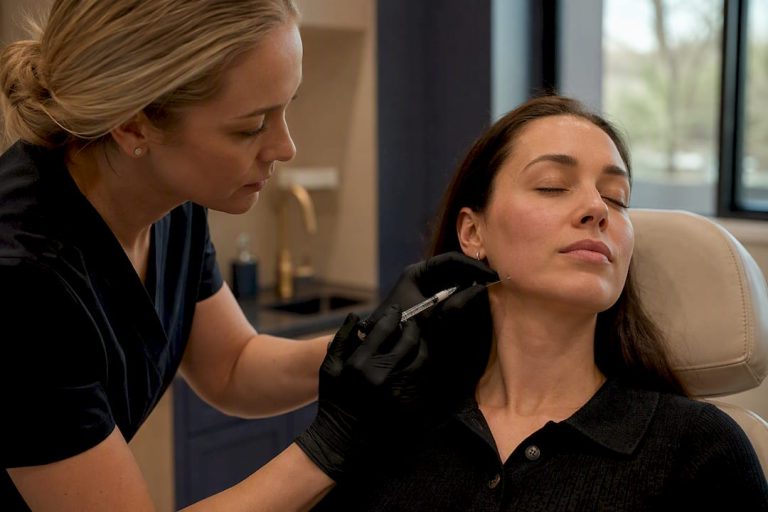

Stay upright for four hours, skip the gym and the sauna for 24, keep your hands off your face, and hold off on alcohol and unnecessary blood thinners for a full day. That is the core of Dysport aftercare, and it applies whether you were treated with Dysport (abobotulinumtoxinA), Botox (onabotulinumtoxinA), or Xeomin (incobotulinumtoxinA). These three botulinum toxin type A products behave similarly enough that the aftercare guidance overlaps almost completely.
One warning matters more than the rest: if you develop trouble breathing or swallowing, sudden severe drooping, or vision changes in the days after treatment, do not wait it out. Manufacturer safety information for Dysport is explicit that these are signs of rare toxin spread, and they need urgent medical attention, not a “let’s see how tomorrow goes” approach.
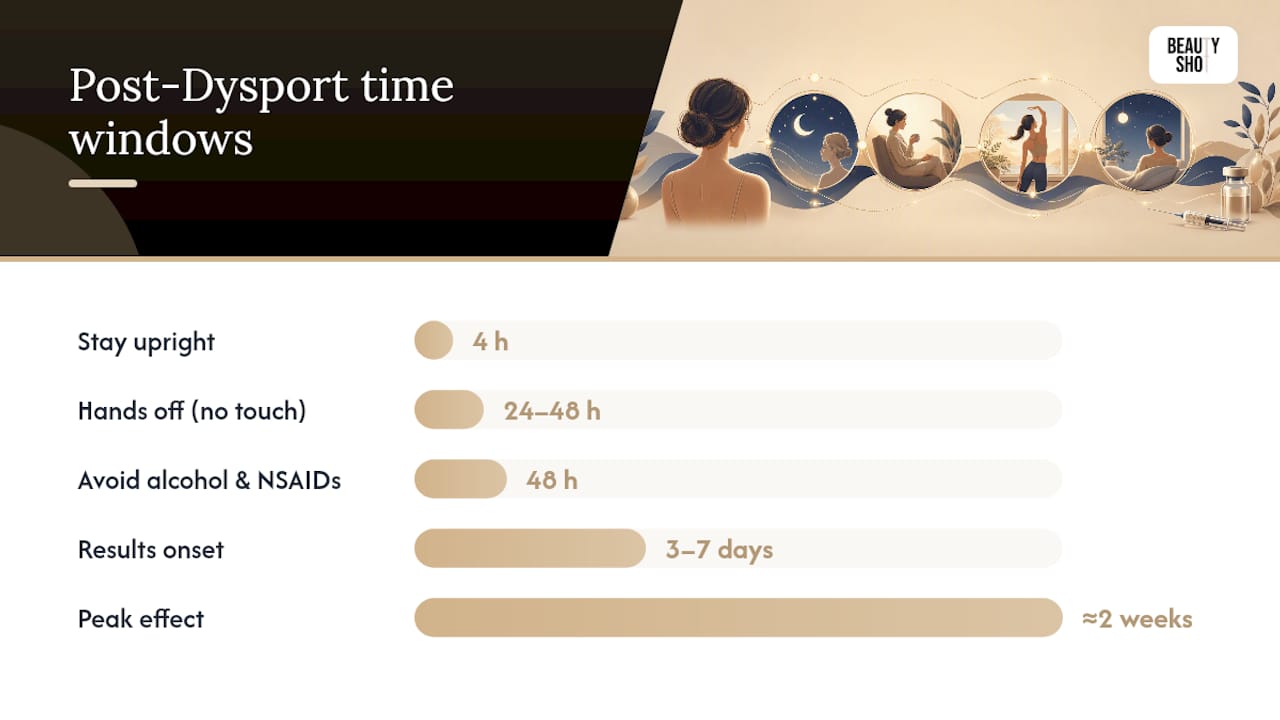
- Stay upright, no bending or lying flat, for about four hours.
- Do not rub, massage, or press on treated areas for 24 to 48 hours.
- Skip strenuous exercise, saunas, and hot yoga for at least 24 hours.
- Avoid alcohol and skip non-essential blood thinners like NSAIDs for 24 hours.
- Use acetaminophen, not ibuprofen, if you need something for tenderness.
Every patient I treat leaves with a written aftercare sheet and my after-hours contact information, because good instructions on paper beat instructions half-remembered from a consultation.
Key Takeaways
Following a structured 48-hour protocol after Dysport, staying upright, avoiding touch and heat, and skipping alcohol and NSAIDs, reduces bruising risk and protects correct product placement.
| Point | Details |
|---|---|
| First four hours matter most | Stay upright and avoid lying flat to keep the product placed where it was injected. |
| Hands off for 24 to 48 hours | Skip massage, facial tools, and pressure-based makeup application near injection sites. |
| Results build over two weeks | Expect onset around day 3 to 7 and peak effect by roughly two weeks, varying by individual. |
| Red flags need urgent care | Breathing or swallowing trouble, severe drooping, or vision changes require immediate medical attention. |
| Beauty Shot Medical Clinic provides structured aftercare | Every patient receives a written aftercare sheet, an after-hours contact, and a two-week follow-up booking. |
What to expect after your Dysport injection
You will feel a pinch during the injections and some tenderness right after. That part is normal and short-lived. Over the next 48 hours, small bumps at the injection sites usually flatten out, and any redness fades within hours to a day.
Real movement in your muscles typically starts a few days after treatment, and most people see the full effect settle in by about two weeks. That two-week mark is not arbitrary. It is the point where your results have stabilized enough for me to properly assess symmetry and decide whether a small touch-up is worth discussing.
Minor side effects are common and expected:
- Bruising at injection points, usually fading within a week to 10 days.
- Swelling that settles within 24 to 48 hours in most cases.
- Tenderness at the injection sites for a day or two.
- Small lumps or firmness that can linger for up to four weeks before smoothing out completely.
Onset and duration vary from person to person, and they also vary slightly between Dysport, Botox, and Xeomin based on their molecular structure and diffusion pattern. Serious spread of the toxin beyond the treatment area is rare, but not impossible. Watch for progressive weakness, drooping beyond the treated muscles, or breathing and swallowing changes, and treat those as urgent.
A step-by-step 48-hour protocol you can actually follow
Patients do better with a protocol than with a vague “take it easy” instruction. Here is what I walk every patient through before they leave the clinic.
Hours 0 to 4: settle and stay upright.
- Remain upright, sitting or standing. Do not lie flat or nap face down.
- Keep your hands off the treated areas. No touching, no checking with your fingers, no rubbing to “help it settle.”
- If you drove yourself in, you are fine to drive home. There is no sedation involved.
- Take acetaminophen if you are tender. Avoid ibuprofen, aspirin, and other NSAIDs, since they raise bruising risk.
Hours 4 to 24: protect the placement.
5. Skip the gym, spin class, and any activity that spikes your heart rate or blood pressure significantly.
6. Avoid saunas, steam rooms, and hot baths. Heat increases blood flow to the face and can worsen swelling or bruising.
7. If you want makeup, use a clean brush or a dispenser product rather than a pad or your fingers. Pressing product on with fingers or pads adds focal pressure that a brush avoids.
8. Sleep on your back if you can manage it, with your head slightly elevated. Side sleeping is not dangerous, but face-down sleeping puts direct pressure on treated muscles.
Hours 24 to 48: ease back in.
9. Light activity, walking, gentle stretching, is fine.
10. Hold off on facials, aggressive exfoliation, or anything involving strong heat or pressure on the face.
11. If a bruise is forming, gentle cold in the first few hours can help, though some consensus guidance cautions against routine icing because it can mask early signs of a vascular problem. After 48 hours, switching to a warm compress can help your body clear the bruise faster.
12. Keep your written aftercare sheet and the clinic’s after-hours number somewhere you will actually find them, not buried in your inbox.
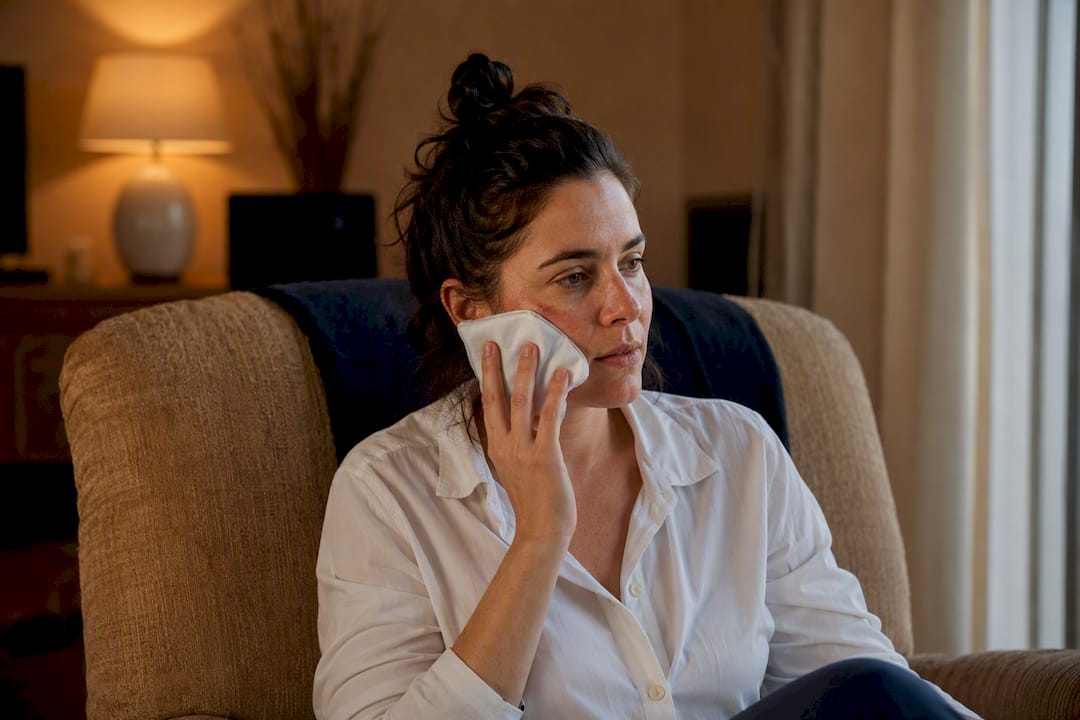
Pro Tip: If a bruise shows up, resist the urge to ice it aggressively right away. A brief cool compress in the first hour is reasonable, but after that, let it be. Once you pass the 48-hour mark, a warm compress for 10 minutes a few times a day often speeds up how quickly the discolouration clears.
Common mistakes that undo good results
I see the same handful of missteps over and over, and almost all of them come from good intentions.
- Rubbing or massaging the area, sometimes with a gua sha tool or jade roller, to “help it absorb.” This can shift the product away from its intended muscle and cause temporary weakness or drooping elsewhere on the face. Give it 24 to 48 hours before any facial tools touch your skin.
- Lying flat too soon. Staying upright for about four hours keeps the product where it was placed.
- Drinking alcohol or taking NSAIDs the same day. Both thin the blood and increase your bruising risk in the 48-hour window around treatment.
- Pressing makeup on with a sponge or fingers. A brush is gentler and reduces pressure on freshly injected sites.
None of these mistakes are dramatic, but together they are the most common reason someone calls asking why their results look uneven two weeks in.
Warning signs that need urgent attention
Most of what happens after Dysport is mild and predictable. A small number of symptoms are not, and they deserve immediate action rather than a wait-and-see approach.
- Progressive difficulty breathing or swallowing.
- Severe or worsening drooping, especially of the eyelid or eyebrow, beyond what was expected.
- Vision changes, including double vision or blurred vision.
- Rapidly expanding swelling or pain that is getting worse rather than better.
- Signs of infection: fever, spreading redness, warmth, or pus at an injection site.
Timing matters here. Most serious symptoms show up within the first few days, but manufacturer safety information notes that toxin spread can, in rare cases, appear later. Stay alert for the first two weeks, not just the first two days.
If anything on that list happens: stop touching the area, call the clinic’s after-hours line right away, and if breathing or swallowing is affected, go to emergency services without delay. This is one of the few areas in cosmetic medicine where “better safe than sorry” is not a cliché, it is the actual clinical standard.
When to expect results and when to book follow-up
Dysport typically starts showing movement change around day 3 to 5, a touch faster on average than some patients experience with Botox, though individual response varies more than the marketing suggests. Peak effect for most patients lands around the two-week mark.
- Onset: noticeable softening begins around day 3 to 5, full effect by roughly two weeks.
- Follow-up: book your review appointment about one to two weeks post-treatment so any asymmetry or under-treated area can be assessed properly.
- Durability: results commonly last well beyond 12 weeks, and open-label extension data on abobotulinumtoxinA shows some patients comfortably going 16 weeks or longer before needing a repeat treatment.
- Retreatment spacing: many product labels and clinical guidelines reference a minimum interval around 12 weeks between treatments in most indications, though your own timeline depends on how your muscles respond.
At your follow-up, I am looking at how well the muscle movement has softened, checking for any asymmetry, and deciding, together with you, whether a small touch-up makes sense. This is rarely about “more product.” It is about precision.
Medications, skincare, and other treatments around your appointment
A few timing questions come up in almost every consultation, so let’s cover them directly.
- Medications: avoid aspirin, ibuprofen, and other NSAIDs for 24 hours before and after your appointment to limit bruising. Acetaminophen is fine for discomfort.
- Skincare and makeup: wait a few hours before applying anything to the treated area, and when you do, use a brush rather than a sponge or your fingers for at least the first day.
- Other cosmetic procedures: if you are combining Dysport with dermal filler in the same visit, filler generally goes first. Hold off on facials, chemical peels, microneedling, or laser treatments for at least a week or two around your injection date, longer if your provider recommends it based on your skin.
- Personalize the plan: exact timing shifts depending on the specific procedure and your skin’s history. Always confirm your combined-treatment schedule with your injector rather than guessing from a general timeline. If you are researching how these treatments layer together, our breakdown of how Botox and Dysport actually work walks through the mechanism in plain language.
What responsible aftercare looks like in a real clinic
A checklist only works if someone actually hands it to you. At Beauty Shot Medical Clinic, every patient leaves with a written aftercare sheet, not a verbal summary they have to remember, plus a clear after-hours contact for anything urgent. We schedule a follow-up at roughly the two-week mark to assess results properly, in line with consensus recommendations for post-treatment care.
- Written aftercare sheet provided at checkout, every time.
- Photo documentation before and after, so we can compare objectively at your follow-up.
- Two-week follow-up booked before you leave.
- Direct after-hours contact for anything that feels off.
I bring a Sunnybrook ICU nursing background and nine-plus years of advanced injectable training to every appointment, which shapes how seriously I take escalation planning. Clear instructions and a real point of contact are not paperwork, they are what actually reduce risk between your appointment and your follow-up.
Pro Tip: Keep a simple photo log on your phone, one photo a day for the first week. It sounds unnecessary until your follow-up appointment, when it becomes the easiest way to show your injector exactly how your results progressed.
Why the standard aftercare advice deserves a second look
Most aftercare lists online read like they were written once in 2005 and copied forward without question. Some of that caution is earned. Avoiding massage and staying upright for a few hours has clear anatomical logic behind it. But a retrospective look at more than 5,000 patients found low complication rates with only a brief post-treatment precaution, which suggests some clinics are still enforcing week-long restriction lists out of habit rather than necessity.
Here is where I land: the 24 to 48 hour window is the part that genuinely matters. That is when BoNT-A is still settling into place at the neuromuscular junction, and it is worth protecting deliberately. Beyond that window, rigid week-long bans on exercise or skincare often do more to manage anxiety than to change outcomes.
What patients should prioritize first is not a longer restriction list. It is a clear plan for the first two days, a real person to call if something feels wrong, and a follow-up appointment already on the calendar. That combination protects your results far more reliably than an extra week of avoiding the gym.
Ready for aftercare that’s actually built around you
Beauty Shot Medical Clinic is the option built for people who want their Dysport aftercare handled with the same care as the injection itself, not a photocopied handout and a “call us if something’s wrong.” Every patient here works directly with an advanced cosmetic Registered Nurse who explains your specific plan in plain language, from the first four hours through your two-week review, so you are never guessing what a symptom means or when to worry. Results stay natural and age-appropriate because the aftercare plan is personalized to your anatomy, not copied from a generic sheet.
If you are considering Dysport or want to understand how it compares to other injectables before booking, start with our honest guide to injectable cosmetics or explore our Botox and Dysport services in Woodbridge to book a consultation and get a written aftercare plan built specifically for you.
This article is general information, not a substitute for advice from a qualified doctor. Consult a qualified healthcare professional about your own circumstances before acting on anything here.
Sources
- Dysport (manufacturer safety information)
- Facial aesthetic injections in clinical practice: pretreatment and posttreatment consensus recommendations to minimise adverse outcomes
- Recovery after botulinum toxin injections (American Society of Plastic Surgeons)
- Facial aesthetic injections in clinical practice: Pretreatment and posttreatment consensus recommendations to minimise adverse outcomes (Wiley/Australasian Journal of Dermatology)
- Are post‑care recommendations following upper‑face botulinum toxin treatment scientifically necessary? — retrospective study (MDPI/Toxins)
These sources back a balanced approach: firm early precautions paired with realistic, evidence-informed flexibility, rather than fear-based rules with no clinical basis.
FAQ
What should I not do after getting Dysport?
Avoid rubbing or massaging treated areas, skip strenuous exercise and saunas for 24 hours, avoid alcohol and NSAIDs, and don’t lie flat for about four hours after your appointment.
Can I sleep on my side 12 hours after Dysport?
Side sleeping is generally fine after the initial four-hour upright period. Face-down sleeping is what to avoid, since it puts direct pressure on treated muscles.
What should I do after a Dysport injection?
Stay upright for about four hours, keep your hands off the treated area, skip strenuous activity and alcohol for 24 hours, and use acetaminophen rather than NSAIDs if you’re tender.
How long do I have to sit up after Dysport?
Most clinics, including Beauty Shot Medical Clinic, recommend staying upright and avoiding lying flat for approximately four hours after treatment.
When will I see my Dysport results, and when should I follow up?
Results typically begin around day 3 to 7 and reach full effect by about two weeks, which is also when your follow-up appointment should be booked to assess the outcome.
Recommended
- Botox Aftercare: Products and Practices to Maximize Results – Beauty Shot | Botox Fillers Woodbridge Vaughan
- Booking Your First Botox Treatment: A Step-by-Step Guide – Beauty Shot | Botox Fillers Woodbridge Vaughan
- Lip filler aftercare step by step: your healing guide
- How to prepare your skin before your first filler session