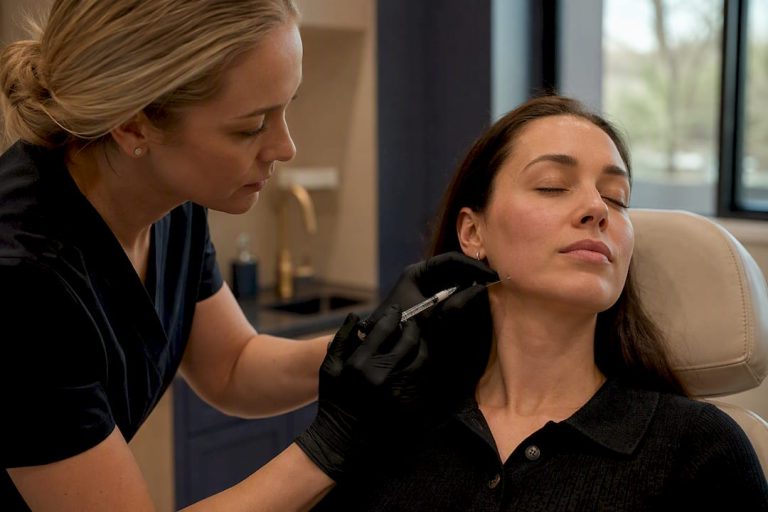

When under-eye hollows come from genuine volume loss, hyaluronic acid filler can soften that shadow and restore a rested look. It won’t help if pigment, loose skin, or prominent fat pads are the actual problem, which is why an accurate diagnosis matters more than the product on the shelf.
Hyaluronic acid (HA) fillers remain the standard choice for the tear trough because they’re reversible and integrate smoothly into thin under-eye tissue, as explained in this dermal filler treatment guide. Most patients see results that hold for about 9 to 12 months before a top-up is needed. If you’re considering this, your first move is a proper consultation, not a quick add-on at the end of another appointment. Bring photos from a few years back so we can see how your under-eye area has changed, and be ready to talk through your health history in detail.
A few situations mean filler isn’t appropriate right now:
- An active eye infection or skin infection near the treatment area
- Pregnancy or breastfeeding
- Recent ocular surgery or an unresolved eye condition
- A history of severe reaction to filler or to hyaluronidase
Quick fact: Under-eye filler is a non-surgical option, and for most patients, results last roughly 9 to 12 months before maintenance is recommended.
Why under-eye hollows happen
The tear trough is the groove that runs from the inner corner of your eye toward your cheek, right along the orbital rim. In a youthful face, fat pads and skin sit smoothly over the bone because ligaments (the orbitomalar ligament is the main one) and midface fat keep everything supported. As we age, that support shifts. The bone itself can resorb, the ligament tightens and pulls the skin down over a now-hollow area, and the fat pads that once cushioned the region migrate or shrink.
Genetics play a bigger role here than most people expect. Some patients see a visible hollow in their twenties simply because of how their orbital bone is shaped, long before any age-related volume loss begins. Others develop it gradually through their thirties and forties as midface fat descends.
“Correct diagnosis, hollow versus pigment versus fat pad, is the key determinant of good outcomes, and hyaluronic acid is preferred because it’s soft, integrates smoothly, and is reversible,” according to patient guidance from Athena Plastic Surgery.
Filler corrects volume loss. It does nothing for pigment sitting in the skin, and it can actually make things look worse if the real issue is a prominent fat pad or skin so thin it shows every vessel underneath. If your under-eye skin is loose or crepey, or you can see a visible bulge rather than a hollow, adding volume on top of that bulge tends to accentuate it rather than smooth it. That’s a case where filler is the wrong tool, no matter how skilled the injector.
Who is a good candidate for under-eye filler?
The best candidates share a few specific traits. If you recognize yourself in this list, you’re likely a reasonable fit for treatment:
- A visible hollow or shadow along the tear trough, rather than a bulge or loose skin
- Skin with decent elasticity that will settle smoothly over added volume
- Realistic expectations. Filler softens a hollow; it does not erase every sign of fatigue permanently
- No active skin conditions or infections in the treatment area
- General health that supports elective cosmetic treatment
Certain conditions mean we pause or reroute the conversation entirely. Pregnancy and breastfeeding are firm no’s. An active autoimmune flare, a current skin infection, or a prior serious reaction to filler or to hyaluronidase also means we hold off. If you’ve had a vascular complication from filler anywhere on your face before, that history needs a much more cautious conversation before we consider your under-eye area.
Some patients are better served by a different treatment entirely. If fat pads are visibly herniating (that puffy, ever-present bag under the eye), surgical blepharoplasty tends to outperform filler because you’re removing tissue, not adding to it. If pigment is the dominant issue, topical treatments, lasers, or peels address the actual cause. And if your hollow is mostly a midface support problem, restoring cheek volume can soften the shadow without ever touching the delicate under-eye area directly, an approach explained further in our guide on how filler restores facial harmony.
Marked fat herniation, significant skin laxity, or a complicated surgical history are all reasons to refer you to an oculoplastic surgeon or ophthalmologist rather than proceed with filler. A good injector knows when a case belongs outside their scope.
Pro Tip: Take a well-lit, makeup-free photo of your under-eye area in natural daylight before your consultation. It helps us assess true hollowing versus pigment or shadow far more accurately than an in-office photo under clinic lighting.
Which fillers treat under-eye hollows, and why
Hyaluronic acid dominates tear-trough treatment for one main reason: it can be dissolved. If a result looks off, or in the rare case of a complication, hyaluronidase reverses it. That safety net doesn’t exist with other filler categories, which is a serious consideration in an area this close to the eye’s vascular anatomy.
Several HA brands are used in this region, each with a slightly different feel and behaviour in thin tissue. Juvéderm and Restylane both offer softer, lower-viscosity formulations suited to delicate under-eye skin. Belotero is known for its ability to integrate very smoothly into thin tissue, which some injectors favour specifically for superficial correction near the eye. Radiesse, a calcium hydroxylapatite filler, is occasionally used for structural midface support rather than direct tear-trough placement, but it isn’t reversible the way HA is, which matters a great deal in a zone with unpredictable vascular anatomy. Fat grafting is a surgical alternative some patients pursue for longer-term volume, though it carries its own recovery time and isn’t reversible either.
There’s no single “best” filler for every patient. Clinicians choose based on how a product behaves in thin tissue, its viscosity, and how cohesive it stays once placed, which is why an experienced injector will often try more than one brand across their practice rather than relying on just one.
| Approach | Best for | Duration | Reversible? | Typical volume/side | Downtime | Risk profile |
|---|---|---|---|---|---|---|
| Direct tear-trough HA filling | Visible hollow with good skin quality | 9 to 12 months | Yes, with hyaluronidase | 0.05 to 0.1 mL | Mild swelling/bruising, days to 2 weeks | Higher vascular risk due to thin tissue |
| Midface/cheek HA support | Hollow caused by descended midface volume | about 9 to 12 months | Yes, with hyaluronidase | 1 to 2 mL cheek volume | Mild swelling, several days | Lower risk than direct placement |
| Calcium hydroxylapatite (structural cheek use) | Deeper structural support, not direct under-eye | 12+ months | No | Varies by area | Moderate swelling | Not reversible, generally avoided directly under eye |
A few practical points sum up the trade-offs:
- HA fillers are the preferred choice for direct tear-trough work because of reversibility and soft tissue integration.
- Interdisciplinary guidance stresses that good anatomical knowledge and appropriate technique are what separate a safe outcome from a risky one, not the brand name on the syringe.
- Radiesse and fat grafting have their place, but rarely as first-line options for the delicate area right under the eye itself.
- Hyaluronidase availability is non-negotiable at any clinic offering HA filler here.
What happens during a tear-trough filler treatment
A tear-trough session should never feel rushed. Here’s the typical flow at a clinic doing this properly:
- Consultation and anatomy assessment. We review your medical history, examine your skin quality, fat pad position, and bone structure, and discuss whether direct filling or midface support is the right approach for your face.
- Markings. The injector marks safe injection points and vascular landmarks before any product touches your skin.
- Numbing. Topical anaesthetic is applied; some injectors also use ice to reduce discomfort and vessel visibility.
- Injection. Small, controlled aliquots are placed, with constant reassessment between passes.
- Immediate assessment. We check symmetry, vision, and skin colour on the spot before you leave the chair.
- Post-procedure plan. You’ll get clear aftercare instructions and a follow-up timeline.
One of the bigger technical debates in this field is needle versus cannula. A blunt-tipped cannula theoretically reduces the risk of piercing a blood vessel because it can glide around vessels rather than through them, while a fine needle allows more precise placement at the cost of a sharper tip. A systematic review comparing the two techniques found no statistically significant difference in aesthetic results, satisfaction, or complication rates between them. A separate prospective study using cannula technique reported that most patients were satisfied after their initial treatment, with mild bruising and swelling as the main side effects.
What matters more than the tool is the dosing strategy. Expert practice favours very small increments, often 0.05 to 0.1 mL per pass, injected slowly with continuous tip movement rather than depositing a static column of product in one spot. Placement typically sits in the supra-periosteal plane, directly against the bone, which offers structural support with a lower vascular risk than more superficial placement. Many experienced injectors will address midface and cheek volume first, since restoring that support can soften the tear-trough shadow with less or even no direct filler placed under the eye itself, an approach detailed in our guide to choosing injectables for your face shape.
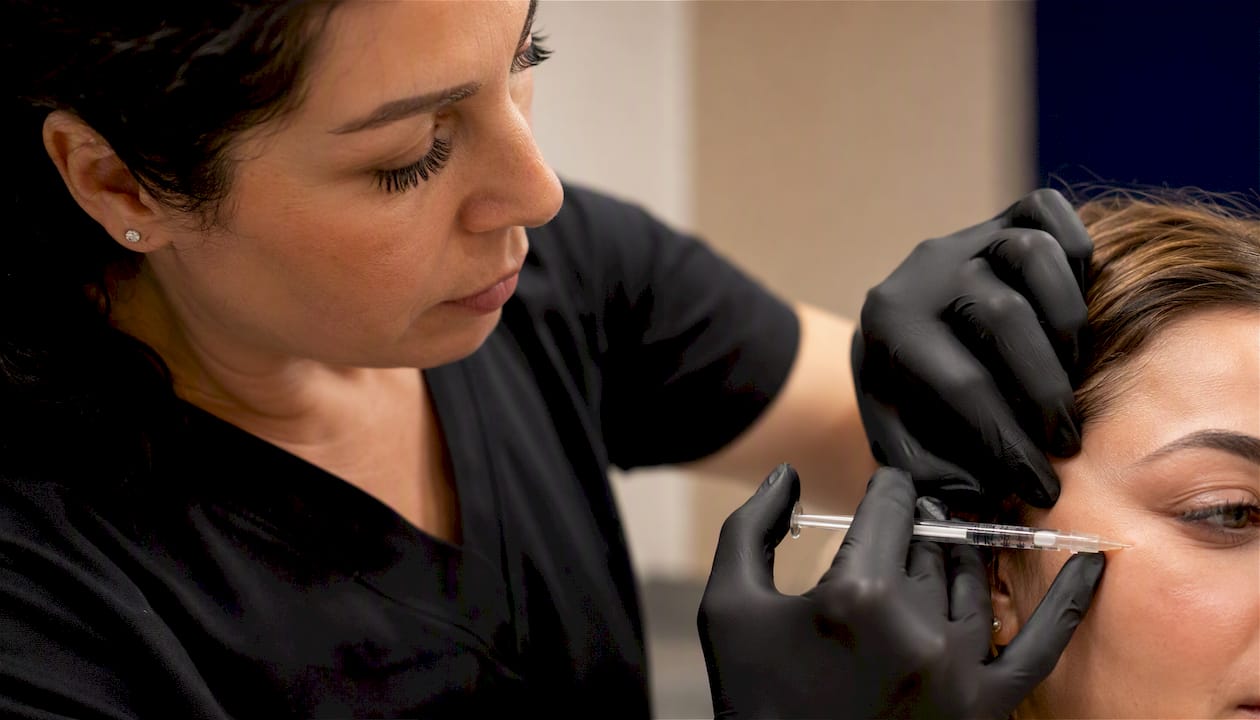
Pro Tip: If your injector suggests treating your cheeks before touching the under-eye area directly, that’s usually a sign of good judgment, not an upsell. Midface support often does more for the hollow than direct filling alone.
What are the risks of under-eye fillers?
Most side effects are minor and predictable. Bruising and swelling are common in the first week, and some patients notice a bluish tint through very thin skin called the Tyndall effect, which happens when filler sits too superficially and light refracts through it.
The rare but serious risks are what deserve real attention. Vascular occlusion can occur if filler enters a blood vessel, and in the worst cases this can lead to skin necrosis or, extremely rarely, vision loss if product travels into the ophthalmic vascular system. These events are uncommon, but the periorbital area’s dense and variable vascular anatomy means the margin for error is smaller here than almost anywhere else on the face.
“Time is critical for any ocular event,” according to the ASDS Task Force recommendations on injectable filler safety, which advise stopping injection immediately at the first sign of visual compromise.
If a vascular event is suspected, the response has to be immediate:
- Stop injecting right away and document the patient’s vision and pain level.
- Perform a basic ocular exam, checking pupil response and visual acuity.
- Begin the hyaluronidase protocol immediately if an HA product was used.
- Refer urgently to ophthalmology, ideally within the 60 to 90 minute window most literature points to for the best chance of reversing vascular compromise.
- Call an ambulance or go to the emergency room without delay if vision changes are significant.
Every clinic offering this treatment should have hyaluronidase stocked and ready, a written vascular occlusion protocol posted for staff, and a prearranged referral pathway to an ophthalmologist. This isn’t excessive caution. It’s the baseline standard the ASDS Task Force recommends for anyone doing this work.
Pro Tip: Ask directly whether your clinic keeps hyaluronidase on site and has a written emergency protocol. A confident, specific answer, not a vague reassurance, tells you a lot about how seriously they take this area.
How long do results last and what maintenance looks like
Right after treatment, expect some visible swelling that can make the area look slightly overfilled for a few days. That settles within one to two weeks as bruising and puffiness resolve. The true final result usually isn’t visible until around the three-month mark, once the filler has fully integrated and any residual swelling is gone.
| Timeframe | What to expect |
|---|---|
| Immediately after | Visible swelling, possible mild bruising |
| 1 to 2 weeks | Swelling and bruising largely resolved |
| 3 months | Final, settled result visible |
| 9 to 12 months | Typical point for HA filler to begin softening |
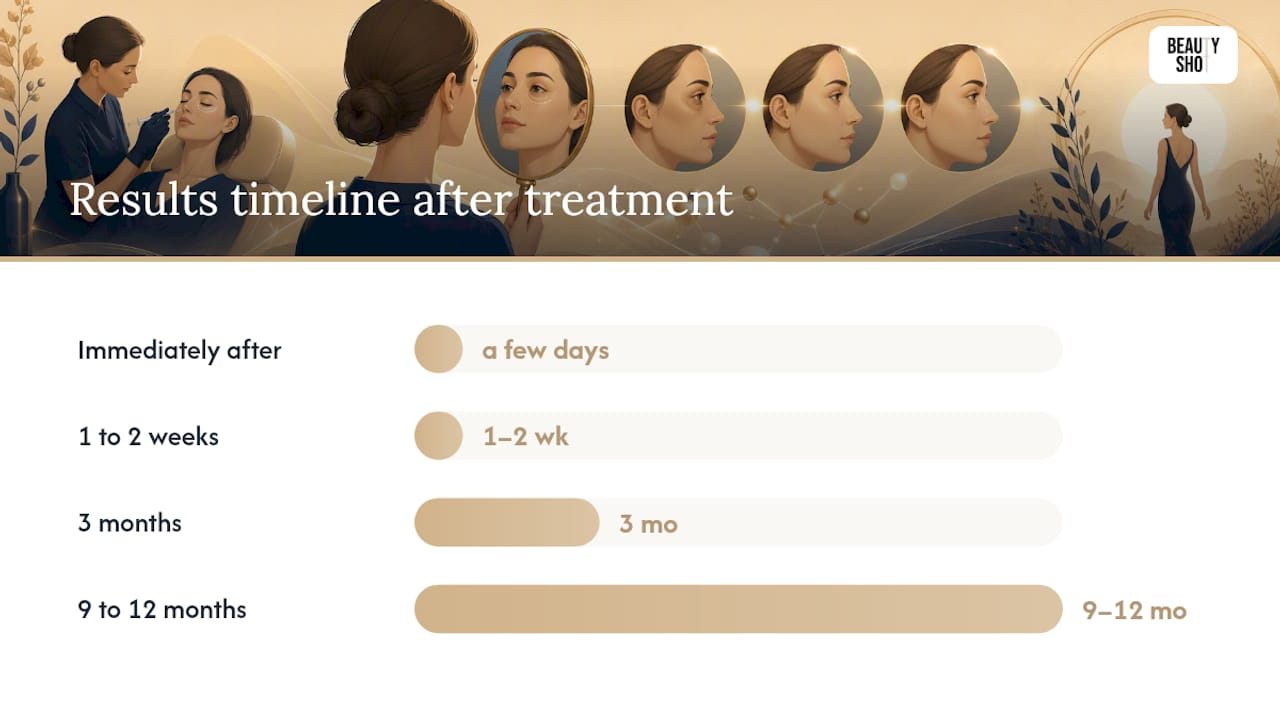
For most patients, HA filler in the tear trough lasts about 9 to 12 months. Duration varies based on the specific product’s rheology (how thick or cohesive it is), your metabolic rate, how deeply it was placed, and your individual immune response to the material.
Maintenance is best approached conservatively. Rather than fully replacing lost volume at each visit, many injectors prefer small top-ups that maintain a natural look over time, sometimes paired with cheek support rather than repeated direct tear-trough treatment. Before-and-after photos are a normal part of tracking your results, and any clinic sharing those images, even anonymized, should have your written consent first.
Recovery and aftercare after treatment
The first 48 to 72 hours set the tone for how smoothly you heal. A few simple rules make a real difference:
- Skip heavy exercise for two to three days to reduce swelling.
- Avoid alcohol the night of treatment and the day after.
- Sleep slightly elevated for the first couple of nights.
- Don’t massage or press on the treated area unless your injector specifically instructs you to.
- Apply cold compresses gently in the first 24 hours if swelling feels uncomfortable.
Bruising typically peaks in the first two to three days and fades over one to two weeks. Swelling usually improves faster, often noticeably better within a few days.
“Correction should stay conservative, and staged,” reflects common guidance from clinics treating tear troughs regularly, with hyaluronidase available as the corrective tool whenever filler placement needs adjusting.
Some symptoms need immediate attention rather than a wait-and-see approach. Contact your clinic right away, or head to the emergency room, if you notice sudden vision changes, severe or escalating pain, or extensive skin blanching (a pale, mottled appearance) in the treated area. These can signal a vascular event and time matters.
Delayed swelling that appears weeks after treatment, or a persistent lump that doesn’t resolve, is also worth a follow-up visit. Hyaluronidase can dissolve misplaced or excess product cleanly if adjustment is needed.
How much do under-eye fillers cost?
Pricing for tear-trough filler varies more than people expect, and it’s rarely just about the syringe. Costs are usually quoted per session or per syringe, and the final number depends on how much product your case actually needs.
A price that seems unusually low for under-eye work is worth questioning rather than celebrating. This is one of the few areas of the face where the injector’s skill and the clinic’s safety infrastructure matter more than almost anywhere else.
Several factors shape what you’ll pay. Injector expertise and training carry real weight, since tear-trough work demands more precision than most other filler areas. The specific product chosen, whether Juvéderm, Restylane, Belotero, or another HA formulation, affects cost too, as does the number of syringes your case requires. If your treatment plan includes cheek support alongside direct tear-trough work, that adds to the total but often improves the outcome.
Before booking, confirm exactly what’s included in your quote: which product brand and how much volume per side, whether a follow-up check-in is part of the package, and what the clinic’s policy is if an adverse event requires hyaluronidase correction. A reputable clinic will answer these questions clearly and without hesitation.
How to choose a safe injector for under-eye filler
This is the single most important decision in the entire process, more important than the brand of filler used. Look for these credentials and signals before booking:
- A registered nurse with advanced injector training, or a dermatologist or oculoplastic surgeon for more complex cases.
- Documented before-and-after photos of tear-trough cases specifically, not just lips or cheeks.
- A clear, confident answer about hyaluronidase availability on site.
- A written emergency protocol for vascular events, not a vague verbal reassurance.
- A prearranged referral pathway to ophthalmology if something goes wrong.
At your consultation, ask direct questions: How many tear-trough cases have they treated? Which filler brands do they use and why? What’s their protocol if a complication happens? What does follow-up care look like after the initial appointment? A confident, specific injector welcomes these questions rather than brushing past them, as we’ve discussed in more depth in cosmetic nurse versus doctor injectables.
Red flags are usually easy to spot once you know what to look for. Be cautious of clinics offering under-eye filler as a casual add-on to another treatment, with no dedicated tear-trough experience behind it. The same goes for any clinic that can’t clearly confirm hyaluronidase is stocked on site, or that has no documented plan for handling a complication.
When reviewing before-and-after photos, look for consistent lighting and angle between the two images, and be wary of examples that look suspiciously flawless. Real results include some natural variation, subtle improvement that still looks like the same person, not a dramatically different face.
Pro Tip: If a clinic can’t answer “what’s your protocol if a patient reports vision changes after treatment?” without hesitation, that’s a reason to keep looking.
How we assess and treat under-eye hollows at our clinic
Every tear-trough consultation starts the same way: with a real conversation, not a sales pitch. We review photo history where available, go through your full medical history, and map your specific anatomy, bone structure, fat pad position, skin quality, before ever discussing product or price. Some patients leave that first visit with a plan for direct tear-trough filling. Others leave with a plan focused on cheek support instead, because that’s what their anatomy actually calls for.
Safety infrastructure isn’t optional in this area of the face. Hyaluronidase stocked and ready, a written vascular occlusion protocol, and a clear referral pathway to ophthalmology are baseline requirements, not extras, for anyone treating the tear trough responsibly.
Our safety checklist includes:
- Hyaluronidase on hand at every appointment involving HA filler.
- A written emergency protocol for suspected vascular events.
- A prearranged referral relationship for urgent ophthalmology assessment if needed.
- Documented informed consent covering rare but serious risks, discussed plainly, not buried in paperwork.
A typical consultation and treatment visit gives you enough time to ask questions, understand your options, and feel confident in the plan before any product is used. Follow-up is built into the process, not an afterthought you have to chase down.
A note from Irene
I’ve treated a lot of under-eye hollows over the years, and the cases that turn out best are almost always the ones where we took our time getting the diagnosis right before we picked up a syringe. Some patients come in expecting filler and leave with a cheek-focused plan instead, because that’s genuinely what their face needs. I’d rather be honest with you about that than give you a treatment that looks good for two weeks and then doesn’t age well.
My approach has always been conservative. Small amounts, careful placement, and a real conversation about what’s realistic for your anatomy. If you’re curious whether filler is right for your under-eye area, the best next step is a proper consultation where we can actually look at your anatomy together, not a guess based on a photo online.
You should walk away from any filler treatment still looking like yourself, just more rested. That’s the whole point.
Book your tear-trough consultation
Beautyshotmedicalclinic takes an anatomy-first approach to under-eye hollows, which means we won’t recommend direct tear-trough filler if your case actually calls for cheek support, dissolving prior filler, or a referral elsewhere. Every treatment is performed by an advanced cosmetic Registered Nurse who assesses fat pad position, skin quality, and vascular considerations before any product is discussed, so you’re not paying for a one-size-fits-all package.
Your first visit includes a full anatomy assessment, a realistic timeline for results, and clear pricing based on what your case actually needs rather than a flat rate applied to everyone. Bring a couple of older photos if you have them, along with a summary of your medical history and any past filler treatments. From there, we’ll walk through whether direct filling, midface support, or a combination makes sense for your face.
If you’re ready to find out what your under-eye area actually needs, visit our dermal fillers page to see treatment details and book a consultation in Woodbridge.
Quick takeaways: the most important points to remember
Under-eye hollows respond well to hyaluronic acid filler only when the cause is genuine volume loss, and safety infrastructure matters more than the brand name on the syringe.
| Point | Details |
|---|---|
| Filler treats volume loss, not everything | Pigment, loose skin, and fat pads need different treatments, not filler. |
| HA is reversible | Hyaluronidase can dissolve HA filler if results need adjusting or a complication occurs. |
| Results last 9 to 12 months | Most patients need a top-up within that window to maintain results. |
| Safety protocols come first | Confirm hyaluronidase availability and a written emergency plan before booking. |
| Beautyshotmedicalclinic uses an anatomy-first approach | Treatment is performed by an advanced cosmetic Registered Nurse who assesses candidacy before recommending direct filling or cheek support. |
Sources
These sources go deeper into the clinical evidence behind tear-trough filler treatment, and reading level ranges from patient-friendly to clinician-oriented:
- Under-eye tear trough filler — Healthline
- Prospective study on cannula technique for tear trough filler — PubMed
- Review on vision loss from fillers and emergency techniques — PMC article
- Recommendations for treatment of tear trough deformity with HA filler — PubMed
- ASDS Task Force recommendations for preventing and treating adverse events of injectable fillers — ASDS PDF
These references are written largely for clinicians, so if anything raises questions specific to your own case, bring them up directly with your provider rather than drawing conclusions on your own.
This article is general information, not a substitute for advice from a qualified doctor. Consult a qualified healthcare professional about your own circumstances before acting on anything here.
FAQ
Can fillers fix sunken under eyes?
Yes, when the sunken appearance comes from genuine volume loss. Hyaluronic acid filler can soften that hollow, though it won’t correct sunken eyes caused mainly by pigment or loose skin.
How do you fill in under-eye hollowness?
A trained injector places small amounts of hyaluronic acid filler, often in the supra-periosteal plane against the bone, using careful incremental dosing to restore lost volume gradually.
How much does it cost to fill under-eye hollows?
Cost is typically quoted per syringe or per session and depends on the product used, how much volume your case needs, and whether cheek support is included alongside direct tear-trough treatment.
What is the downside of under-eye fillers?
The main downsides are temporary bruising and swelling, plus a small risk of more serious complications like vascular occlusion, which is why hyaluronidase availability and injector experience matter so much in this area.