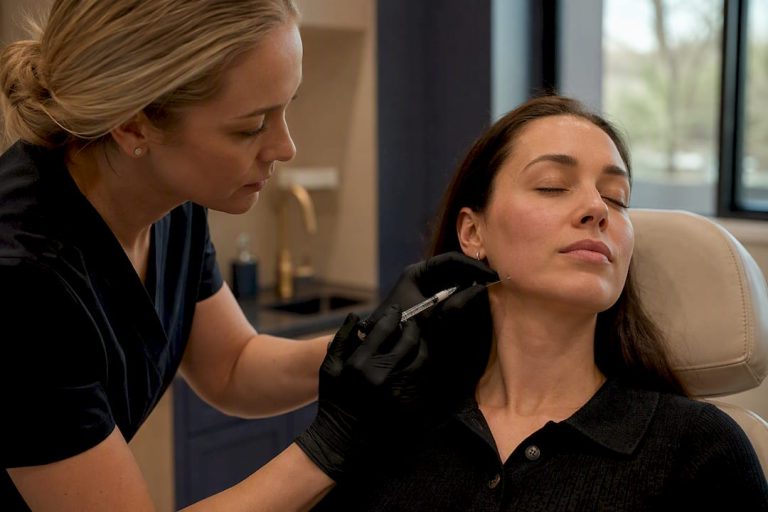
Botox and dermal fillers are defined by where and how they work. Botox relaxes the muscles that cause dynamic wrinkles, primarily in the upper face, while dermal fillers restore lost volume and smooth static wrinkles in the mid- and lower-face areas. Understanding this distinction is the foundation of every good treatment plan. Choosing between the two is not about preference. It is about matching the right tool to the right problem on your face. This guide walks you through exactly where each treatment works, why, and how to decide what suits your specific concerns.
1. Botox vs fillers treatment areas: the core difference
Botox targets movement-driven wrinkles; fillers address volume loss and lines visible at rest. This single distinction drives every treatment area decision a skilled injector makes. Botox, known clinically as onabotulinumtoxinA, works by blocking the nerve signals that tell a muscle to contract. When the muscle relaxes, the overlying skin smooths out. Fillers, most commonly made from hyaluronic acid, physically add structure beneath the skin to plump and lift.
The practical result is that these two treatments rarely compete. They complement each other. A patient with forehead lines and flat cheeks needs both, applied in different zones for different reasons. Recognising this early saves you from choosing one treatment when your face actually calls for both.
2. Where Botox is approved and most effective
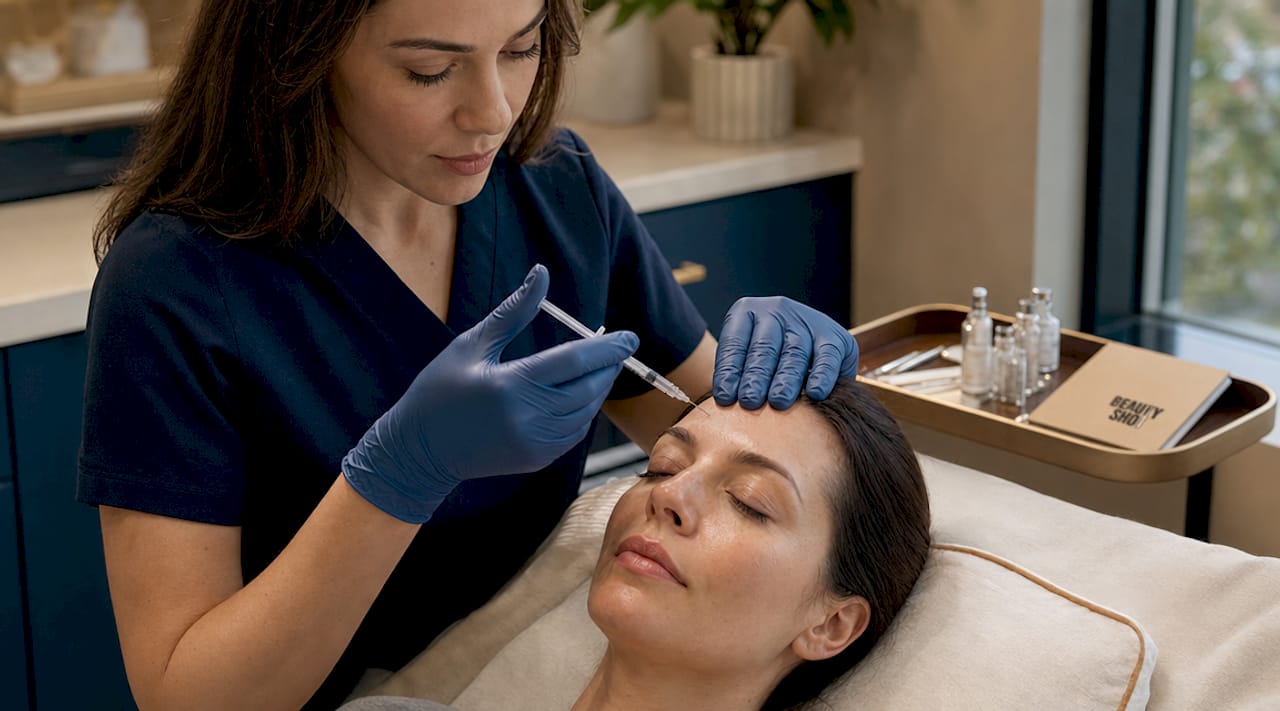
Botox has FDA-approved cosmetic indications for four specific areas: glabellar lines (the frown lines between your brows), forehead lines, crow’s feet at the outer corners of the eyes, and platysma bands in the neck. These approvals reflect years of clinical evidence confirming both safety and predictable outcomes in these zones. For anyone exploring Botox treatment areas for the first time, these four are the most reliable starting points.
The best areas for Botox share one characteristic: they are all driven by repetitive muscle movement. Squinting creates crow’s feet. Raising your brows creates forehead lines. Frowning creates the glabella crease. Botox interrupts that cycle without removing any tissue or adding any substance.
Common on-label Botox treatment areas include:
- Glabellar lines (frown lines between the brows): the most commonly treated zone
- Forehead lines: horizontal creases from brow raising
- Crow’s feet: fine lines at the outer eye corners from squinting and smiling
- Platysma bands: vertical neck cords that become prominent with age and muscle use
Pro Tip: Ask your injector to show you which lines disappear when your face is at rest versus which ones remain. Lines that persist at rest are static wrinkles and will not respond to Botox alone.
3. Off-label Botox uses: what requires extra caution
FDA approval for Botox began in 2002 with glabellar lines and expanded over time, but many popular Botox applications remain off-label. This includes the lip flip, brow lift, masseter slimming, chin dimpling, and the “Nefertiti lift” for the lower face and neck. Off-label does not mean unsafe. It means the treatment requires a deeper level of anatomical knowledge and clinical judgement.
Off-label Botox injections require expertise in facial muscle anatomy and an understanding of how relaxing one muscle affects the balance of surrounding muscles. An unskilled injector treating the masseter, for example, may inadvertently weaken nearby muscles involved in chewing or smiling. The results can include asymmetry, heaviness, or impaired facial movement. This is why the injector’s training matters as much as the treatment itself.
4. Fillers treatment areas and what they restore
Fillers are gel-like substances injected to restore facial volume in cheeks, lips, jawline, and nasolabial folds. Unlike Botox, fillers do not affect muscle activity. They physically fill the space beneath the skin where volume has been lost or where structure needs support. Hyaluronic acid fillers, such as those from the Juvederm and Restylane product families, are the most widely used because they are reversible with hyaluronidase if needed.
Common fillers treatment areas include:
- Cheeks: restoring the lifted, defined look that diminishes with age-related fat pad descent
- Lips: adding volume, shape, and definition to the lip border and body
- Nasolabial folds: softening the lines that run from the nose to the corners of the mouth
- Under-eye hollows (tear troughs): one of the most delicate filler zones, requiring significant expertise
- Jawline and chin: creating definition and improving facial proportion
- Temples: restoring volume lost in the upper face that contributes to a hollowed appearance
Pro Tip: Under-eye filler is one of the highest-risk areas due to the proximity of blood vessels. Only seek this treatment from an injector with advanced training and a clear protocol for managing complications.
Static wrinkles, meaning lines visible when your face is completely relaxed, are the primary target for fillers. These form because the underlying tissue has thinned or shifted, not because a muscle is contracting. No amount of Botox will fill a nasolabial fold that exists at rest.
5. Key differences between Botox and fillers at a glance
The table below summarises the most clinically relevant contrasts between the two treatments when it comes to selecting the right option for your facial concerns.
| Feature | Botox | Dermal fillers |
|---|---|---|
| Mechanism | Relaxes muscles by blocking nerve signals | Adds physical volume beneath the skin |
| Wrinkle type | Dynamic (movement-related) | Static (present at rest) |
| Primary facial zone | Upper face | Mid- and lower face |
| Onset of results | Several days to take full effect | Immediate volume visible post-treatment |
| Duration | 3 to 4 months on average | 6 to 24 months depending on product and area |
Botulinum toxin is the treatment of choice for upper-face dynamic wrinkles, while fillers add volume and smooth static folds in the mid- and lower face. This is not a marketing distinction. It is a clinical one grounded in how each product interacts with facial anatomy. Knowing this helps you walk into a consultation with realistic expectations and the right questions.
6. How to choose based on your facial concerns
The decision between Botox and fillers starts with one simple self-assessment: look at your face at rest, then make an expression. Lines that appear only when you move are dynamic. Lines that are present whether you are expressionless or animated are static. This single observation tells you a great deal about which treatment your face needs.
Here is a practical framework for thinking through your options:
- Identify your wrinkle type. Dynamic lines in the forehead, between the brows, or at the outer eyes point toward Botox. Folds around the mouth, hollowed cheeks, or a receding chin point toward fillers.
- Consider volume loss. If your face looks tired or deflated rather than lined, fillers are likely the primary solution. Volume loss is not a Botox problem.
- Think about your timeline. Botox results develop over several days and last roughly 3 to 4 months. Fillers show results immediately and can last 6 to 24 months. If you have an event coming up, timing matters.
- Ask about combination treatments. Many patients in their 30s and 40s benefit from both. Botox softens the upper face while fillers restore the mid-face. You can explore combining Botox and fillers safely with the right guidance.
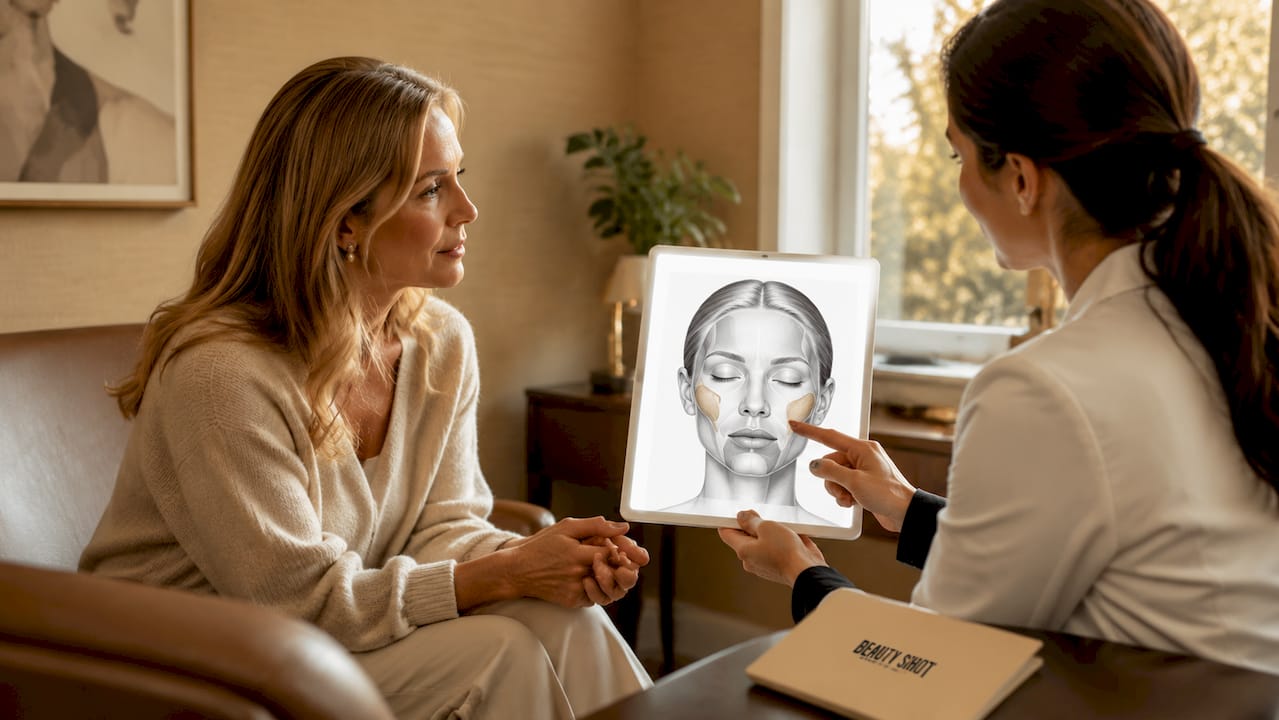
- Prioritise the consultation. Dynamic versus static wrinkle assessment during a consultation is the most reliable way to classify your concerns and choose the right treatment. A thorough facial mapping appointment with an experienced injector removes the guesswork entirely.
Pro Tip: Bring a photo of yourself from 5 to 10 years ago to your consultation. It gives your injector a clear reference point for what volume and contour looked like before age-related changes began, which leads to more natural-looking results.
7. When both treatments work together
The most natural-looking outcomes often come from using Botox and fillers in their respective zones at the same appointment. A patient in their early 40s might receive Botox in the glabella and forehead to soften expression lines, combined with cheek filler to restore the lifted midface that makes the entire face look refreshed. Neither treatment alone would achieve the same result.
The fillers vs botox question is often framed as a choice, but for many patients it is a sequence. Botox first to relax the upper face, then fillers to restore structure below. Some injectors prefer to place fillers first to establish the structural foundation before addressing movement. The order depends on your anatomy and your injector’s assessment. What matters most is that each product is placed in the zone where it will perform best.
Combination treatments also tend to use less of each product individually. When the face is balanced structurally with filler, less Botox is needed to achieve a smooth, rested appearance. This is one reason why experienced injectors rarely treat one zone in isolation.
Key takeaways
Botox and dermal fillers treat different wrinkle types in different facial zones, and choosing correctly between them requires assessing whether lines are caused by muscle movement or volume loss.
| Point | Details |
|---|---|
| Botox targets dynamic wrinkles | Approved for forehead, glabella, crow’s feet, and neck bands where muscle movement causes lines. |
| Fillers restore volume and structure | Best suited for cheeks, lips, jawline, and nasolabial folds where tissue has thinned or shifted. |
| Wrinkle type guides treatment choice | Lines at rest need fillers; lines that appear only with expression respond to Botox. |
| Results and duration differ significantly | Botox lasts 3 to 4 months; fillers last 6 to 24 months depending on product and placement area. |
| Combination treatments deliver the best balance | Many patients benefit from both, applied in their respective facial zones at the same session. |
What I have learned from treating both zones every day
After nine years of injecting, the question I hear most often is: “Which one do I need?” My honest answer is almost always: “Let me look at your face first.”
The biggest mistake I see patients make before a consultation is deciding on a treatment before an assessment. Someone comes in convinced they need filler for their forehead lines, when what they actually have are dynamic creases that will respond beautifully to Botox. The reverse happens too. A patient requests Botox for lines around the mouth that are entirely static and will not budge without volume support.
Treatment area selection should never be driven by marketing trends or what a friend had done. It should be driven by your anatomy. I assess every patient’s face at rest and in motion before recommending anything. That two-minute assessment changes the entire treatment plan more often than you would expect.
I also want to be direct about off-label Botox areas. Treatments like the lip flip, brow lift, and masseter reduction can produce beautiful results in the right hands. But they require a level of anatomical precision that not every injector has. If a provider is offering these treatments without a thorough consultation and facial assessment, that is a signal to ask more questions.
My goal with every patient is a refreshed, balanced result that still looks like them. That only happens when the right product goes into the right zone for the right reason.
— Felix
Book your personalised treatment assessment at Beauty Shot
If you are weighing Botox against fillers and want clarity on which treatment areas suit your face, a personalised consultation at Beautyshotmedicalclinic is the most direct path forward. Located in Woodbridge, Vaughan, all injectable treatments at Beauty Shot are performed by Irene Soni, an advanced cosmetic Registered Nurse with over nine years of experience in facial balancing, Botox, Dysport, and dermal fillers. Browse the before and after gallery to see real patient results across a range of treatment areas, and visit Beauty Shot Medical Clinic to book your consultation.
FAQ
What is the main difference between Botox and fillers?
Botox relaxes muscles to smooth dynamic wrinkles caused by facial movement, while fillers add volume to correct static wrinkles and restore facial structure. They work through entirely different mechanisms and are suited to different areas of the face.
Can Botox and fillers be used in the same areas?
In most cases, no. Botox is best suited to the upper face where muscle movement drives wrinkles, while fillers are used in the mid- and lower face for volume restoration. Some areas, like the lips, can benefit from both treatments applied for different purposes.
How do I know if I need Botox or filler for my forehead?
If your forehead lines disappear when your face is at rest, Botox is the appropriate treatment. If lines remain visible even without expression, a filler may be needed to address the static component, though forehead filler requires advanced expertise.
How long do Botox and filler results last?
Botox results typically last 3 to 4 months, while dermal fillers can last anywhere from 6 to 24 months depending on the product used and the area treated. High-movement areas like the lips tend to break down filler more quickly than lower-movement zones like the cheeks.
Is it safe to get Botox and fillers at the same appointment?
Yes, when performed by an experienced injector, Botox and fillers can be safely administered in the same session. Many patients achieve more balanced, natural-looking results by addressing both dynamic and static concerns together rather than in separate appointments.
Recommended
- Botox vs. Fillers: Which One is Right for You? – Beauty Shot | Botox Fillers Woodbridge Vaughan
- Fillers vs. Botox: what’s the real difference?
- Combining Botox and fillers safely: your 2026 guide
- Combining Botox with Other Treatments: What You Need to Know – Beauty Shot | Botox Fillers Woodbridge Vaughan