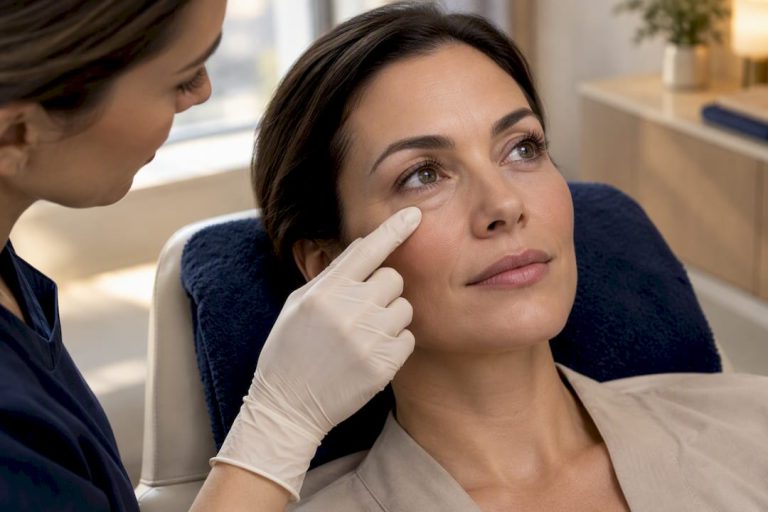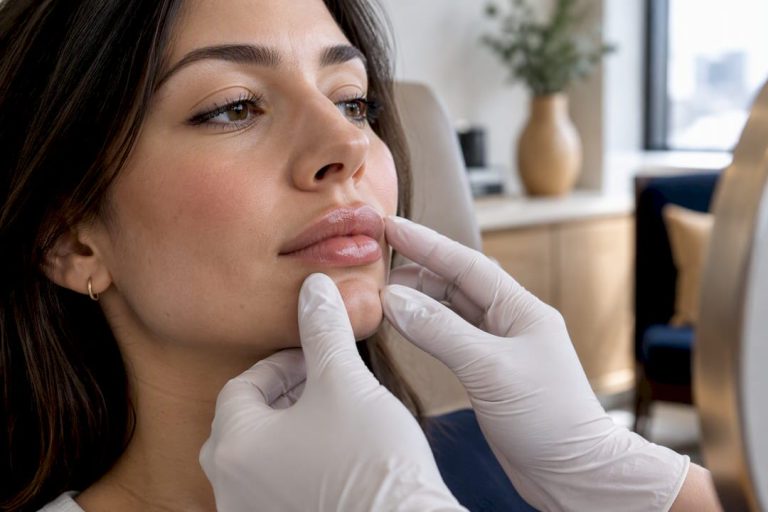

You can usually reintroduce retinol about 1 to 2 weeks after filler, though many clinics recommend waiting the full 7 days at minimum before any exfoliating actives touch treated skin, according to hospital dermatology aftercare guidance. In the meantime, stick to a gentle cleanser, a fragrance-free moisturizer, and daily SPF. Lips and under-eye areas often need longer, so confirm your exact timeline with your injector before restarting.
TL;DR:
- Wait at least seven days after filler before reintroducing retinol, with a full two-week pause recommended for delicate areas like lips and under-eyes.
- During the first two weeks, avoid retinoids, exfoliating acids, and vigorous facial massage to allow injection sites to fully heal.
- Gradually reintroduce retinol starting with patch tests and low concentrations, advancing slowly once skin tolerates it without irritation.
- Using a gentle, barrier-supportive moisturizer and daily SPF during healing minimizes irritation and supports proper filler settling.
- Follow-up consultations are essential for personalized timing of retinol restart, considering filler type, injection depth, and individual skin response.
Your post-filler timeline: what to do in the first days and weeks
The days right after your appointment matter more than most patients expect. Your skin has tiny puncture wounds from the needle or cannula, and those need to seal before you introduce anything that speeds up cell turnover or thins the surface layer.
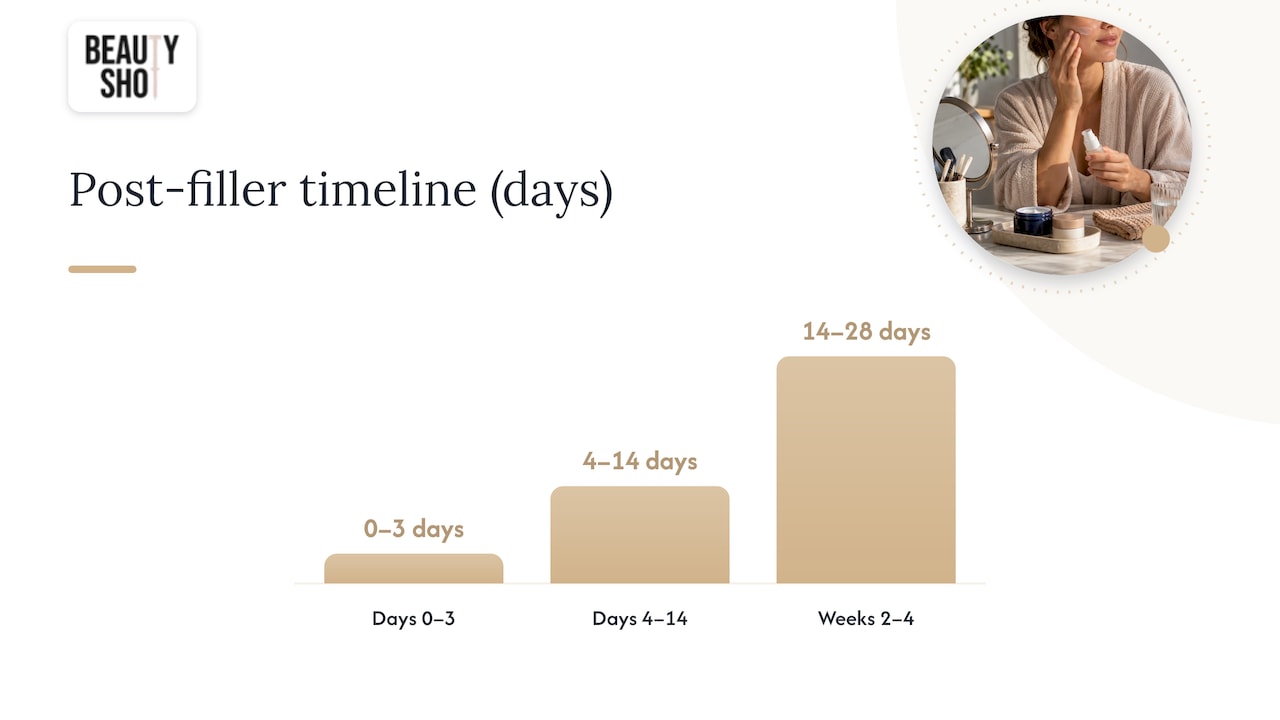
- Days 0 to 3: Focus on letting injection sites close. Wash gently with a mild, non-comedogenic cleanser, apply a plain moisturizer, and skip makeup for the first 24 to 48 hours if you can. Avoid touching, massaging, or applying pressure to treated areas.
- Days 4 to 14: Your skin is stabilizing but still healing beneath the surface. Most clinic protocols advise avoiding retinoids for at least 7 days, and many injectors extend that to the full two weeks, particularly if you had lip or under-eye filler.
- Two to four weeks: This is when most patients have a follow-up check, and it is the natural point to reassess your skincare routine with your injector.
That two to four week follow-up is not just a courtesy call. It gives your injector a chance to see how the filler has settled, check for any lingering swelling or firmness, and confirm your skin is ready for actives again. Health Canada notes that dermal filler reactions can include pain, bruising, swelling, or nodules, and these are exactly the signs your injector will want to rule out before clearing you for retinol.
Clinical practice also discourages vigorous facial massage or exfoliating treatments for at least seven days post-injection, which gives the micro-puncture sites time to fully close. If you had filler in a delicate area like the lips, our day-by-day lip filler recovery guide walks through what normal healing looks like during that window.
Why retinol too soon can interfere with healing
Retinol works by speeding up how quickly your skin cells turn over, which is exactly what makes it effective for fine lines and texture over the long term. Right after filler, though, that same mechanism becomes a liability. Faster cell turnover means more surface shedding, and shedding skin over fresh puncture sites raises the chance of irritation exactly where your skin is trying to heal.
Retinoids also temporarily weaken the skin barrier, the outer layer that keeps moisture in and irritants out. When that barrier is compromised at the same time as a healing injection site, you get a higher likelihood of localized redness, flaking, or in rare cases, a setup for infection at the entry point. This is part of why hospital dermatology guidance groups retinoids with other agents to avoid, including cretinoid, benzoyl peroxide, and glycolic or salicylic acids, for the same early window.
There is a cosmetic reason to wait, too. Filler needs a few days to settle into its final position and volume, and any irritation, swelling, or inflammation on the surface can make that settling process harder to judge accurately. If your skin is reacting to a retinoid, it becomes difficult for you or your injector to tell whether swelling is from the filler or from the product. Waiting removes that variable and gives you a clearer picture of your actual results.
How to bring retinol back into your routine, step by step
Once you are past the early healing window, and ideally once your injector has confirmed your skin looks settled, the goal is a slow, controlled reintroduction rather than jumping straight back to your old routine.
- Patch test first. Apply a small amount of your retinol product to your forearm or along the jawline, away from any injection site, and wait 48 to 72 hours to check for redness or irritation.
- Start low and slow. Use a lower concentration than you might be used to, and apply it once or twice a week rather than nightly.
- Increase gradually. If your skin tolerates the product with no redness, flaking, or stinging, you can typically move to every other night over the following two to three weeks.
- Watch the injection sites specifically. Even once you are applying retinol elsewhere on the face, some injectors suggest waiting a little longer before applying it directly over lips or under-eye areas, since these zones tend to be thinner and more reactive.
- Space out other treatments. If you have a chemical peel, microneedling, or laser session planned, talk to your injector about sequencing so you are not combining multiple exfoliating stressors on skin that just had filler.
This staged approach is not just caution for its own sake. An international expert panel reviewing periprocedural skincare found that tailored pre- and post-procedure routines involving moisturizers, antioxidants, and sunscreens support better outcomes, and the same review notes that retinoids belong in long-term skincare but their timing needs to be adapted to the individual and the procedure. A separate practical algorithm published in the Journal of Drugs in Dermatology describes patch testing on the forearm or jawline, waiting 48 to 72 hours, then applying once weekly away from injection sites before resuming limited use near treated areas, which lines up closely with what most injectors recommend in practice.
Pro Tip: Keep a small notebook or phone note tracking when you restarted retinol and any reaction you noticed. It makes your next filler consultation far more useful.
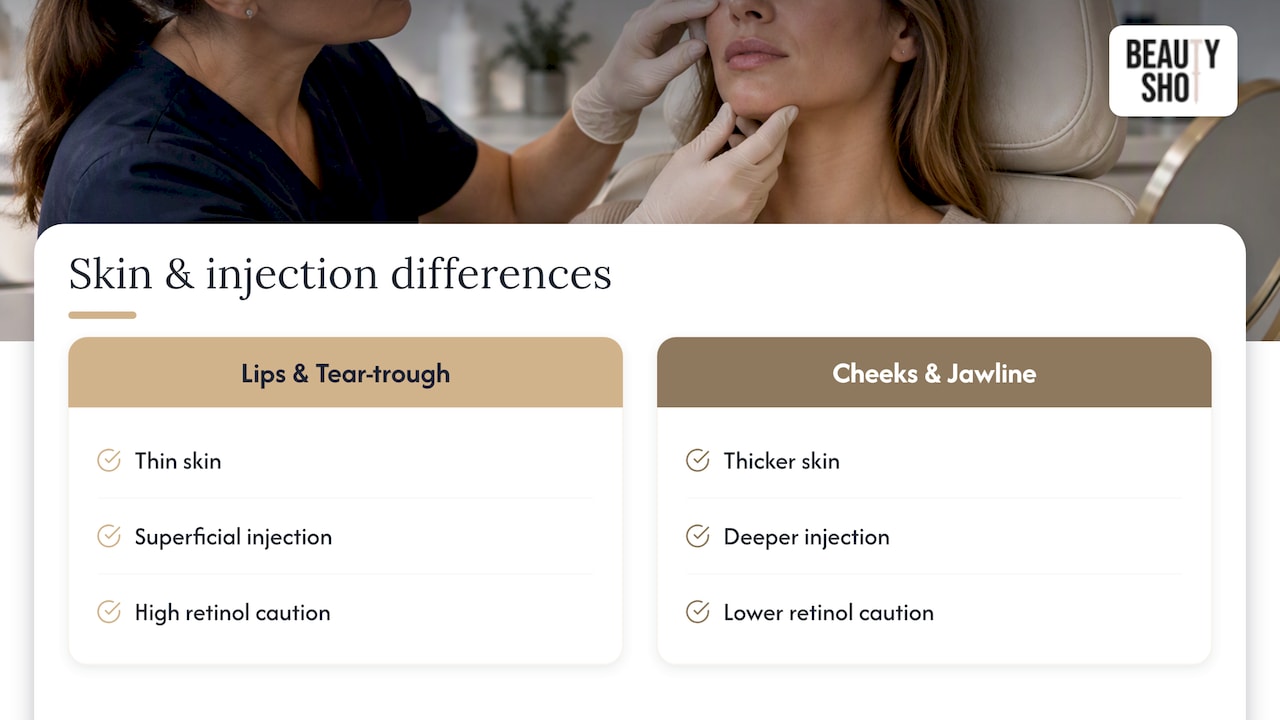
If you had filler in the cheeks, temples, or jawline, where the tissue is thicker and the placement is often deeper, you may find your injector comfortable moving through this ramp-up a little faster than if you had lip or tear trough filler. Our guide on how filler restores facial harmony covers how placement depth varies by treatment area, which is part of why one blanket timeline never fits every patient.
What to put on your skin while you ease retinol back in
The products you choose during this ramp-up period matter almost as much as the timing itself. A few principles keep irritation to a minimum while your skin adjusts.
- Choose a mild retinol formulation in a gentle, non-irritating base rather than a high-strength or prescription retinoid.
- Avoid layering retinol with AHAs, BHAs, or benzoyl peroxide during the ramp-up, since combining actives multiplies the risk of redness and flaking.
- Hold off on strong vitamin C serums on the same nights as retinol until your skin has proven it tolerates the retinol alone.
- Add a moisturizer with ceramides or hyaluronic acid to support the barrier while it recovers from both the injection and the new active.
- Wear a broad-spectrum SPF every morning, since retinol increases sun sensitivity and your skin is already more vulnerable post-procedure.
- Read labels for the active ingredient list rather than trusting marketing terms like “gentle” or “sensitive formula,” which are not regulated claims.
Panel consensus on periprocedural skincare specifically supports routine use of moisturizers and sunscreen around injectable procedures, noting these elements reduce irritation and support better outcomes once actives are reintroduced. If you are looking for a barrier-focused option to lean on during this window, a firming serum such as Maison Dovellé’s Firm Serum is worth considering for its focus on skin support rather than exfoliation.
Normal healing versus signs that need a call to your injector
Most people experience some mild bruising, a bit of swelling, or slight lumpiness in the first few days after filler, and this typically settles within a week to ten days on its own.
- Mild bruising or tenderness at the injection site is expected and usually fades within a week.
- Transient swelling, especially in the lips or under the eyes, often peaks in the first 24 to 48 hours and then improves.
- Slight lumpiness while the filler integrates is common and often smooths out as the product settles.
- Worsening pain, spreading redness, fever, or discharge from an injection site are not normal and warrant a same-day call to your clinic.
- Persistent hard nodules beyond two to three weeks, or any sign of skin breakdown or ulceration, should be assessed urgently.
Health Canada notes that filler reactions can include pain, bruising, swelling, nodules, or infection, and recommends discussing any concerns with a healthcare provider rather than waiting them out. When in doubt, call your injector before your next skincare step rather than after.
A simple checklist for the first two weeks
Keeping your evening routine predictable during healing takes the guesswork out of when to layer products back in.
- Days 0 to 3: Gentle cleanser, plain moisturizer, SPF in the morning, no makeup for the first 24 to 48 hours if possible.
- Days 4 to 7: Same simple routine, still no retinol, no exfoliating acids, no facial massage tools.
- Week 2 onward: Begin patch testing retinol away from injection sites once your injector confirms healing looks on track.
- Throughout: Avoid facial rollers, gua sha, or any tool that presses on treated areas until your follow-up visit.
If you had lip filler, our guide on sleeping after lip fillers has practical positioning tips that pair well with this checklist, since pressure from a pillow can matter just as much as what you put on your skin.
Why your injector’s read on your skin matters more than a generic timeline
Not every face heals on the same schedule, and not every filler behaves the same way once it is placed. Thin perioral skin around the lips settles differently than the deeper fat pads of the cheek, and Health Canada’s own documentation on dermal fillers notes that different materials such as HA, PMMA, and PLLA carry different complication profiles and require different management. A superficial injection in the tear trough calls for more patience with actives than a deep injection along the jawline.
This is the real reason a follow-up appointment is worth keeping rather than skipping. Your injector can look at how your skin has actually responded, not just count days on a calendar, and adjust your retinol restart accordingly.
What the research and clinical practice actually tell us
The honest answer is that there is no single universal timeline, and most of what governs safe retinol timing is judgment built on anatomy, not a fixed rule that applies to every face. The conventional advice you will find online, usually a flat “wait two weeks,” misses that lip and under-eye tissue behaves nothing like cheek or jawline tissue, and treating them the same risks either unnecessary caution or unnecessary irritation.
What the evidence does support is a staged, individualized approach: a short mandatory pause while punctures seal, a patch test before full reintroduction, and a follow-up check that actually looks at your skin rather than just your calendar. If I had to name the one thing patients get wrong, it is treating the retinol restart as a single date rather than a process that depends on where the filler went and how the skin responds along the way. Prioritize the patch test and the follow-up conversation over the exact day count, and you will avoid most of the irritation that sends people back to their injector with unnecessary worry.
— Felix
Getting a personalized restart plan at a medical aesthetics clinic
Generic timelines are a reasonable starting point, but they cannot account for your specific filler type, injection depth, or skin sensitivity, and that gap is exactly where a follow-up visit earns its value. At this clinic, every injectable treatment is performed and followed up by an advanced cosmetic Registered Nurse with extensive injection experience, so the guidance you get on restarting retinol is based on how your face actually looks at your check-in, not a one-size-fits-all handout.
If you are a few weeks out from filler and wondering whether your skin is ready for retinol again, bring your current skincare products and a couple of recent photos to your follow-up so we can compare healing progress and talk through a realistic ramp-up schedule together. You can explore treatment areas and book a follow-up through our dermal fillers page or see the full range of options on our services page.
This article is general information, not a substitute for advice from a qualified doctor. Consult a qualified healthcare professional about your own circumstances before acting on anything here.
Sources
- Concomitant use of dermo-cosmetic skin care in aesthetic procedures: systematic review with expert panel recommendations
- Concomitant Use of Dermo-Cosmetic Skin Care in Aesthetic Procedures: Systematic review with expert panel recommendations
- Cosmetic after care instructions | OHSU
- Cosmetic injections – Health Canada
- A practical algorithm integrating skin care with nonenergy and injectable dermatologic procedures to improve patient outcomes and satisfaction – JDDonline
FAQ
How long after fillers can you use retinol?
Most clinics advise waiting at least 7 days before using retinol, with many extending that to 1 to 2 weeks for conservative healing. Lips and under-eye areas often need a longer pause, so confirm the exact timing with your injector at your follow-up.
What is forbidden after fillers?
Clinical aftercare guidance recommends avoiding retinoids, exfoliating acids like glycolic and salicylic acid, and benzoyl peroxide for about seven days post-injection. Vigorous facial massage and exfoliating facials are also discouraged during this window to let injection sites seal properly.
What makes fillers last longer?
Filler longevity depends on the material used and how it is placed, since Health Canada notes that different filler types such as HA, PMMA, and PLLA have different profiles and some are designed to last longer than others. A gentle, non-irritating skincare routine in the weeks after treatment also supports smoother healing while the filler settles.
What skincare can I use after fillers?
In the first week, stick to a gentle cleanser, a simple moisturizer, and daily broad-spectrum sunscreen while avoiding retinoids and exfoliating acids. Expert panel guidance supports adding moisturizers and sunscreen as core parts of periprocedural skincare before reintroducing stronger actives like retinol.