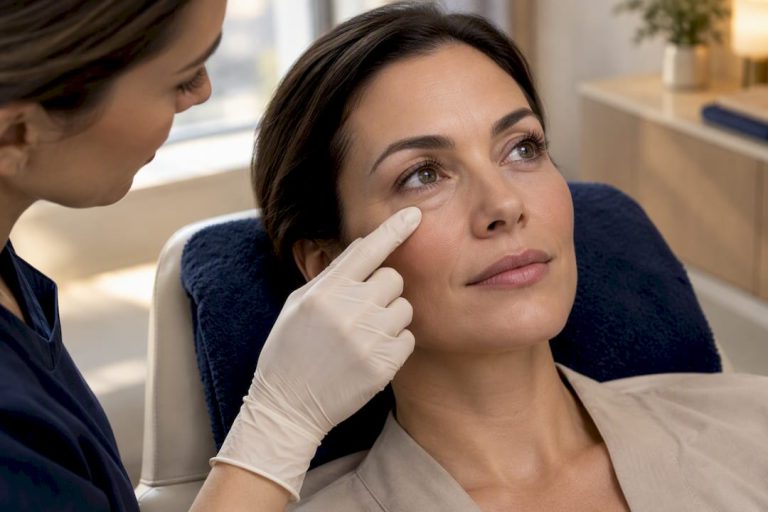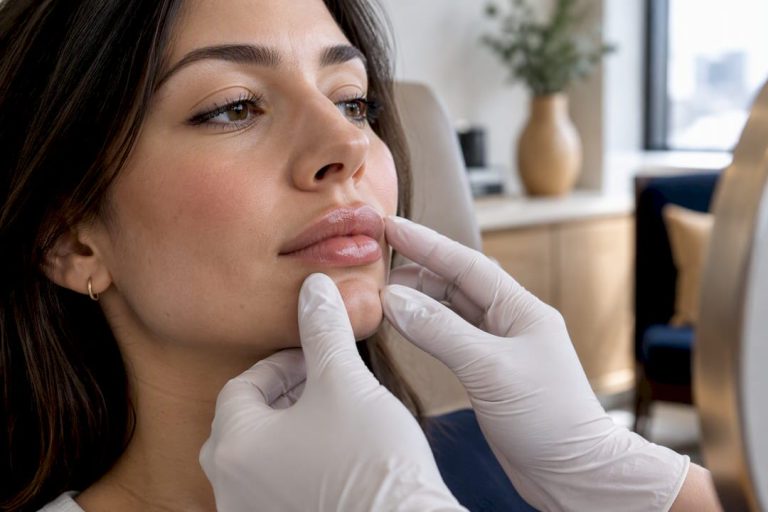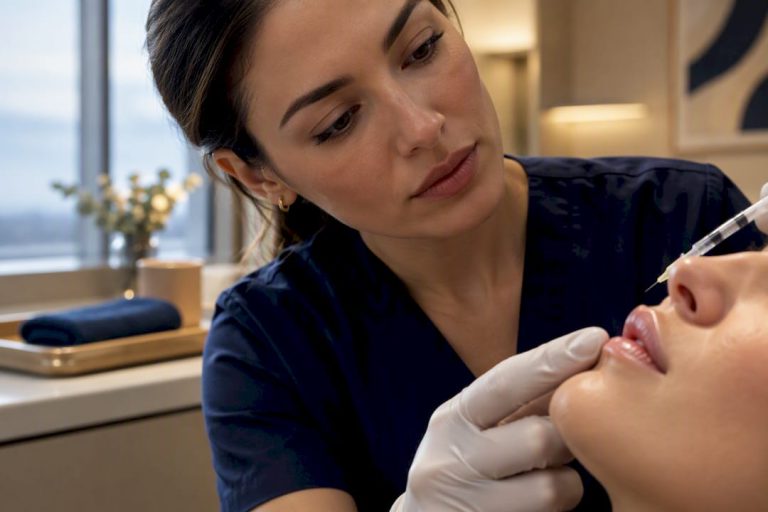
Avoid alcohol for at least 24 hours after dermal fillers, and plan on 48 to 72 hours if you bruise easily, take blood thinners, or had a larger volume treated. Alcohol widens blood vessels and can thin the blood slightly, both of which raise your odds of bruising and swelling at the injection sites. If you already had a drink, cold compresses and a call to your injector’s office are your next steps.
TL;DR:
- Waiting at least 24 hours before and up to 72 hours after treatment is essential, especially if you take blood thinners or have previously experienced heavy bruising.
- Alcohol causes vasodilation and reduces platelet reactivity, which increases bruising and swelling at injection sites during the critical healing period.
- Medications like aspirin, ibuprofen, and supplements such as fish oil or ginkgo also raise bruising risk, and should be paused under medical guidance before injections.
- If you drink alcohol after fillers, applying cold compresses and avoiding heat, exertion, and further alcohol minimizes complications.
- Full recovery and final results typically appear within two to four weeks, with lips and delicate areas taking longer to settle.
Why alcohol increases bruising and swelling after injectable treatments
Alcohol relaxes and widens your blood vessels, a response called vasodilation, which sends more blood flow to the skin and soft tissue right where you were just injected. That extra circulation is exactly what you do not want in the first 24 hours, when tiny vessels at each injection point are still sealing themselves off. Research also shows that alcohol intake is associated with decreased platelet reactivity, meaning your blood clots slightly less efficiently after drinking, which can extend bruising or make it more noticeable.
Alcohol consumption is linked to reduced platelet reactivity, according to a large population study, and even a modest change in clotting can matter a great deal in the small, delicate vessels of the lips or under-eye area. The effect is generally smaller than what a medication like aspirin produces, but timing makes it relevant. You are asking your body to heal from dozens of tiny needle punctures, and alcohol works against that process for as long as it is in your system.
Practical waiting times: how long to wait before and after fillers
Most clinics ask patients to skip alcohol for 24 hours before their appointment and for at least 24 to 72 hours afterward. The wider window applies to anyone with extra risk factors, and it is always the safer choice when you are unsure.
- Standard guidance: avoid alcohol 24 hours before treatment and 24 to 72 hours after.
- Extend to the full 72 hours if you take a blood thinner, have bruised heavily with past injections, or received a larger-volume treatment such as full-face filler.
- Planning a big event? If you want lip filler smooth and camera-ready for a wedding or photoshoot, book it 10 to 14 days ahead so any bruising or swelling has time to fully resolve.
- When in doubt, wait longer. An extra day of caution costs you nothing, but a bad bruise can take one to two weeks to fade.
Medications, supplements and other factors that raise bruising risk
Alcohol is not the only thing that thins your blood or dilates your vessels. A handful of common medications and supplements do the same, and disclosing all of them before your appointment helps your injector plan around your specific risk.
- Aspirin and NSAIDs such as ibuprofen and naproxen reduce platelet function and are commonly paused before injectables.
- Prescription anticoagulants, including warfarin and newer DOACs, have a much stronger blood-thinning effect and should never be stopped without your prescribing physician’s approval.
- Fish oil, vitamin E, ginkgo, and garlic supplements are all associated with increased bruising tendency.
- Some herbal formulas marketed for circulation or heart health carry similar effects and are worth mentioning at your consultation.
Expert consensus recommendations suggest pausing certain over-the-counter supplements and NSAIDs for 7 to 10 days before treatment, but only with your physician’s or injector’s guidance, since some of these serve important medical purposes.
Pro Tip: Write down every medication and supplement you take, even the occasional ones, and bring the list to your consultation so nothing gets missed.
If you already drank alcohol after fillers, here is what to do
A glass of wine at dinner is not a crisis. Here is how to manage it calmly.
- Apply a cold compress to any swollen or bruised areas for 10 to 15 minutes at a time during the first 24 hours.
- Keep your head elevated, even while sleeping, to reduce blood flow to the treated area.
- Skip the gym, sauna, and hot showers for the rest of the day, since heat and exertion add to swelling.
- Avoid more alcohol, salty food, and blood-thinning medication for the next 24 to 72 hours to let things settle.
- Call your injector if you notice pain that keeps increasing, discolouration spreading beyond the injection site, unusual paleness of the skin, or any change in vision. These can signal a rare but serious vascular complication that needs prompt attention.
Aftercare checklist to reduce bruising and help fillers settle
A few consistent habits in the first two to three days make a real difference in how quickly you look and feel like yourself again.
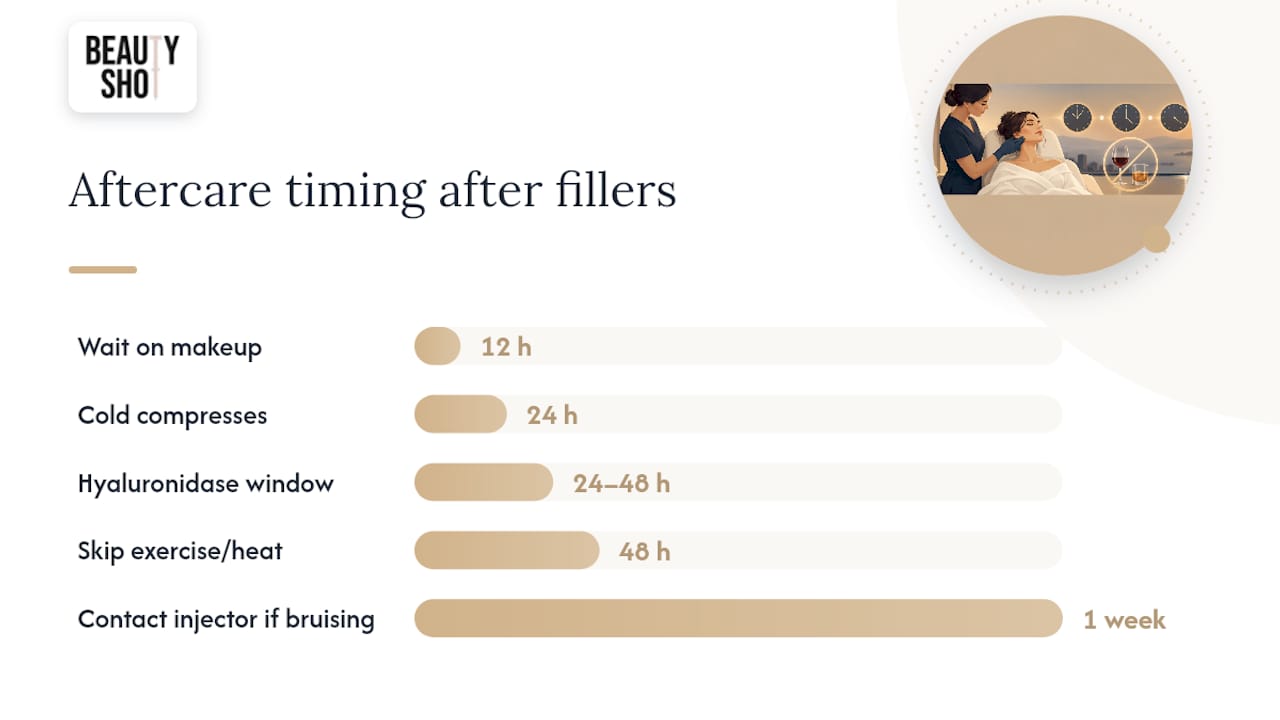
- Use cold compresses on and off for the first 24 hours, never applying ice directly to the skin.
- Sleep with your head slightly elevated for the first couple of nights.
- Skip strenuous exercise, saunas, and hot yoga until at least 48 hours have passed, a topic we cover in more detail in our guide to working out after lip fillers.
- Stay hydrated and go easy on sodium, which can worsen swelling.
- Hold off on new supplements and non-essential blood thinners unless your physician says otherwise.
- Wait on makeup over the injection sites for at least 12 hours to reduce infection risk.
If bruising or swelling seems to be getting worse rather than better after a few days, our tips for reducing swelling after lip fillers walk through additional remedies. In rare cases where a vascular issue is suspected, hyaluronidase can dissolve hyaluronic acid filler, and early treatment within 24 to 48 hours is linked to better outcomes.
Pro Tip: Drink water steadily through the day rather than all at once. Good hydration supports healing, and if bruising lingers past a week, let your injector know so we can check on it.
How long fillers take to settle, and what counts as normal
Some swelling and bruising right after treatment is expected and not a sign anything went wrong. Most patients see the bulk of it resolve within one to two weeks, with the final, settled result visible by two to four weeks depending on the area and the product used. Lips tend to swell and bruise more than other areas because the tissue is highly vascular, while cheeks and jawline typically settle faster. The under-eye area is thinner and more delicate, so it can take longer to look fully smooth. Drinking alcohol or continuing blood-thinning medications during this period can prolong visible bruising and swelling, which is why observing the recommended waiting time is important.
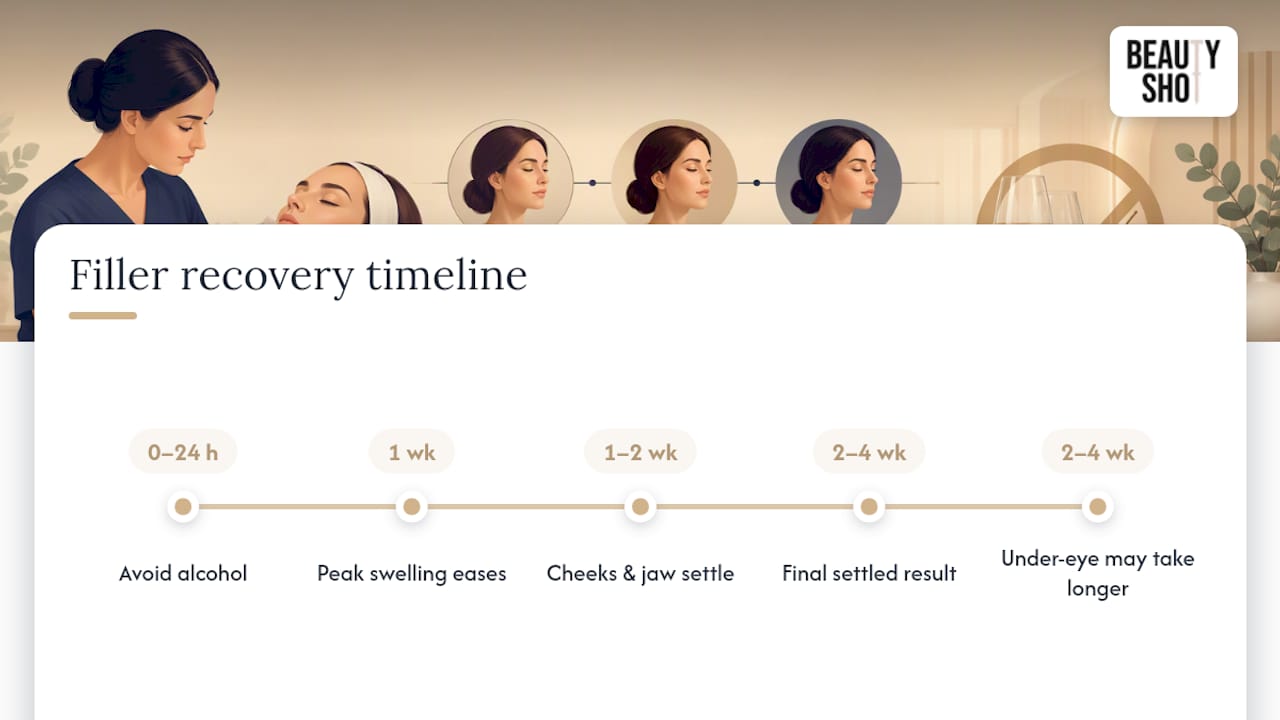
For a fuller picture of what to expect day by day, our recovery timeline after lip fillers breaks down what is normal at each stage.
Why we ask patients to be conservative with alcohol after treatment
Our aftercare guidance is not arbitrary. It reflects what the evidence shows about alcohol’s effect on blood vessels and clotting, combined with years of watching how different patients heal. Some people bruise easily and need extra caution, while others recover quickly with minimal precautions. That is why we ask every patient about their medications, supplements, and drinking habits before treatment, not to be intrusive but to give advice that actually fits their body. A consultation is the best place to sort out your personal risk factors so your aftercare plan works for you rather than a generic set of rules.
— Felix
Book a consultation for safe, personalized filler care
Injection plans are built around your anatomy, medical history, and the natural, refreshed look you actually want. Treatments are performed by experienced medical professionals, so your aftercare guidance, including how long to wait before having a drink, comes from someone knowledgeable about recovery. If you are considering treatment or have questions about a recent one, our dermal fillers page outlines the areas we treat, from cheeks and temples to lips and under-eye hollows. When aftercare needs extra attention, including hyaluronidase consideration, we assess that in person rather than over the phone. Visit our services page to see the full range of injectable treatments and book a consultation.
Sources
This article draws on Health Canada’s cosmetic injections advisory, peer-reviewed research on alcohol and vasodilation and platelet function, and expert consensus recommendations on managing filler complications.
This article is general information, not a substitute for advice from a qualified doctor. Consult a qualified healthcare professional about your own circumstances before acting on anything here.
- Alcohol intake including wine drinking is associated with decreased platelet reactivity in a large population sample
- Treatment of soft tissue filler complications: expert consensus recommendations
FAQ
How long after getting fillers can I drink alcohol?
Wait at least 24 hours after fillers before drinking, and extend that to 48 to 72 hours if you take blood thinners, have bruised heavily before, or had a larger treatment. This window gives the tiny injection sites time to seal and reduces the chance of bruising from alcohol-related vasodilation.
What should I avoid after having fillers?
Avoid alcohol, strenuous exercise, saunas, and hot showers for at least 24 to 48 hours, since heat and increased blood flow both worsen swelling. It is also wise to hold off on new supplements like fish oil or vitamin E and to skip makeup over the injection sites for about 12 hours.
How long does it take for dermal fillers to settle?
Most swelling and bruising resolves within one to two weeks, with the final result visible by two to four weeks depending on the treated area. Lips tend to take longer to settle than cheeks or jawline because the tissue is more vascular.
What happens if I accidentally drink alcohol after lip fillers?
A single drink is unlikely to cause serious harm, but it can increase your chance of bruising or swelling in the lips, which are especially vascular. Apply a cold compress, avoid further alcohol for the next 24 to 72 hours, and contact your injector if you notice worsening pain, spreading discolouration, or any change in skin colour.