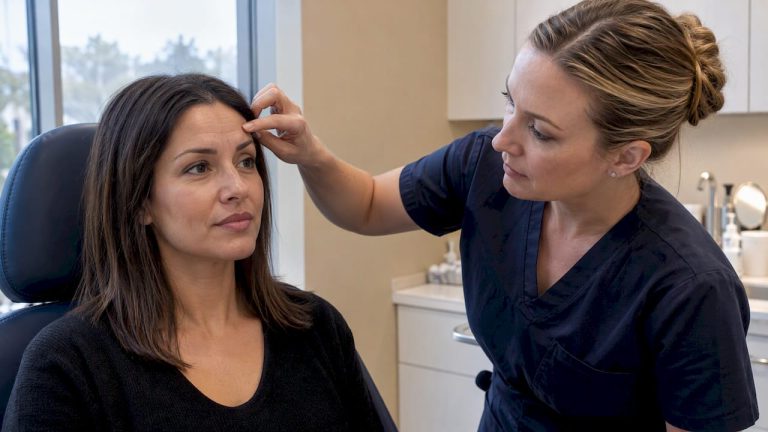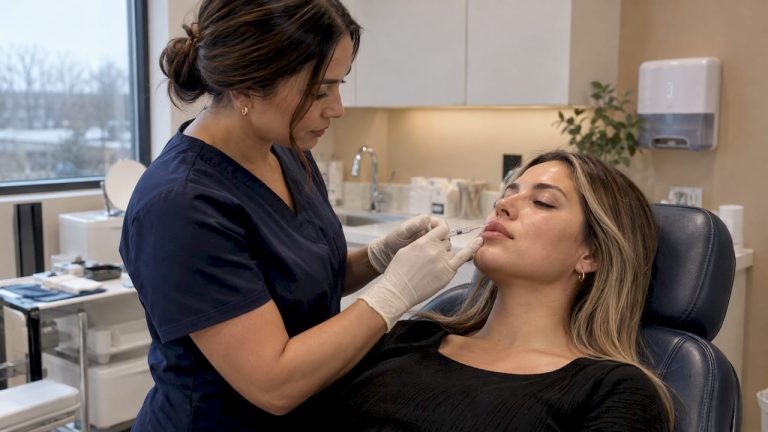

If you smoke or vape and have filler booked, you do not need to cancel, but you do need to tell your injector. Nicotine and heat can affect how your skin heals, and your injector can only plan around what they know. The same goes for ibuprofen, blood thinners and supplements. The most useful thing you can do is give a complete, honest list at your consultation.
I’m Irene Soni, a registered nurse and the founder of Beauty Shot Medical Clinic in Woodbridge. The questions below are ones patients in Vaughan, Maple, Kleinburg and across the GTA ask before their first filler appointment. I’ll give you what the sources say, where they stop, and how I handle it in a consultation.
TL;DR
- Health Canada’s public filler guidance gives no set number of days to stop smoking or vaping before treatment. It tells you to talk to an experienced professional and follow the product’s instructions and warnings.
- Nicotine narrows blood vessels. That is why your injector needs to know about cigarettes, vaping and nicotine products before any plan is made.
- Ibuprofen, aspirin, prescribed blood thinners and some supplements can affect bruising. List every one, and never stop a prescribed medication on your own: your prescribing doctor makes that call.
- Afterwards, follow your clinic’s written aftercare. Smoke, heat and repeated lip movement land right on fresh injection sites.
- Honest answers lead to a safer, more natural-looking result. Nobody at a good clinic is judging you.
What the guidance says, and what it doesn’t
People often search for a single rule: “stop smoking X days before fillers.” There isn’t one in Canada’s public guidance, and I won’t invent one.
Health Canada’s page on cosmetic injections tells patients to discuss possible medication interactions with a doctor and to follow the product’s instructions and warnings. It also says to postpone or avoid treatment if you have a bleeding disorder, inflamed or infected skin, active cysts, pimples, rashes or hives, a history of severe allergy, or a tendency to scar excessively. It does not set a smoking or vaping interval, and it does not list ibuprofen as a universal stop rule.
So the honest answer is that timing depends on you: your health, your medications, the area being treated and the product used. That is why a consultation with a qualified injector matters more than any internet number. Health Canada also advises you to see a medical professional experienced in injectable cosmetic procedures and to understand the risks and benefits first.
Why smoking matters to your injector
A filler appointment is a series of tiny injections into living tissue. Your skin then has to settle, heal and hold the result evenly. Anything that affects blood flow to the skin is relevant.
Nicotine is a vasoconstrictor, meaning it narrows blood vessels. That is a basic property of the drug, and it is the reason injectors ask about it. Cigarettes, vapes, nicotine pouches, patches and gum all deliver nicotine, although the research on each differs.
The larger body of evidence comes from surgery, not filler. The American Society of Plastic Surgeons’ 2024 reference on managing smoking risks says cigarette smoking has strong evidence of harming health and outcomes in plastic surgery. For e-cigarette nicotine, similar risks are presumed but not yet proven. It recommends stopping 4 to 8 weeks before surgery, depending on health and procedure. Those are surgical intervals. A filler appointment is a different, much smaller procedure, and I would never present surgical timelines as a filler rule.
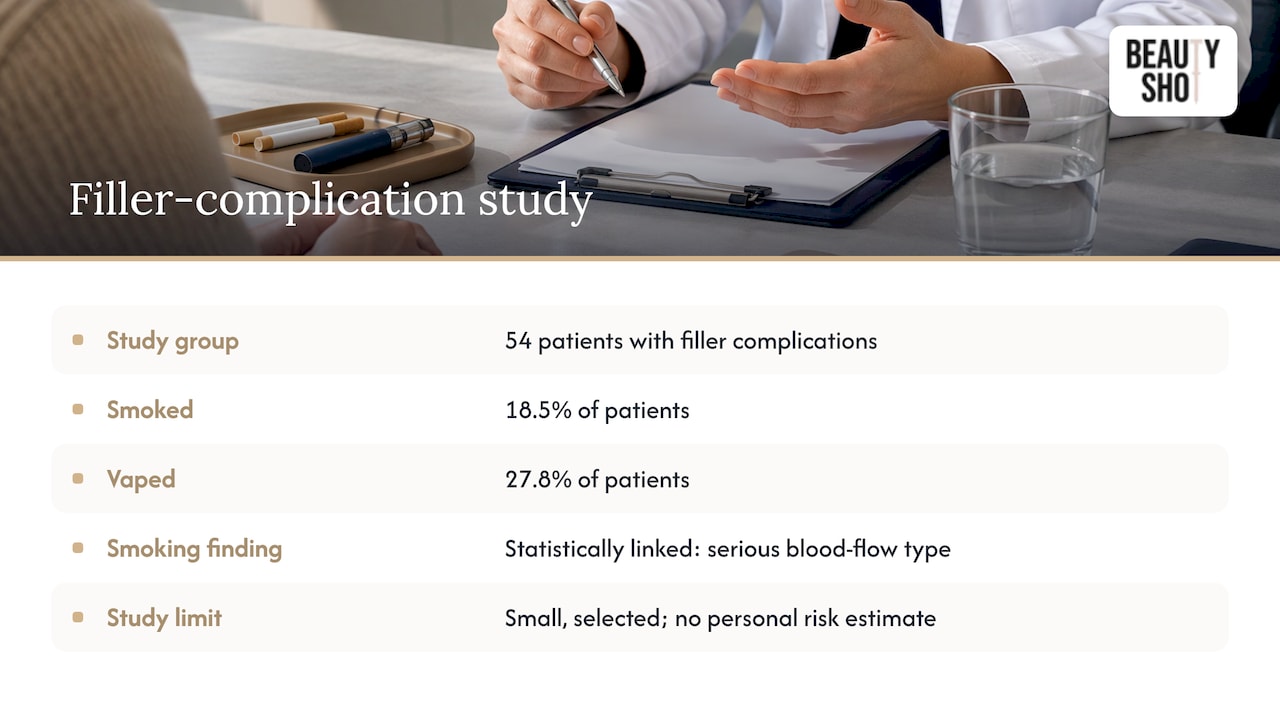
One 2025 study looked at 54 patients who came to a Tehran dermatology hospital with filler complications. It found that 18.5% smoked and 27.8% vaped. Smoking was statistically associated with the more serious blood-flow-related type of complication. The authors themselves describe smoking’s role as debatable, and the group was small and selected. These numbers show why the question is worth asking. They do not tell you your personal risk.
What I take from all of this is simple. Smoking is a factor I want to know about so I can plan your treatment sensibly. It is not a reason to feel ashamed or to skip your consultation.
What to tell your injector if you smoke or vape
Be specific. “I vape sometimes” is less helpful than a clear picture. Here is what I would want to hear:
- What you use: cigarettes, vape, cannabis, nicotine pouches, patches or gum.
- How often: daily, a few times a week, socially.
- Whether you can pause: around the appointment and during the first days of healing.
- Your skin and health history: slow healing, scarring, cold sores, or anything your doctor monitors.
- The area you want treated: lips and the lines around the mouth involve a lot of movement, so they come up most often with smokers.
With that information, your injector can talk through timing, product choice and how much to do in one visit. Sometimes the most natural-looking plan is a smaller first session. I would rather see you refreshed and happy with a conservative start than overtreated.
Ibuprofen before fillers
This is one of the most common questions I hear, usually from someone who took ibuprofen for a headache the morning of the appointment.
The American Academy of Dermatology advises telling your provider about all prescription and nonprescription medicines and supplements before fillers. It names warfarin, aspirin, ibuprofen, vitamin E, St. John’s wort, and garlic and ginger supplements. The reason these come up is that some of them can influence bruising. Health Canada’s page, for its part, points you to your doctor for medication interactions.
Practically, that means:
- Make a complete list of everything you take, including over-the-counter pain relievers, vitamins, herbal products and teas or supplements you think of as “natural.”
- Share it at your consultation, not in the chair on the day. It is much easier to plan when we are not rushing.
- Ask before changing anything. If you take ibuprofen occasionally, we will talk about it. If a doctor prescribed it or another medication, they decide whether it is safe to change.
- Do not start a new product in the days before your appointment without mentioning it.
If you have pain on the day of treatment, tell us. Do not guess and do not hide it.
If you also take wellness supplements or have regular vitamin therapy, include them too. Even a glutathione injection benefits and risks overview shows how many products people use without thinking of them as medication. Mention anything you inject, infuse or swallow regularly.
Prescribed blood thinners
If your doctor has prescribed a blood thinner, you must tell your injector before any filler is planned. Health Canada advises postponing or avoiding filler if you have a bleeding disorder, and it directs medication questions to a doctor. Blood thinners are prescribed for real medical reasons, such as heart rhythm problems or clots. Never stop one on your own to get ready for a cosmetic appointment. Speak with the doctor who prescribed it, and let your injector know what was decided. Cosmetic treatment can wait; your health cannot.
Alcohol and other pre-appointment habits
While you are reviewing your habits, alcohol belongs on the list. Guidance from one clinic-style preparation list on the search results suggests avoiding alcohol for at least 24 hours before filler because it can increase bruising and swelling. Our own page on alcohol after fillers explains the 24 to 72 hour window I use for aftercare.
A few other things help on the day:
- Arrive with clean skin, no active breakouts, rash or cold sore in the area.
- Plan the appointment so you do not have an important event for a few days. Bruising and swelling are possible, as Health Canada notes, and many effects are temporary.
- Eat beforehand and stay hydrated, so you feel comfortable.
- Bring photos of what you like, and tell us what you do not want. Natural results begin with a clear conversation.
Smoking after fillers
This is the other half of the search, and it is where I give the most direct guidance. Fresh filler sites are tender. There are small injection points, mild swelling and sometimes bruising. Smoke and hot vapour, repeated puffing and coughing all add irritation and movement to that area, especially around the lips.
What I recommend to patients:
- Follow your clinic’s written aftercare sheet for the exact waiting period. It is tailored to the treated area and product.
- Be extra careful with lip filler, where the mouth is in constant motion and where smoke and heat are right at the treatment site.
- Avoid touching, pressing or massaging the area unless you were told to.
- Treat nicotine substitutes as nicotine. Patches, gum and pouches still contain it. Ask which are suitable for you.
- Watch for warning signs and call your clinic right away: pain that is increasing, skin that turns pale, white or dusky, a spreading rash, or marked asymmetry. For severe symptoms, such as vision changes, trouble breathing or fast-spreading swelling, go to the emergency department or call 911.
Health Canada lists reported filler effects that include bruising, redness, swelling, nodules, infection, discolouration, allergy and improper placement. Many are temporary, but some last months or need more treatment. Knowing the early signs means you can act quickly.
If you are finding it hard to hold off, this is a good time to mention it to your family doctor or pharmacist. Quitting is hard, and a cosmetic appointment is sometimes the motivation people need. In Ontario, Smokers’ Helpline style support exists through public health channels, and your doctor can walk you through options.
“Smokers’ lines” and what fillers can and can’t do
Many people who search this topic also have fine vertical lines around the mouth, often called smokers’ lines. They are not caused only by smoking. Loss of muscle tone, skin elasticity and collagen all contribute, so people who have never smoked can have them too.
Small, careful amounts of filler can soften these lines, and our dermal fillers page lists lips and peri-oral lines and neck lines among the areas we treat. Our lip flip with Botox or Dysport is another option patients ask about when the upper lip’s movement is part of the concern. Which approach suits you depends on your anatomy, and that is decided at consultation. If you want to understand the product itself first, how dermal fillers work explains it in plain language.
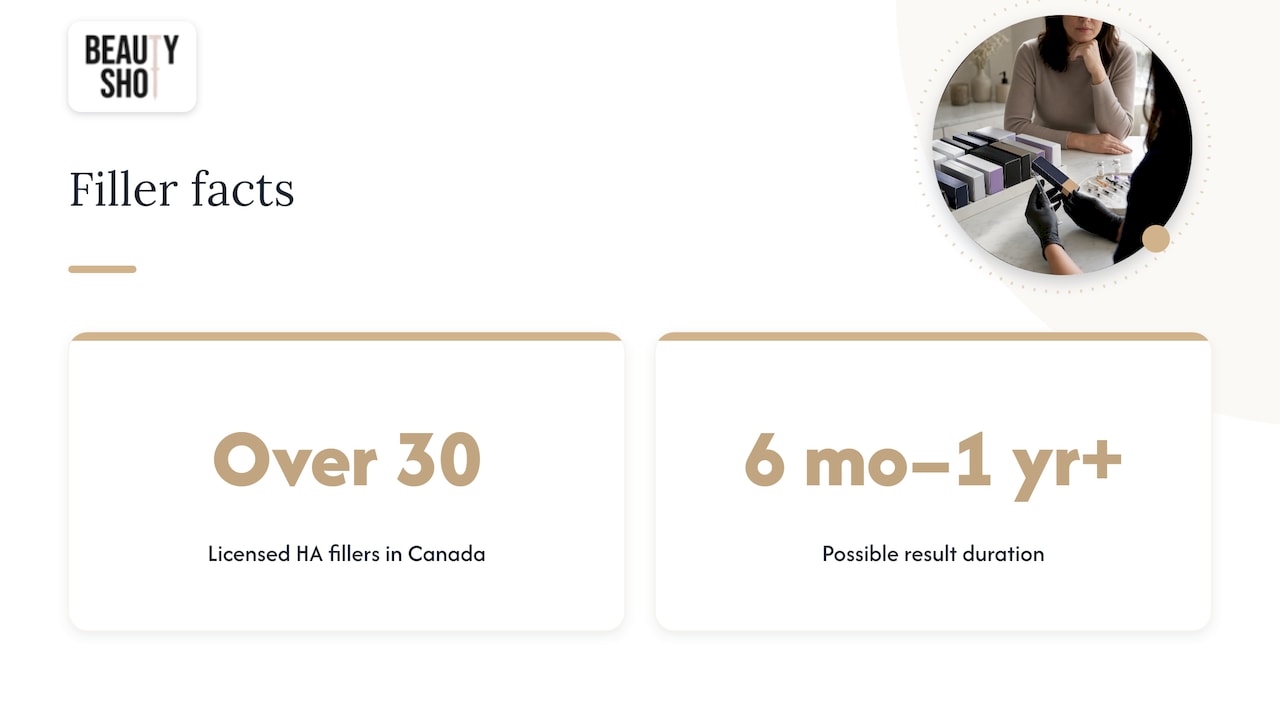
Health Canada notes that over 30 hyaluronic acid fillers are licensed in Canada and that results can last from six months to a year or more, depending on you and the product. That is a good reason to protect your investment with good habits both before and after.
A simple checklist before you book
Do:
- Tell your injector about smoking, vaping, cannabis and nicotine products.
- List every medication, vitamin, herbal product and supplement.
- Ask your prescribing doctor before changing any prescribed medicine.
- Postpone if you have a cold sore, infection, rash or active breakout in the area.
- Read your aftercare sheet before the appointment, not after.
Don’t:
- Stop or start medication on your own because of something you read online.
- Assume a rule from surgery, or from another country, applies to filler.
- Hide a habit out of embarrassment. It changes your plan, not how you are treated.
- Schedule treatment right before a major event.
Our perspective
Patients sometimes apologize when they tell me they smoke or vape. Please don’t. I am not there to judge you. I am there to make the safest plan I can for your face.
At Beauty Shot, every injectable treatment is performed by an advanced cosmetic Registered Nurse, with 9+ years of injection experience behind it. That matters most in the consultation, where we talk through your history, your habits and your goals before anything is injected. Our approach is built around individualized treatment plans and subtle, natural-looking results, so you look refreshed and still like yourself.
There is no single formula that fits everyone, and I won’t give you a number I can’t support. What I can promise is time, honest questions and a plan made for you. If something about your health or medication means treatment should wait, I will say so.
Felix
Book a consultation in Woodbridge
If you are planning fillers and want to talk through smoking, vaping, ibuprofen or any other medication first, we are in Woodbridge, Vaughan. Our services page covers Botox and Dysport, hyperhidrosis treatment and dermal fillers. Our dermal filler page shows the areas we treat, including cheeks, temples, chin, jawline, lips, nasolabial folds, marionette lines and under-eye hollows. Bring your medication list, and we will build the plan together.
FAQ
How long before fillers should I stop smoking?
There is no interval in Health Canada’s public filler guidance, and surgical timelines should not be treated as a filler rule. Tell your injector what you use and how often, and they will advise on timing for your treatment. Pausing around your appointment is a sensible conversation to have.
Can I take ibuprofen before fillers?
Tell your injector before you do. The American Academy of Dermatology names ibuprofen among the medicines and supplements to disclose before fillers. If a doctor prescribed it, ask them before changing anything.
What should I avoid before getting fillers?
Be ready to discuss smoking and vaping, alcohol, anti-inflammatory medication, aspirin, vitamin E and herbal supplements such as St. John’s wort, garlic and ginger. Also avoid booking if you have an active infection, rash or cold sore in the treatment area. Your injector will give you personal instructions.
What if I take prescribed blood thinners?
Tell your injector and the prescribing doctor that you are planning filler. Do not stop the medication yourself. Treatment may be postponed or adjusted depending on what your doctor advises.
Can I smoke after lip filler?
Follow the written aftercare from your clinic for the waiting period. Smoke, heat and repeated lip movement affect a freshly treated area, so lip filler patients especially should plan ahead. Call your clinic if you notice worsening pain or skin colour changes.
Sources
- Cosmetic injections, Health Canada
- Fillers: Preparation, American Academy of Dermatology
- Managing the Risks of Smoking in Plastic Surgery Patients, American Society of Plastic Surgeons (2024)
- The Demographics of Patients With Dermal Filler Complications, PubMed Central