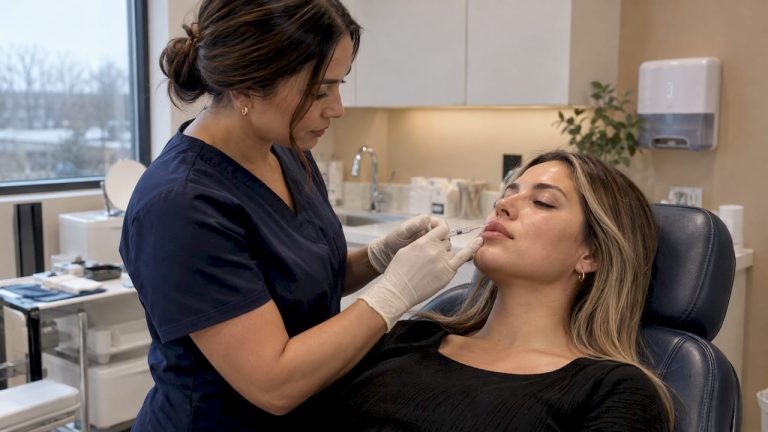
The safest answer is to wait 24 hours before a hard workout, and to keep your day light until then. A walk is fine the same day. The American Academy of Dermatology gives a shorter minimum of two hours. Many injectors ask for a full day because it costs you almost nothing and keeps the treated area calm while the Botox settles. Below you will find what to do in the first four hours, what you can do at the gym on day one and why the advice exists. You will also see when a symptom is worth a call.
TL;DR
- Day of treatment: walking and normal daily tasks are fine. Hold off on hard cardio, heavy lifting and hot classes.
- Wait 24 hours before a strenuous workout. The American Academy of Dermatology’s minimum is two hours, but 24 hours is the common clinic standard.
- First four hours: do not lie flat, bend over for long, or press on the treated area.
- Move your face normally. Smiling and frowning are fine and are generally encouraged.
- Call your injector if something feels wrong. Seek urgent medical care for trouble swallowing, speaking or breathing.
The short answer: what the guidance says
You will see different numbers online, and they are not as contradictory as they look. They answer slightly different questions.
| Source | What it says |
|---|---|
| American Academy of Dermatology | Most people return to everyday activities right away. Wait two hours before strenuous activity, such as lifting heavy items or working out. |
| Healthline | Wait at least four hours, including before bending over or lying down. Twenty-four hours is ideal. |
| Medical News Today | Many clinics recommend 24 hours. The Botox prescribing information has no specific warning against strenuous exercise. |
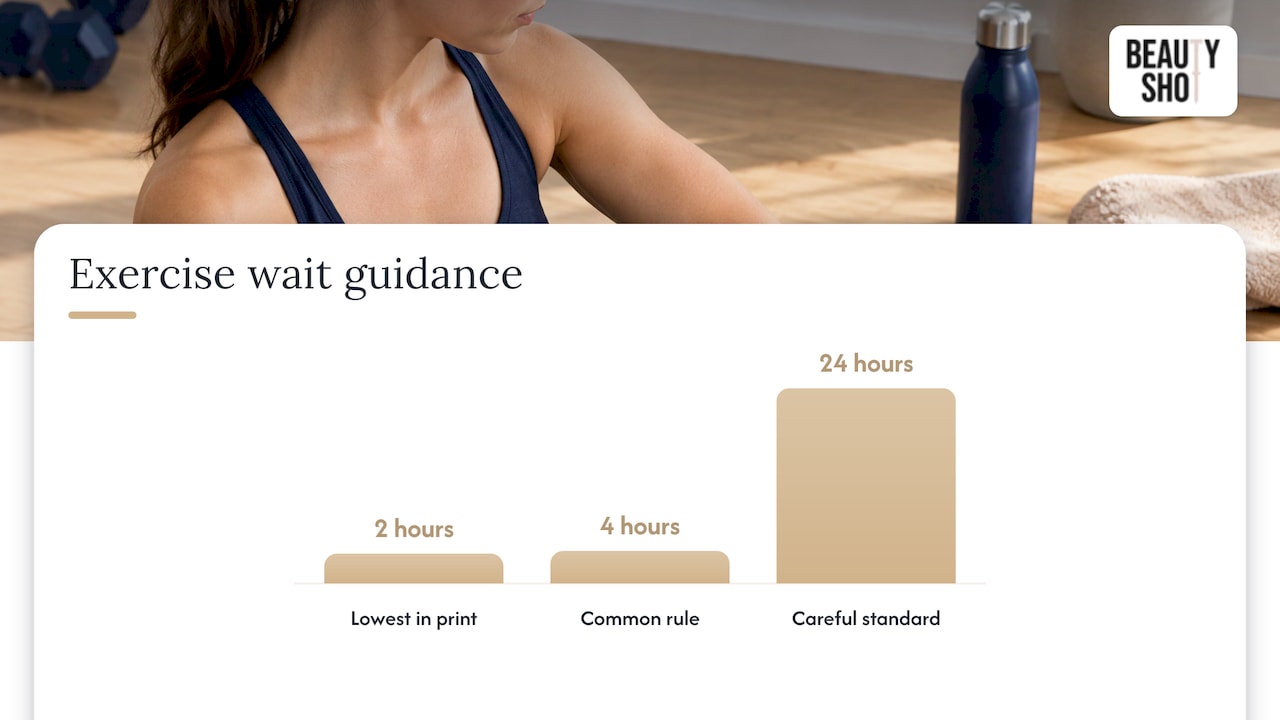
So two hours is the lowest figure in print, four hours is the common “rule”, and 24 hours is the careful standard. When your own injector gives you a number, follow it. They know where they placed the product and how many units they used.
In my practice I choose the 24-hour rule for one simple reason: you lose very little by waiting, and you protect a result you have paid for.
The 4-hour rule, explained
The “4-hour rule” is the part of the instructions that is about position and pressure, not exercise. For roughly the first four hours, the usual advice is:
- Stay upright. Do not lie down or nap flat.
- Avoid bending over for long, for example gardening or picking things off the floor.
- Do not rub, press or massage the treated areas.
- Keep tight hats, headbands, goggles and face masks off the area where possible.
The idea is to keep the product where it was placed while it begins to bind. Healthline lists this four-hour window as the general minimum before exercise, with 24 hours as the ideal.
The 4-hour rule and the 24-hour rule do not compete. The first protects the injection area in the short term. The second is a cushion before you push your heart rate and blood pressure up.
What you can do on the day of your appointment
Most of my patients are busy professionals who come in on a lunch break or after work. They want to know what a normal day looks like afterwards. If you are heading back to the office, our guide on returning to work after Botox covers the practical side.
For movement, here is a simple split.
Generally fine on the same day
- Walking at an easy pace, indoors or outdoors
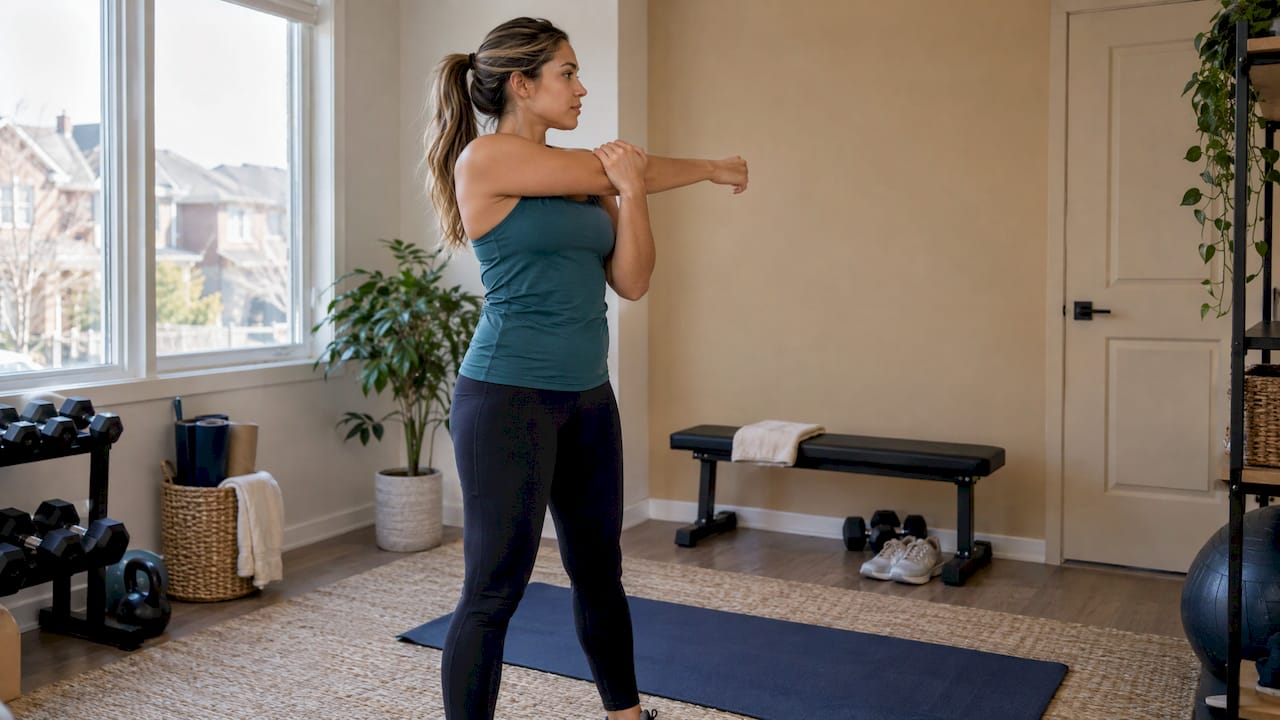
- Gentle stretching that keeps your head above your heart
- Light housework and errands
- Easy, upright movement that does not make you breathe hard
Better to leave for the next day
- Running, cycling classes, HIIT, boot camp
- Heavy weightlifting, especially overhead or with straining
- Hot yoga, infrared saunas and steam rooms
- Yoga or Pilates positions where your head drops below your heart (inversions, downward dog held for long)
- Swimming with tight goggles pressed on the forehead or temples
The AAD describes strenuous activity as lifting heavy items, working out or anything that raises your heart rate. That is a good working definition: if you can chat easily, you are probably in light territory. If you are breathing hard, wait.
Why waiting helps
Botox works by relaxing the muscles that create certain lines. For that to happen in the muscle you and your injector chose, the product needs time to settle in place. Hard exercise increases blood flow and body heat, and it can mean sweating, straining and pressure on the face. Clinicians generally prefer to avoid those variables in the first hours.
There is also a practical side. Lying under a barbell, wearing a tight headband or pressing your face into a mat can put pressure on exactly the spot you just treated. Waiting removes all of that.
It is fair to know that the evidence here is not dramatic. The Botox prescribing information has no specific warning against strenuous exercise, and the AAD’s minimum is short. The 24-hour advice is a precaution that fits how injectors work: conservative, simple to follow and easy to remember. A 2025 simulation study of everyday behaviours in the first four hours also suggests that movement of the product from bending or light activity is small, which is reassuring if you bent down to tie your shoe on the way out.
Working out after Botox: a simple timeline
This is the schedule I give to patients who ask for a plan they can put on their calendar.
- 0 to 4 hours: stay upright, no pressure on the area, no hard exercise. Walking is fine.
- 4 to 24 hours: keep activity light. Take an easy walk, do chores, return to work. Skip the gym session you had planned.
- 24 hours onward: return to your usual workouts, building back up if you feel flushed or dizzy.
- Days 3 to 14: keep training as normal. Botox takes time to show its full effect, so this is when results arrive, not a time to hold back. Our piece on how long Botox results last explains the timeline.
If you had Dysport rather than Botox, the first 48 hours are laid out in our Dysport aftercare guide.
Should I move my face after Botox?
Yes, normally. Healthline notes that facial expressions such as smiling and frowning are recommended after Botox. Using the treated muscles in a natural way is part of the typical aftercare advice. What you avoid is rubbing, massaging or pressing on the skin. If you want to know how a first smile in the mirror may feel, see our article on a changed smile after Botox.
Gym-specific questions
Can I go to the gym the same day?
You can go, but keep it gentle. An easy walk on a treadmill or a short stretch is realistic. Skip weights, intervals and anything that has you red in the face. The simplest plan is to book your appointment on a rest day.
What about yoga, Pilates and swimming?
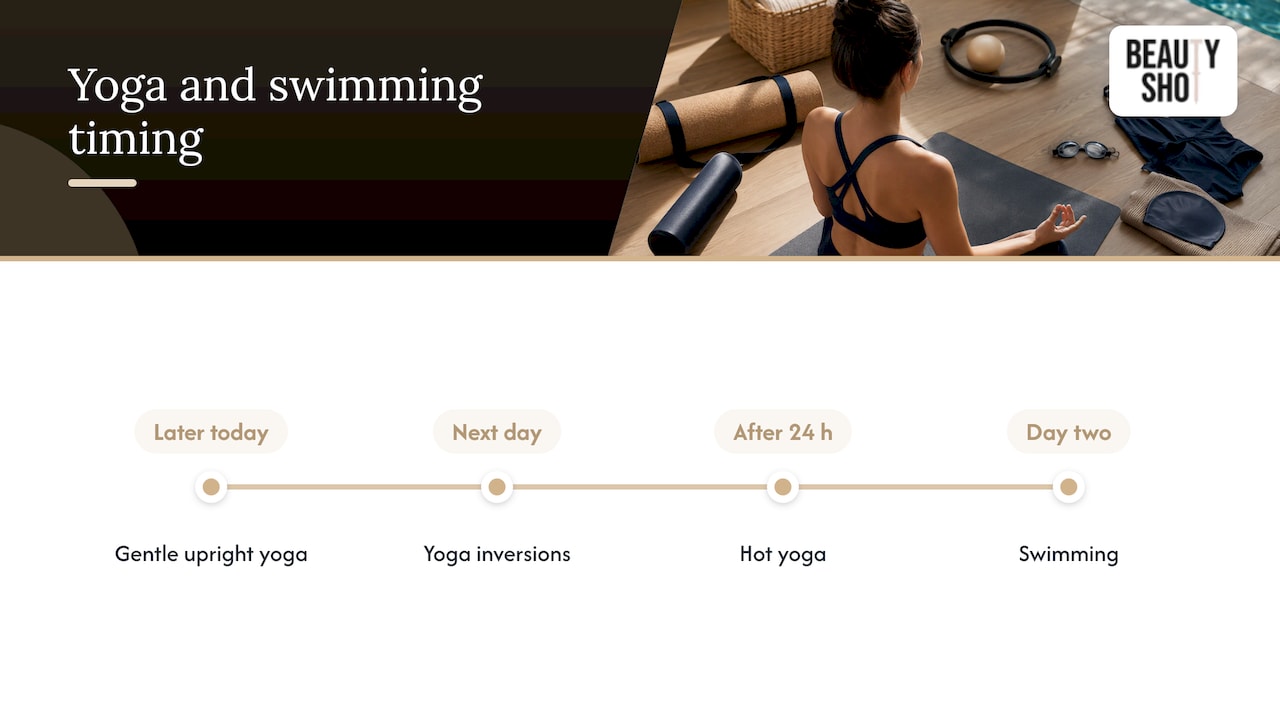
Gentle upright yoga is fine later in the day, but inversions are best left until the next day. Swimming is best saved for day two, as goggle straps and water pressure can sit directly on the forehead and temples. Hot yoga adds heat, so give it 24 hours.
What about the sauna and hot tub?
Heat raises skin temperature and flushes the face. Leave saunas, steam rooms and hot tubs for at least 24 hours. If you also had a skin treatment, how long to wait for laser, IPL or microneedling after Botox is worth a read.
Does the treatment area change the advice?
A little. If you had Botox on your forehead or between the brows, avoid headbands, tight caps and anything that presses there. If your jaw was treated (masseter Botox), skip heavy clenching and straining exercises on day one. If you had Botox for underarm sweating, the AAD-style two-hour minimum and 24-hour precaution still apply, but you may feel more comfortable resting your arms for the first day. Your injector will tailor the advice to the exact areas treated.
Other habits that go with your workout plan
People who plan their gym day around Botox often have other questions at the same time. A few quick pointers, each with a fuller guide:
- Alcohol: a drink after a workout is a common habit. We explain the reasoning in alcohol around Botox.
- Makeup: applying it after a session is a question we hear often, covered in makeup after Botox.
- Sun and heat: outdoor runs in strong sun are covered in sun exposure after Botox.
- Travel: if you are flying soon after, see flying after Botox.
- Everything together: our Botox aftercare guide pulls the whole routine into one place.
When to call your injector
Most people feel nothing unusual. Some mild redness, small bumps at injection points or a light headache can happen and typically settle on their own. Contact your injector if you notice:
- A droopy eyelid or brow, or an uneven look that bothers you
- Swelling or bruising that is increasing rather than fading
- Pain that is getting worse
- A result that looks uneven after two weeks, when the effect has fully developed
The Canadian product monograph for Botox warns of toxin spread away from the injection site and says to get immediate medical care for swallowing, speech or breathing problems. If you have any of those, do not wait for a callback: go to the nearest emergency department or call 911.
What if I already worked out too soon?
Don’t panic. This is one of the most common questions I hear, and the most common answer is that nothing happened. If you did a hard session a few hours after treatment, watch the treated area over the next days. If your results look even and you feel normal, carry on. If you notice asymmetry, heaviness or a change in your expression, let your injector know so they can assess it in person. Note when the workout happened, what you did and what you noticed. That makes the conversation quick and clear.
Our perspective on exercise and Botox
After nine years of injecting, the part of aftercare I find most useful is also the simplest: plan the day. Book your appointment on a rest day or a lighter day, bring a hat that doesn’t press on your forehead, and give yourself a calm evening.
The research on exercise after Botox is not as strict as the internet suggests. The dermatology minimum is short, and the longer advice you hear in clinics is a precaution. I prefer the precaution. A day of walking costs you nothing, and I would always rather you protect the result we planned together.
What matters more is the plan before the needle. Every face is different, and so is every schedule. At Beauty Shot, all injectables are performed by a Registered Nurse, which means your treatment plan, your aftercare and your workout schedule can all be discussed with the person doing your injections. My aim is a result that looks refreshed and natural, and that you feel confident about, including at the gym.
Felix
Booking Botox or Dysport in Woodbridge
If you are planning treatment, you can see what we offer on our Botox and Dysport services page. Our lip flip with Botox or Dysport is a popular first treatment because it is subtle. Every injectable at Beauty Shot Medical Clinic is performed by an advanced cosmetic Registered Nurse with more than nine years of injection experience, and each plan is individualized. When you book, choose a day that lets you relax afterward. If you are in Woodbridge, Vaughan, Maple, Kleinburg or Concord, we are close by.
FAQ
How soon can you exercise after Botox?
Light walking is fine right away. For strenuous exercise, the American Academy of Dermatology advises waiting at least two hours, while many injectors recommend 24 hours. Ask your injector which they prefer for your treatment areas, and plan to follow that.
Can I lift weights after Botox?
Wait 24 hours for heavy lifting, especially overhead lifts or exercises that involve straining. Heavy lifting raises your heart rate and blood pressure, and it is listed by the AAD as strenuous activity. After the first day, return to your usual routine.
Is walking okay after Botox?
Yes. Walking at an easy pace is generally considered fine on the day of treatment. Keep your head upright, avoid heat and sun on your face, and stop if you feel flushed or dizzy.
Can I do yoga after Botox?
Gentle, upright yoga later on the same day is generally fine. Leave inversions, such as headstands or long downward dog holds, and hot yoga for the next day. This keeps blood from rushing to your face and avoids pressure on the treated area.
Does exercising too soon ruin Botox?
It is unlikely to ruin it. The prescribing information has no specific warning on strenuous exercise, and the longer waiting time is a precaution. If you worked out early, watch your results as they develop and tell your injector if anything looks uneven.
Sources
- American Academy of Dermatology: Botulinum toxin therapy FAQs
- Medical News Today: Do’s and don’ts of working out after Botox
- Healthline: Exercise after Botox, do’s and don’ts
- ReachMD: New simulation study on BoNT/A restrictions
- Health Canada Drug Product Database: Botox product monograph