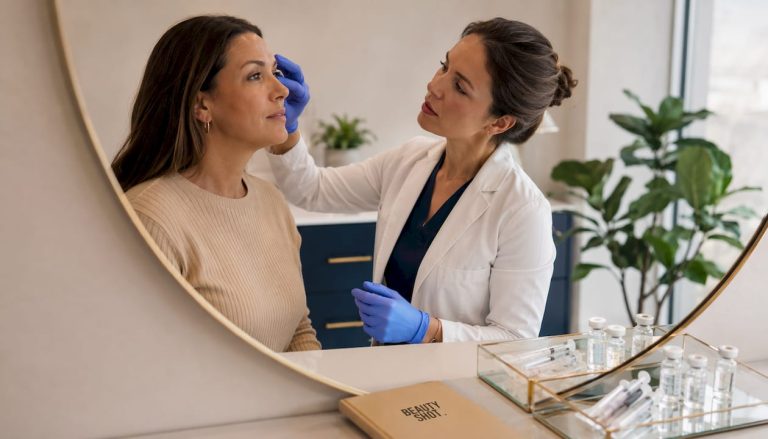
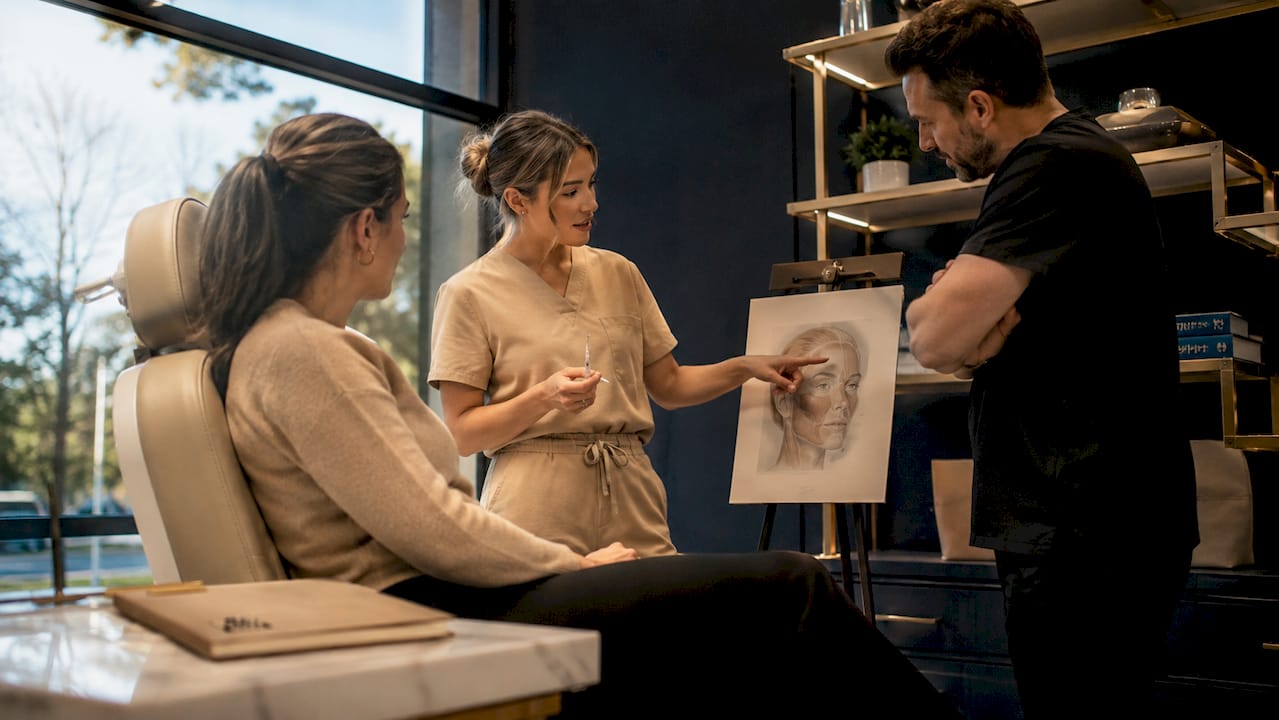
Choosing between a cosmetic nurse and a doctor for injectables is not simply a matter of professional title. The real deciding factors are training depth, case volume, emergency preparedness, and the protocols a clinic follows every single day. Whether you are considering Botox, Dysport, or dermal fillers, the provider who can demonstrate rigorous qualifications and a clear plan for complications is the one worth trusting. This guide walks you through every key difference so you can make a confident, informed decision.
1. Cosmetic nurse vs doctor injectables: what the titles actually mean
A cosmetic nurse is a Registered Nurse (RN) or Nurse Practitioner (NP) who has completed additional aesthetic training beyond their base nursing degree. A cosmetic doctor holds a medical degree (such as an MBBS or MD) and has pursued postgraduate aesthetic education. Both titles describe professionals who can administer Botox and fillers. Neither title alone guarantees superior outcomes. What separates a safe, skilled injector from an unsafe one is the quality of their specific aesthetic training, their documented case volume, and the protocols their clinic follows.

2. What training and qualifications should you look for?
Training paths differ significantly between nurses and doctors, but both require dedicated aesthetic education on top of their base credentials.
For cosmetic nurses, look for:
- A current RN or NP licence in good standing with their provincial or state regulatory college
- Formal postgraduate training in facial anatomy and injectable techniques
- Certification through recognised programmes such as Allergan training, Teoxane Academy, or Clarion Medical
- Documented training in complication recognition and emergency response
- Ongoing education, not just a one-time weekend course
For cosmetic doctors, look for:
- A medical degree with postgraduate aesthetic training (dermatology, plastics, or a fellowship in cosmetic medicine)
- Membership in a recognised body such as the Canadian Association of Aesthetic Medicine
- Hands-on training in advanced techniques beyond basic neuromodulator injections
- A clear record of continued professional development
Postgraduate aesthetic qualifications are often optional for both groups and vary widely in depth. A doctor who completed a single-day filler course has less relevant training than a nurse who has completed hundreds of supervised injections through a structured programme.
Pro Tip: Ask your provider directly: “Where did you train, how many injections have you performed, and what is your protocol if something goes wrong?” A confident, specific answer is a strong positive sign.
3. How legal scope and practice authority differ
Legal authority to prescribe and inject varies by country and province. Understanding these differences helps you evaluate whether a clinic is operating within proper boundaries.
| Provider type | Canada | United States | United Kingdom |
|---|---|---|---|
| Registered Nurse (RN) | Requires physician or NP authorization | Requires physician delegation or standing orders | Can inject under medical supervision |
| Nurse Practitioner (NP) | Independent prescribing authority in most provinces | Full-practice authority in many states | Prescribing rights vary by registration |
| Medical Doctor (MD) | Full independent prescribing and injection scope | Full independent scope | Full independent scope |
In Canada, RNs who administer injectables must do so under a physician’s or NP’s authorization, either through direct orders or a standing order protocol. NPs in most Canadian provinces hold independent prescribing authority, which means they can assess, prescribe, and inject without physician sign-off. Doctors carry full independent scope across all jurisdictions. These distinctions matter because they shape how a clinic is structured and how quickly a provider can respond if something goes wrong.
4. Practical experience, complication management, and patient safety
Experience and protocols protect patients far more reliably than a professional title does. No large-scale studies show higher complication rates for nurse practitioners versus doctors in aesthetic injectables. What the evidence does show is that training quality and case volume are the strongest predictors of safe outcomes.
“The most important safety factor is a clear plan for managing complications, including baseline photography, anatomical risk explanation, and on-site emergency protocols. A provider who cannot describe their complication management process in detail is not yet ready to inject you.”
High-volume injectors, regardless of degree, develop better spatial awareness of facial anatomy, more consistent technique, and faster recognition of early warning signs. A nurse who has performed thousands of filler treatments under structured supervision will typically outperform a doctor who injects occasionally as a side service.
Critical safety elements to verify before any treatment:
- Baseline photography taken before every session
- A thorough explanation of anatomical risks specific to your treatment area
- On-site access to hyaluronidase for immediate reversal of filler complications
- A written emergency management plan, not just a verbal assurance
- The ability to identify and treat vascular occlusion on-site without needing to refer out
Vascular occlusion is the most serious filler complication. It occurs when filler is inadvertently injected into or compresses a blood vessel, cutting off circulation to surrounding tissue. Rapid access to hyaluronidase and the knowledge to use it immediately is non-negotiable. Ask your provider directly whether they stock it on-site.
Pro Tip: Review before-and-after photos from your specific provider, not just the clinic’s general gallery. Consistent, natural-looking results across many patients tell you far more than credentials alone.
5. How the treatment setting influences your safety
The clinic environment shapes your safety as much as the injector’s background does. Medical setting and proper supervision often impact injectable safety more than injector title alone. Here is how common settings compare:
-
Medical clinics and physician offices. These settings typically have the strongest oversight structures, on-site emergency equipment, and clear protocols for escalation. Injectors in these environments usually operate under well-defined medical director supervision.
-
Dermatology and plastic surgery offices. Dermatologists and plastic surgeons bring deep anatomical knowledge. These settings are well-suited for complex cases, high-risk treatment areas like tear troughs, or patients with prior complications.
-
Medical spas (med spas). Quality varies widely. Some med spas operate with rigorous medical director oversight and experienced injectors. Others rely on supervision as a legal formality with a medical director who is rarely present. Patients should verify on-site presence and emergency protocols rather than assume safety by title.
-
Aesthetic clinics led by advanced nurse injectors. When an advanced RN or NP runs a dedicated aesthetic clinic with strong training credentials, documented protocols, and on-site emergency supplies, the safety standard can match or exceed that of a general medical office. The key is verifying those protocols directly.
-
Home-based or mobile injection services. These carry the highest risk. Emergency equipment is rarely available, oversight is minimal, and the ability to manage a serious complication is severely limited. Avoid these settings for any injectable treatment.
The right question is not “Is this a doctor’s office or a nurse’s clinic?” The right question is “What happens here if something goes wrong?”
6. Situational guidance: which provider type suits your needs?
The best provider for you depends on your treatment goals, the areas being treated, and your personal comfort level. Use the framework below as a starting point.
| Situation | Recommended provider focus |
|---|---|
| Routine forehead or crow’s feet Botox | Qualified RN or NP with strong neuromodulator volume |
| Lip filler or facial balancing | Advanced nurse injector or doctor with high filler case volume |
| Tear trough or under-eye filler | Doctor or highly experienced advanced nurse with specific tear-trough training |
| First-time injectable patient | Any qualified provider who offers thorough consultation and baseline photography |
| Complex facial anatomy or prior complications | Doctor with plastics or dermatology background |
For routine neuromodulator treatments like Botox and Dysport, a qualified nurse injector with strong case volume is equally safe and effective as a doctor. For higher-risk areas such as the tear troughs, glabella, or deep structural filler work, a provider with specific advanced training in those zones is the priority, whether that is a nurse or a doctor.
When you sit down for a consultation, ask these questions directly:
- How many treatments like mine have you performed?
- What is your specific training in this area?
- What do you do if I have a complication during or after treatment?
- Is hyaluronidase available on-site?
A provider who answers these questions clearly and without hesitation has earned a level of trust. One who deflects or gives vague answers has not. For guidance on choosing the right treatment for your goals, understanding the difference between neuromodulators and fillers is a helpful first step.
Key takeaways
The safest injectable provider is the one who combines rigorous training, high case volume, and a clear, on-site plan for managing complications, regardless of whether they hold a nursing or medical degree.
| Point | Details |
|---|---|
| Title does not equal safety | Complication rates are not clearly linked to provider title; training and case volume matter more. |
| Verify emergency protocols | Confirm on-site hyaluronidase access and a written complication management plan before treatment. |
| Legal scope varies by jurisdiction | Canadian RNs require physician or NP authorization; NPs and doctors hold independent prescribing authority. |
| Setting matters as much as credentials | Medical director presence and clinic protocols shape safety outcomes more than injector title alone. |
| Ask specific questions | A provider who answers complication-management questions clearly and confidently is a strong indicator of readiness. |
What I have learned after 9 years of injecting
I want to be honest with you about something the cosmetic industry rarely says out loud. The debate over cosmetic nurse vs doctor injectables often misses the point entirely. I have seen doctors with impressive credentials produce results that looked overdone and unnatural. I have also seen advanced nurse injectors with deep anatomical training and thousands of hours of practice deliver consistently beautiful, refreshed outcomes. The title is not the story.
What I have learned from my background in Medical/ICU nursing at Sunnybrook Hospital, and from training with programmes like MD Codes, Allergan, Teoxane Academy, and Dr. Martins Training Center Canada, is that the mindset matters as much as the credential. A nurse who trained in critical care thinks differently about risk. We are wired to anticipate complications, act fast, and stay calm under pressure. That background translates directly into safer aesthetic practice.
The question I encourage every patient to ask is not “Are you a nurse or a doctor?” It is “What is your plan if something goes wrong?” If the answer is detailed, immediate, and confident, you are in good hands. If the answer is vague or dismissive, keep looking. You deserve a provider who has thought through every scenario before you sit in the chair.
At Beautyshotmedicalclinic, every treatment starts with a thorough consultation, baseline photography, and an honest conversation about your anatomy and goals. The aim is always a result that looks like you, refreshed and balanced, not a result that announces itself.
— Felix
Injectable care at Beautyshotmedicalclinic in Woodbridge
Beautyshotmedicalclinic is a dedicated cosmetic injectables clinic in Woodbridge, Vaughan, Ontario, led by Irene Soni, RN, BScN, an advanced cosmetic nurse injector with 9+ years of experience and a critical care nursing background. Every patient receives a personalised consultation, baseline photography, and a treatment plan built around natural-looking results. If you want to understand your options before booking, the injectable cosmetics guide covers Botox, Dysport, and dermal fillers in plain, honest language. For patients ready to see real results, the before and after gallery shows the kind of subtle, refreshed outcomes Beautyshotmedicalclinic is known for.
FAQ
Is a cosmetic nurse as safe as a doctor for Botox and fillers?
No large-scale studies show higher complication rates for nurse injectors versus doctors. Safety depends on training quality, case volume, and the clinic’s emergency protocols, not the provider’s degree.
What qualifications should a cosmetic nurse injector have in Canada?
A cosmetic nurse injector in Canada should hold a current RN or NP licence, have completed formal postgraduate aesthetic training, and be able to demonstrate documented case volume and a clear complication management plan.
What is vascular occlusion and why does it matter?
Vascular occlusion occurs when filler blocks blood flow to surrounding tissue and is the most serious filler complication. Your provider must stock hyaluronidase on-site and treat vascular occlusion immediately without external referral.
Should I choose a doctor for high-risk areas like tear troughs?
For high-risk areas, prioritise a provider with specific advanced training in that zone, whether a doctor or an experienced nurse injector. Training and case volume in the specific area matter more than the professional title.
What questions should I ask before my first injectable appointment?
Ask how many treatments like yours the provider has performed, what their specific training covers, whether hyaluronidase is available on-site, and what their step-by-step response is to a complication. Clear, confident answers indicate a well-prepared provider.