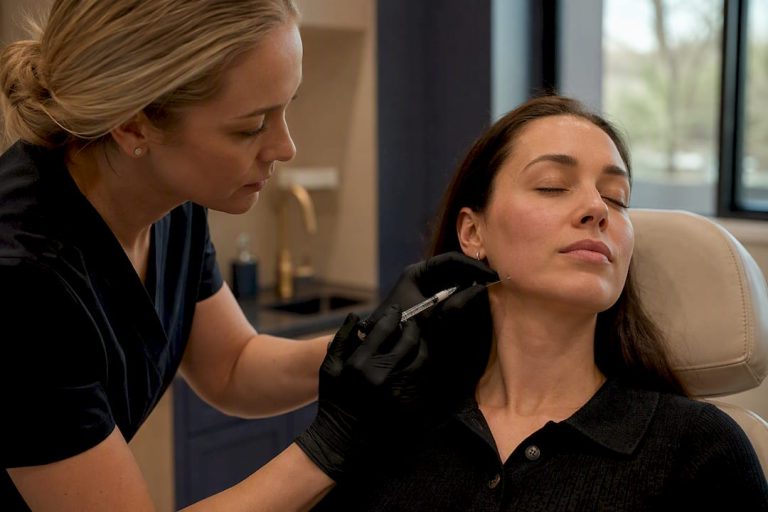

Choosing the right lip filler amount means selecting a volume that enhances your natural lip shape while maintaining facial harmony and safety. In clinical practice, this is called “determining lip filler volume,” and it is guided by anatomy, aesthetic goals, and staged dosage planning rather than a fixed number of syringes. The standard starting dose for first-time patients is 0.5 mL to 1 mL of hyaluronic acid filler. Getting this right from the start protects your results, your safety, and your confidence in the outcome.
What are the clinical guidelines for lip filler dosage?
Standard starting doses for first-time lip filler patients range from 0.5 mL to 1 mL per session. This range reflects both safety and the goal of natural-looking enhancement. Volumes above 1 mL per session are rarely recommended for initial treatments. When more volume is desired, clinicians plan staged sessions to build gradually.

For patients who want 1.5 mL to 2 mL total, the standard approach is to split that across two appointments spaced 4–8 weeks apart. This gives the tissue time to settle and allows both patient and injector to assess the result before adding more. Rushing to a larger volume in one sitting increases the risk of swelling, asymmetry, and an unnatural appearance.
Age also shapes the appropriate dose. Younger lips typically need precise definition along the vermilion border rather than bulk volume. Mature lips conserve volume with less than 0.25 mL of border filler, focusing instead on restoring lost structure and hydration. A one-size approach does not work here.
Pro Tip: Ask your injector to show you a pre-treatment photo of your lips and discuss which specific area, body of the lip or border, needs the most attention. This conversation shapes the dose more accurately than any fixed number.
| Starting volume | Best suited for |
|---|---|
| 0.5 mL | First-time patients, very thin lips, subtle definition |
| 1 mL | Moderate enhancement, first or second session |
| 1.5–2 mL | Staged across two sessions, experienced filler patients |
| Less than 0.25 mL border | Mature lips needing structure, not bulk |
Which individual factors influence how much lip filler you need?
Natural lip enhancement depends on facial balance, lip proportions, and anatomy rather than filler amount alone. Your injector should assess all of these before recommending a volume. The following factors directly affect how much filler is appropriate for you.
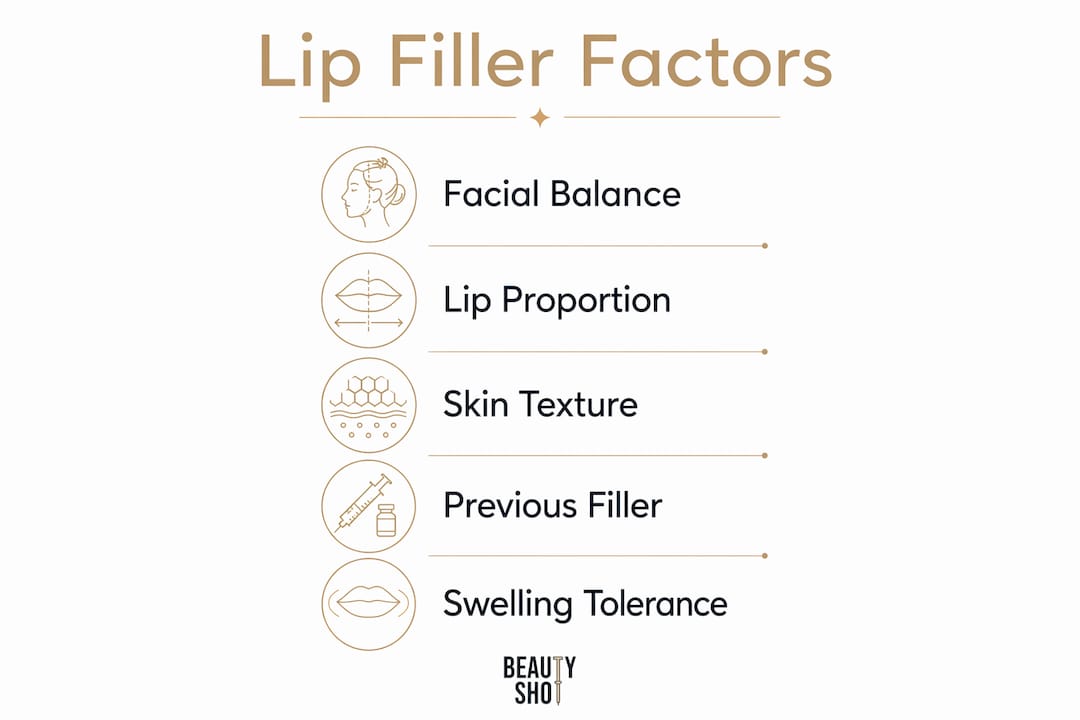
Lip shape and proportion
The ideal upper-to-lower lip ratio is generally 1:1.6, with the lower lip slightly fuller. If your lips are already close to this ratio, a smaller volume achieves a natural result. If there is significant asymmetry or thinning, a slightly higher volume may be needed to restore balance.
Facial balance and smile dynamics
How much of your teeth show when you smile, how your lips move, and how your lips relate to your nose and chin all affect the right volume. An injector who assesses smile dynamics and dental show will recommend a dose that complements your whole face, not just your lips in isolation.
Skin texture and elasticity
Lips with good elasticity hold filler well and show results clearly. Thinner or more mature skin may require a softer filler product and a more conservative volume to avoid lumpiness or visible product under the skin.
Previous filler history
If you have had lip filler before, residual product may still be present. Your injector needs to assess how much filler remains before adding more. Layering filler on top of undissolved product can cause overfilling even at a “standard” dose.
Swelling tolerance and lifestyle
Swelling affects 78% of patients after lip filler, and bruising occurs in 34% of cases. These are temporary, but they matter for timing. If you have a wedding, a job interview, or a public event within two weeks, plan your treatment well in advance.
Pro Tip: Bring two or three reference photos to your consultation. Choose images of lips that look natural and proportionate on faces similar to yours. This gives your injector a concrete visual target and reduces the chance of miscommunication.
How to plan the right lip filler amount step by step
Effective dosage planning is patient-specific, relying on anatomical assessment, previous treatments, and personal goals rather than standard volumes. Follow these steps to prepare well and get the best outcome.
- Define your aesthetic goal first. Are you looking for subtle definition, noticeable fullness, or restored volume you have lost over time? Write this down before your appointment. Vague goals lead to vague results.
- Book a proper consultation. A good consultation includes a full assessment of your lip anatomy, facial proportions, and skin quality. At Beautyshotmedicalclinic, this step is not skipped. It shapes every volume decision.
- Discuss your filler history honestly. Tell your injector about any previous lip filler, even if it was years ago. Residual hyaluronic acid can still be present and will affect how much new product is appropriate.
- Start conservatively and build. For most patients, beginning with 0.5 mL and reassessing at a follow-up four to six weeks later is the safest path. You can always add more. Removing filler requires dissolving it with hyaluronidase, which is an extra step and an extra cost.
- Plan around your schedule. Lip filler results last 6–18 months, requiring one to two maintenance sessions annually. Factor this into your timing so you are not caught off guard by touch-up needs.
- Attend your follow-up appointment. This is where your injector confirms the result, checks for symmetry, and decides whether a small top-up is warranted.
“The goal is never a specific number of millilitres. The goal is a lip that looks like it belongs on your face. We start with the minimum effective dose and build from there, always with your anatomy and your comfort guiding the plan.”
Common dosage planning mistakes to avoid:
- Requesting a fixed volume without discussing your anatomy first
- Skipping the follow-up appointment because results look “good enough”
- Booking treatment too close to a major event
- Choosing a provider based on price alone rather than training and technique
What are the common misconceptions about lip filler volume?
More filler does not necessarily mean unnatural results. Skilled placement and patient-specific goals matter far more than the number on the syringe. This is one of the most misunderstood points in lip enhancement. A well-placed 1 mL can look more natural than a poorly placed 0.5 mL.
The “duck lip” appearance that many patients fear is caused by a specific technical error, not by volume alone. Too much filler in the vermilion border causes the lip to project outward unnaturally rather than rotating upward subtly. Injecting filler into the dry vermilion instead encourages a natural vertical lip rotation. This is a technique issue, not a volume issue.
Understanding this distinction helps you ask better questions during your consultation. For guidance on avoiding unnatural lip results, focus your conversation on placement and technique, not just how many millilitres you are receiving.
Other common misconceptions to watch for:
- “Bargain pricing means a good deal.” Significantly low pricing often signals the use of unbranded or expired filler products, increasing the risk of migration, lumps, or poor results. Proper pricing covers consultation, product quality, injection skill, and follow-up care.
- “I need a full syringe every time.” Many patients maintain their results with 0.5 mL top-ups once existing filler has partially dissolved. Your injector assesses this at each visit.
- “All lip fillers produce the same result.” Different hyaluronic acid products have different consistencies, lift capacities, and longevity profiles. The right filler type for your lips depends on your anatomy and goals, not brand recognition alone.
- “Swelling is the final result.” Swelling peaks at 24–48 hours and resolves within one to two weeks. Wait the full two weeks before judging your outcome or requesting a top-up.
Key takeaways
The right lip filler amount is determined by anatomy, facial balance, and staged planning, not by a fixed volume or a single syringe.
| Point | Details |
|---|---|
| Start with 0.5–1 mL | First-time patients achieve natural results within this standard clinical range. |
| Anatomy drives the dose | Lip shape, age, skin quality, and previous filler all affect the appropriate volume. |
| Technique matters as much as volume | Skilled placement prevents unnatural projection regardless of the amount used. |
| Stage larger volumes | Volumes above 1 mL are best split across two sessions spaced 4–8 weeks apart. |
| Avoid bargain providers | Low pricing often signals substandard products that increase risk and reduce results. |
What I have learned from years of planning lip filler volumes
After nine years of performing cosmetic injectables, the question I hear most often is: “How much do I need?” My honest answer is always the same. I do not know until I have looked at your lips, your face, and understood what you are hoping to feel when you look in the mirror.
The patients who are happiest with their results are rarely the ones who came in with a specific millilitre request. They are the ones who came in open to a conversation. They brought photos, they described how they wanted to feel, and they trusted the process of starting conservatively and building. That patience almost always produces the most natural, satisfying outcome.
What I have also learned is that the fear of looking “overdone” is often more powerful than the desire for fuller lips. That fear is valid, and it is worth addressing directly. The natural lip filler approach is not about using less filler. It is about using the right filler, in the right place, for the right face. Volume is just one variable in that equation.
My advice to anyone considering lip filler: prioritise the consultation over the treatment itself. A thorough assessment of your anatomy, your goals, and your history is what separates a result you love from one you regret. The injector who takes that time is the one worth trusting.
— Felix
Lip filler planning at Beautyshotmedicalclinic
Beautyshotmedicalclinic in Woodbridge, Vaughan, offers medically guided lip filler consultations performed by Irene Soni, R.N., BScN, an advanced cosmetic nurse injector with over nine years of experience. Every treatment plan begins with a thorough assessment of your facial anatomy, lip proportions, and aesthetic goals. The focus is always on natural, balanced results that look refreshed rather than overdone. For a full overview of injectable options and what to expect, the injectable cosmetics guide is a helpful starting point. You can also view real patient outcomes in the before and after gallery to see the standard of subtle enhancement Beautyshotmedicalclinic consistently delivers.
FAQ
What is the standard starting dose for lip filler?
The standard starting dose for first-time patients is 0.5 mL to 1 mL of hyaluronic acid filler. Volumes above 1 mL are typically planned across staged sessions rather than administered in a single appointment.
How long does lip filler last before a top-up is needed?
Lip filler results generally last 6–18 months, with most patients scheduling one to two maintenance sessions per year. The exact duration depends on the product used, your metabolism, and the volume originally placed.
Can lip filler look natural at higher volumes?
Yes. Skilled placement and proper technique produce natural results regardless of volume. The “duck lip” appearance results from incorrect placement along the vermilion border, not from the amount of filler used.
How do I know if my injector is choosing the right amount for me?
A qualified injector assesses your lip anatomy, facial proportions, previous filler history, and aesthetic goals before recommending any volume. If a provider skips this assessment and quotes a fixed amount without examining you, that is a red flag.
Is it safe to get lip filler if I have had it before?
Yes, but your injector must assess how much residual filler remains before adding more. Layering new product on top of undissolved filler can cause overfilling even at a conservative dose.
Recommended
- How to Choose the Right Lip Filler for Your Desired Look | Expert Filler Selection Guide – Beauty Shot | Botox Fillers Woodbridge Vaughan
- Comparing Different Types of Lip Fillers: Which Is Right for You? – Beauty Shot | Botox Fillers Woodbridge Vaughan
- Lip filler techniques: types, results, and how to choose
- The Best Age to Start Getting Lip Fillers: Expert Advice – Beauty Shot | Botox Fillers Woodbridge Vaughan