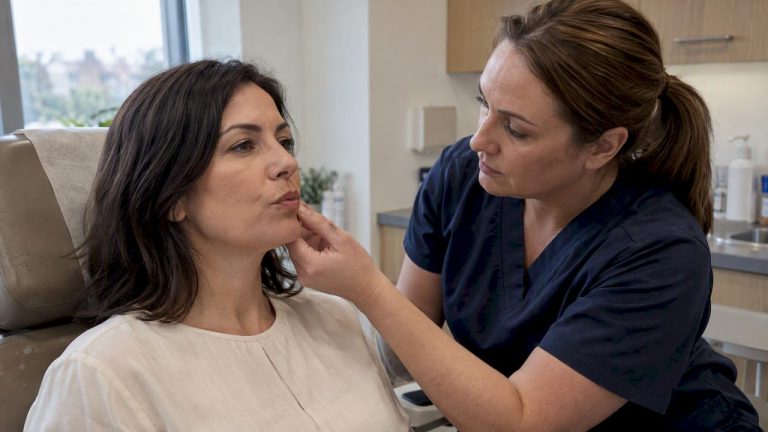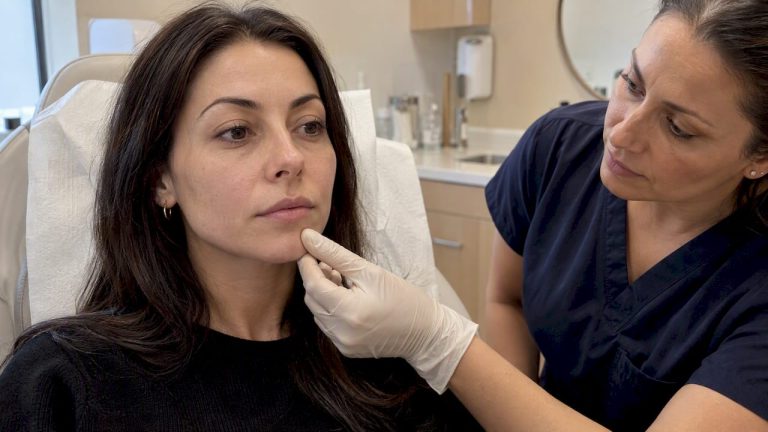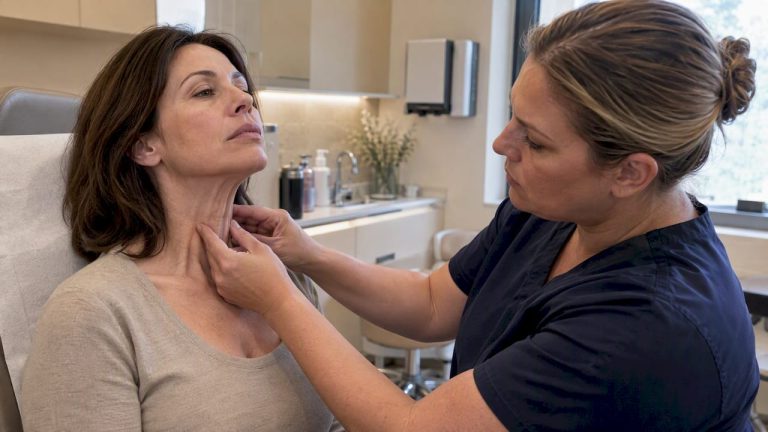
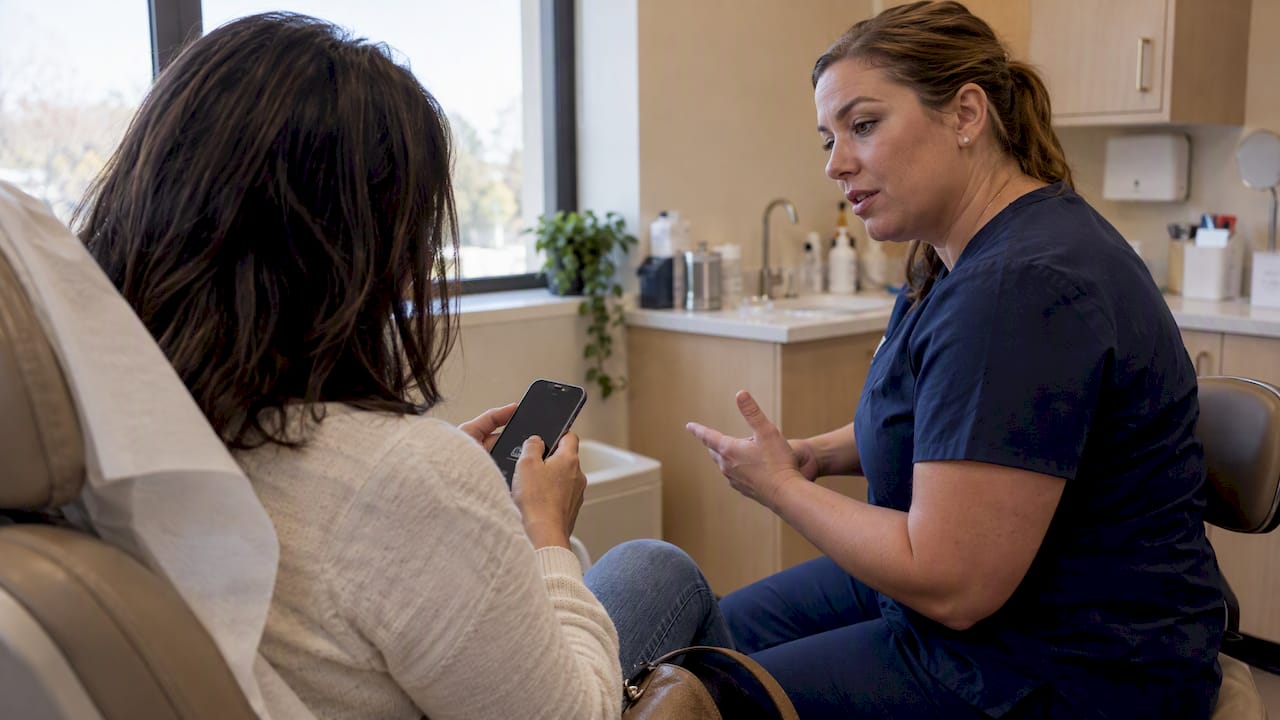
Yes, you can fly after Botox. Cabin pressure does not move or undo the product, and flying is generally considered safe because the drug’s effects stay localized to the injection site. What matters is what happens around the flight: bruising, swelling, sitting for hours, and whether you can follow aftercare at an airport. Our usual advice is to book treatment at least a few days before you leave, and to wait 24 to 48 hours at minimum if you have no choice.
Below, we explain what is known, what is simply habit, and how to plan your appointment if you are leaving from Toronto Pearson or anywhere else.
TL;DR
- Flying after Botox is generally considered safe. The risk is not the plane itself, it is bruising, swelling and skipping aftercare.
- We suggest waiting 24 to 48 hours before a flight when you can, and ideally treating 1 to 2 weeks before a big trip.
- Stay upright and do not rub or press the treated area for the first 4 hours. That rule matters more than altitude.
- Do not pack a first-time treatment into the day before a wedding, a conference or a vacation. Botox takes days to settle in.
- Dermal filler is a different conversation: swelling can be more noticeable, so give it more room before you travel.
What the evidence actually says about flying
People ask this question because many clinics hand out an aftercare sheet that says “no flying for 24 or 48 hours.” It sounds like a rule with a reason behind it. The honest answer is that it is mostly a precaution.
A published review of post-treatment advice after botulinum toxin injections found a paucity of research evidence behind the recommendations patients are commonly given. A review of office-based neuromodulator procedures says much the same: most post-injection care recommendations are anecdotally based and have limited supporting evidence. We have not found a clinical study showing that air travel reduces how well Botox works or makes it less safe.
That does not mean you should ignore the advice. It means you should understand what the advice is protecting you from.
Why Botox does not “move” at altitude
Botox works by binding to nerve endings in the muscle it was placed in. According to Medical News Today’s aftercare guide, this binding happens within roughly 2 to 3 hours, which is why spread after 24 hours is highly unlikely. Concerns about movement relate mainly to physical manipulation of the area, such as rubbing or massaging, not to changes in air pressure.
So a flight 24 hours after treatment is not a flight on which the product is still free to travel. The first hours are the sensitive window, and they are about your hands and your posture, not the sky.
What a flight can still affect
The more practical risks are these:
- Bruising. A small bruise can happen with any injection, and it is down to technique and your individual anatomy. A bruise at the start of a holiday is annoying, and you may not have time to let it fade before photos.
- Swelling or tenderness. Small bumps at the injection sites usually settle quickly, but you may feel self-conscious on a long flight.
- Headache or tightness. Some people feel a mild headache or heaviness in the first day or two. Being in a cramped seat with a pillow pressed against the forehead is not ideal.
- Unexpected results far from home. If one brow sits slightly higher or a lid feels heavy, you will want your injector close by. Results take time to appear, and a fine-tuning visit is often part of care.
The last point is the one we weigh most heavily for our own patients, and it shapes the timeline below.
How long to wait before you fly
There is no official clearance time. Sources vary: some clinicians say fly immediately, others wait a day or two, and Medical News Today notes that a doctor may recommend anything from 1 day to 2 weeks to avoid worsening potential side effects. Here is how we think about it.
| Your situation | What we suggest |
|---|---|
| Short flight, you have treated before and bruise rarely | Flying the same or next day is generally reasonable if you follow the 4-hour aftercare rules |
| First-time Botox or Dysport | Wait 24 to 48 hours at minimum, and ideally treat 1 to 2 weeks before leaving |
| Long-haul flight or a trip with no easy access to care | Treat at least 1 to 2 weeks ahead so results settle and any touch-up can happen before you go |
| You bruise easily or are treating the under-eye area | Allow extra time, and ask during your consultation |
| Dermal filler instead of Botox | Leave more buffer: swelling can be more noticeable, so aim for several days |
| Important event on arrival (wedding, interview) | Do not treat for the first time right before travel |
These are our clinical habits, not a regulatory standard. Your own history, the areas treated and your travel plans change the answer, which is why we talk it through at the consultation.
The 4-hour rule matters more than the flight
If you remember one thing from this article, make it this. After injection, the commonly given advice is to stay upright and avoid rubbing, massaging or pressing on the treated areas for at least 4 hours, so the product stays where it was placed.
That is simple at home. At an airport, it takes some thought.
Airport and cabin habits for the first 4 hours
- Skip the neck pillow that pushes up on your face. Use one that supports the neck only, and keep your face off headrests and the seat in front.
- Do not lie face down on a lounge couch or a lie-flat seat.
- Do not press a mask or goggles hard across your forehead. Tight headwear over treated brows is best avoided early on.
- Keep your hands away. Rubbing tired eyes during a boarding queue is a common trap.
- Pack your carry-on so you do not have to lift anything heavy. Hard exertion is usually discouraged in the first 24 hours. Check our full Botox aftercare guide for the complete list.
What to do and what to skip in the first day
Do:
- Drink water and eat before you travel.
- Follow the aftercare sheet your injector gave you.
- Wear sunglasses and a hat if you want to feel private about small marks.
- Save your injector’s clinic number in your phone.
Skip:
- Alcohol on the flight or at the airport lounge. We explain why in our piece on alcohol around Botox.
- Heavy makeup pressed in with fingers right after treatment. Our nurse’s view on makeup after Botox covers timing.
- Facial massages or in-flight sheet masks that you press down hard.
- A workout on the day of your flight.
Planning your appointment around a trip
The best way to fly after Botox is to not fly right after Botox. Here is a simple timeline we give patients.
- 2 to 3 weeks before departure: Book your consultation. A first-timer especially benefits from this lead time. Our guide to preparing for your Botox session lists what to avoid beforehand, such as certain supplements and alcohol.
- 10 to 14 days before: Have your treatment. Botox usually takes several days to show its full effect, so the early part of this window is when you start to see how it looks.
- About 1 week before: Check in. If something looks uneven, a small adjustment can be made while you are still at home.
- Day of travel: You are well past the first 24 to 48 hours, and you can move through the airport normally.
If you must travel sooner, tell your injector at the start. We would rather adjust a plan than have you discover an issue at a gate. The same thinking applies to work and social calendars: our guide on returning to work after Botox shows how to plan the first few days.
Common questions about side effects in transit
Most people who fly after Botox have an uneventful trip. Still, know what is normal and what is not.
Usually normal: small red dots at injection points, mild tenderness, a light headache, and a minor bruise. Our article on common Botox side effects lays out what to expect and when.
Contact your injector if: one eyelid droops, your vision changes, or a bruise or swelling keeps getting worse after the first few days.
Seek urgent medical care if you have trouble swallowing, speaking or breathing, or notice general muscle weakness. These symptoms are rare. Health Canada’s page on cosmetic injections describes the toxin in Botox Cosmetic and the importance of receiving it from a qualified provider. Case reports in the literature, such as a hospital case of systemic botulism following a cosmetic injection, describe rare systemic spread, including with counterfeit formulations. That is one more reason to choose a clinic that uses properly sourced product and a trained injector, rather than a bargain deal before a trip.
If you are abroad when symptoms like these appear, go to the nearest emergency department and tell them you have had a botulinum toxin injection, with the date.
Our perspective: the worry is usually the wrong worry
We see this pattern often. A patient is excited, has a trip on the calendar, and asks whether the plane will “ruin” her Botox. It will not. What can spoil the experience is rushing: treating the day before a flight, having no time to check results, then trying to manage a small bruise in a seat with no mirror and no access to us.
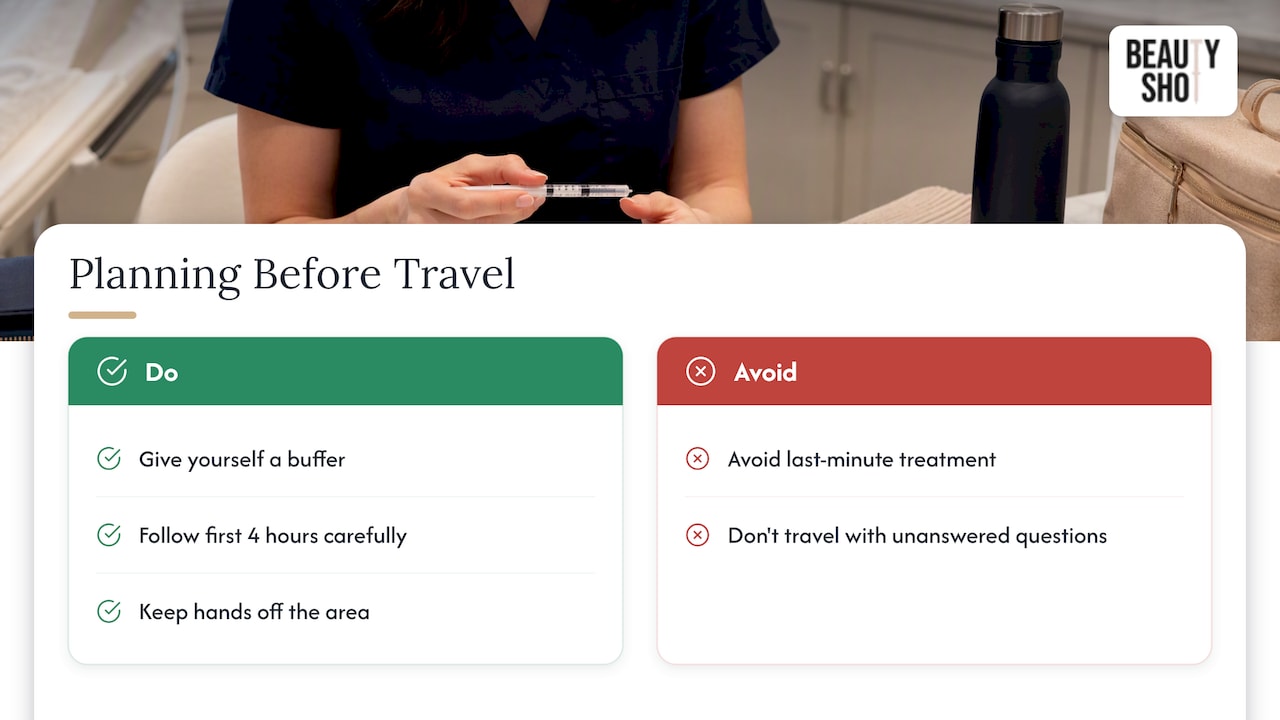
Our approach is built around subtle, natural-looking results that still look like you. That takes planning, a thoughtful consultation, and an honest conversation about timing. All injectables at Beauty Shot are performed by an advanced cosmetic Registered Nurse with more than nine years of injection experience, and she would rather move your appointment up by a week than have you travel with unanswered questions.
So our advice is plain. Give yourself a buffer, follow the first 4 hours carefully, keep your hands off the area, and choose a time that lets you see your results settle before you pack. If your schedule truly does not allow it, tell us, and we will build the safest plan we can.
— Felix
Booking before you travel
If you are in Woodbridge, Vaughan, Maple, Kleinburg or Concord and have a trip coming up, the easiest step is to talk to us early. We offer Botox and Dysport for expression lines, hyperhidrosis treatment, and dermal fillers, with a personalized plan after a consultation. If you want a subtler lip shape before a vacation, ask about our lip flip. Tell us your departure date when you book, and we will work backwards from it.
If you are also considering both Botox and filler, see how we think about combining them safely so you can plan your timeline in one visit.
Frequently asked questions
Can you fly right after Botox?
In most cases, yes. Flying does not change how the product works, and it is generally considered safe. We still prefer you wait 24 to 48 hours when possible, mainly to allow for bruising and swelling and to make sure you have followed the first-day aftercare.
What is the 4-hour rule for Botox?
It means staying upright and avoiding rubbing, massaging or pressing the treated area for at least 4 hours after your appointment. The goal is to keep the product where it was placed while it binds, which takes about 2 to 3 hours. If you have a flight that same day, this rule is the part to plan around.
Can Botox migrate after 24 hours?
It is highly unlikely. Once the toxin has bound to nerve endings, movement is mostly linked to physical manipulation of the area, not to air pressure or travel. If you notice a drooping lid or brow after a few days, contact your injector rather than waiting it out.
What should you not do for 24 hours after Botox?
Avoid hard exercise, rubbing or massaging the area, tight headwear across the forehead, and alcohol. Our aftercare guide has the full list. Your injector may adjust it for you.
Is flying after filler different from flying after Botox?
Yes, it can be. Filler can cause more visible swelling or bruising than Botox, so we suggest leaving more buffer, often several days, before a trip. Ask your injector about the areas you are treating, especially under the eyes or lips.
Sources
- Can you fly after Botox? Tips for safety and myths explained, Medical News Today
- Botox aftercare: What experts recommend following your treatment, Medical News Today
- Post-treatment advice following botulinum toxin injections: a review
- Office-based facial plastics procedures: Neuromodulators, PMC
- Cosmetic injections, Health Canada
- A Hospitalist’s Challenge: Systemic Botulism Following a Cosmetic Injection, PMC