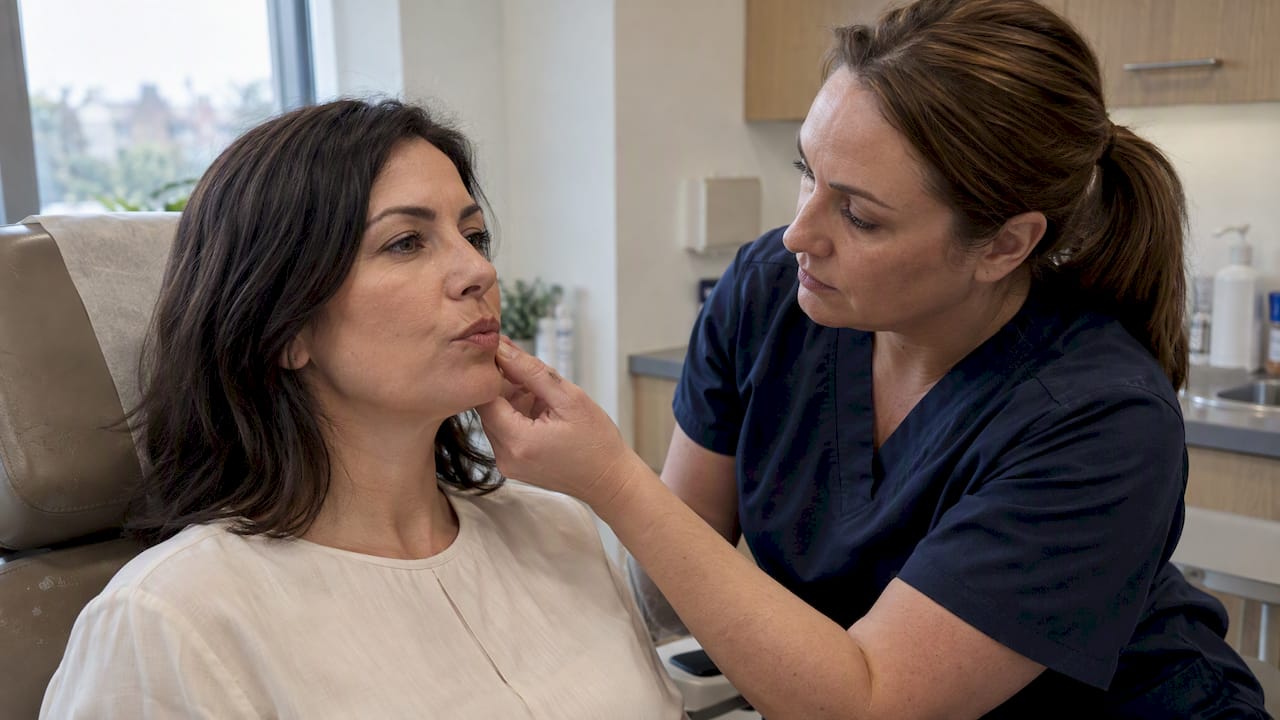
Botox can soften vertical lip lines that deepen when you purse, and a lip flip relaxes the upper-lip muscle to ease that pursing. Health Canada says effects typically last 3–4 months, and only authorised products should be used. If your lines remain visible at rest, you will likely need a combined plan.
TL;DR:
- Lines visible at rest often reflect skin damage or volume loss, so Botox alone may not address them; fillers or resurfacing may be needed.
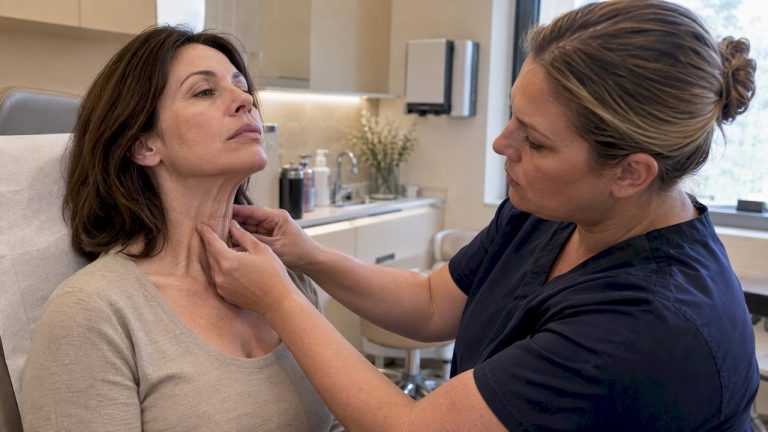
- A consultation checks muscle strength, lip length and volume, prior filler, skin quality, medical history, and medications before setting a conservative dose.
- A lip flip uses a small dose near the upper lip border, but dosing should protect speech, drinking, whistling, and smiling.
- Results appear after a few days, settle within 1–2 weeks, and typically last 3–4 months; treatments should be spaced at least two months apart.
- Before treatment, verify the product label and Drug Identification Number because unauthorized toxin products pose health risks; seek immediate care for speech or swallowing problems.
How does Botox work around the mouth?
Botox is a neuromodulator. It blocks the nerve signal that tells a targeted muscle to contract, which, as Health Canada explains, reduces dynamic wrinkles. Around the lips, the muscle in question is the orbicularis oris, the ring that controls speech, lip closure and pursing.
That anatomy is why this area is technique-sensitive. The Canadian Society of Plastic Surgeons notes that injectors must balance smoothing lines with preserving those functions. Here is what that means in practice:
- Dynamic lines respond best. Lines that show up when you purse, sip or speak come from repeated muscle movement, which is exactly what Botox quiets.
- Dosing stays conservative. Small amounts, placed precisely, soften the lines while you can still whistle, drink and smile.
- A lip flip is a targeted technique. A very small dose near the upper lip border relaxes the muscle so the top lip gently rolls outward. It changes lip posture without adding volume. You can read more about how this works in our guide on whether a lip flip helps smokers’ lines.
Pro Tip: Tell your injector how you use your mouth: playing a wind instrument, drinking through straws, or speaking publicly all affect how conservative the plan should be.
Am I a good candidate, and how will you assess me?
The first question is whether your lines are movement-based or static. Lines that appear only when you purse respond well to Botox. Lines you can still see when your face is relaxed usually involve skin damage or volume loss, and those need more than a neuromodulator.
At a consultation, we check:
- Muscle strength: how strongly your upper lip pulls inward when you purse.
- Lip volume and upper-lip length: these shape how a lip flip will look on you.
- Prior filler: what you have had, when, and where it sits.
- Skin quality: thin, sun-damaged skin behaves differently from resilient skin.
- Medical history and medications: including anything that affects bruising or muscle function.
A trained medical injector and a personalized plan matter more here than anywhere else on the face. Our guide to questions to ask a Botox specialist will help you vet any clinic you consider.
What happens during the appointment, and when will I see results?
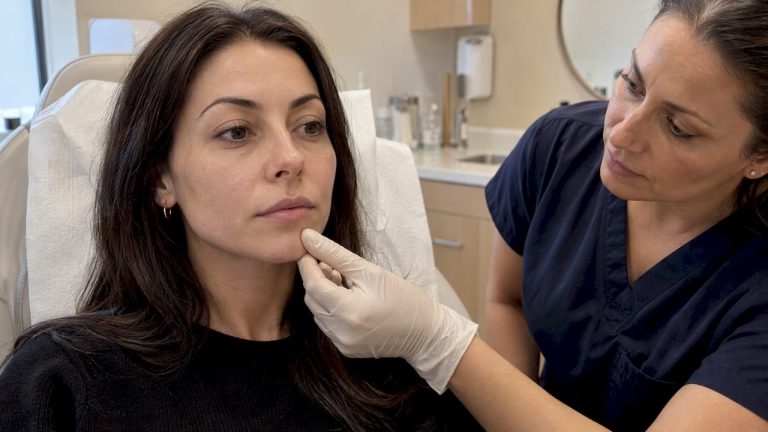
The visit is short and low-key. Your injector marks the points, cleans the area, and places a few tiny injections around the upper lip. Most people return to their day right away, with aftercare instructions in hand.
- Dosing is customized. Perioral treatments use small unit counts and precise placement, adjusted to your muscle strength and goals.
- Onset is gradual. Effects become noticeable after a few days, and results typically settle at 1–2 weeks.
- Duration is limited. Health Canada reports treatments typically last 3–4 months.
- Spacing matters. Injections should not be repeated more often than every two months.
For a deeper look at timing, see our clinical guide on how long Botox results last.
What are the side effects, and how do you stay safe?
Most reactions are mild and temporary. Contact us if anything feels unusual.
- Common: bruising or tenderness at the injection points, mild temporary weakness when pursing, and slight asymmetry that can be adjusted.
- Rare but serious: toxin effects spreading beyond the target area, causing trouble with speech or swallowing. Seek immediate care if you notice these.
- Prevention: choose a skilled injector. Health Canada warns of risks from incorrect perioral injections, including muscle weakness and difficulty with speech or swallowing.
Health Canada has advised that unauthorised botulinum toxin products may pose serious health risks. Ask to see the product label and check its Drug Identification Number (DIN) before treatment.
Our article on common Botox side effects covers what to expect and when to call.
How does Botox compare with fillers, lasers and peels?
Each option treats a different cause, so the right choice depends on what is creating your lines.
- Botox: best for dynamic lines caused by muscle movement.
- Hyaluronic acid fillers: address volume loss and support the lip border. A 52-week randomized study found a resilient hyaluronic acid filler significantly improved moderate-to-severe perioral lines versus control at Week 8, with many patients still responding at Week 52.
- Laser resurfacing and chemical peels: remodel skin and improve texture where lines are etched into the surface.
A common example: Botox to quiet the pursing, plus a small amount of filler to soften a line that remains at rest. If you would like to understand the pairing in more depth, see combining Botox with other treatments.
What should you do after treatment, and how often should you return?
Good aftercare is simple, and it protects your result.
- Avoid rubbing or pressing the treated area.
- Avoid strenuous exercise immediately after treatment and follow your injector’s aftercare instructions.
- Follow our instructions about blood-thinning medications or supplements.
- Expect subtle softening rather than a dramatic change; your expression and function stay intact.
- Plan maintenance around the 3–4 month duration, with individualized touch-up timing.
For gentle at-home skin support between visits, this anti-aging face massage guide offers a useful routine.
How we plan perioral treatment safely
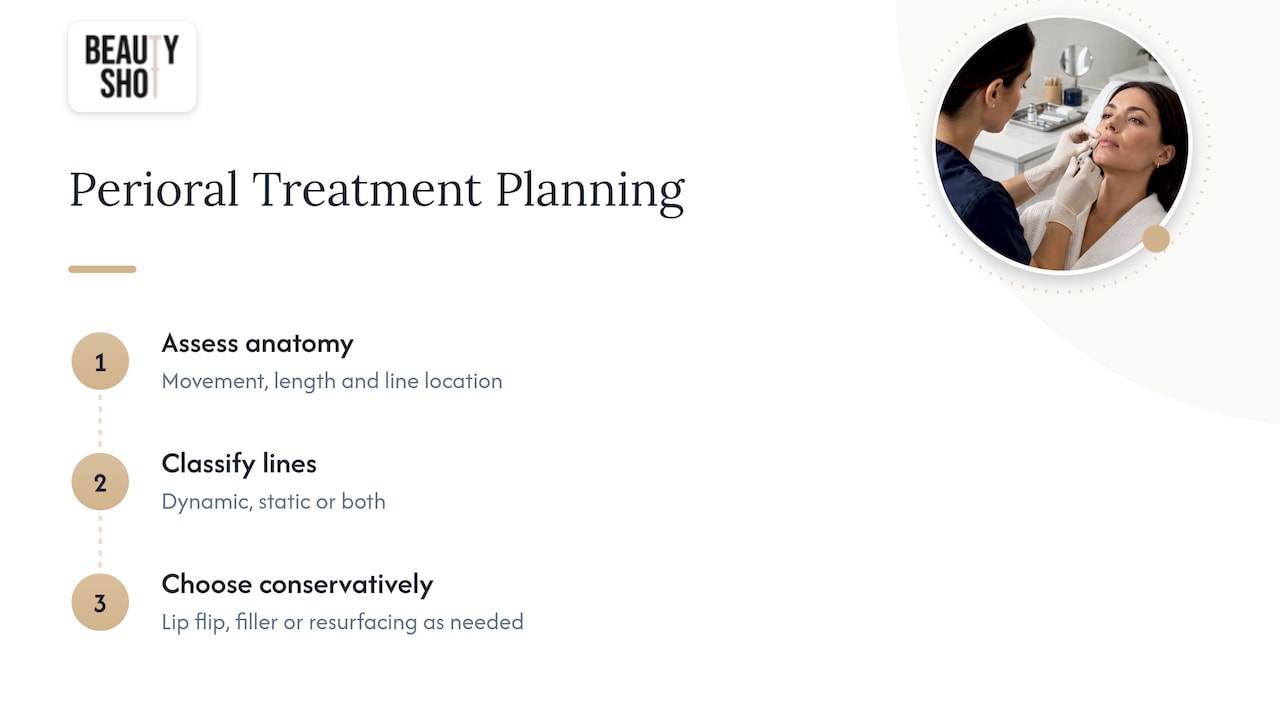
Our approach starts with anatomy, not the syringe. We look at how your lip moves, how long your upper lip is, and where the lines sit, then dose conservatively to protect your speech and smile. Whether a lip flip alone is enough, or fillers or resurfacing should join it, depends on whether your lines are dynamic, static or both. All injectables here are administered by an advanced cosmetic Registered Nurse.
Why a conservative plan beats chasing smooth
The conventional advice is to treat lip lines until they disappear. We think that is the wrong target. The mouth is the most expressive, hardest-working part of your face, and the research on this area keeps returning to the same point: the orbicularis oris does too many jobs to be silenced. A result that erases every line often costs you the way you talk and smile.
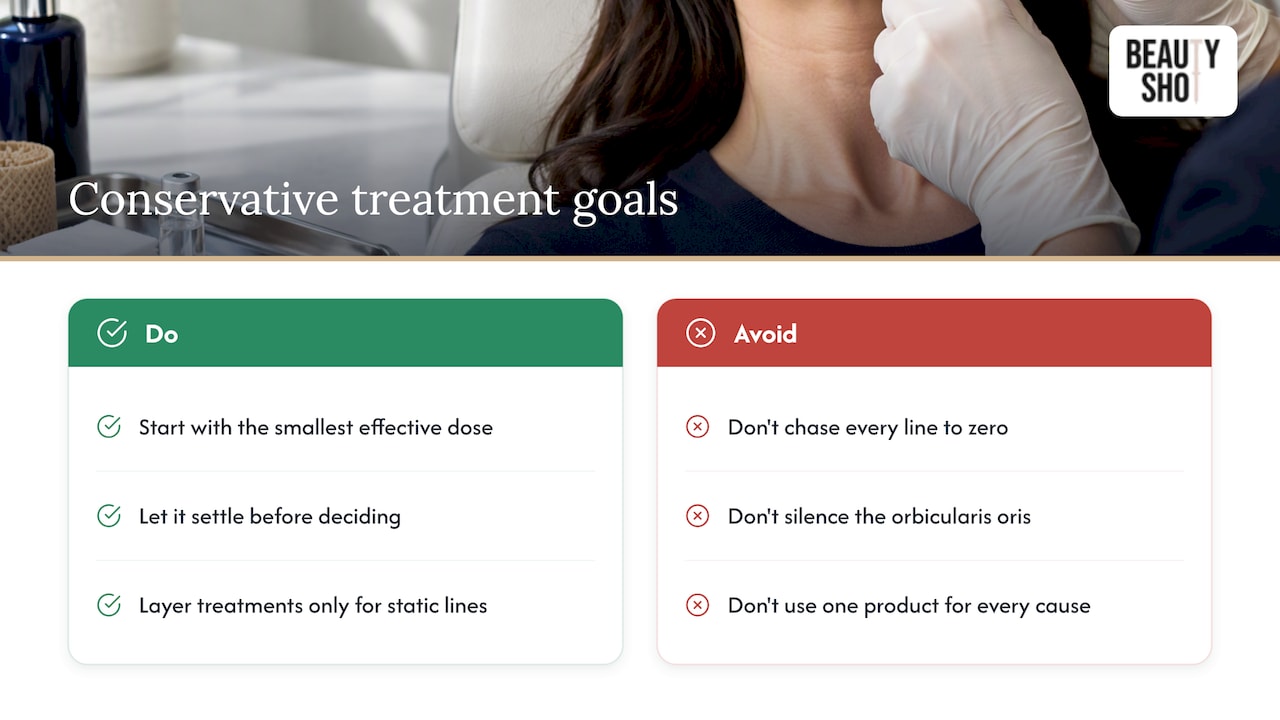
What deserves attention first is the cause. Movement lines, sun-damaged skin and lost volume each need a different tool, and a single product asked to do all three tends to disappoint. Candidacy checks matter more than brand names or unit counts.
Our advice: start with the smallest effective dose, allow it to settle, then decide whether anything else is needed. Layer treatments only when your lines tell you they are static. Subtle and still looking like you is a better goal than flawless.
— Felix
Book a lip lines consultation with us
If you would like to know whether a lip flip, filler, resurfacing or a combined plan suits your goals, we will assess you in person. Our injectables are administered by an advanced cosmetic Registered Nurse, and we focus on natural, subtle results. Bring your medical history and any prior treatment details, then book through our services page. You can also read about our lip flip with Botox or Dysport.
This article is general information, not a substitute for advice from a qualified doctor. Consult a qualified healthcare professional about your own circumstances before acting on anything here.
FAQ
Does Botox help lip lines?
Yes, for lines caused by muscle movement. Botox relaxes the muscle that creates the pursing lines, which softens them. Lines visible at rest usually need filler or skin resurfacing as well.
How soon will I see results from Botox?
Effects become noticeable after a few days and typically settle at 1–2 weeks. Health Canada reports that treatments typically last 3–4 months.
How does a lip flip work?
A very small amount of Botox is placed near the upper lip border to relax the muscle. The top lip then gently rolls outward, which can make it look slightly fuller without adding volume.
Can fillers replace Botox for lip lines?
Not entirely. Fillers restore volume and support the lip border, while Botox addresses movement. Many people benefit from a combination, planned during a consultation.
Sources
- Canada
- Neurotoxin (For Treatment of Wrinkles) – The Canadian Society of Plastic Surgeons
- Efficacy and Safety of a New Resilient Hyaluronic Acid Filler in the Correction of Moderate-to-Severe Dynamic Perioral Rhytides: A 52-Week Prospective, Multicenter, Controlled, Randomized, Evaluator-Blinded Study.
- Unauthorized Nabota botulinum toxin may pose serious health risks – Canada.ca