For subtle enhancement of thin lips, a small-volume hyaluronic acid filler administered with anatomy-driven micro-technique may be an option to discuss with a qualified clinician. Before booking, confirm the product is authorized and the clinician is regulated and experienced.
TL;DR:
- Thin lip tissue generally suits softer, more flexible hyaluronic acid gels; border injections may add definition more effectively than adding volume centrally.
- Because early swelling can make lips look fuller than the final result, assess the settled shape after two to four weeks.
- A lip flip may suit people seeking more upper lip show rather than volume, though its effect is subtler and lasts less time than filler.
- Swelling, bruising, firmness, and tenderness are common after hyaluronic acid injections, while serious adverse events are rare when clinicians use proper technique.
- Health Canada says devices that inject filler without needles are not authorized in Canada and may cause inflammatory reactions, abscesses, or infection.
How hyaluronic acid fillers work and why they’re the usual choice for thin lips
Hyaluronic acid (HA) filler is a gel that mimics a substance your skin already produces. It may be an option when lips need volume. Unlike some older filler materials, HA can be dissolved if you’re unhappy with the result, which gives us (and you) a safety net that matters most on delicate lip tissue.
Results vary by product and by your own metabolism. In the days after treatment, mild swelling and bruising are common and expected, not a sign anything went wrong.
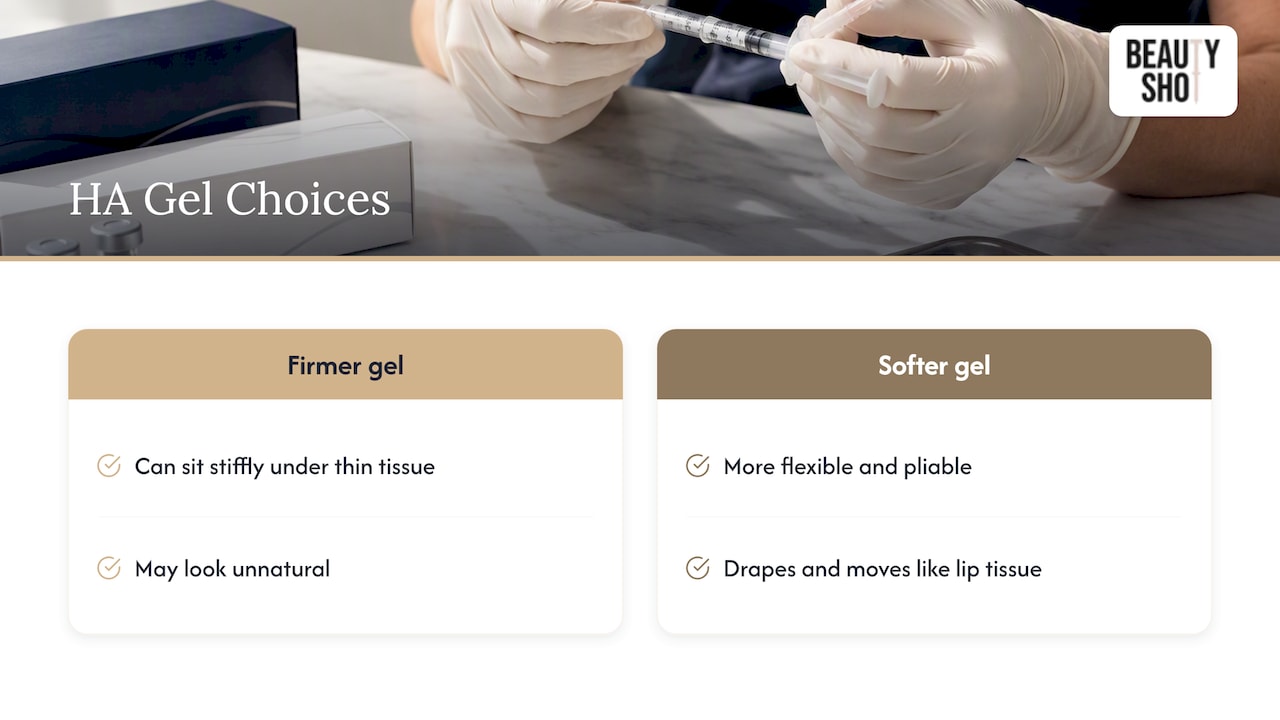
With thin lips, the gel’s rheology, meaning how soft, flexible, or cohesive it is, matters more than the brand name on the box. A gel that’s too firm can sit stiffly under thin tissue and look unnatural, while a softer, more pliable gel tends to drape and move the way your own lip tissue does.
A recent systematic review and meta-analysis of randomized controlled trials found that HA lip fillers measurably improve lip fullness and aesthetic appearance, with moderate-to-high patient satisfaction. The same review noted that swelling, firmness, bruising, and tenderness are common after treatment, while serious adverse events remain rare.
Who is a good candidate for lip filler when lips are thin
If your lips have always been thin and you’re looking for a subtle, proportionate change rather than a dramatic transformation, you’re likely a good candidate for a consultation. We look for a few things before recommending treatment:
- You’re in good general health with no active cold sores, infections, or severe allergies in the treatment area.
- You understand that some swelling and tenderness are part of healing and you can plan around it.
- Your goals are realistic: refreshed and balanced, not a complete change to your natural shape.
Thin lips often come with less natural definition along the border, so we also look at how your lips sit relative to your nose, chin, and overall facial proportions. Sometimes a small amount of filler at the border makes more visual difference than adding volume to the body of the lip. If your main concern is a lack of upper-lip show rather than volume itself, we may suggest starting with a smaller intervention before committing to a full lip-filler plan.
Techniques and product considerations for subtly enhancing thin lips
Thin lips leave less room for error, which is exactly why technique matters as much as product choice. A conservative approach can help avoid a dramatic result.
- We inject in small aliquots, tiny amounts placed deliberately rather than large boluses pushed into limited tissue.
- We respect your natural lip border and facial proportions instead of chasing a uniform, trendy shape.
- We often stage treatment over time so the final shape develops gradually.
The technical choices also shift depending on what your lips need. Border definition calls for a different hand than adding central projection, and some areas respond better to tiny point injections while others suit a gentler threading technique along the tissue plane. For thin lips specifically, we tend to favour softer, more flexible HA gels that settle naturally into limited tissue rather than firmer, more cohesive gels designed for structural support elsewhere on the face.
Pro Tip: Book your “after” photos once swelling has fully resolved and the filler has settled into its final shape.
Swelling is temporary, and it’s normal for lips to look fuller than planned in the first few days. The true result becomes visible once tissue integration is complete, typically within two to four weeks.
What to expect during the procedure, recovery timeline, and typical results for thin lips
A lip filler appointment follows a predictable rhythm, and knowing the steps ahead of time tends to ease any nerves.
- We start with a consultation to discuss your goals, review your health history, and confirm consent.
- We mark the treatment plan directly on your lips so you can see and approve the plan before any injection happens.
- We apply a topical or local anesthetic to keep the process comfortable.
- We inject slowly and in small amounts, checking symmetry and shape as we go.
- We assess the result together immediately after, while you’re still in the chair.
After treatment, some swelling, mild bruising, and tenderness may occur. Final integration, when the filler has fully softened into your tissue, is usually visible by two to four weeks. Durability depends on the product used, your own metabolism, and lifestyle factors like sun exposure and activity level. Simple aftercare, such as cool compresses, gentle handling, and avoiding strenuous exercise for a day or two, supports smoother healing.
Non-filler alternatives and adjuncts: the lip flip and complementary approaches
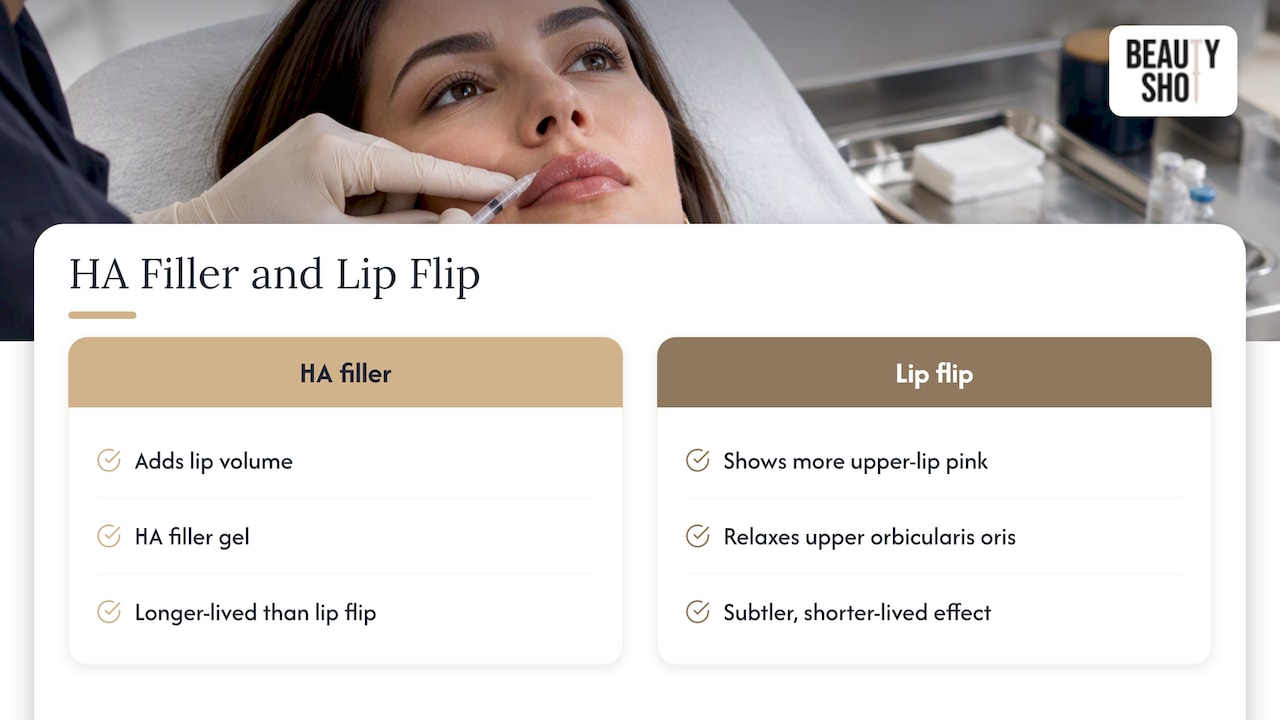
If what you want is a touch more upper-lip show rather than added volume, a lip flip may suit you better than filler. This treatment uses a small amount of botulinum toxin to relax the upper orbicularis oris muscle, so the top lip gently rolls outward and shows more pink. It’s subtler and shorter-lived than HA filler. Public interest data shows lip filler remains searched more often than the lip flip overall, though flip interest has grown as a lighter alternative. Some patients combine a small amount of HA filler with a lip flip to achieve lift without added bulk.
Safety, regulations, and red flags to watch for in lip filler treatments
Safety starts with knowing what’s actually authorized. In Canada, HA dermal fillers are regulated medical devices, and the Canadian Society of Plastic Surgeons advises that safe results depend on an individualized approach built on facial anatomy and a practitioner who can manage complications if they arise.
One device category to watch for: needle-free dermal filler tools, sometimes marketed as hyaluron pens or similar names. Health Canada has confirmed these devices are not authorized for use in Canada and may cause inflammatory reactions, abscesses, and infection.
Before any treatment, a few checks protect you:
- Ask to see the product packaging and confirm it’s a Health Canada-authorized filler.
- Confirm your clinician’s regulatory status, whether that’s a registered nurse, nurse practitioner, or physician.
- Ask who provides medical oversight at the clinic in case a complication needs management.
The systematic review of HA fillers found that while swelling, bruising, and tenderness are common after treatment, serious adverse events are rare when authorized products and proper technique are used. For a deeper look at risks and benefits, our guide on whether lip fillers are safe covers this in more detail.
How to choose the right injector and prepare for your consultation
The injector matters more than the product. We’d encourage you to look for a regulated clinician, an RN or physician, with documented training in injectable techniques and a portfolio that shows subtle, natural-looking results rather than uniformly “done” lips.
- Ask what specific product they’re recommending for you and why, given your lip anatomy.
- Ask about the injection plan: how much volume, which technique, and how many sessions.
- Ask how they handle complications and what aftercare support looks like.
A few small preparations help the appointment go smoothly. Avoid NSAIDs or aspirin before treatment if your clinician advises it, since these can increase bruising risk. Bring reference photos of the look you want, and mention any past filler history so your injector can plan around existing product. Our guide to lip filler techniques and our piece on achieving natural-looking lips both walk through what a thoughtful treatment plan looks like.
Pro Tip: Bring an older photo of your lips. It can help show what “natural” means for your own face.
A nurse injector’s note on treating thin lips
Restraint is a skill, not a limitation. A conservative, anatomy-first plan can be discussed during a consultation to decide what may suit your lips.
— Felix
Nurse-administered lip filler and lip flip care at Beauty Shot Medical Clinic
Treating thin lips well takes a steady hand and a plan built around your own anatomy, not a one-size template. At Beauty Shot Medical Clinic, every injection is performed by an advanced cosmetic registered nurse, so you’re never guessing who’s holding the needle.
A consultation with us starts with a discussion of your goals and treatment options:
- We verify the product and confirm it’s authorized before it ever touches a tray.
- We build a personalized plan based on your lip shape, facial balance, and goals.
- We stage treatment where it makes sense, rather than pushing for maximum volume in one visit.
If subtle, natural-looking lips are what you’re after, our dermal fillers page outlines our lip and peri-oral treatment options, and we’re happy to talk through whether filler, a lip flip, or a combination suits you best.
This article is general information, not a substitute for advice from a qualified doctor. Consult a qualified healthcare professional about your own circumstances before acting on anything here.
FAQ
What is the thickest filler for lips?
Firmer, more cohesive HA gels are typically used for structural support in areas like the cheeks or jawline rather than the lips, since thick, stiff gels can look unnatural on thinner lip tissue. For lips, especially thin ones, softer and more flexible HA formulas tend to integrate more naturally and move the way lip tissue does.
How to make thin lips appear fuller?
Small amounts of HA filler placed with anatomy-led technique, often focused on border definition rather than bulk, create a fuller look without appearing overdone. A lip flip using botulinum toxin can complement this by increasing how much upper lip shows when you smile or speak.
Is lip fillers still popular in 2026?
Lip filler remains one of the more commonly searched cosmetic treatments, consistently outpacing interest in alternatives like the lip flip, with important connections to lip health and smile appearance, though flip interest has grown as a lighter option. Demand for subtle, natural-looking results has shaped how both treatments are approached.
What do thin lips indicate?
Thin lips are simply a natural variation in facial anatomy and don’t indicate anything about health. They often relate to genetics, age-related volume loss, or the structure of the lip border itself, and they can be enhanced subtly with HA filler if that’s a goal you have.
Sources
- Soft Tissue Fillers – The Canadian Society of Plastic Surgeons
- Efficacy and Safety of Hyaluronic Acid Lip Fillers: A Systematic Review and Meta-Analysis of Randomized Controlled Trials
- Needle-free dermal filler devices used for cosmetic skin treatments are not authorized in Canada and may pose health risks – Canada.ca