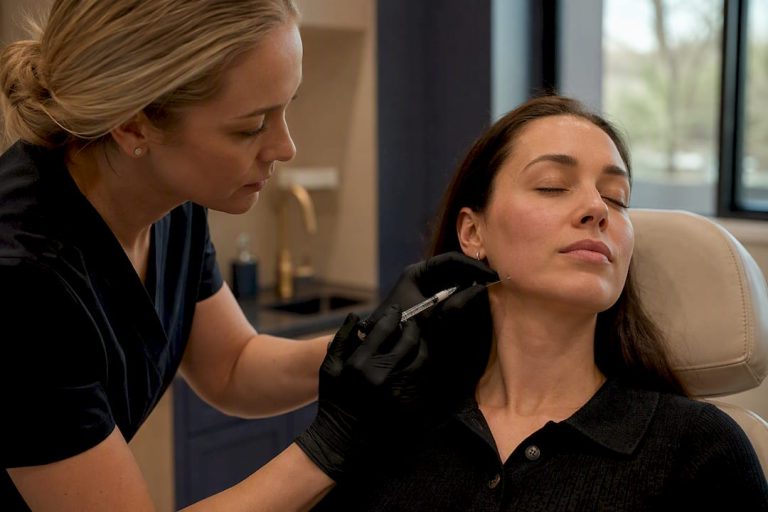
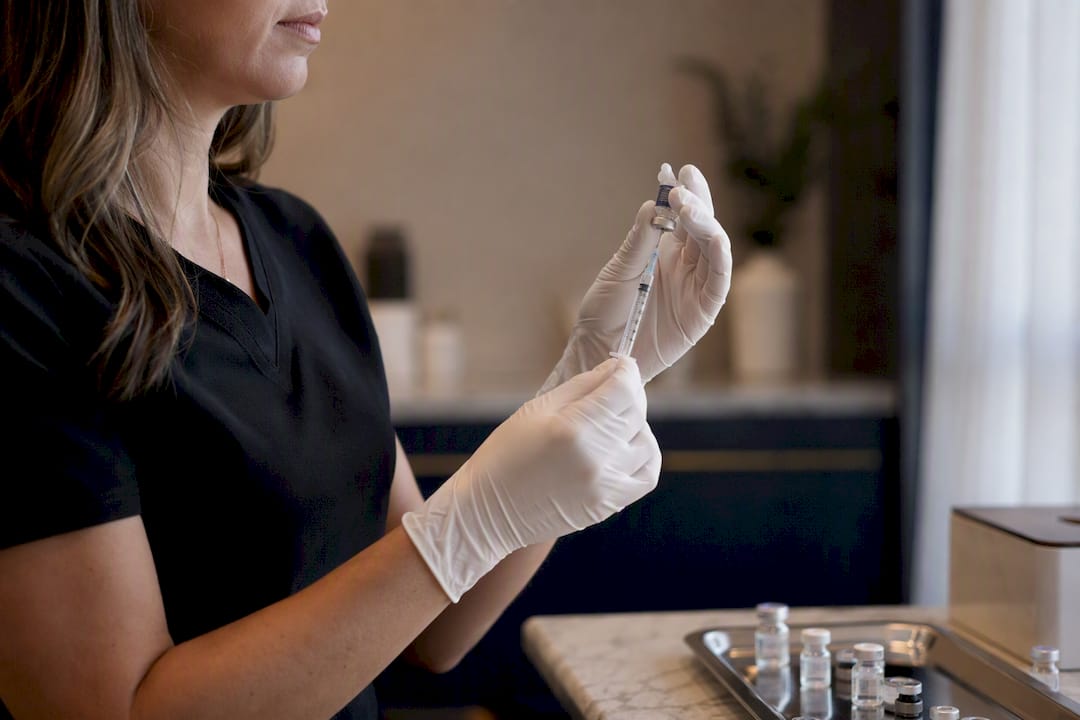
Choose a licensed medical injector, an RN, NP, or MD, working out of a real clinical setting, and treat every other option as a question mark until proven otherwise. That is the whole answer. If you are searching for how to find trusted injector locally, the next right step is simple: book a consultation that is separate from any treatment appointment, and use it to interview the provider before anything gets injected.
A few signals should make you pause immediately:
- A service run out of someone’s home, condo, or a “pop up” event
- Prices that sit noticeably below what other clinics in your area charge
- No consultation offered, or a consultation that is really just a sales pitch for treatment that day
Everything else in this article is about giving that first sentence some backbone.
Key Takeaways
A licensed, clinic-based injector who welcomes scrutiny of their credentials, product sourcing, and emergency protocols is the safest and most reliable choice for cosmetic injectables.
| Point | Details |
|---|---|
| Verify the licence | Look up the provider’s licence number on their provincial regulatory college registry before booking. |
| Separate consultation first | Insist on a consultation appointment apart from treatment day, including medical history and consent. |
| Watch for red flags | Avoid home-based services, prices far below market, and providers without hyaluronidase on site. |
| Confirm product sourcing | Ask to see sealed vials, brand names, and lot numbers for Health Canada–approved products. |
| Choose conservative, nurse-led care | Beautyshotmedicalclinic pairs nurse-administered injectables with a consultation-first, natural-results approach. |
This article is general information, not a substitute for advice from a qualified doctor. Consult a qualified healthcare professional about your own circumstances before acting on anything here.
How to verify credentials and licences before booking
Anyone can call themselves an “injector.” Not everyone can legally hold a needle of Botox or a syringe of hyaluronic acid filler. In Canada, that authority belongs to regulated health professionals, registered nurses, nurse practitioners, and physicians, who have completed recognized injectable training on top of their medical licence. The letters after a name matter less than what they represent: years of anatomy education, an understanding of vascular structures in the face, and accountability to a professional college that can suspend a licence for unsafe practice.
Here is how to actually check, rather than just take someone’s word for it:
- Ask for the provider’s full name and licence number, then look it up on your province’s nursing or medical regulatory college website. This registry search is public and free.
- Confirm the licence is active and in good standing, not expired, suspended, or under review.
- Ask specifically what injectable training they have completed, beyond their base licence, such as MD Codes, Allergan technique training, or manufacturer academies like Teoxane Academy.
- Request confirmation of ACLS or emergency-preparedness training, since injectables carry rare but real complication risks that require immediate response.
Reputable providers won’t flinch at any of this. In fact, experienced injectors are typically the ones who volunteer their credentials before you even ask, because ongoing training is something they’re proud of, not something they hide.
Pro Tip: Ask when the provider last took an advanced technique course, not just when they were first certified. Facial injectable science evolves quickly, and a nurse who trained once in 2019 and never again is a very different provider than one still attending academies today.
A safe consultation: what to expect and 10 questions worth asking
A genuine consultation is its own appointment, separate from treatment day. That structure exists for a reason: it gives you time to think, and it gives the provider time to properly assess your anatomy without the pressure of a needle already in the room. A safe consultation should include a review of your medical history, a facial assessment, informed consent discussion, and before photos, all before any product is opened.
During that visit, these ten questions will tell you almost everything you need to know:
- What is your licence type, and can I see it?
- Who is your supervising or collaborating physician, if applicable?
- Do you keep hyaluronidase on site for filler emergencies?
- What brand and lot number will you use, and can I see the sealed packaging?
- How many years have you been injecting, specifically?
- What happens if I have a complication after hours?
- Can I see photos of your own patients, not stock images?
- What would you personally recommend for my face, and why?
- Is there any reason you’d advise against treatment for me right now?
- How soon can I follow up if something feels off?
If the answers feel rehearsed, rushed, or if the “consultation” quietly turns into product being drawn up before you’ve agreed to anything, that’s your cue to leave. A proper consult never feels like a countdown clock.
Red flags that should make you walk away
Some warning signs are obvious once you know to look for them. Others are quieter, but just as serious. Trust your gut here.
- Non-clinical settings. Injections performed in a living room, hotel room, or at a kiosk event skip the sterile environment and emergency equipment a real complication would demand.
- Prices that seem too good to be true. Product costs money. Training costs money. A price far below the local range often means diluted or diverted product, or an untrained hand.
- Evasive answers about sourcing. If a provider won’t tell you the brand or won’t show you the vial, that’s a serious gap in transparency.
- No hyaluronidase, no protocol. Hyaluronidase should be sitting in the fridge of any clinic injecting hyaluronic acid fillers, ready to dissolve product if a vessel is compromised.
- A provider who says yes to everything. Nobody’s anatomy or budget supports every request. A “yes” to it all is a red flag, not generosity.
- No written consent, no paperwork. Consent forms exist to document that risks were actually discussed, not just implied.
Clinics that operate from verifiable commercial addresses and can produce sealed product packaging on request are the norm among safe providers, not the exception.
Confirming product authenticity, pricing, and safe timing
Health Canada maintains oversight of which cosmetic injectables are approved for sale, and a legitimate provider will happily confirm that the product in the room, Botox, Dysport, Juvéderm, Restylane, is licensed and sourced properly, right down to the lot number.
- Ask to see the sealed vial before it’s opened. This is standard practice, not an unusual request.
- Understand that pricing reflects more than the needle. It covers product cost, the provider’s training, sterile supplies, and emergency preparedness. A price that ignores all of that is cutting corners somewhere.
- Follow product monograph guidance on timing. Botox Cosmetic should not be administered more frequently than every two months per Health Canada’s guidance, a rule that protects against tolerance and overtreatment, not just a scheduling convenience.
Finding, comparing, and booking the right consultation
Once you know what to look for, the actual search moves quickly. Start with clinic websites rather than social media alone. A real clinic will list its team’s credentials, its consultation process, and often a gallery of results. That said, here’s a process worth following:
- Search locally, then check each clinic’s “About” or “Team” page for licence type, years injecting, and named advanced training.
- Cross-check licences against your provincial regulatory college registry, not just the clinic’s own claims.
- Read local reviews, but weigh them by specificity. A review mentioning the provider’s name, the treatment, and a follow-up experience carries more weight than a vague five-star rating.
- Look at before-and-after photos of real patients, ideally with consistent lighting and angles, since heavily filtered or dramatically lit photos can hide the truth of an outcome.
- Call and ask two or three of the ten consultation questions above before booking, to see how comfortably the front desk or provider answers.
- Bring a written list of medications, allergies, and past treatments to your consultation, and don’t be afraid to cancel if anything about the visit feels off once you’re there.
A short comparison note, credentials confirmed, consultation offered separately, product sourcing transparent, pricing reasonable, is enough to shortlist two or three clinics before you commit to one.
Why a nurse-injector, consultation-first practice fits this checklist
Beautyshotmedicalclinic is a cosmetic injectables and medical aesthetics clinic in Woodbridge, Vaughan, where every injectable treatment is performed by an advanced cosmetic Registered Nurse. That structure exists because a nursing background, especially one rooted in acute clinical care, builds the kind of anatomical judgment and emergency readiness that this entire checklist is built around.
The clinic’s approach centres on natural-looking results and facial balance rather than trend-driven volume. Consultations happen before treatment decisions, not during them, and questions about training, product sourcing, or safety protocols are answered directly. For readers who’ve worked through the checks above and want an in-person, medically supervised option to evaluate against, that consultation-first structure is worth seeing for yourself.
Understanding injectable types and which one fits your goals
Not every injectable does the same job, and knowing the difference changes how you evaluate any provider’s recommendation.
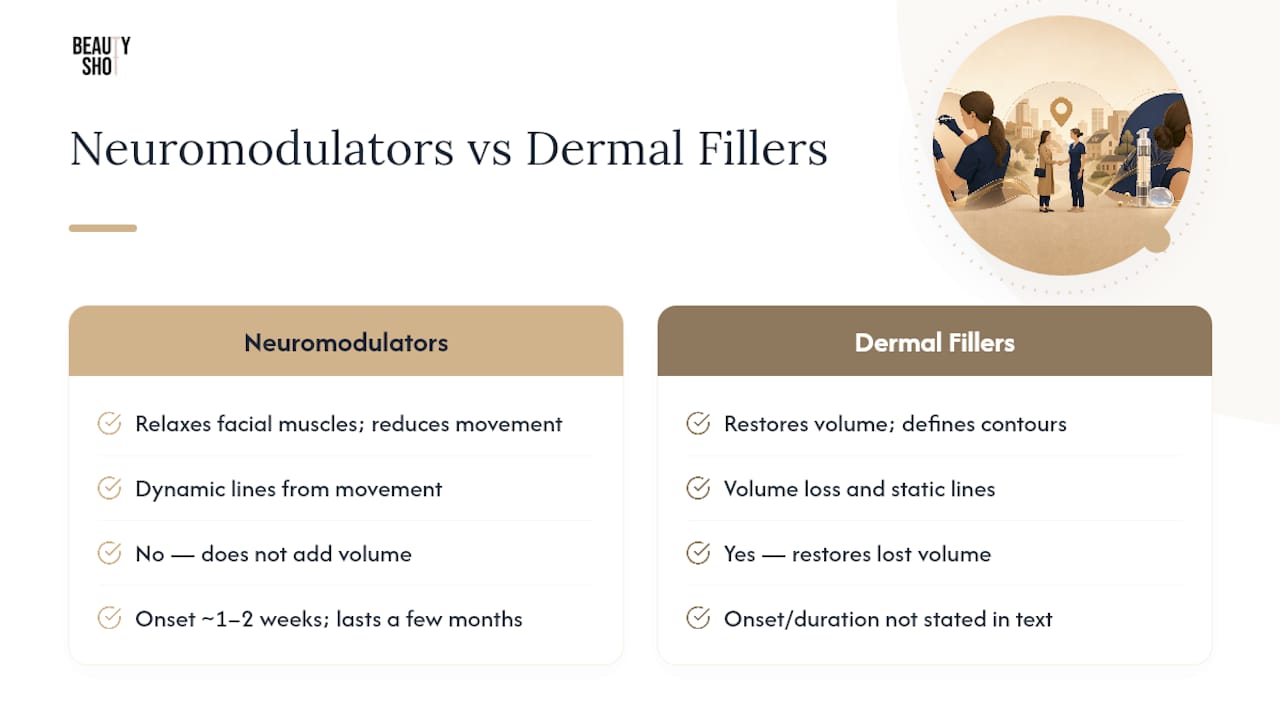
Neuromodulators, Botox and Dysport among them, relax specific facial muscles to soften lines caused by repeated movement: forehead creases, frown lines, crow’s feet. They don’t add volume. They work by temporarily reducing muscle activity, with results typically appearing over one to two weeks and lasting a few months.
Dermal fillers work differently. Most are made of hyaluronic acid, a substance naturally found in skin, and are used to restore lost volume, define contours like the cheeks or jawline, or soften static lines that show even at rest. Brands like Juvéderm and Restylane fall into this category, each formulated with different thicknesses for different facial zones. Choosing between Botox and fillers often comes down to whether the concern is muscle movement or lost structure, and a properly trained injector should be able to explain that distinction clearly rather than defaulting to whichever product they have on hand.
Some patients benefit from combining both, but that decision belongs in a consultation, not a walk-in booking. A conservative provider will assess your facial anatomy first and recommend only what’s appropriate for your goals and your face, not a standard package applied to everyone who walks through the door.
Ready to book your consultation with Beauty Shot
If you’ve worked through the checklist above and you’re ready to see it applied in person, booking with Beautyshotmedicalclinic starts with a consultation, not a treatment slot. Expect a conversation about your medical history, a facial assessment, and an honest discussion of what’s appropriate for your face and your goals, with safety steps and follow-up planning built in from the start.
You can explore the clinic’s approach through pages like how dermal fillers restore volume or the science behind how Botox works before your visit, so you arrive with informed questions rather than starting from zero.
This isn’t the only safe path available to you, and this article’s checklist applies wherever you end up booking. But if you’re in Woodbridge or Vaughan and want a nurse-led, consultation-first clinic that matches every safety criterion outlined above, the next step is to book your consultation with Beauty Shot Medical Clinic and bring your questions with you.

A note from Irene
I tell patients this often: the safest thing I can say in a consultation is sometimes “not yet” or “let’s do less than you’re asking for.” Nine years of injecting has taught me that restraint protects results as much as it protects safety. My training, from Sunnybrook’s ICU floors to advanced technique work with MD Codes and the Teoxane Academy, has shaped how carefully I approach every face that sits in my chair.
If a provider anywhere hesitates to answer your questions, that hesitation is information. Bring your questions to us, or to whoever you choose. A calm, unhurried consultation is never too much to ask for.
Sources
FAQ
How do I verify an injector’s licence?
Ask for their full name and licence number, then search your province’s nursing or medical regulatory college website to confirm it’s active and in good standing.
What’s a reasonable price for Botox or filler?
Pricing varies by clinic, but costs far below local averages often signal diluted product, an untrained provider, or corners cut on safety supplies.
How often can I safely get Botox?
Per Health Canada’s product monograph guidance, Botox Cosmetic should not be given more often than every two months.
Should my consultation happen on the same day as treatment?
No. A safe consultation is its own appointment, giving you time to ask questions and think before any product is injected.
Does Beauty Shot Medical Clinic offer a consultation before treatment?
Yes, Beautyshotmedicalclinic follows a consultation-first process with a nurse-administered approach focused on natural, balanced results.