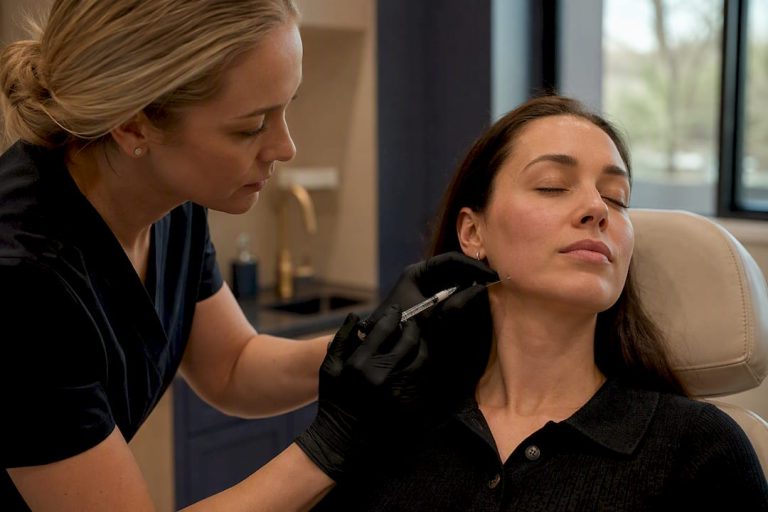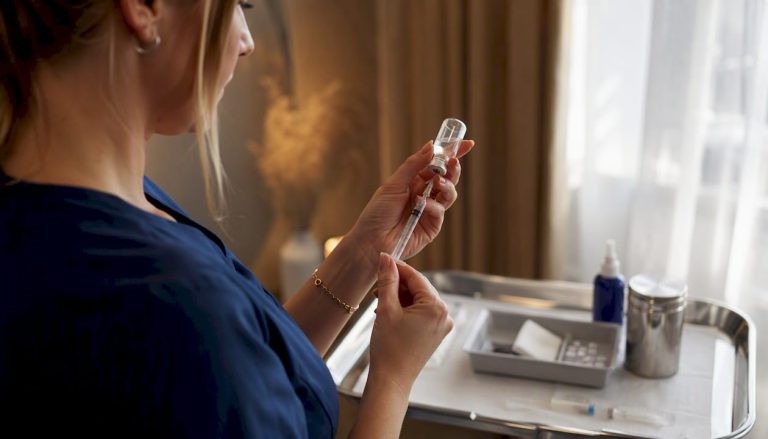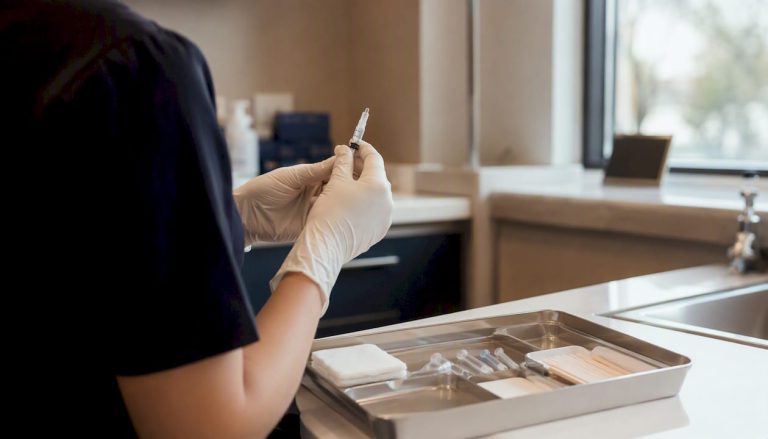

Botox results are defined by a predictable timeline: initial softening begins within 3–5 days, and full clinical effect appears between 10–14 days after treatment. The medical term for this process is neuromuscular blockade, where botulinum toxin type A temporarily interrupts nerve signals to targeted facial muscles. Results typically last 3–4 months before muscle activity gradually returns. At Beautyshotmedicalclinic in Woodbridge, Vaughan, every treatment is performed by Irene Soni, R.N., an advanced cosmetic nurse injector with over nine years of experience. Understanding what happens at each stage helps you feel calm, prepared, and confident in your results.
How does Botox work to soften wrinkles naturally?
Botox works by blocking nerve signals at the neuromuscular junction, the point where a nerve meets a muscle. When that signal is interrupted, the muscle cannot contract with its usual force. The result is a visible softening of the lines that form when you squint, frown, or raise your brows.
The goal is never to eliminate movement entirely. Reducing muscle contraction while preserving natural expression is what separates a refreshed appearance from a frozen one. Skilled injection technique targets specific muscle fibres rather than entire muscle groups. This selective approach keeps warmth and animation in your face while smoothing the lines you want addressed.
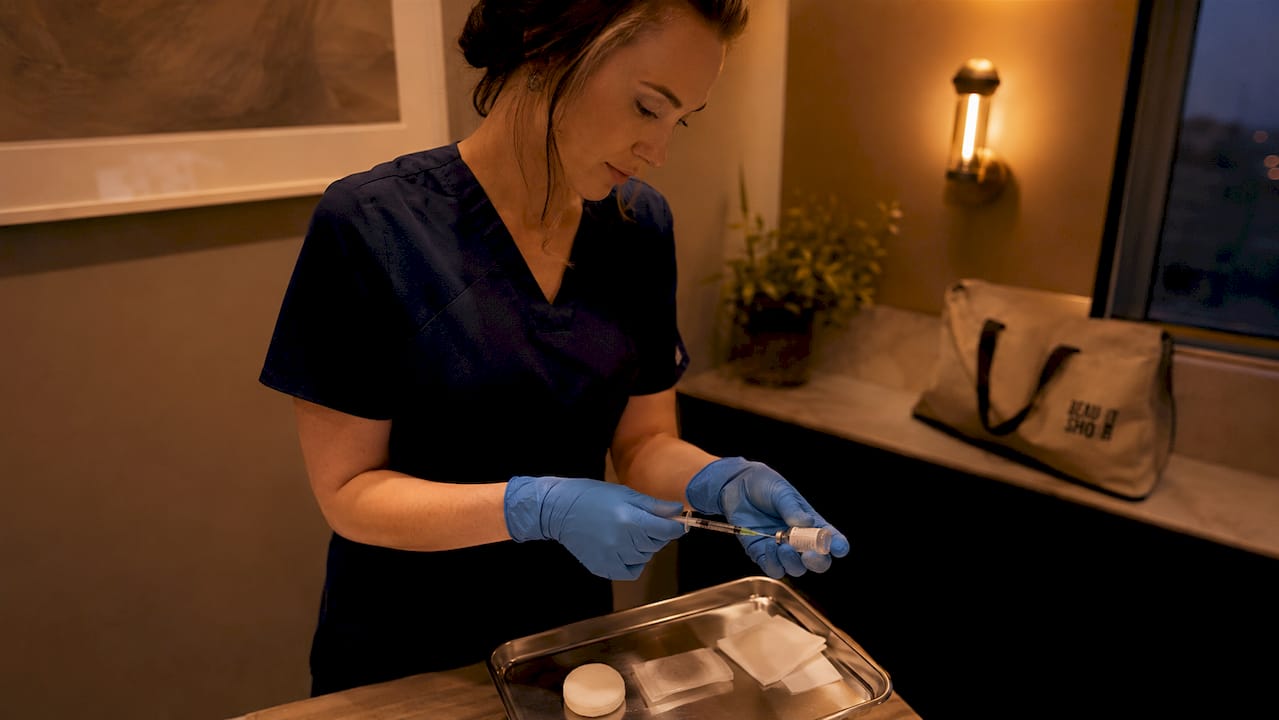
Treatment areas commonly include the forehead, the glabellar region (the area between the brows), and the crow’s feet around the eyes. Each area requires a different dosage and injection depth based on your individual muscle anatomy. A thorough assessment before treatment is what makes natural-looking results achievable rather than accidental.
Key points about how Botox creates its effect:
- Botulinum toxin type A is the active ingredient in both Botox and Dysport.
- The toxin does not affect sensation, only voluntary muscle contraction.
- Effects are temporary because the body gradually forms new neuromuscular connections.
- Injection placement and dosage directly determine whether results look natural or overdone.
Pro Tip: Book your Botox treatment at least two weeks before a significant event. Full results require the complete neuromuscular blockade cycle to finish, and rushing the timeline leads to disappointment.
What is the Botox results timeline from first effect to wearing off?
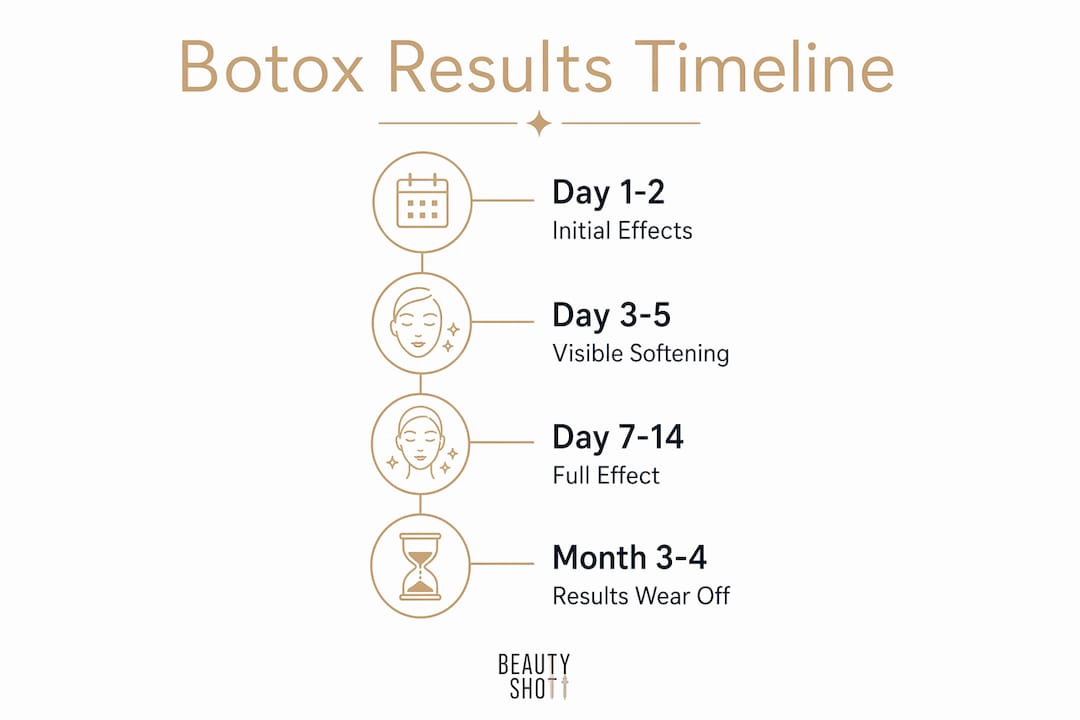
Understanding the progression of your results removes the anxiety of watching and waiting. The timeline follows a consistent pattern for most patients, though individual variation is normal.
- Days 1–2: No visible change. The toxin is binding to nerve endings but has not yet interrupted muscle function.
- Days 3–5: Initial softening begins. You may notice that certain lines look slightly less deep, particularly in the crow’s feet area where muscles are smaller.
- Days 7–10: Noticeable improvement becomes clear. Forehead lines and frown lines appear visibly smoother. Most patients see a meaningful difference at this stage.
- Days 10–14: Full clinical effect is reached. This is the point at which your final result is visible and any touch-up assessment should be made.
- Months 1–3: Results remain stable. The treated muscles stay relaxed and lines continue to look smooth.
- Months 3–4: Muscle activity gradually returns. Lines begin to reappear slowly, not suddenly. This gradual return is very different from the lines “snapping back” overnight.
Clinical studies confirm that 80% of adults show significant improvement in frown lines by day 30, and nearly 68% report mild or no crow’s feet at the same point. Those numbers reflect how consistently Botox performs when administered correctly.
The wearing-off phase is worth understanding clearly. Muscle activity returns progressively over several weeks. Most patients notice the change around the three-month mark, which is the ideal time to schedule a maintenance appointment. Waiting until lines are fully back means starting the softening process from scratch each time.
Pro Tip: Do not judge your results before the 14-day mark. Waiting the full two weeks before assessing your outcome is the single most important thing you can do to avoid unnecessary anxiety or premature touch-ups.
Why do Botox results vary between patients?
No two patients respond identically to Botox, and that is entirely normal. Several biological and treatment factors influence both how quickly results appear and how long they last.
- Metabolism: Patients with faster metabolic rates tend to process the toxin more quickly. This can shorten the duration of results, sometimes to closer to three months rather than four.
- Muscle size and strength: Larger, stronger muscles require more units to achieve the same degree of relaxation. The masseter muscle used for jaw clenching, for example, needs significantly more Botox than the orbicularis oculi around the eye.
- Treatment history: Repeat treatments can provide more lasting effects over time. Regular patients often find their results extend slightly longer with each appointment, as the muscles gradually weaken from consistent relaxation.
- Dosage and placement: The number of units injected and the exact placement within a muscle group directly affect the outcome. Under-dosing produces minimal results; over-dosing risks the frozen appearance patients want to avoid.
- Area treated: Smaller muscles around the eyes respond faster and may wear off sooner than larger forehead muscles.
Pro Tip: Tell your injector about your lifestyle honestly. High-intensity exercise, heat exposure, and certain medications can all influence how quickly Botox metabolises. Your injector uses that information to personalise your treatment plan and dosage.
What side effects should you expect after Botox?
Common mild side effects are a normal part of the Botox treatment process. Redness, bruising, and minor headaches are the most frequently reported reactions and typically resolve within a few days. These are not signs that something has gone wrong. They reflect the body’s natural response to injection.
More significant side effects, such as eyelid drooping (ptosis), are rare and almost always linked to improper injection placement rather than the treatment itself. Strict adherence to pre and post-care protocols significantly lowers the risk of any adverse outcome.
Follow these care guidelines to protect your results:
- Before treatment: Avoid blood-thinning medications, including aspirin, ibuprofen, and fish oil supplements, for at least seven days before your appointment. These increase bruising risk.
- After treatment: Remain upright for at least four hours post-injection. Do not lie flat or bend forward for extended periods.
- First 24 hours: Avoid strenuous exercise, touching the treated area, or applying pressure to the face. Physical activity increases blood flow and can cause the toxin to migrate from the intended site.
- Avoid heat: Saunas, hot yoga, and direct sun exposure in the first 24 hours can accelerate the breakdown of the toxin.
Reviewing preparation tips before your appointment helps you arrive ready and reduces the chance of preventable side effects.
What do natural Botox results actually look like?
Natural Botox results soften lines without erasing the expressions that make your face yours. The goal is a face that looks rested and refreshed, not one that looks treated.
The table below compares the characteristics of natural results versus overdone outcomes:
| Feature | Natural results | Overdone results |
|---|---|---|
| Forehead movement | Slightly reduced, expression preserved | Completely flat, no movement |
| Brow position | Lifted or maintained naturally | Heavy, lowered, or arched unnaturally |
| Crow’s feet | Softened at rest and in motion | Absent entirely, skin looks tight |
| Facial warmth | Smile and emotion visible | Flat affect, limited animation |
| Overall appearance | Refreshed, rested, like yourself | Waxy, stiff, or “done” looking |
Preserving facial expression is the defining characteristic of a natural result. The frozen look almost always results from injection patterns or dosage mismatches to a patient’s anatomy, not from Botox itself. A conservative, balanced approach avoids unnatural firmness. The “less is more” principle applies especially to first-time patients, where starting with a lower dose and assessing at 14 days gives both patient and injector the information needed to refine future treatments.
Balanced treatment across the forehead, glabellar lines, and crow’s feet creates harmony. Treating one area in isolation without considering the surrounding muscles can shift the balance of the face and produce results that look uneven or heavy.
Key takeaways
Botox results follow a consistent, predictable timeline: softening begins within days, full effect arrives by two weeks, and results last approximately 3–4 months before gradual muscle activity returns.
| Point | Details |
|---|---|
| Results timeline | Initial softening appears in 3–5 days; full effect is visible by day 10–14. |
| Duration of results | Most patients maintain results for 3–4 months; repeat treatments can extend this over time. |
| Natural results require skill | Injection pattern and dosage determine whether results look refreshed or overdone. |
| Side effects are manageable | Redness and bruising are common and resolve quickly; proper pre and post-care reduces risk. |
| Individual variation is normal | Metabolism, muscle size, and treatment history all influence how results appear and last. |
What I have learned from years of watching patients wait
The most common mistake I see is patients judging their results too early. Someone comes in on day five, looks in the mirror, and panics because they expected a dramatic change. The neuromuscular blockade is still developing. Waiting the full 14 days before drawing any conclusions is not just a suggestion. It is the clinical standard.
The second misconception I hear regularly is that Botox causes a frozen face. That outcome is a technique problem, not a product problem. When a practitioner treats the forehead without accounting for brow support, or injects too many units into a small muscle group, the result looks heavy and unnatural. The toxin itself is not responsible. The injection pattern is.
Botox is also not a one-time treatment. Patients who commit to a maintenance schedule, returning before their results fully wear off, see cumulative benefits. The muscles gradually weaken over time, which means many long-term patients need fewer units per session and enjoy longer-lasting results. That is a meaningful advantage that a single appointment cannot provide.
My honest advice: come in with realistic expectations, follow your post-care instructions, and wait the full two weeks. The patients who do that consistently are the ones who leave satisfied every time.
— Felix
Beautyshotmedicalclinic: personalized Botox care in Vaughan
Beautyshotmedicalclinic offers Botox and Dysport treatments performed by Irene Soni, R.N., an advanced cosmetic nurse injector with over nine years of clinical experience. Every patient receives a personalised assessment before treatment, with dosage and placement tailored to their facial anatomy and aesthetic goals. The clinic’s focus is on results that look refreshed and natural, never overdone. If you are considering Botox for the first time or want to understand your options more clearly, the injectable cosmetics guide is a helpful starting point. You can also view real patient results in the clinic’s before and after gallery to see what natural outcomes look like in practice. Book a consultation at Beautyshotmedicalclinic to discuss your goals with Irene directly.
FAQ
When do Botox results start showing?
Initial softening typically begins within 3–5 days of treatment. Full results are visible between 10–14 days after injection.
How long do Botox results last?
Results last approximately 3–4 months for most patients. Repeat treatments over time can gradually extend the duration as muscles weaken with consistent relaxation.
What does natural Botox look like?
Natural results soften lines while preserving facial expression and warmth. A refreshed, rested appearance is the goal, not a flat or frozen look.
Can Botox results look overdone?
An overdone result is caused by injection pattern or dosage mismatches to a patient’s anatomy, not by Botox itself. A conservative, anatomy-informed approach prevents this outcome.
Is there recovery time after Botox?
There is no formal downtime. Mild redness or bruising may appear and resolves within a few days. Patients should avoid strenuous activity and remain upright for four hours post-injection.