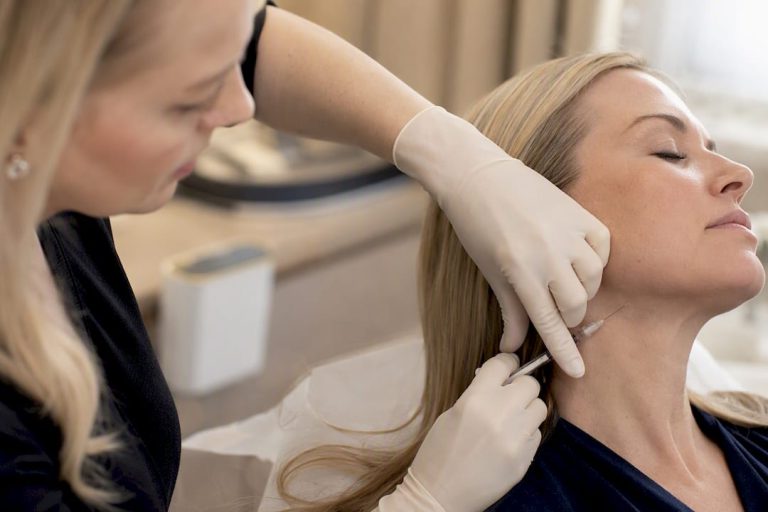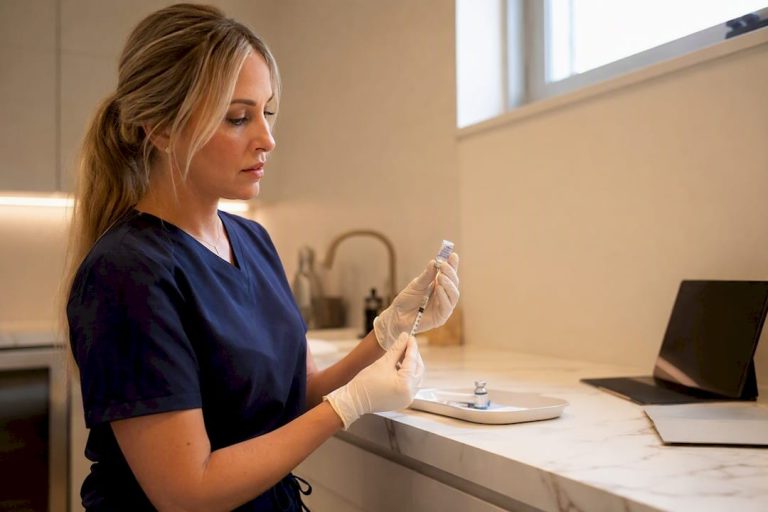

Yes, Dysport can create a subtle, non-surgical brow lift when a trained injector balances the muscles that pull your brows down against the ones that lift them up. Most patients see the change begin within 3 to 5 days, with the full effect settled by about day 10. The lift typically holds for 3 to 4 months, depending on your anatomy and how quickly your body metabolizes the product.
TL;DR:
- Dysport typically provides a subtle brow lift lasting around three to four months, with initial changes appearing within three to five days.
- Precise injection placement and conservative dosing, tailored to your anatomy, are key to avoiding side effects like eyelid droop or asymmetry.
- The spread and onset of Dysport differ from Botox, with Dysport spreading slightly more and sometimes showing results a day earlier.
- Proper assessment of muscle activity and lid support during consultation is more important than choosing one product over the other.
- Most results depend on the injector’s skill in mapping movement patterns and adjusting doses accordingly to ensure a natural, safe outcome.
What is a Dysport brow lift and how does it work?
A Dysport brow lift works by relaxing the small muscles that constantly pull your eyebrows downward, letting the muscle that lifts them do more of the work unopposed. I explain this to patients as a tug-of-war. Your forehead has an elevator (the frontalis) working against several depressors, and when Dysport quiets the depressors, the frontalis wins a little more ground.
The muscles involved are:
- Corrugators — the muscles that pull your brows together and down, often responsible for that “11” line between the eyes
- Procerus — the muscle across the bridge of the nose that pulls the inner brow down
- Orbicularis oculi — the ring muscle around the eye that, in its upper portion, contributes to brow depression
- Frontalis — the broad forehead muscle that raises the brows once its opposition is weakened
This is exactly why anatomy dictates whether a lift will look natural or cause problems. Someone who relies heavily on their frontalis to keep their eyelids from feeling heavy, for instance, needs more conservative dosing. The Dysport product monograph specifically cautions against injecting too close to the levator palpebrae superioris, the muscle that keeps your upper eyelid open, because that proximity is where droop risk begins.
How long does a Dysport brow lift take to show, and how long does it last?
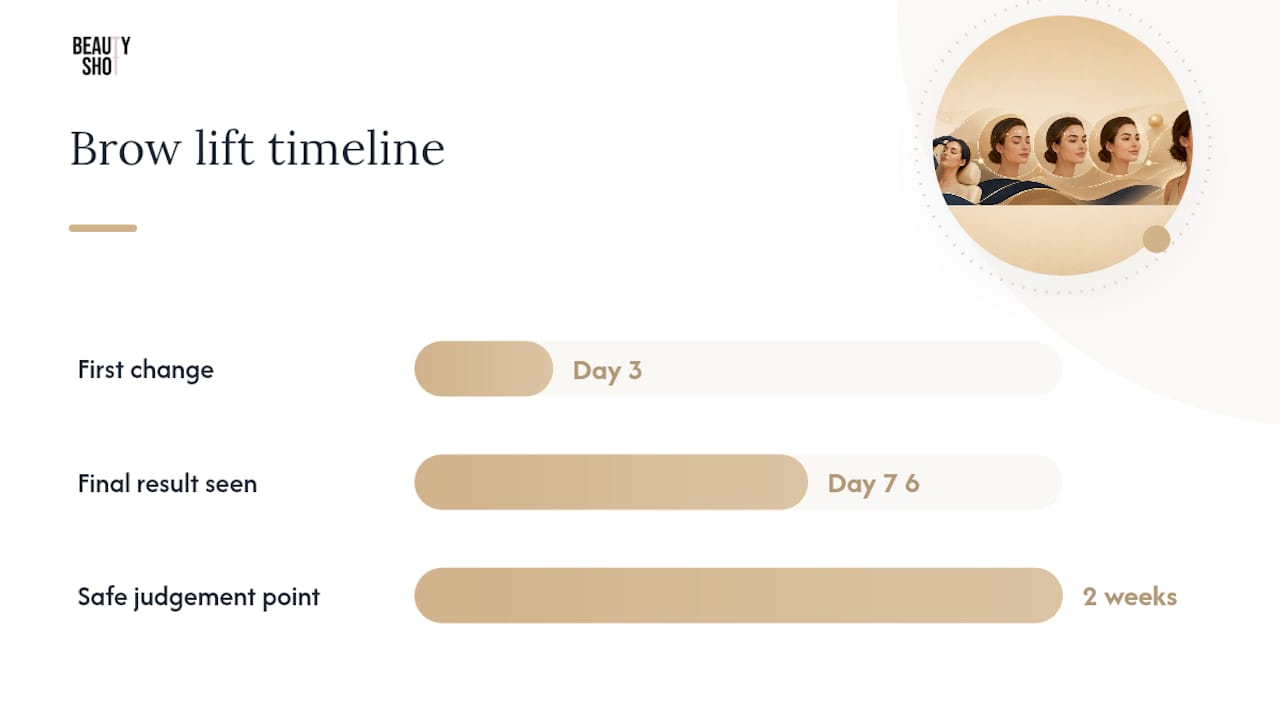
Most patients notice the first change around day 3, with the brow position continuing to refine over the following week. By day 7 to 10, you’re seeing the final result, not a preview of it. That settling period matters. It’s the reason I never recommend judging your outcome, or booking a touch-up, before that two-week mark.
Pro Tip: Take a “before” photo straight on, with your face relaxed and eyebrows neutral, before your appointment. It’s the only reliable way to actually see the lift once it settles, since day-to-day mirror checking tends to miss subtle changes.
According to Health Canada’s drug product database, Dysport’s treatment effect for glabellar lines and related brow work commonly lasts around 3 to 4 months.
A few things influence where you land in that range:
- Faster metabolisms and more muscle activity tend to shorten duration
- Deeper-set depressor muscles may need slightly more product to achieve the same lift
- Patients who repeat treatment consistently sometimes report the effect lasting a bit longer over time, though this varies person to person
- A subtle lift (a few millimetres of brow elevation) tends to look more natural and lasts comparably to a more obvious one, since duration is dose and anatomy dependent, not appearance dependent
If your brows start feeling heavy again or your “11” lines reappear around the three-month mark, that’s a reasonable signal to book a touch-up rather than wait for full return to baseline.
Dysport vs. Botox for a brow lift: what actually differs
Both products do the same job biologically. Where they differ is in behaviour once injected, and that behaviour matters more for brow work than for almost any other area of the face.
- Diffusion: Dysport tends to spread slightly further from the injection point than Botox, which can help soften a broader area of the forehead but demands more careful placement near the brow and eye
- Onset: Dysport often shows visible change a day or two earlier for some patients, according to manufacturer prescribing data, though individual response varies
- Precision: Botox generally offers a tighter, more focal effect, which some injectors prefer when working within a few millimetres of the orbital rim
- What actually matters more: the injector’s assessment of your muscle strength, lid support, and resting brow position
Neither product is the “better” choice in the abstract. A patient with strong, deep-set corrugators and good lid support might do beautifully with Dysport’s wider spread. A patient with thinner skin and less margin for error near the brow might be better served by a more focal approach. This is a clinical decision, not a brand loyalty question, and it’s one reason an experienced injector’s assessment matters more than which vial is on the tray.
What happens during a Dysport brow lift appointment
Before any needle touches your skin, a proper assessment maps how your specific muscles move. Here’s what that actually looks like in practice:
- Movement mapping — you’ll be asked to frown, raise your brows, and squint so I can see exactly how your corrugators, procerus, and frontalis fire relative to one another
- Lid support check — I assess how much your frontalis compensates for any existing eyelid heaviness, since over-treating a compensating frontalis is the single biggest cause of post-treatment droop
- Injection placement — common sites include two points per side over the corrugators and one over the procerus, generally staying a safe distance above the orbital rim and central brow to reduce the risk of eyelid droop
- Dosing — units are chosen based on muscle mass and your goals rather than a fixed number; conservative dosing is typical for a first treatment, with room to adjust at follow-up
- Immediate aftercare — you’ll be asked to stay upright, avoid rubbing the area, and skip strenuous exercise for the rest of the day
Pro Tip: Skip alcohol and blood-thinning supplements like fish oil for a couple of days before your appointment. It’s a simple step that noticeably reduces bruising risk without any real downside.
The first 48 hours are when proper aftercare matters most, since that’s the window where positioning and pressure can theoretically influence how the product settles.
What are the risks, and how are they managed?
The Dysport product monograph lists headache and injection-site pain as the most commonly reported side effects, alongside bruising that most patients see with any needle-based treatment. These are usually mild and resolve within days.
The risks specific to brow work deserve more attention:
- Eyelid droop (ptosis) — the most talked-about risk, caused when product spreads to the levator palpebrae superioris; this is why injection distance from the orbital rim is a hard rule, not a suggestion
- Asymmetry — can occur if the two sides of the face weren’t assessed for their natural differences before treatment
- Dry eye — less common, related to effects near the orbicularis oculi
- Unintended diffusion — more of a consideration with Dysport given its spread pattern, managed through dose control and dilution choices
Galderma’s safety data notes that serious adverse events from toxin spread beyond the injection area are rare, but patients should still be counselled on warning signs.
If you notice drooping eyelids, difficulty swallowing, or breathing changes after treatment, that’s not a “wait and see” situation. Contact your injector immediately or seek urgent medical care.
Who is a good candidate for a Dysport brow lift?
Most healthy adults bothered by a heavy or low brow position are reasonable candidates, but “reasonable” isn’t the same as “right for everyone.” Here’s how I think through it with patients:
- Good candidates typically have some muscle activity to work with. Someone whose brow heaviness comes mostly from skin laxity or volume loss, rather than muscle pull, will likely see limited benefit from neuromodulator alone and may be better served by a surgical brow lift or complementary filler.
- Contraindications include pregnancy or breastfeeding, certain neuromuscular disorders like myasthenia gravis, and any known allergy to the product’s ingredients. These aren’t flexible guidelines.
- Aftercare in the first 48 hours means staying upright, avoiding facial massage, skipping intense workouts, and not lying down flat for several hours after treatment.
- Follow-up timing is generally around the two-week mark, once results have fully settled, so any refinement can be judged accurately rather than guessed at early.
None of this replaces an actual consultation. Your muscle strength, lid position, and facial history are unique, and a safe treatment plan has to be built around them specifically.
Why the injector matters more than the product
I’ve assessed hundreds of foreheads at this point, and the pattern is consistent: the outcome depends far more on who’s holding the syringe than which vial it came from. Advanced training through programs like the Teoxane Academy and Allergan technique courses taught me to read a forehead before I ever draw up a dose, not after.
In consultation, I’m checking for compensatory frontalis use (are you unconsciously raising your brows to keep your eyes open?), lid support, and how symmetric your natural movement pattern actually is, since most faces aren’t perfectly even. That assessment determines dosing far more than any standard chart could. It’s also how overcorrection and ptosis get avoided in the first place: conservative starting doses, anatomical buffers around the orbital rim, and a willingness to adjust at a follow-up rather than push too much product on day one.

What I’d tell a patient before they book
Here’s where I’ll push back on how this treatment usually gets marketed. Most content treats Dysport and Botox as a horse race, faster onset here, tighter control there, as if the product were the deciding factor in your outcome. It isn’t. The deciding factor is whether your injector actually mapped your frontalis reliance and lid support before drawing up a syringe.
The other thing I’d correct: subtle is not the same as weak. A well-placed, conservatively dosed brow lift that moves your resting position by a few millimetres will read as “you look rested,” not “you had something done.” That’s the goal, and it’s also why I’d rather under-treat on a first visit and adjust at your two-week follow-up than chase a dramatic result that risks heaviness or asymmetry.
If you take one thing from this, prioritize the consultation over the product debate. Ask how your specific anatomy will be assessed before you ask which toxin is being used.
— Felix
How Beauty Shot Medical Clinic approaches your brow lift
A Dysport brow lift is only as good as the assessment behind it, and that’s the whole philosophy at Beauty Shot Medical Clinic. Every consultation starts with movement mapping and a lid support check, the same process described above, before a single unit is drawn up. As an advanced cosmetic RN with a Sunnybrook Hospital ICU background and training through the Teoxane Academy, Clarion Medical, and Allergan technique programs, I plan every dose around your specific anatomy rather than a standard chart, which is exactly how overcorrection and ptosis risk get avoided.
If you’re curious what natural, personalized brow rejuvenation actually looks like, browse our injectable treatment guide or view real results in our before-and-after gallery. When you’re ready, book a consultation and we’ll map your muscles together before recommending a plan.
Sources
Claims about onset, duration, dosing, and safety in this article draw from the Health Canada drug product database, the Dysport aesthetic product monograph, a clinical trial evaluating Dysport for brow ptosis, and a peer-reviewed review on lifting with neuromodulators.
This article is general information, not a substitute for advice from a qualified doctor. Consult a qualified healthcare professional about your own circumstances before acting on anything here.
- Health Canada drug product database — Dysport / product information
- Dysport aesthetic product monograph (Galderma)
FAQ
Can Dysport give you a brow lift?
Yes. Dysport relaxes the muscles that pull your eyebrows down, letting the frontalis lift them slightly, with results typically visible within 3 to 5 days and lasting 3 to 4 months.
What are the downsides of Dysport?
The most common downsides are headache and injection-site pain, while the brow-specific risks include eyelid droop, asymmetry, and, less often, dry eye from product spreading beyond the intended muscle.
How many units of Dysport do you need for a brow lift?
Dosing varies by muscle mass and goals rather than a fixed number, though clinical trial protocols evaluating brow ptosis have used ranges around 50 to 80 units in the glabellar region in some study arms, with your injector adjusting based on your assessment.
Why do my eyebrows droop after Dysport injections?
Eyebrow or eyelid droop usually happens when product spreads too close to the levator palpebrae superioris or when a heavily compensating frontalis gets over-treated, which is why conservative dosing and careful injection distance from the orbital rim matter so much.
How does Dysport compare with Botox for a brow lift?
Dysport tends to diffuse a bit more broadly and can have a slightly faster onset for some patients, while Botox often offers tighter focal control, but the injector’s anatomical assessment matters more than the product choice itself.