
Mild to moderate swelling after undereye filler is common and usually improves within a couple of weeks. Most cases follow a predictable course: puffiness peaks in the first two to three days, then eases steadily. Certain signs, though, need urgent care: sudden vision changes, severe or worsening pain, rapidly spreading bruising, or symptoms of infection. When swelling from hyaluronic acid filler does linger, hyaluronidase remains a reliable way to dissolve it.
TL;DR:
- Swelling after under-eye filler peaks within 48 to 72 hours and usually begins to improve after two weeks, with half of the cases resolving by four weeks.
- Higher injected volumes significantly increase the risk of prolonged swelling and contour irregularities, emphasizing the importance of conservative dosing.
- Most early swelling responds well to cold packs, gentle warmth, elevation, and avoiding strenuous activities, but persistent or delayed swelling should prompt professional review.
- Hyaluronidase is an effective treatment for lingering swelling caused by hyaluronic acid fillers, especially if the swelling persists beyond four weeks.
- Proper injector experience and staged treatment plans reduce swelling risk, and open patient communication facilitates early detection and management of complications.
The swelling timeline after under-eye filler
Your body reacts to the needle before it reacts to the filler itself. In the first hours, you may notice redness, tightness, and early puffiness around the injection sites, sometimes with light bruising. This is a normal inflammatory response to the tiny punctures the injector makes to place the product.
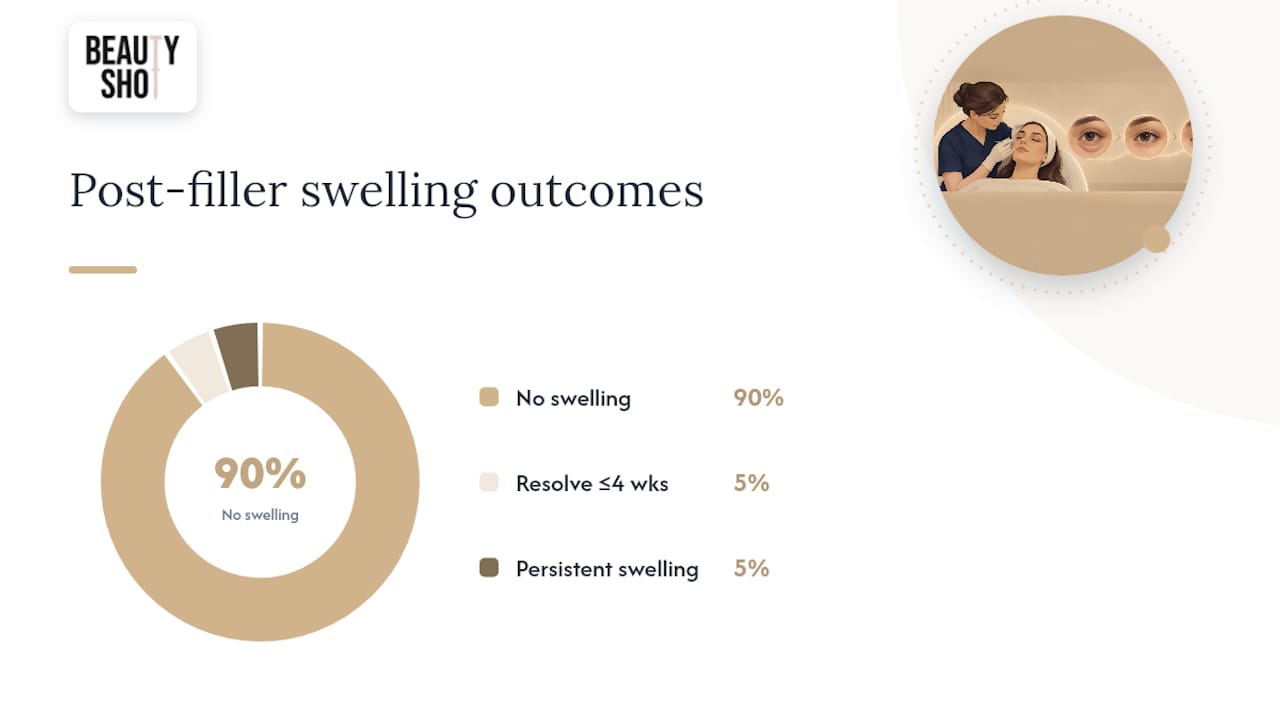
Swelling typically peaks around 48 to 72 hours after treatment, then begins to settle. Most patients see noticeable improvement within one to two weeks, and many are back to their baseline appearance by around four weeks. In one large clinical series of tear trough filler patients, swelling occurred in about 10% of treated cases, with a median duration of four weeks and about half of those cases resolved by that time.
A smaller number of patients experience delayed swelling that appears weeks or months after the original injection, often triggered by illness, dental work, or an unrelated immune response. A systematic review of delayed complications found swelling accounted for 42.3% of delayed reactions, with an average onset around 16.8 months after treatment.
- Day 0 to 3: peak puffiness, possible bruising and tenderness
- Week 1 to 2: visible improvement, residual tightness
- Week 3 to 4: most swelling resolved for the majority of patients
- Months later: rare delayed-onset swelling can still occur and warrants review
What causes swelling after your injection
Some contributors to swelling are within an injector’s control, and some are not. Technique matters enormously here because the under-eye skin is some of the thinnest on the face, so even small placement errors show.
- Superficial placement or overfilling can trap fluid close to the surface, producing visible puffiness.
- Injection trauma from repeated needle passes increases early bruising and edema.
- Filler type plays a role: hyaluronic acid products behave differently than semi-permanent materials, and each carries its own complication profile.
- Patient-specific factors, including lymphatic drainage patterns, prior surgery, previous dissolving treatments, and a tendency toward inflammation, can all raise individual risk.
Volume is one of the clearest drivers. The same large tear trough series found that higher injected volume correlated with a statistically significant increase in oedema and contour irregularities. This is part of why conservative dosing matters so much in this particular area.
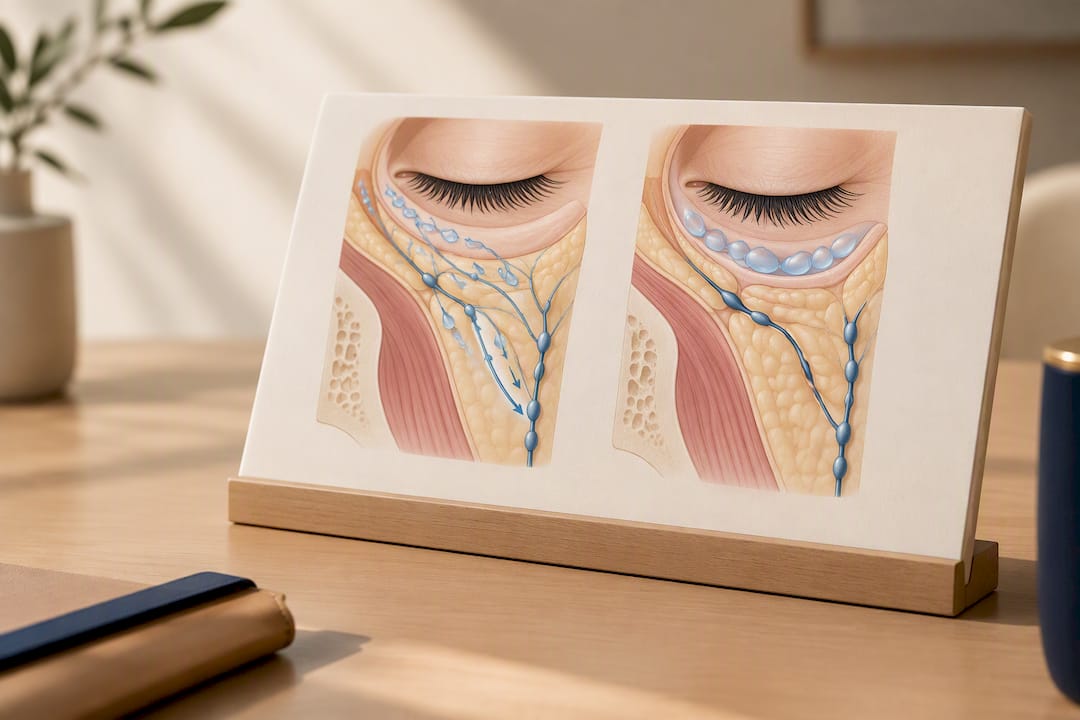
Persistent puffiness sometimes traces back to disruption of the delicate lymphatic channels around the cheek and lower eyelid. When those channels are irritated or compressed, fluid has nowhere efficient to drain, and swelling can linger well past the usual window.
What you can do at home in the first few weeks
Most swelling responds well to simple, conservative care. The goal in the early days is to calm inflammation, and later, to help your body clear any remaining fluid.
- Apply a cold pack wrapped in a clean cloth for short intervals during the first 24 to 48 hours to limit early swelling and bruising.
- Switch to gentle warmth after the first two days if puffiness lingers, since mild heat can support lymphatic drainage once the acute phase has passed.
- Sleep with your head slightly elevated for the first few nights to reduce overnight fluid pooling.
- Avoid strenuous exercise, heavy lifting, and activities that raise blood pressure for at least 24 to 48 hours.
- Choose acetaminophen over routine high-dose NSAIDs in the first days, since anti-inflammatory painkillers can increase bruising risk; check with your injector before taking anything for pain.
- Cut back on salt and alcohol for a few days, as both encourage fluid retention.
Pro Tip: Keep a daily photo log during the first two weeks. It’s the easiest way to see real progress when day-to-day changes feel too small to notice.
If swelling isn’t improving with these steps by the two-week mark, it’s time to stop self-managing and check in with your injector rather than waiting it out.
When to seek professional assessment and what providers can do
A proper assessment starts with a conversation: when did the swelling start, has it changed, and are there other symptoms like warmth, pain, or visual disturbance. Photos taken at each visit help track whether swelling is trending in the right direction. Providers also rule out rarer but serious causes, including infection or a vascular event.
For swelling tied to hyaluronic acid filler, hyaluronidase is the standard corrective tool. A 2025 review of periocular filler complications classifies reactions as immediate, early, or late, and recommends hyaluronidase or conservative management for most of them, with urgent high-dose hyaluronidase reserved for vascular occlusion causing vision changes.
Roughly 10% of tear trough filler cases develop some degree of swelling, and half of those resolve within four weeks without intervention. That leaves a smaller group who benefit from active treatment rather than watchful waiting.
- Persistent oedema unresponsive to conservative care may respond to hyaluronidase dissolving.
- Infection requires prompt antibiotic treatment, not home remedies.
- Reactions to permanent or semi-permanent fillers occasionally require surgical removal.
- Vision changes, severe pain, or skin discolouration that spreads rapidly are same-day emergencies.
Swelling that persists beyond four weeks, or new swelling that appears months later, deserves a specialist look rather than more time.
Questions to ask before you book tear trough or under-eye filler
Prevention starts before the needle ever touches your skin. Ask your injector how much experience they have specifically with periorbital anatomy, since this area behaves differently than cheeks or lips. Conservative technique and a willingness to stage treatment over multiple sessions, rather than fully correcting hollows in one visit, tend to produce steadier results with less swelling.
- Ask which filler is planned and why it suits the under-eye area specifically.
- Ask for the exact volume planned per side, not just a general estimate.
- Ask whether staged, smaller sessions are an option if you’re new to the area.
- Ask what their follow-up and dissolving policy looks like if swelling doesn’t settle.
If you’ve had filler dissolved before, mention it. Patients who previously needed hyaluronidase are statistically more likely to need it again after repeat treatment, so a clear record helps your injector plan more carefully. Our guide to under-eye hollow treatment covers more on suitability and what to expect.
How Beauty Shot approaches swelling risk and aftercare
Beauty Shot Medical Clinic specializes in medical-grade cosmetic treatments with an emphasis on conservative, natural-looking results rather than maximum correction in a single visit. Every injectable treatment is performed by an advanced cosmetic Registered Nurse, and patients are followed up after their procedure so any swelling or irregularity gets proper assessment rather than guesswork.
At an assessment, expect photo documentation, a review of your history, and a conservative management plan first. When hyaluronidase is appropriate, it’s discussed openly, with realistic timelines rather than promises.
A nurse injector’s perspective on swelling
Most of the swelling I see after under-eye filler settles on its own with patience and simple care. What matters more than reassurance alone is a cautious approach from the start: smaller volumes, staged sessions, and honest conversations about what your anatomy can handle. I’d rather see a patient return for a second, careful session than deal with correcting an overfilled area.
Document what you notice, take photos, and tell your injector everything, even the small changes. Open communication catches problems early and keeps your results looking like you, just refreshed.
— Felix
Getting help with swelling or planning your treatment
If you’re dealing with swelling that hasn’t settled, or you’re weighing whether under-eye filler is right for you, a proper assessment beats guessing every time. Beauty Shot offers dermal filler consultations that include a full discussion of your anatomy, realistic volume planning, and conservative aftercare guidance from an advanced cosmetic Registered Nurse.
Appointments typically include a review of any prior filler history, a conservative treatment plan, and clear follow-up steps, including hyaluronidase when it’s genuinely needed rather than offered by default. You can view current dermal filler options or book a consultation through our services page to get a personalized plan.
Sources
- Tear Trough Filler Using the Three-point Tangent Technique: Lessons from 1452 Tear Trough Applications
- Delayed Complications following Dermal Filler for Tear Trough Augmentation: A Systematic Review
- Complications of periorbital cosmetic hyaluronic acid filler injections: a major review
This article is general information, not a substitute for advice from a qualified doctor. Consult a qualified healthcare professional about your own circumstances before acting on anything here.
FAQ
How long does it take filler to settle under eyes?
Most swelling from under-eye filler noticeably improves within one to two weeks, with the majority of cases resolved by around four weeks. In a large clinical series, half of all swelling cases resolved by the four-week mark, though final settling of the filler itself can take a few weeks longer as any residual fluid clears.
When is swelling the worst after fillers?
Swelling typically peaks between 48 and 72 hours after your injection appointment. After that window, most people see steady, gradual improvement rather than a sudden change.
How long does it take to recover from under eye fillers?
Visible bruising and swelling generally calm down within one to two weeks, letting most people return to normal routines quickly. Full settling, where any subtle puffiness disappears completely, can take up to four weeks for about half of patients who experience swelling at all.
Will under eye filler lumps go away?
Small, early lumps often soften on their own as swelling resolves and the filler integrates with surrounding tissue. Lumps that persist, feel firm, or don’t improve should be assessed by your injector, since hyaluronidase can dissolve hyaluronic acid filler that isn’t settling the way it should.