Underarm Botox is an established, effective treatment for moderate-to-severe axillary hyperhidrosis, with clinical reviews reporting roughly 82 to 87% reduction in sweating and a typical duration of six to eight months. It’s generally considered once topical antiperspirants have failed or when a Hyperhidrosis Disease Severity Scale score sits at 3 or 4. Most people tolerate it well, though a consultation with a trained injector is the safest way to confirm candidacy and set realistic expectations.
TL;DR:
- Underarm Botox typically lasts six to eight months, with some patients experiencing benefits beyond a year, depending on individual factors.
- Proper mapping using starch-iodine tests and precise, shallow injections spaced 1.5 centimeters apart are essential for effective and even results.
- Most treatments involve about 50 units of onabotulinumtoxinA per axilla, divided across 10 to 15 injection sites, with doses not interchangeable between products.
- Patient response varies based on gland density, metabolism, and injection accuracy, making follow-up visits important for optimal long-term results.
- Side effects are generally mild and include bruising, soreness, or transient numbness, with serious systemic effects being exceedingly rare.
What is hyperhidrosis, and how is it diagnosed?
Hyperhidrosis means sweating far beyond what the body needs for temperature regulation. Primary focal hyperhidrosis, the type most often treated with Botox, targets specific areas like the underarms, palms, or soles, and it tends to start earlier in life without an obvious trigger. It affects a meaningful share of the population, though many people live with it for years before seeking help, often assuming heavy sweating is simply “how they’re built.”
Clinicians use a few tools to measure severity rather than relying on guesswork:
- The Hyperhidrosis Disease Severity Scale (HDSS): a simple 4-point questionnaire asking how tolerable sweating is and how much it interferes with daily activities. A score of 3 (barely tolerable, frequently interferes with routine) or 4 (intolerable, always interferes) usually signals a good candidate for treatment.
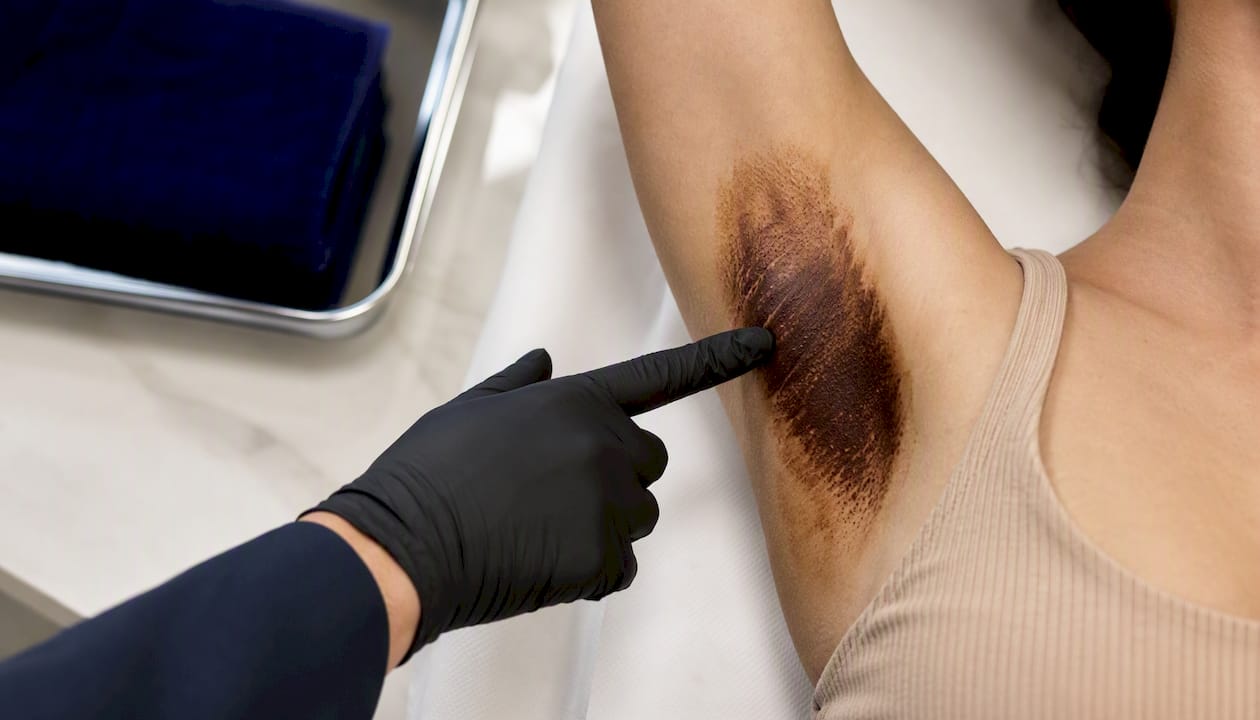
- Minor starch-iodine mapping: iodine solution is painted on the underarm, then dusted with starch. Sweat turns the mixture a deep blue-black, mapping exactly which areas are producing the most moisture, information your clinician uses to plan injection sites.
- Gravimetry: a filter paper is weighed before and after being pressed against the skin for a set time, giving an objective measurement (in milligrams) of sweat production. This is more common in clinical trials than in everyday practice, but the principle behind it is why “before and after” comparisons in studies carry real weight.
When sweating starts suddenly in adulthood, is one-sided, or occurs alongside night sweats, weight loss, or fever, that pattern points toward a secondary cause rather than primary focal hyperhidrosis, and it deserves a medical workup before any cosmetic treatment is considered.
How does underarm Botox actually work?
Botulinum toxin works by blocking the release of acetylcholine, the chemical messenger that tells your eccrine sweat glands to activate. In the underarms, those glands sit close to sympathetic nerve endings just beneath the skin, which is exactly why the injections are placed so shallow.
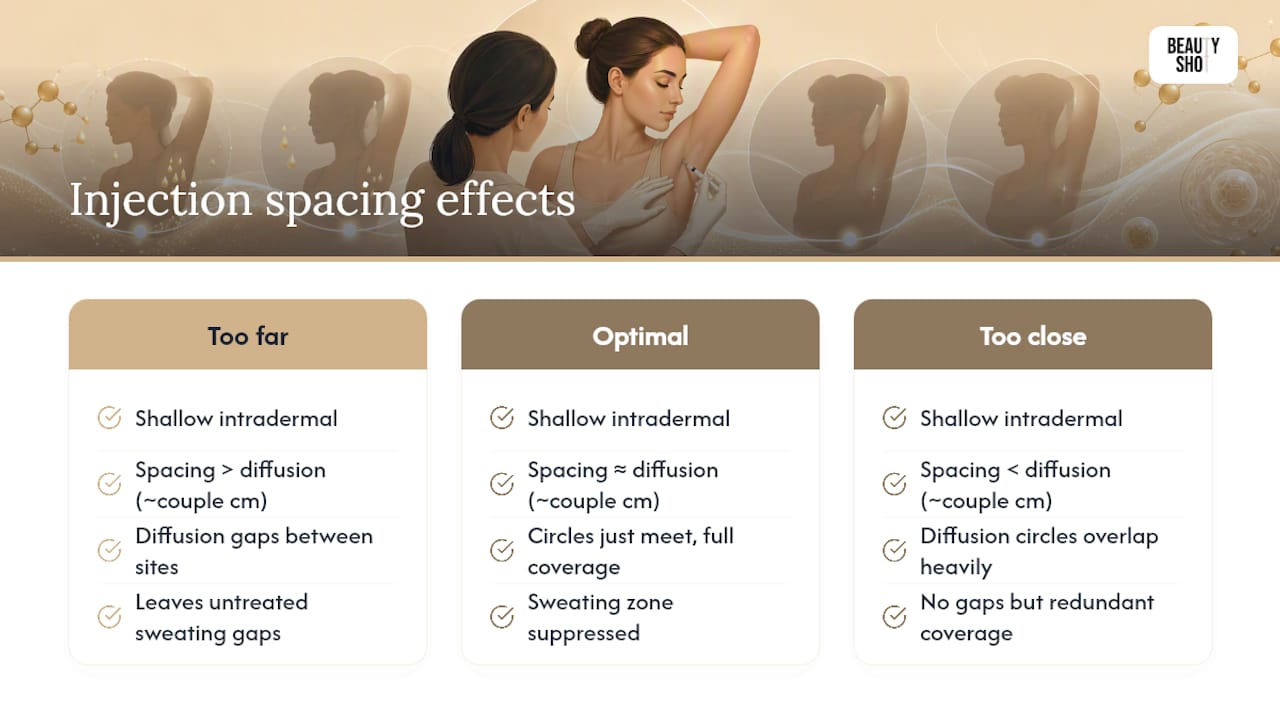
Rather than one or two deep shots, treatment uses a grid of small intradermal injections spread across the sweating zone identified during mapping. Botox diffuses only a short distance from each injection point, roughly a couple of centimetres, so the spacing between sites matters. Too far apart and you leave untreated gaps that keep sweating; too close and you’re using more product than the area needs.
One detail patients are often surprised to learn: Botox, Dysport, and other botulinum toxin products are not interchangeable unit-for-unit. A dose that works well with one brand can’t simply be copied over to another, because each manufacturer measures potency using its own internal standard. Your injector needs to know which product they’re using and dose accordingly, not apply a generic number they read somewhere online.
Interestingly, the effect on sweat glands tends to last noticeably longer than the effect on facial muscles treated for wrinkles. Muscle relaxation from Botox typically fades in three to four months, but sweat gland suppression often persists for six months or longer. The nerve pathways to eccrine glands seem to regenerate more slowly than motor nerve endings, which is good news for anyone weighing the cost of a session against how long the results actually last.
Mapping, dosing, and how the injections are done
A proper underarm Botox appointment follows a structured sequence, not a rushed jab-and-go. Here’s what typically happens:
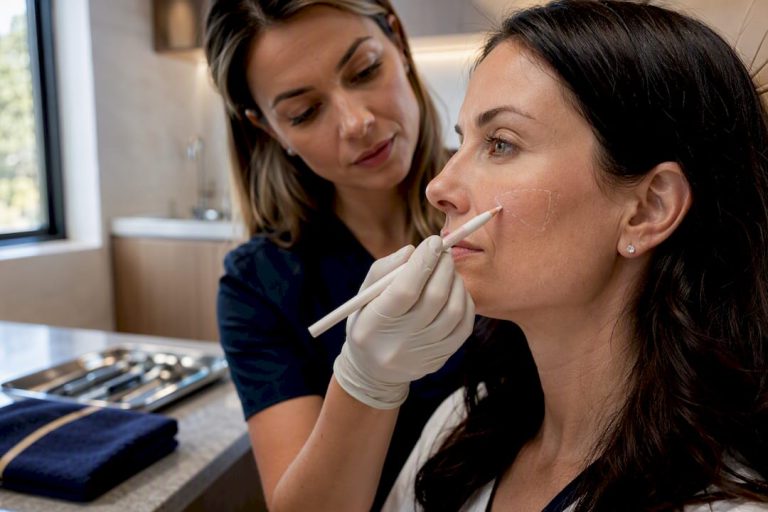
- Mapping the sweat zone. Your clinician applies the Minor starch-iodine test to visually outline exactly where sweating is most active, so injections target the real problem area instead of a generic oval shape.
- Marking injection sites. Using that map, sites are marked roughly 1.5 centimetres apart in a grid pattern across each underarm, generally landing on 10 to 15 injection points per side.
- Dosing. A standard protocol calls for about 50 units of onabotulinumtoxinA per axilla, divided evenly across those marked sites, though your injector may adjust slightly based on the size of the sweating area and your mapping results.
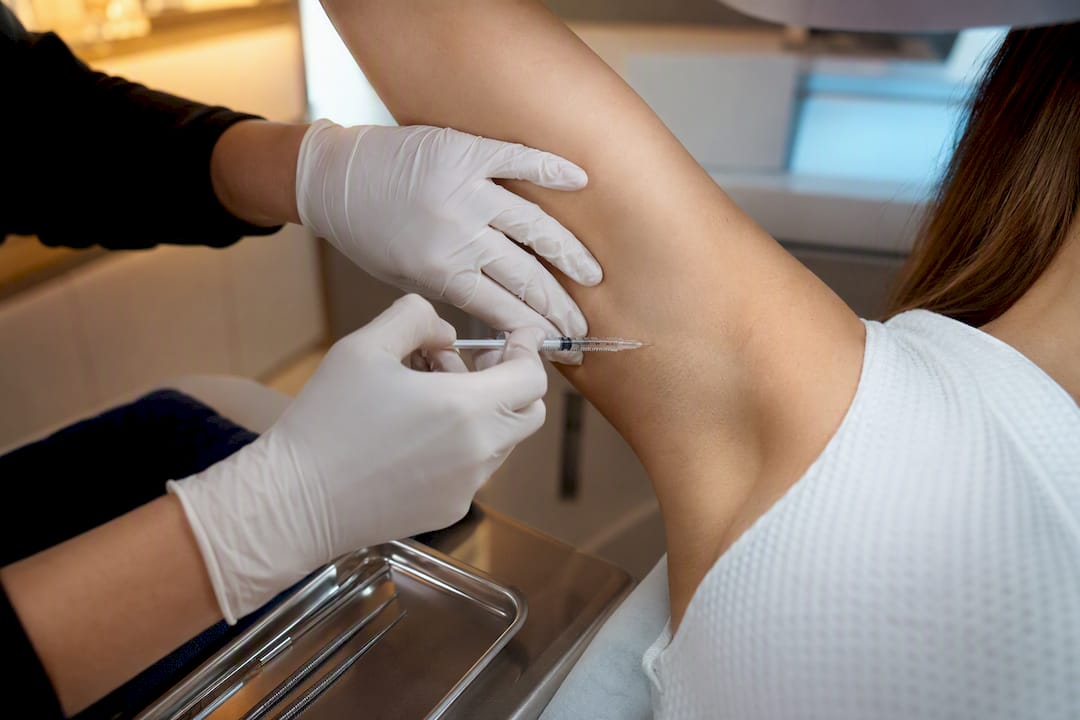
- Injecting. A fine needle is inserted at a shallow angle, typically somewhere between 10 and 30 degrees, just under the skin’s surface. Done correctly, each injection raises a small, temporary wheal, a sign the product has landed intradermally rather than too deep into muscle.
- Comfort measures. Ice or a topical numbing cream beforehand takes the edge off. Most patients describe the sensation as a quick pinch rather than significant pain, since the underarm skin, while sensitive, is treated with a very fine needle.
The appointment itself usually runs 30 to 45 minutes, most of which is mapping, marking, and conversation rather than the injections themselves, which take only a few minutes per side.
Pro Tip: Ask your injector to show you the starch-iodine map before they begin injecting. Seeing exactly which zones are active helps you understand why the injection pattern looks the way it does, and it’s a good sign you’re working with someone who takes mapping seriously rather than eyeballing it.
Immediately afterward, mild redness or small raised bumps at each injection site are normal and settle within an hour or two. There’s no downtime required, and most people return to normal activities the same day. For a closer look at what a broader Botox session involves beyond the underarms, see this complete guide to treatment areas.
What does the clinical evidence actually show?
The numbers behind underarm Botox are stronger than most cosmetic treatments can claim, largely because hyperhidrosis Botox has been studied in randomized, placebo-controlled trials rather than just observational reports.
By the numbers: the Canadian Dermatology Association reports an average 83% reduction in sweating among clinical study participants, with effects lasting about 7 months on average, and roughly 30% of patients experiencing benefits beyond a full year.
A multicentre randomized trial published in the New England Journal of Medicine found that intradermal botulinum toxin A produced a significant, measurable drop in sweat production compared with placebo injections, alongside high patient satisfaction and willingness to repeat treatment. Onset is fast by injectable standards: most patients notice less sweating within a few days to two weeks, well before the treatment reaches its full effect.
A one-year prospective study using standardized mapping and 50 units per axilla tracked 81 patients and found the benefit wasn’t just measured in sweat output. Quality-of-life scores improved alongside the physical results, and those gains held at both the 6 and 12-month marks, not just in the first few weeks.
Why does duration vary so much from one patient to another, some see six months, others see over a year? Individual metabolism, the density of sweat glands in the treated area, precision of the original injection grid, and even the specific toxin product used all play a role. This is one reason a follow-up visit matters: it lets your clinician see how you specifically responded before planning the next round.
What are the side effects and risks?
Underarm Botox has a well-documented safety profile, and serious complications are uncommon when the procedure is done by a trained injector using appropriate technique and dosing.
- Bruising and soreness: the most frequently reported effects, usually mild and resolved within a few days.
- Transient numbness or tingling: occasionally felt at injection sites, typically temporary.
- Compensatory sweating: a shift in sweat production to other body areas (commonly the back, face, or trunk). This occurs far less often, and to a much lesser degree, than the compensatory sweating seen after surgical sympathectomy, since Botox works locally rather than interrupting the entire sympathetic chain.
- Neutralizing antibodies: a rare development with repeated high-dose exposure over time that can reduce the toxin’s effectiveness. This is more relevant for patients receiving frequent, large-dose treatments across multiple areas than for someone treating underarms occasionally.
- Systemic effects: exceedingly rare at the doses used for hyperhidrosis, but any unusual muscle weakness, difficulty swallowing, or breathing changes after treatment warrants prompt medical attention.
Because antibody-mediated resistance becomes more relevant with cumulative exposure, a responsible clinician will ask about your prior toxin history, including which brand and how recently, before planning a repeat course. Precise, shallow, evenly spaced injections aren’t just a technique preference; they’re directly tied to lower complication rates and more even results.
Who is a good candidate for underarm Botox?
Underarm Botox is generally a good fit for adults with primary focal hyperhidrosis who haven’t found relief from clinical-strength antiperspirants or prescription topical treatments. Beyond that baseline, clinicians weigh a few specific factors:
- HDSS score of 3 or 4. This reflects sweating that’s genuinely disruptive, not just an occasional damp shirt on a hot day.
- No signs of a secondary cause. Sudden onset, one-sided sweating, or systemic symptoms need medical evaluation first, not injections.
- A completed assessment. History-taking, visual mapping with the starch-iodine test, and, where available, gravimetric measurement give your clinician the full picture before treatment starts.
- Realistic expectations about partial response. Most people see substantial improvement, but a small number respond only partially and may need adjusted dosing or spacing next time around.
For patients who don’t respond well to Botox, or who prefer a non-injectable route, iontophoresis (mild electrical currents applied to the skin), oral anticholinergic medications, or in more severe, treatment-resistant cases, surgical options, remain available alternatives worth discussing with your care provider. Most people, though, find Botox strikes the right balance of effectiveness and simplicity. To understand more about why underarms respond so well to this treatment, this explainer on hyperhidrosis mechanics covers the physiology in plain language.
How should you prepare for treatment, and what happens after?
A little preparation goes a long way toward a smoother appointment and clearer mapping results.
- Skip shaving for 3 to 4 days beforehand. Stubble can interfere with how clearly the starch-iodine test shows active sweat zones.
- Disclose your full medication and supplement list, particularly blood thinners, which can increase bruising risk.
- Bring your treatment history, including any prior toxin brand, dose, and how long results lasted, since this informs both dosing and antibody risk assessment.
- Wear loose, comfortable clothing that allows easy access to the underarm area without needing to fully undress.
- Plan for a 30 to 45 minute appointment, and know that numbing cream or ice is available if you’re nervous about discomfort.
Afterward, avoid heavy exercise, saunas, or hot tubs for the rest of the day, since raised body temperature and sweating right after injection can affect how evenly the product settles. A follow-up visit at one to two weeks lets your clinician check your response and add small touch-ups to any missed spots, rather than waiting months to find out coverage wasn’t complete.
Pro Tip: If you notice a small patch still sweating a week or two after treatment, don’t assume the whole session failed. It’s usually a spot that needs a touch-up, not a reason to write off the treatment. Flag it at your follow-up rather than waiting for the next full session.
Seek prompt medical attention if you experience difficulty swallowing, unusual muscle weakness far from the injection site, or breathing changes, though these are rare at hyperhidrosis dosing levels. For general guidance on getting the most out of any Botox appointment, this session preparation checklist applies just as well to underarm treatment.
How much does underarm Botox cost?
Pricing for underarm Botox varies by clinic, injector experience, and the total dose required to properly cover both underarms. Because treatment typically uses around 100 units total (50 units per side), and unit pricing differs from clinic to clinic, the cost tends to sit meaningfully higher than a single small cosmetic area like the forehead.
A few factors influence what you’ll actually pay:
- Total dose needed. Larger sweating zones identified during mapping may require slightly more product to achieve even coverage.
- Clinician expertise. Injectors with specific hyperhidrosis training and mapping experience often price their time differently than general cosmetic-only providers.
- Clinic location and overhead. Urban clinics with specialized training programs may price differently than smaller practices.
Insurance coverage for hyperhidrosis Botox is inconsistent. Some extended health plans cover it when a physician documents medical necessity, particularly after documented failure of topical treatments, so it’s worth asking your provider for a letter outlining your HDSS score and prior treatment attempts before assuming it’s entirely out of pocket. When comparing quotes, remember that the lowest price isn’t automatically the best value. Precise mapping and even spacing directly affect how complete and long-lasting your results are, so clinician skill deserves as much weight as the number on the invoice.
What’s the realistic timeline for results?
Most patients notice reduced sweating within a few days to two weeks of treatment, with the full effect typically settling in by the two-week mark. This isn’t an overnight transformation; the toxin needs time to interrupt the nerve signal fully, so don’t judge results in the first 48 hours.
Success is measured a few different ways. Some clinicians simply ask how your day-to-day experience has changed, essentially an informal HDSS check-in. Others repeat the Minor starch-iodine test at follow-up to visually confirm reduced sweat activity compared with your original map. A partial response usually looks like one or two small areas still showing activity while the rest of the underarm stays dry, which is exactly what the one-to-two-week touch-up visit is designed to catch.
For retreatment planning, most patients return somewhere in the six-to-eight-month range, though some studies note about 30% of patients stretch past 12 months before sweating returns to pre-treatment levels. Rather than booking on a fixed calendar schedule, the more reliable approach is booking your next session when you notice sweating creeping back, since that variability is normal and expected.
A nurse injector’s perspective: what I want patients to know
Underarm Botox is one of the more evidence-backed treatments in cosmetic medicine, but outcomes still depend heavily on the hands doing the injecting. Mapping isn’t optional, and neither is understanding exactly how much product a patient’s anatomy actually needs, rather than applying the same number to everyone who walks through the door.
If you’re considering a consultation, come with a few direct questions: How many hyperhidrosis patients has this injector treated? Do they use starch-iodine mapping, or are they estimating by eye? What dose and injection pattern do they typically use, and do they offer a follow-up visit for touch-ups? Their answers will tell you a lot about how seriously mapping and precision are taken at that clinic.
Above all, this treatment should leave you feeling like yourself again, just without the constant worry about sweat marks, not like you’ve undergone some dramatic procedure. Honest expectation setting matters more than promising perfect results to everyone.
— Felix
Book underarm Botox with an experienced injector in Vaughan
Beauty Shot Medical Clinic gives you something many hyperhidrosis patients don’t get elsewhere: every injection is performed personally by an advanced cosmetic Registered Nurse with over 9 years of injection experience, not handed off to a technician or rotating staff member. That matters for underarm Botox specifically, since even spacing and accurate mapping are what separate a full, lasting result from a patchy one. Irene Soni brings advanced training in injection technique to every hyperhidrosis consultation, building an individualized plan based on your own sweating pattern rather than a one-size-fits-all protocol. If persistent underarm sweating has started affecting your confidence or your wardrobe choices, the next step is simple: book a consultation through the Beauty Shot Medical Clinic services page to discuss your Botox for hyperhidrosis options and get a personalized dosing plan.
Selected clinical and society resources
For readers who want to go deeper into the evidence behind this treatment, the Canadian Dermatology Association’s hyperhidrosis overview covers diagnosis and treatment options in plain language. The International Hyperhidrosis Society publishes the standard starch-iodine injection protocol referenced throughout this article. For primary trial data, see the NEJM multicentre trial and the clinical development review in PMC.
This article is general information, not a substitute for advice from a qualified doctor. Consult a qualified healthcare professional about your own circumstances before acting on anything here.
Sources
- Hyperhidrosis — Canadian Dermatology Association
- OnabotulinumtoxinA injections (Botox®) — International Hyperhidrosis Society
- Botulinum toxin A for axillary hyperhidrosis — NEJM
FAQ
How long does underarm Botox last?
Most patients see results lasting six to eight months, with the Canadian Dermatology Association reporting an average duration around 7 months and about 30% of patients experiencing benefits beyond a year.
How much does underarm Botox cost?
Cost varies by clinic, total dose used, and injector experience, since treatment typically requires around 100 units split between both underarms; Beauty Shot Medical Clinic’s current pricing is available by contacting the services page directly.
How many units of Botox are needed to stop underarm sweating?
The standard protocol uses about 50 units of onabotulinumtoxinA per axilla, spread across 10 to 15 intradermal injection sites roughly 1.5 centimetres apart.
What is the riskiest place for Botox?
Areas near the eyes and the area between the eyebrows carry the highest risk of side effects like eyelid drooping if injected imprecisely, because the toxin can migrate to nearby muscles; underarm injections carry a different, generally lower risk profile since they target sweat glands rather than muscles controlling facial movement.
Is underarm Botox covered by insurance?
Coverage is inconsistent, but some extended health plans reimburse hyperhidrosis Botox when a physician documents medical necessity after topical treatments have failed, so it’s worth requesting a letter outlining your HDSS score and treatment history.