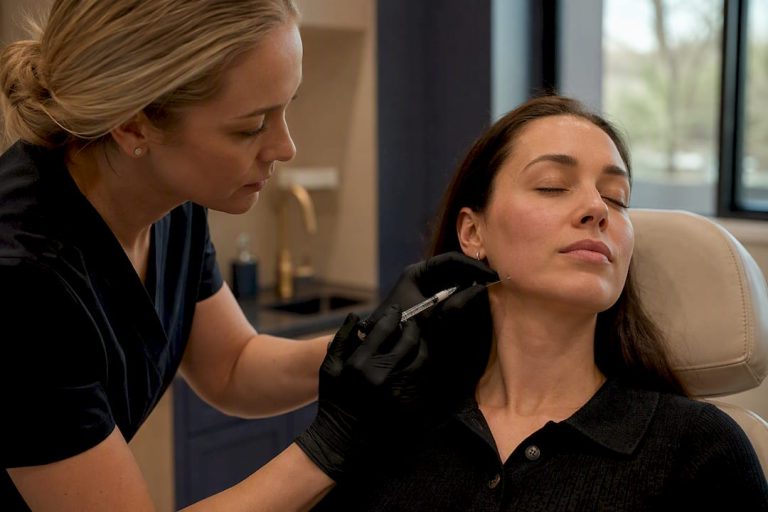

Choosing injectables for your face shape is defined as the process of matching filler types, placement zones, and treatment goals to your unique facial anatomy for balanced, natural-looking results. In the industry, this approach is often called facial balancing or proportion-based treatment planning. Rather than chasing individual lines, the goal is to assess your overall facial structure and select products like Juvéderm, Restylane, Radiesse, or Sculptra based on where your face needs support, definition, or volume. This guide walks you through exactly how that process works, from identifying your anchor zones to selecting the right product for each area.
How do you assess your face shape for injectables?
Facial mapping is the starting point for any well-planned injectable treatment. Your injector evaluates your proportions, symmetry, and the relationship between your upper, mid, and lower face before recommending a single product. This is not about measuring your face against an ideal. It is about understanding what your face needs to feel balanced and refreshed.
Most faces fall into one of five general categories: oval, round, square, heart-shaped, or oblong. Each shape has characteristic strengths and areas where volume or definition tends to be lacking. Knowing your shape helps your injector prioritise treatment zones rather than treating every concern at once.
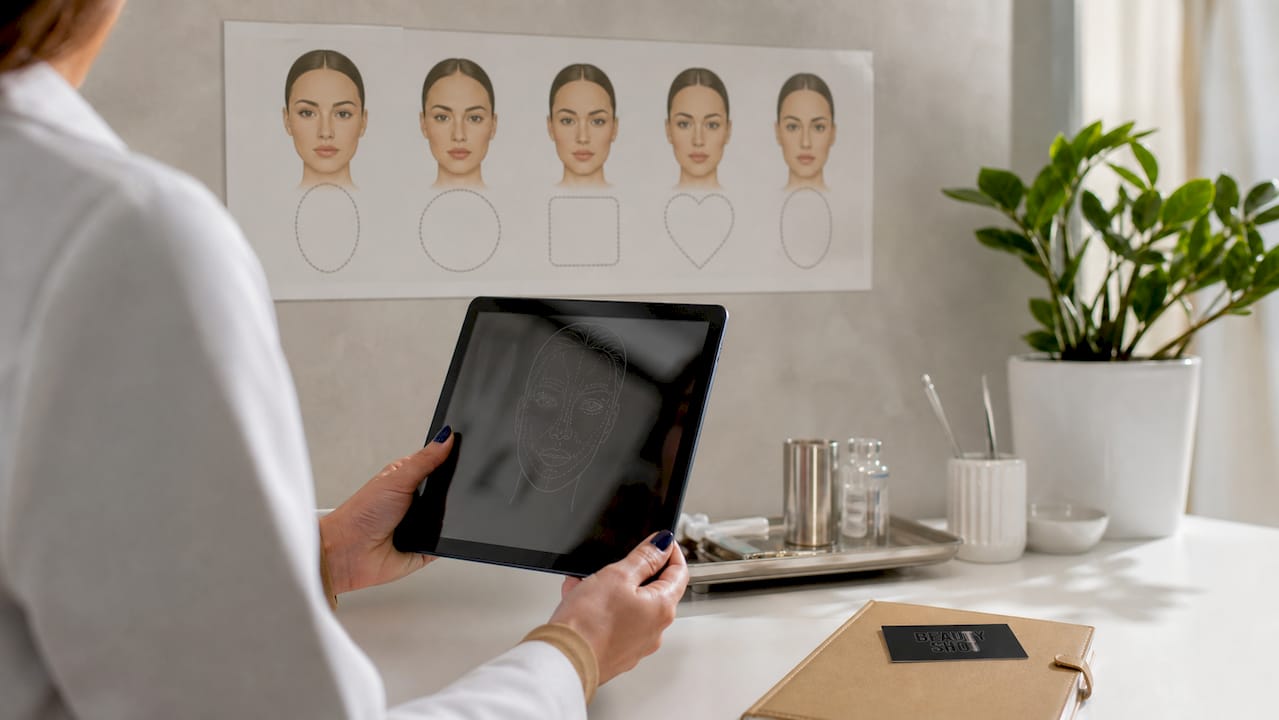
The concept of anchor zones is central to this process. Anchor zones are the structural areas of the face, primarily the cheeks, chin, and jawline, that support overall contour and proportion. Treating these zones first creates a foundation that improves the appearance of surrounding areas without overfilling isolated lines.
Key anchor zones and what they influence:
- Cheeks and midface: Support the under-eye area, soften nasolabial folds, and restore youthful projection
- Chin: Balances the profile, improves the jawline-to-chin ratio, and adds definition to the lower face
- Jawline: Creates structure, reduces jowling, and frames the lower third of the face
- Temples: Restore volume loss that causes hollowing and a narrowed upper face
Pro Tip: Before your consultation, take a straight-on photo and a side-profile photo in natural light. These two angles reveal proportional imbalances that are easy to miss in a mirror and give your injector a clearer starting point for planning.
Which filler type is right for each facial zone?
Injectable products are not interchangeable. Each type has distinct properties that make it suited to specific zones and treatment goals. Understanding the differences helps you have a more informed conversation with your injector.
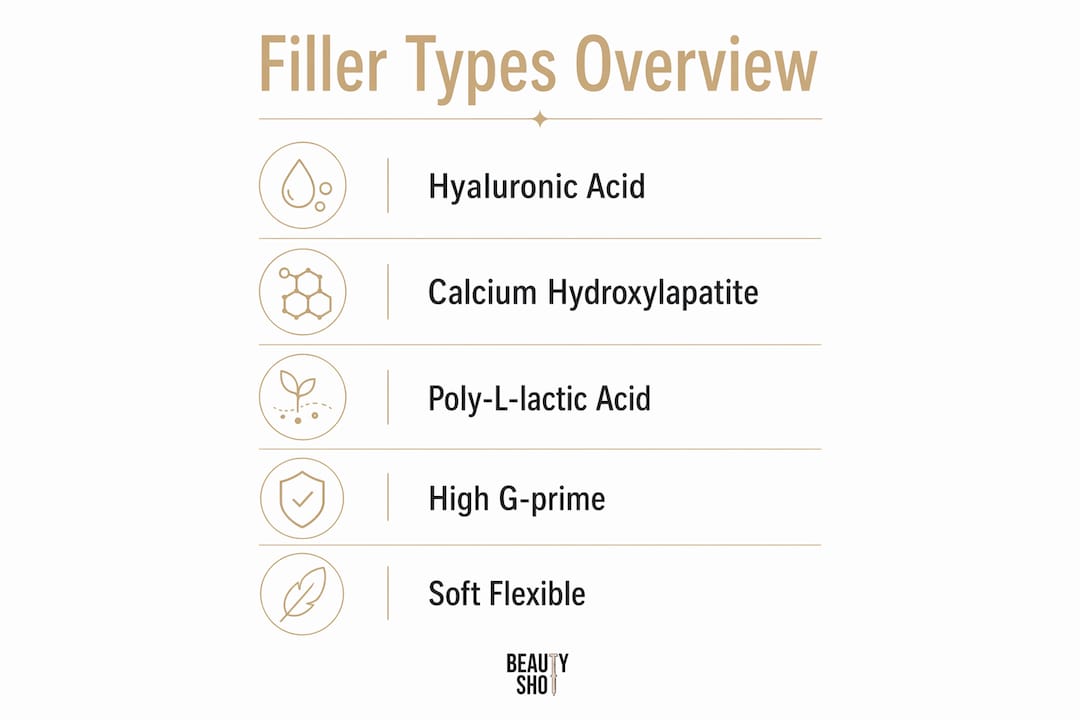
The three main categories are hyaluronic acid (HA) fillers, calcium hydroxylapatite (CaHA) fillers like Radiesse, and poly-L-lactic acid (PLLA) biostimulators like Sculptra. Neuromodulators such as Botox and Dysport are a separate category entirely, treating dynamic lines caused by muscle movement rather than volume loss.
| Product Type | Best Zones | Key Property | Longevity |
|---|---|---|---|
| Soft HA filler (e.g., Restylane Silk, Juvéderm Ultra) | Lips, fine lines, under-eye | Flexible, low firmness | 6–12 months |
| Firm HA filler (e.g., Juvéderm Voluma) | Cheeks, midface, chin | High G-prime, structural lift | Up to 2 years |
| CaHA (Radiesse) | Jawline, hands, deep folds | Firm, stimulates collagen | 12–18 months |
| PLLA (Sculptra) | Diffuse volume loss, temples, cheeks | Gradual collagen stimulation | 2+ years |
| Neuromodulators (Botox, Dysport) | Forehead, crow’s feet, brow | Relaxes muscle movement | 3–4 months |
Zone-dependent filler selection is the standard framework for natural results. Soft, flexible fillers belong in expressive areas like the lips, where movement is constant. Firmer, structural fillers belong in foundational zones like the cheeks and jawline, where they resist compression and provide lasting lift.
Sculptra deserves special mention. As a collagen-stimulating biostimulator, it works gradually over several months rather than providing immediate correction. It is best suited for patients with diffuse volume loss across the face rather than those seeking targeted, instant results. Sculptra has been used in Europe since 1999 and received U.S. approval in 2004, giving it one of the longest safety records among biostimulators.
Cheek augmentation with Voluma, a high G-prime HA filler, can provide durable lift lasting up to two years. That durability matters because the cheeks are a load-bearing zone. A filler that loses its structure quickly in this area will require more frequent touch-ups and may not maintain the lift you are looking for.
Pro Tip: Ask your injector specifically about filler firmness, not just brand name. Two products from the same brand can have very different consistencies. Knowing whether a filler is soft or structural helps you understand why it is being chosen for your specific area.
How to build a personalized injectable plan step by step
A well-structured treatment plan prevents the most common injectable mistakes: overfilling, treating the wrong areas first, and losing sight of overall facial balance. Here is how a thoughtful plan comes together.
Step 1: Define your goals clearly.
Are you looking to restore lost volume, sharpen your contours, soften lines, or all three? Each goal points to a different product category and treatment zone. Being specific helps your injector prioritise.
Step 2: Start with anchor zones.
Starting with midface and chin before addressing isolated lines is the approach experienced injectors use. Restoring cheek volume, for example, often softens nasolabial folds without any filler being placed there directly. This reduces the total product needed and avoids an overfilled appearance.
Step 3: Treat conservatively and assess.
Less product placed well always outperforms more product placed carelessly. A conservative first session lets you and your injector evaluate how your face responds before adding more. Swelling can take up to two weeks to fully resolve, so patience is part of the process.
Step 4: Plan for staged treatments.
Injectable treatment plans evolve over time as your face changes with age. A plan that works at 35 may need adjusting at 45. Building in follow-up appointments and reassessments keeps your results looking natural rather than frozen in time.
Common mistakes to avoid:
- Treating every line at once rather than addressing foundational zones first
- Choosing a filler based on brand name alone rather than its properties
- Skipping the follow-up appointment after initial treatment
- Expecting permanent results from temporary products
- Ignoring the lower face when the midface needs support first
Which injectables suit different face shapes?
The best fillers for your face shape depend on which areas need more definition, volume, or lift. Here is how common face shapes typically guide treatment decisions.
| Face Shape | Common Concern | Suggested Focus Zones | Product Examples |
|---|---|---|---|
| Oval | Mild volume loss with age | Cheeks, under-eye, lips | Juvéderm Voluma, Restylane |
| Round | Lack of definition, soft jawline | Jawline, chin, cheek projection | Radiesse, Voluma |
| Square | Strong jaw, less midface softness | Cheeks, temples, Botox for masseter | Voluma, Botox/Dysport |
| Heart-shaped | Narrow chin, wide forehead | Chin projection, lower face volume | Juvéderm Vollifting, Restylane |
| Oblong | Elongated proportions, flat cheeks | Cheeks, temples, chin width | Sculptra, Voluma |
A few important points about this table. These are starting frameworks, not prescriptions. Your injector will assess your actual anatomy, not just your face shape category. Two people with round faces can have completely different treatment needs depending on their age, skin quality, and bone structure.
For jawline definition, firmer fillers like Radiesse or high-G-prime HA products provide the structural support needed along the mandible. Soft fillers placed here tend to migrate or lack the definition patients are looking for. The difference between Botox and fillers also matters here: Botox in the masseter muscle can slim a square jaw, while fillers add projection to a recessed chin. These two approaches are often combined for patients with square or round face shapes.
What safety principles should guide your injectable choices?
Safety in injectable treatments depends on four factors: the product used, the area treated, the indication, and the injector’s expertise. No single filler is universally the safest option. The right choice is always context-specific.
“The most important question to ask before any injectable treatment is not ‘which filler is best’ but ‘is this injector trained to use this product in this area safely?’ Product quality matters, but placement expertise matters more.”
Verify that your injector uses Health Canada-approved products and has specific training in the zones being treated. At Beautyshotmedicalclinic, all treatments are performed by an advanced cosmetic Registered Nurse with training from Allergan, Teoxane Academy, Clarion Medical, and the MD Codes system. That level of training is not standard across all clinics.
Matching filler firmness to tissue mobility is a safety principle as much as an aesthetic one. Using a firm filler in a mobile area like the lips causes unnatural stiffness and visible lumping. Using a soft filler in a structural zone like the jawline fails to provide the definition needed and may require correction sooner.
Pro Tip: Ask your injector to show you the product packaging before treatment. Legitimate clinics use unopened, properly labelled products from authorised distributors. This simple step confirms you are receiving what you paid for.
Key takeaways
Choosing injectables for your face shape requires matching product firmness, placement zones, and treatment staging to your unique anatomy rather than treating concerns in isolation.
| Point | Details |
|---|---|
| Start with anchor zones | Treat cheeks, chin, and jawline first to build a foundation before addressing isolated lines. |
| Match filler firmness to the zone | Use soft fillers in mobile areas like lips and firm fillers in structural zones like cheeks and jawline. |
| Stage treatments conservatively | Begin with less product, assess results after two weeks, and adjust at follow-up appointments. |
| Face shape guides, not dictates | Use face shape categories as a starting framework, then personalise based on actual anatomy and goals. |
| Injector expertise is non-negotiable | Product safety depends on training, approved products, and zone-specific placement knowledge. |
What i have learned after years of facial balancing consultations
The most common misconception I see in consultations is that patients come in focused on one specific line or one specific feature. They point to a nasolabial fold or a thin upper lip and say, “This is what I want fixed.” My job is to gently redirect that conversation toward the whole face.
When I assess a patient’s face, I am looking at proportion and support. A deep nasolabial fold is often a symptom of midface volume loss, not a problem in itself. Filling the fold directly can create a pillow-like appearance that looks unnatural and does not address the underlying cause. Restoring cheek volume first often softens that fold without placing a single drop of filler near it. That is the kind of result that makes people say you look refreshed rather than “done.”
I also want to be honest about something the aesthetics industry does not always say clearly: injectable plans need to evolve. The face you have at 35 is not the face you will have at 50. Overfilling to compensate for future volume loss is one of the most common long-term mistakes I see. A conservative, staged approach with regular reassessments produces far better outcomes over time than trying to correct everything in one session.
My advice is to find an injector who spends more time asking questions than recommending products. A good consultation feels like a conversation about your face, your goals, and your comfort level. If you leave a consultation feeling pressured or overwhelmed, that is useful information. The right injector will make you feel informed and confident, not rushed.
— Felix
How Beautyshotmedicalclinic supports your facial balancing goals
Beautyshotmedicalclinic, located in Woodbridge, Vaughan, Ontario, specialises in proportion-based injectable planning for patients who want natural, balanced results. Every treatment begins with a thorough facial assessment to identify anchor zones and match the right products to your specific anatomy and goals. The clinic offers hyaluronic acid fillers, Radiesse, Sculptra, Botox, and Dysport, all administered by an advanced cosmetic Registered Nurse with training from Allergan, Teoxane Academy, and MD Codes. Explore the full injectable treatment guide to understand your options, or browse the dermal fillers page to learn which products may suit your face shape and goals.
FAQ
What is facial balancing in injectable treatments?
Facial balancing is a treatment approach that prioritises proportion and structural support over isolated line correction. Injectors assess anchor zones like the cheeks, chin, and jawline to improve overall facial harmony rather than targeting individual wrinkles.
How do i know which filler is right for my face?
The right filler depends on the zone being treated and your specific goals. Soft, flexible fillers suit mobile areas like the lips, while firm, structural fillers suit foundational zones like the cheeks and jawline.
Is it safe to get multiple areas treated at once?
Treating multiple areas in one session is common, but a conservative staged approach often produces better results. Starting with anchor zones and assessing the outcome before adding more product reduces the risk of overfilling.
How long do results last for different face shapes?
Longevity varies by product and zone. Voluma in the cheeks can last up to two years, while softer lip fillers typically last 6–12 months. Sculptra, a biostimulator, provides gradual results that can persist for two or more years.
Does my face shape change which injectables i need?
Yes. Face shape guides which zones to prioritise and which products to use. A round face may benefit from jawline and chin definition, while a heart-shaped face often needs chin projection and lower-face volume to balance a wider forehead.