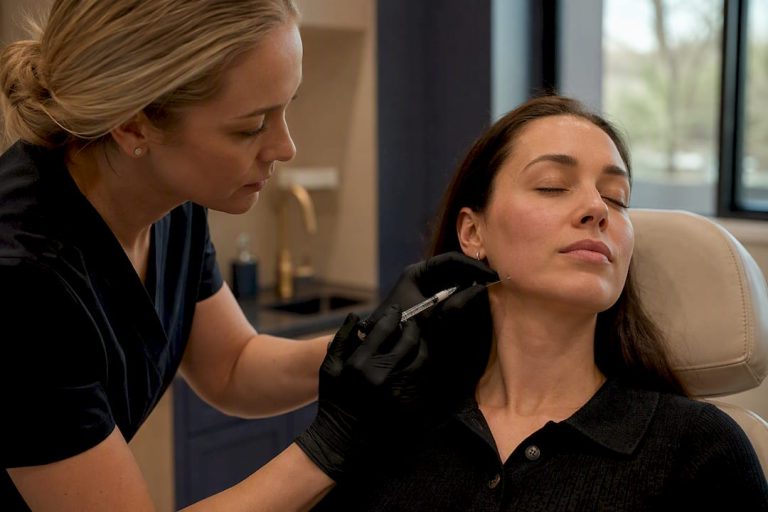
Botox results last 3–4 months for most patients, with some individuals maintaining effects for up to 5–6 months depending on metabolism, dosage, and treatment consistency. The clinical term for Botox and Dysport is neuromodulator, a prescription injectable that temporarily relaxes targeted facial muscles. Understanding the full Botox effect timeline, from first onset through gradual fading, helps you plan treatments realistically and get the most from every appointment. Both Botox (onabotulinumtoxinA) and Dysport (abobotulinumtoxinA) follow a similar arc, though their onset speeds and diffusion patterns differ in ways that matter for specific treatment areas.
How long do botox results last, start to finish?
The Botox effect timeline moves through three clear phases: onset, peak, and gradual fading. Knowing each phase helps you set accurate expectations and schedule retreatments at the right time.

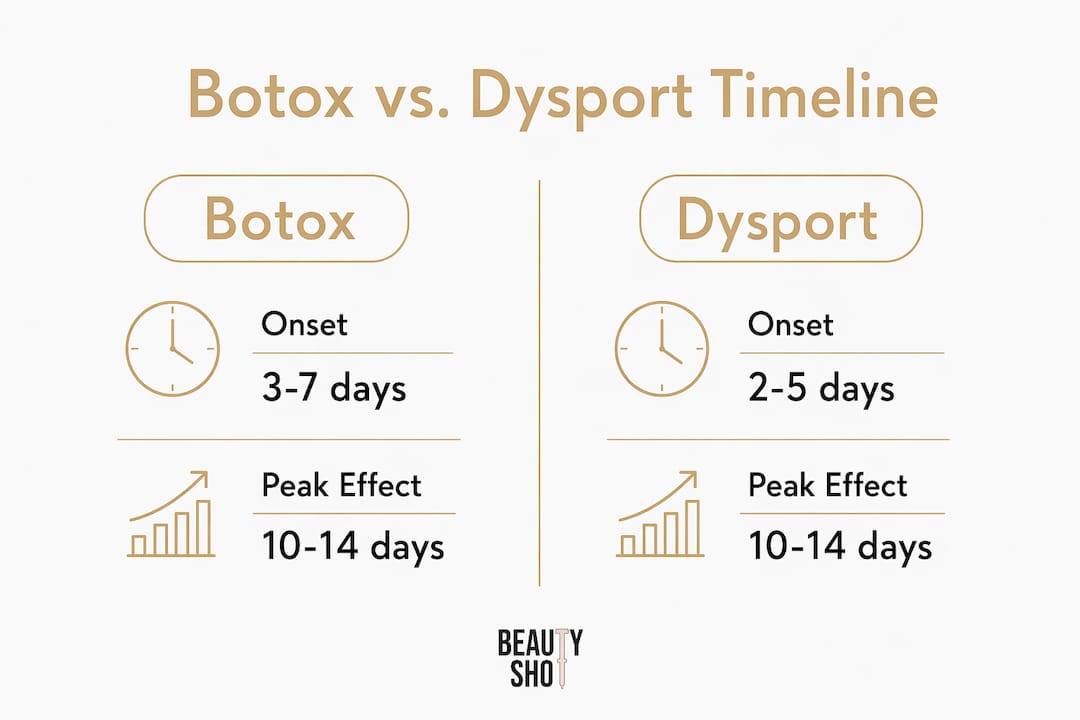
Onset is when you first notice muscle relaxation. Dysport onset begins in 2–5 days, while Botox typically takes 3–7 days. That difference matters if you have an event coming up and need results quickly.
Peak effect arrives at 10–14 days for both products. This is when the aesthetic result is at its fullest, lines are smoothest, and the treated muscles are most relaxed. Many injectors recommend a two-week follow-up appointment at this stage to assess results and make any minor adjustments.
Gradual fading begins around months 2–3. Muscle activity slowly returns as nerve endings regenerate. 80% of adults show significant improvement by day 30, and the typical return to baseline occurs between months 3–4. One important detail: visual fading lags behind muscle activity return. You may feel movement returning before you see wrinkles reappearing, which is your signal to book your next appointment.
Botox vs. dysport timeline at a glance
| Phase | Botox | Dysport |
|---|---|---|
| Onset | 3–7 days | 2–5 days |
| Peak effect | 10–14 days | 10–14 days |
| Fading begins | Month 2–3 | Month 2–3 |
| Typical duration | 3–4 months | 3–4 months |
| Extended duration (consistent use) | Up to 5–6 months | Up to 5–6 months |
Pro Tip: Book your two-week follow-up after every new treatment. This is the best time to assess your peak result and discuss any adjustments before your next session.
Botox vs. dysport: which lasts longer?
The direct answer is that no significant duration difference exists between Botox and Dysport. Both neuromodulators last 3–4 months for facial lines in the vast majority of patients. The choice between them comes down to treatment area, onset preference, and how your body responds individually.
Dysport has a wider diffusion radius. This makes it well-suited for larger surface areas like the forehead, where spreading coverage is an advantage. Botox offers more precise targeting, which is preferred for smaller, more delicate areas such as crow’s feet, the lip border, or the brow. Dosage and injection technique strongly affect duration, and under-dosing with either product is the most common reason patients feel one brand “wore off faster” than another.
The dose conversion ratio between the two products is approximately 2.5:1 (Dysport units to Botox units). This means a treatment requiring 20 units of Botox would use roughly 50 units of Dysport. Cost per unit differs, but total treatment costs are generally comparable when dosed correctly.
Key differences between botox and dysport
- Onset speed: Dysport works 1–2 days faster on average
- Diffusion: Dysport spreads more broadly; Botox stays more localised
- Best areas for Dysport: Forehead, glabellar lines (the “11s”), large muscle groups
- Best areas for Botox: Crow’s feet, lip lines, brow shaping, precise contouring
- Duration: Essentially equal for both products when dosed correctly
- Tolerance: Some long-term Botox users develop mild tolerance; switching to Dysport or adjusting the dose can restore optimal response
Pro Tip: If you feel your results have been shortening over time, the issue is rarely the brand. Ask your injector to review your dosage before switching products.
You can read a deeper breakdown of how these two neuromodulators work at a cellular level in this science-based comparison.
What factors influence how long botox effects last?
Botox longevity is not uniform. Several personal and clinical factors determine whether your results last closer to three months or closer to six.
Metabolic rate and physical activity
Your metabolism is the single biggest variable. People with faster metabolisms process neuromodulators more quickly, which shortens duration. Highly active muscles recover faster, reducing how long the relaxation holds. Athletes and people who train intensely often notice shorter Botox duration than sedentary individuals. Sun exposure also accelerates breakdown of the product at the injection site, so consistent SPF use is genuinely relevant to your results.
Treatment area
The location of your injection matters significantly. Forehead lines tend to hold results longer because the frontalis muscle is large and moves relatively slowly. Crow’s feet and perioral (around the mouth) areas involve smaller, more frequently active muscles, so results fade faster there. 23% of patients return to baseline in glabellar lines by week 16, which illustrates how even the same product behaves differently across facial zones.
Dosage and injection technique
Higher doses generally extend duration, within safe clinical limits. An experienced injector calibrates dosage to your muscle mass, facial anatomy, and treatment goals. Under-dosing is the most common reason for shorter-than-expected results, and it is far more common than patients realise. Individual metabolism and muscle mass drive longevity more than brand choice, which is why two people receiving the same product can have very different experiences.
Treatment history
First-time patients almost always experience shorter duration than those who have been maintaining treatments consistently. This is not a flaw in the product. It reflects the fact that your muscles are still strong and accustomed to full movement. Over time, with regular treatments, those muscles gradually weaken and require less product to stay relaxed. The result is longer-lasting effects with each successive session.
How to plan botox maintenance and extend your results
Consistent scheduling is the most reliable way to extend Botox longevity over time. The goal is to retreat before your muscles fully reactivate, not after wrinkles have fully returned.
Here is a practical maintenance framework:
- Schedule every 3–4 months. Retreatment every 3–4 months before deep wrinkles return is the standard clinical recommendation. Waiting too long allows muscles to fully regain strength, which resets the training effect and shortens your next result.
- Watch for first muscle movement, not first wrinkle. Results fade gradually, and visual fading lags behind muscle recovery. The moment you feel movement returning in a treated area, that is the right time to book your appointment.
- Protect your skin from the sun. UV exposure degrades collagen and accelerates the return of surface lines. Daily SPF 30 or higher is a straightforward way to support your results between treatments.
- Stay hydrated and maintain skin health. Well-hydrated skin with good elasticity shows Botox results more clearly. Incorporating a medical-grade moisturiser and retinol into your routine supports the skin quality that makes neuromodulator results look their best.
- Discuss dosage adjustments with your injector. If your results consistently last under three months, the answer is usually a dosage review, not a product switch. Long-term consistent treatment can extend results to six months or more as the muscle training effect accumulates.
- Consider your lifestyle factors. If you exercise intensely five or more days per week, discuss this with your injector. Some patients with very active lifestyles benefit from slightly higher doses or more frequent scheduling.
Pro Tip: Pair your Botox maintenance with a solid aftercare routine. Avoiding intense exercise for 24 hours post-treatment and staying upright for four hours after injection both support optimal product placement and longevity. See our full guide on Botox aftercare practices for a complete list.
Key takeaways
Botox and Dysport both last 3–4 months for most patients, and consistent maintenance treatments create a cumulative muscle-training effect that progressively extends results over time.
| Point | Details |
|---|---|
| Typical duration | Both Botox and Dysport last 3–4 months, sometimes up to 5–6 months with consistent use. |
| Onset and peak | Dysport activates in 2–5 days; Botox in 3–7 days. Both peak at 10–14 days. |
| Duration is personal | Metabolism, muscle mass, treatment area, and dosage matter more than brand choice. |
| Maintenance timing | Retreat every 3–4 months before full muscle reactivation to preserve the training effect. |
| Longevity improves over time | Regular treatments progressively weaken muscles, leading to longer-lasting results with each session. |
What nine years of injecting has taught me about botox duration
I have had this conversation hundreds of times: a patient comes in frustrated because their results “only lasted two months.” Nine times out of ten, the issue is not the product. It is the dose, the timing, or the expectations.
Here is what I have observed clinically. First-time patients almost always metabolise neuromodulators faster. Their muscles are strong, their nerve-to-muscle connections are fully intact, and the product has more work to do. I always tell new patients to give it three consistent treatments before drawing conclusions about how long their results last. By the third or fourth session, the pattern becomes much clearer and the duration almost always improves.
The other thing I see regularly is patients waiting too long between appointments. They want to get the most out of each treatment, so they hold off until their wrinkles are fully back. This actually works against them. When muscles fully reactivate between sessions, you lose the cumulative weakening effect that makes long-term Botox maintenance so worthwhile. Retreating at the first sign of movement, not the return of full wrinkles, is what builds lasting results.
I also want to be honest about the limits of any neuromodulator. Botox and Dysport relax muscles. They do not fill volume loss, address skin texture, or replace collagen. For patients who want natural-looking results that address multiple signs of ageing, a combination approach often serves them better than increasing Botox dose alone. My goal is always to help you look refreshed and like yourself, not treated.
— Felix
Personalised botox care at Beautyshotmedicalclinic
Beautyshotmedicalclinic, located in Woodbridge, Vaughan, offers Botox and Dysport treatments performed by Irene Soni, R.N., BScN, an advanced cosmetic nurse injector with over nine years of clinical experience. Every treatment plan at Beautyshotmedicalclinic is tailored to your facial anatomy, lifestyle, and aesthetic goals, with a focus on natural, refreshed results that never look overdone.
If you are ready to understand your options and build a maintenance plan that works for your schedule and budget, start with our injectable cosmetics guide or browse the Botox and Dysport treatment page to learn what a personalised consultation looks like. You can also view real patient outcomes in the before and after gallery to set realistic expectations before your first appointment.
FAQ
How long do botox injections last on average?
Botox injections last 3–4 months for most patients, with some individuals maintaining results for up to 5–6 months through consistent treatment and optimal dosing.
Does dysport last longer than botox?
Dysport and Botox have essentially the same duration of 3–4 months. Dysport works faster (2–5 days vs. 3–7 days for Botox), but neither product has a clinically significant longevity advantage over the other.
When do botox effects start to wear off?
Botox effects begin fading around months 2–3 as nerve endings regenerate and muscle activity gradually returns. Visual fading typically lags behind muscle recovery, so you may feel movement before you see wrinkles returning.
How often should i get botox to maintain results?
Most patients retreat every 3–4 months. Scheduling before full muscle reactivation preserves the cumulative training effect that progressively extends results over time.
Can anything make botox last longer?
Consistent scheduling, adequate dosing, sun protection, and good skin hydration all support longer-lasting results. High-intensity exercise and fast metabolism are the most common reasons results fade earlier than expected.
Recommended
- How Long Do Botox Results Last and When Should I Get a Touch-Up? – Beauty Shot | Botox Fillers Woodbridge Vaughan
- How Soon Will I See Results After a Botox Treatment? – Beauty Shot | Botox Fillers Woodbridge Vaughan
- Botox Aftercare: Products and Practices to Maximize Results – Beauty Shot | Botox Fillers Woodbridge Vaughan
- Common Botox side effects: what to expect and when to worry