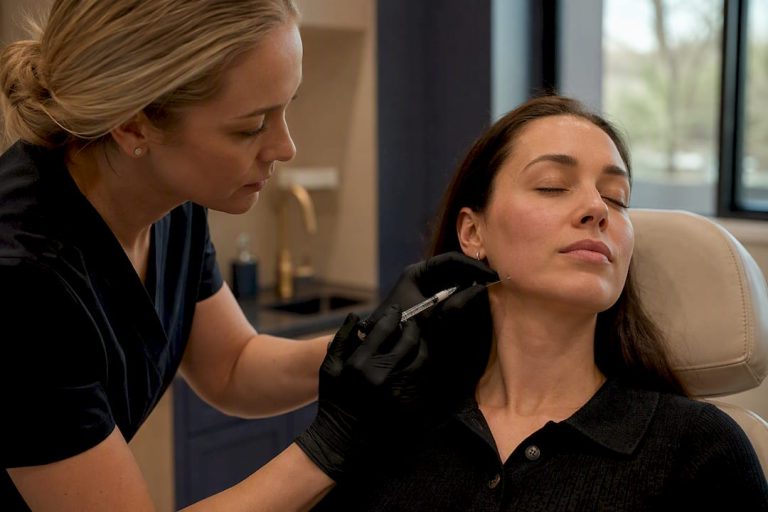

Dermal filler can soften or eliminate many chin creases by restoring subcutaneous support and improving the mentolabial transition. The mental crease, the horizontal fold that sits between the lower lip and the chin, often deepens with age as soft tissue thins and the mentalis muscle becomes more active. A qualified injector can assess whether your crease is structural, dynamic, or both, and recommend the right approach. Health Canada advises that treatment should be avoided in the presence of active skin infection, bleeding disorders, or a history of severe allergic reactions. Your practical next step is to book a consultation with a medically trained injector in Canada who can evaluate your anatomy and confirm you are a safe candidate.
Key takeaways
Dermal filler can effectively soften the mental crease by restoring subcutaneous support, with HA fillers as the first-line choice due to their immediate results and reversibility with hyaluronidase.
| Point | Details |
|---|---|
| HA fillers are first-line | Hyaluronic acid provides immediate volume and is reversible with hyaluronidase, making it the safest starting point. |
| Results last several months depending on the HA filler type, metabolic rate, and combination with neuromodulators | Duration varies by product, metabolic rate, and whether a neuromodulator is combined with filler. |
| Health Canada licensing matters | Only use Health Canada-licensed Class III or IV dermal filler products administered by a medically trained injector. |
| Know the emergency signs | Blanching, severe pain, livedo, or vision changes after injection require immediate contact with your clinic or emergency services. |
| Beautyshotmedicalclinic | Irene Soni, R.N., BScN, provides anatomy-led chin crease treatment in Woodbridge, Vaughan, with full consent and follow-up. |
How does chin crease filler work, and why does placement matter?
Filler placed beneath the mental crease lifts and supports the overlying soft tissue, smoothing the mentolabial transition without altering the overall chin shape. Understanding why the crease forms in the first place makes the treatment logic much clearer.
The mental crease sits directly above the chin apex and is partly defined by the mentalis muscle, which originates on the mandible and inserts into the skin of the chin. When this muscle contracts repeatedly or when subcutaneous fat diminishes with age, the skin folds inward and the crease deepens. Some patients have a crease that is primarily structural, present even at rest, while others have one that is largely dynamic, appearing mainly during expression. That distinction matters because it changes the treatment plan.
A peer-reviewed clinical review of chin and jawline injection targets identifies the following injection points for lower-face rejuvenation:
- Subcutaneous support under the crease: Small boluses placed in the subcutaneous plane directly beneath the fold lift the skin and reduce the shadow the crease casts.
- Chin apex: Volume at the tip of the chin improves overall projection and creates a smoother curve from the lower lip to the chin.
- Prejowl sulcus: Filling the slight depression lateral to the chin softens the jowl transition and frames the chin more cleanly.
- Mandibular body: In some cases, support along the jawline complements chin work by improving overall lower-face definition.
When the crease is primarily dynamic, a small amount of neurotoxin (Botox or Dysport) to relax the mentalis can reduce active folding. Combining a neuromodulator with filler often produces a more complete result than either treatment alone, particularly for patients whose crease deepens noticeably during speech or expression. For a structural crease with significant volume loss, filler is usually the primary tool. Understanding how fillers restore facial volume helps clarify why layered placement at the right depth matters so much.
Which filler classes and brands are used for the chin crease in Canada?
Hyaluronic acid (HA) fillers are the usual first choice for the mental crease because they provide immediate, visible volume and are reversible with hyaluronidase if needed. That reversibility is a meaningful safety advantage, particularly in the lower face where vascular anatomy is variable.
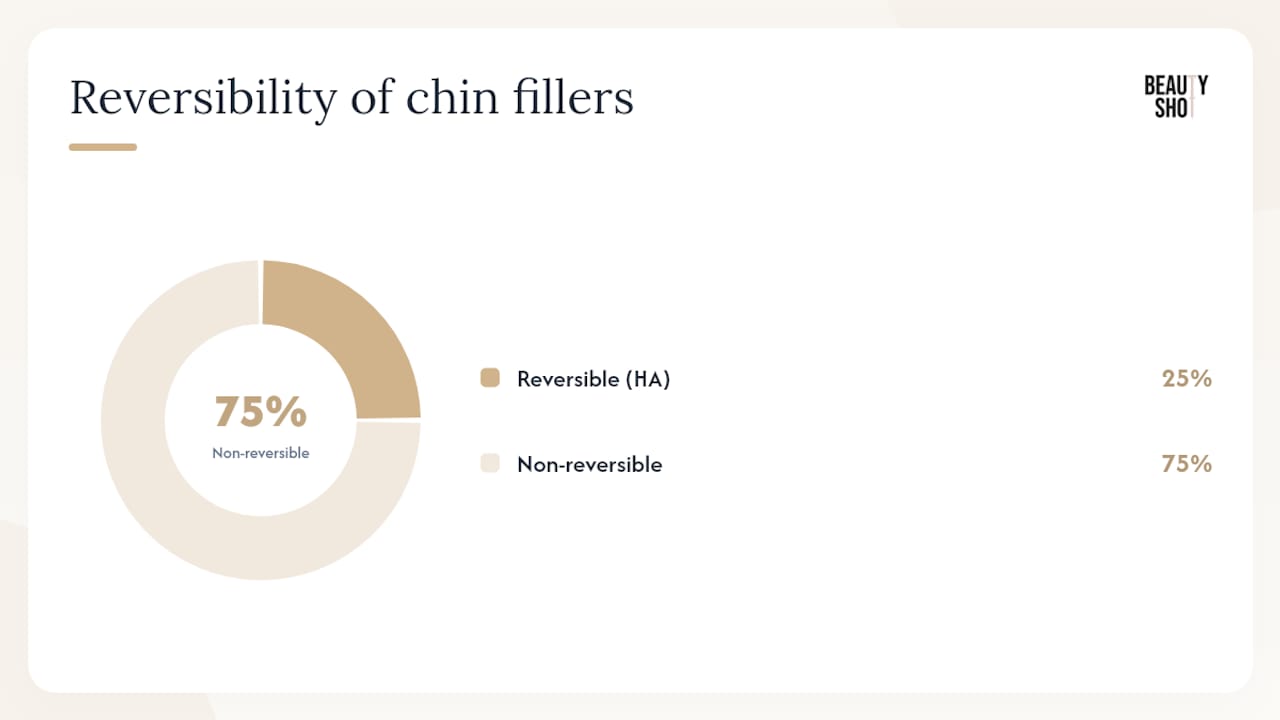
Evidence on filler mechanisms confirms that HA delivers immediate volume, calcium hydroxylapatite (CaHA) provides structural lift through a biostimulatory mechanism, and poly-L-lactic acid (PLLA) works by gradually stimulating collagen over several months. Polymethylmethacrylate (PMMA) is a permanent microsphere filler rarely used for the chin crease in Canada given its non-reversibility and the complexity of managing complications.
Dermal fillers are regulated as medical devices in Canada. Health Canada’s premarket guidance classifies them as Class III or Class IV devices depending on their composition, and requires safety and effectiveness evidence before a product licence is granted. Choosing a licensed product is not a formality; it is a patient safety standard.
| Filler type | Reversible? | Typical duration | Best clinical use for chin crease | Common side effects |
|---|---|---|---|---|
| Hyaluronic acid (HA) | Yes, with hyaluronidase | 6–18 months | First-line; immediate volume, adjustable | Bruising, swelling, tenderness |
| Calcium hydroxylapatite (CaHA) | No | 12–18+ months | Structural lift, deeper placement | Bruising, nodule risk if superficial |
| Poly-L-lactic acid (PLLA) | No | 18–24+ months (gradual) | Collagen stimulation, multi-session | Delayed swelling, papule risk |
| PMMA microspheres | No | Permanent | Rarely used; high-complexity risk profile | Granuloma, migration risk |
Commonly used HA product families in Canada include:
- Juvéderm (Allergan, Vycross technology): The Vycross cross-linking platform produces a range of viscosities. Volux is formulated for structural support in the chin and jawline; Ultra variants suit softer tissue planes. Allergan’s MD Codes technique maps specific injection points for the lower face, including the chin.
- Restylane (Galderma): A well-established HA family with products suited to different tissue depths. Restylane Defyne and Lyft are often selected for the lower face given their cohesive gel properties.
- Teoxane (RHA / Teosyal): The RHA (Resilient Hyaluronic Acid) line is designed to move with facial dynamics, which can be an advantage in an area as expressive as the chin. Teosyal RHA products are available in Canada and used by injectors trained through the Teoxane Academy.
Who is a good candidate for chin crease filler, and who should wait?
Ideal candidates have a noticeable mental crease caused by volume loss or reduced subcutaneous support, are in good general health, and have realistic expectations about what a non-surgical treatment can achieve. A thorough consultation will assess several factors before any product is recommended.
Your injector will evaluate skin laxity (loose skin responds differently than firm skin), underlying bone projection, dental and occlusal factors that affect chin position, and how much of the crease is driven by muscle activity versus volume loss. Aesthetic goals matter too: some patients want a subtle softening; others are interested in modest chin augmentation as part of a broader facial balancing plan.
Contraindications to chin crease filler include:
- Active skin infection or open wound at or near the injection site
- Bleeding disorders or current use of anticoagulant medications
- History of severe allergic reaction or anaphylaxis, particularly to HA or lidocaine
- Pregnancy or breastfeeding
- Autoimmune conditions or immunosuppressive therapy (discuss with your treating physician)
- Unrealistic expectations or body dysmorphic disorder
Timing considerations: Postpone treatment if you have had recent oral or dental surgery in the lower jaw, an active cold sore (herpes labialis), or a recent facial procedure that has not fully healed. Health Canada’s cosmetic injections guidance provides a clear summary of conditions under which treatment should be avoided, and your injector should review this with you during the consent process.
What happens at a chin crease filler appointment?
A typical appointment begins with a thorough medical history, a facial assessment, a personalised treatment plan, and a detailed informed consent discussion before any product is prepared. Nothing is injected until you understand the plan and have agreed to it in writing.

Before the procedure, you will be asked to pause blood-thinning medications and supplements (aspirin, ibuprofen, fish oil, vitamin E) for approximately one week if medically safe to do so, as these increase bruising risk. Topical numbing cream is applied to the treatment area for 20–30 minutes. Standardised photographs are taken for your clinical record, and the consent form covers the procedure, expected outcomes, risks, and emergency protocols.
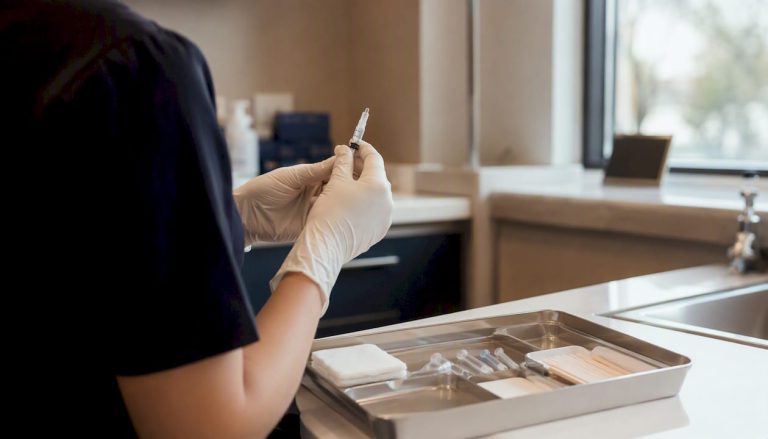
The procedure itself follows a careful sequence. The skin is cleansed and an antiseptic is applied. Your injector will choose between a fine needle and a blunt-tipped cannula depending on the target depth and the product being used; technique and complication-avoidance evidence supports cannula use in certain lower-face planes to reduce vascular risk. Product is placed in small, layered boluses rather than a single large deposit, allowing the injector to assess the result incrementally and avoid overfilling. The chin area is massaged gently to distribute the product evenly. Total treatment time is typically 20–40 minutes.
After the procedure, expect mild swelling, tenderness, and possible bruising for 3–7 days, with most visible swelling resolving within two weeks. Avoid strenuous exercise, alcohol, and excessive heat (saunas, hot yoga) for 24–48 hours. Sleep with your head slightly elevated the first night. A follow-up review at two weeks allows your injector to assess the settled result and add a small touch-up if needed.
Pro Tip: Avoid alcohol and NSAIDs for at least five days before your appointment, and apply arnica gel or use an ice pack (wrapped in cloth) to the treated area in the first 24 hours post-treatment. Both steps meaningfully reduce bruising and discomfort.
What are the real risks, and when should you seek urgent care?
Most side effects after chin filler are temporary. Bruising, swelling, redness, and tenderness at the injection site typically resolve within a short period, usually under two weeks. Rare but serious complications, including vascular occlusion, nodule formation, and infection, can occur and require prompt attention.
A systematic review of dermal filler adverse events documents that common local reactions (swelling, oedema, bruising) are well characterised across filler classes, while delayed inflammatory responses and granulomas are less common but clinically significant. HA fillers appear frequently in adverse event reports, though this likely reflects their high usage frequency rather than a higher inherent risk per injection.
Vascular occlusion, where filler inadvertently compresses or enters a blood vessel, is the most serious acute complication. In the chin and lower face, the relevant vessels include branches of the inferior labial and mental arteries. Recognising the signs early and acting immediately is what determines the outcome.
Emergency signs requiring immediate action: Sudden severe pain during or after injection, skin blanching (white or pale patches), livedo reticularis (a mottled, net-like skin pattern), or any change in vision are all warning signs of possible vascular compromise. Contact your treating clinic immediately or go to the nearest emergency department. If your injector has hyaluronidase on hand and an HA filler was used, prompt dissolution can help restore blood flow. Do not wait to see if symptoms resolve on their own.
The Canadian medical-legal picture is reassuring in terms of absolute frequency. A Canadian medical-legal review of soft tissue filler therapy found that severe complications such as blindness from facial filler are extremely rare, with fewer than five documented medical-legal cases over a 15-year period in Canada. The same review emphasises that detailed informed consent and thorough documentation are the most consistent factors distinguishing well-managed cases from those that result in complaints or litigation.
Choosing a licensed product matters here too. Health Canada’s device licensing framework requires that Class III and IV dermal fillers demonstrate safety and effectiveness before market approval, which is a meaningful baseline that unlicensed or grey-market products do not meet. For a broader overview of dermal filler safety and side effects, the clinic’s own resource covers this in patient-friendly detail.
How long do results last, and what does treatment cost in Canada?
Visible smoothing of the mental crease is typically noticeable immediately after treatment, once initial swelling settles. How long results last depends on the filler type, your metabolic rate, the depth of placement, and whether you combine filler with a neuromodulator.
Combining a small amount of Botox or Dysport to relax the mentalis with HA filler tends to extend the filler’s longevity, because the muscle is not actively working against the volume. Patients who metabolise filler quickly, exercise intensively, or have significant dynamic crease activity may notice results fading sooner than the product’s published duration suggests.
Typical duration ranges by filler class:
- HA fillers (Juvéderm, Restylane, Teosyal RHA): Generally 6–18 months in the chin area, with softer formulations tending toward the shorter end and denser structural products lasting longer.
- CaHA: Structural lift typically persists for 12–18+ months; not reversible, so patient selection matters more.
- PLLA: Results build gradually over three to six months as collagen is stimulated; longevity can extend to 18–24+ months, but multiple sessions are usually required.
Cost in Canada varies by injector credentials, clinic location, product used, and the volume required. As a general guide, chin crease treatment with HA filler in Ontario typically ranges from approximately $500 to $900 CAD per session, though this is not a fixed benchmark. Budgeting for the initial treatment plus a two-week touch-up visit and annual or biannual maintenance is a realistic planning approach. Unusually low pricing warrants scrutiny; it often reflects unlicensed products or inexperienced injectors. Exploring how dermal fillers can address aging concerns gives useful context on outcomes and longevity across different treatment areas.
How do you choose a safe, qualified injector in Canada?
Choose a medically trained injector with documented experience in lower-face anatomy, transparent pricing, and a clear informed consent process. In Canada, dermal fillers are not regulated as drugs, which means the regulatory floor for who can inject them varies by province. That makes your own due diligence more important, not less.
Questions to ask at your consultation:
- What is your medical training and injector-specific education?
- Which filler products do you use, and are they Health Canada-licensed?
- Do you have hyaluronidase on-site for emergency dissolution?
- What is your protocol if a vascular complication occurs?
- Can I see a before-and-after gallery of chin and lower-face cases?
- What does your follow-up policy include?
- Is written informed consent part of every appointment?
Red flags to watch for:
- No written consent form or a consent form that does not mention serious risks
- Inability or unwillingness to show injector credentials
- No documented emergency protocol for vascular occlusion
- High-volume discount promotions that prioritise throughput over assessment
- Reluctance to discuss contraindications or to decline treatment when it is not appropriate
A Canadian review of soft tissue filler informed consent found that poor documentation and inadequate consent discussions are among the most common contributors to medical-legal complaints after filler therapy. A clinic that takes consent seriously is protecting you, not just itself.
Beautyshotmedicalclinic meets these standards. All injectable treatments are performed by Irene Soni, R.N., BScN, an advanced cosmetic nurse injector with documented training in MD Codes, Allergan techniques, Teoxane Academy, and additional programs. The focus is on anatomy-led, natural-looking outcomes, not volume for its own sake. Personalised filler placement is central to how every treatment plan is built.
The Beautyshotmedicalclinic approach to chin crease treatment
Beautyshotmedicalclinic takes a safety-first, anatomy-led approach to chin crease treatment, with all injections performed by an advanced cosmetic Registered Nurse.
Irene Soni, R.N., BScN, founded Beauty Shot Medical Clinic in Woodbridge, Vaughan, Ontario, bringing a Sunnybrook Hospital Medical/ICU nursing background to cosmetic practice. With 9+ years of injector experience and advanced training across MD Codes, Allergan techniques, Teoxane Academy, Clarion Medical, and Dr. Martins Training Center Canada, her clinical foundation goes well beyond a weekend course.
Trust assets available on the clinic site:
- Before-and-after gallery showing real patient outcomes across lower-face and chin treatments
- Detailed procedure pages covering product options, technique, and aftercare
- Educational resources on filler safety, candidacy, and realistic expectations
- Documented informed consent processes for every injectable appointment
A consultation at Beautyshotmedicalclinic includes a full medical history review, a facial anatomy assessment, a discussion of product options and realistic outcomes, and a cost estimate, all before any treatment decision is made. The goal is always a refreshed, balanced result that still looks like you.
What an experienced injector actually prioritises
Safety and anatomy come before aesthetics, every time. When I assess a patient’s chin crease, I am thinking about the underlying structure, the muscle activity, and whether filler alone is the right answer or whether a small amount of neurotoxin would serve them better. The goal is never to fill a crease for its own sake; it is to restore balance to the lower face in a way that looks natural at rest and in motion.
Shared decision-making matters. A good outcome starts with a patient who understands what the treatment can and cannot do, and who feels comfortable asking questions. That conversation is the most important part of the appointment.
Ready to assess your chin crease with a qualified injector?
Beautyshotmedicalclinic offers personalised consultations for patients considering chin crease treatment in Woodbridge, Vaughan, and the surrounding area. Rather than a one-size approach, every appointment begins with a thorough facial assessment, a review of your medical history, a discussion of product options and expected outcomes, and a clear cost estimate. You leave with a treatment plan that fits your anatomy and your goals, not a generic protocol.
If you are ready to find out whether chin crease filler is right for you, book a consultation at Beauty Shot Medical Clinic and take the first step toward a refreshed, natural result.
Sources
The safety and technique points in this article are supported by Canadian regulatory guidance and peer-reviewed clinical literature. These sources are worth reviewing if you want to go deeper before your consultation.
Health Canada: Cosmetic injections covers adverse reactions, contraindications, and device-licensing expectations for dermal fillers in Canada.
Using injectable fillers for chin and jawline rejuvenation (PMC) is a peer-reviewed clinical review of injection targets and technique for the lower face, including the mental crease, chin apex, and prejowl sulcus.
Soft tissue filler therapy and informed consent: a Canadian review (Sage Journals) examines the medical-legal landscape for filler therapy in Canada, with a focus on consent documentation and known complications.
Adverse events of dermal fillers: a review of the evidence (CDA/AMC) summarises common and rare adverse events across filler classes from a systematic review perspective.
Health Canada: Guidance on premarket medical device licence preparation explains device classification and the evidence Health Canada expects before a filler product is licensed.
This article is general information, not a substitute for advice from a qualified doctor. Consult a qualified healthcare professional about your own circumstances before acting on anything here.
- Canada
- Using injectable fillers for chin and jawline rejuvenation – PMC
- Soft Tissue Filler (STF) therapy and informed consent: A Canadian review (Sage Journals)
- Adverse events of dermal fillers — a review of the evidence (CDA/AMC report)
- DOI: 10.1002/wjo2.93
FAQ
Can you put filler in a chin crease?
Yes. Dermal filler placed in the subcutaneous plane beneath the mental crease can lift and smooth the fold, with peer-reviewed technique reviews confirming the chin apex, prejowl sulcus, and the crease itself as established injection targets.
What is the best filler for chin creases?
Hyaluronic acid fillers such as Juvéderm Volux, Restylane Defyne, or Teosyal RHA are typically the first choice because they provide immediate volume and can be dissolved with hyaluronidase if needed. The right product depends on the depth of your crease and your injector’s assessment.
How long does chin crease filler last?
HA fillers in the chin area generally last 6–18 months depending on the product, your metabolic rate, and whether a neuromodulator is used alongside. CaHA and PLLA formulations can last longer but are not reversible.
How do you fix a chin crease without surgery?
A combination of HA filler for subcutaneous support and a small amount of Botox or Dysport to relax the mentalis muscle is the most common non-surgical approach. A qualified injector will assess whether filler alone, neurotoxin alone, or a combination is appropriate for your specific crease.
Is chin crease filler safe in Canada?
Serious complications are rare. Canadian medical-legal data documents fewer than five cases of severe outcomes such as blindness over a 15-year period. Safety depends on using a Health Canada-licensed product, choosing a medically trained injector, and following proper informed consent and emergency protocols.