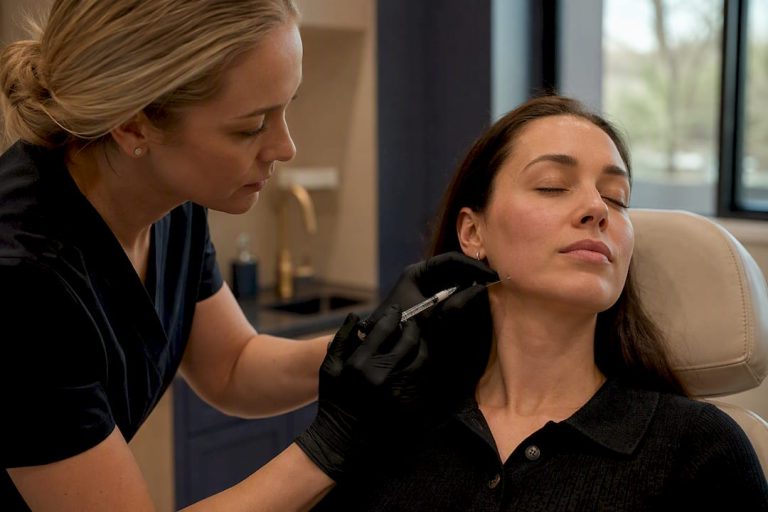

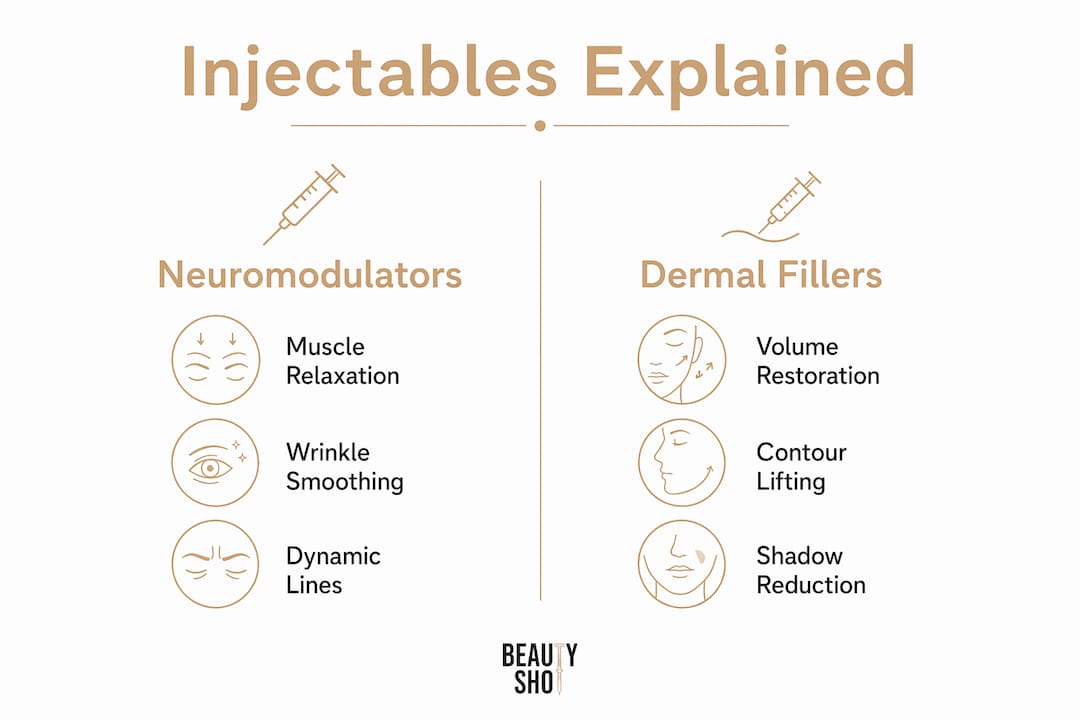
Cosmetic injectables refresh a tired appearance by combining two distinct mechanisms: muscle relaxation and volume restoration. Neuromodulators like Botox and Dysport target the overactive facial muscles that create dynamic wrinkles, while hyaluronic acid dermal fillers replenish the volume lost beneath the skin’s surface. Together, these treatments address the two root causes of facial fatigue. If you have been told you look tired when you feel fine, or if shadows and lines have deepened over time, understanding how injectables work gives you a clear, medically grounded path forward.
How do neuromodulators like Botox refresh a tired look?
Botulinum toxin refreshes a tired look by relaxing overactive facial muscles that cause dynamic wrinkles. Dynamic wrinkles form from repeated muscle contractions, such as squinting, frowning, or raising the brows. Over time, those lines deepen and remain visible even when your face is at rest, which is what creates the classic “tired” or “tense” expression.
Small, targeted doses of botulinum toxin block the nerve signals that tell specific muscles to contract. The result is smoother skin, a softer brow, and a face that no longer looks permanently furrowed. Common treatment areas include the glabellar lines between the brows, crow’s feet at the outer corners of the eyes, and horizontal forehead lines.
Key points about neuromodulator treatments:
- Onset: Effects develop over about 2 weeks and are not immediate. Patients who expect overnight results are often disappointed unnecessarily.
- Duration: Results typically last 3–4 months before a maintenance appointment is needed.
- Precision matters: Targeted injections reduce muscle activity without erasing all facial movement. The goal is softening, not freezing.
- Side effects: Mild erythema, tenderness, and occasional bruising are expected and resolve within days to a couple of weeks.
- Brands used: Botox (onabotulinumtoxinA) and Dysport (abobotulinumtoxinA) are the most widely used neuromodulators in Canadian aesthetic clinics.
Pro Tip: Book your neuromodulator appointment at least 2 weeks before any event. Results peak around day 14, so planning ahead means you will look your best on the day that matters.
Neuromodulators work best when the tired look comes from muscle-driven lines. If fatigue stems primarily from volume loss and hollowing, fillers are the more appropriate tool, and often both are needed together.
How do dermal fillers restore volume and reduce facial shadows?
Hyaluronic acid fillers restore lost facial volume by adding support beneath the skin’s surface, lifting contours and softening the shadows that make a face look drawn or exhausted. Volume loss is a natural part of ageing. Fat pads in the midface shift and thin, bone density decreases, and the skin loses its scaffolding. The result is a face that looks deflated rather than rested.
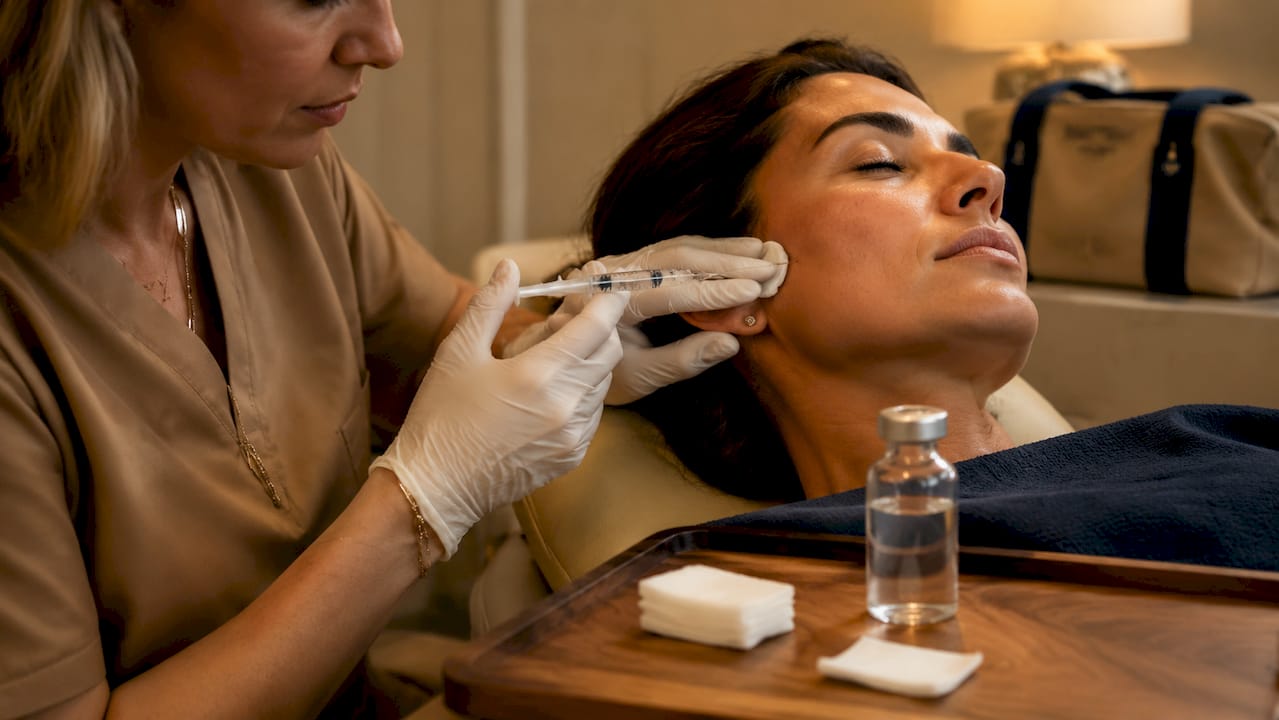
Fillers address this by replenishing the deeper support layers. When cheek volume is restored, the entire midface lifts slightly, which reduces the appearance of under-eye hollows, nasolabial folds, and a generally sunken look. Fillers create smoother transitions and improved facial balance rather than dramatic changes, which is exactly what a natural refresh requires.
Common treatment areas for a fatigued appearance:
| Treatment area | What it addresses |
|---|---|
| Cheeks and midface | Restores lift, reduces hollowing and shadowing |
| Tear troughs (under eyes) | Softens dark circles caused by volume loss |
| Nasolabial folds | Smooths lines from nose to mouth corners |
| Temples | Replaces volume loss that creates a gaunt look |
| Jawline | Restores definition lost with age-related fat redistribution |
One important clinical nuance: under-eye hollow correction often involves restoring midface volume rather than placing filler directly in the thin under-eye skin. Direct tear trough filler carries a higher risk of visible lumps and vascular complications. Lifting the cheek first frequently reduces under-eye shadowing with far less risk.
Short-term side effects of hyaluronic acid fillers are mild. A systematic review of 947 patients confirmed that swelling, redness, pain, bruising, and small nodules are the most common adverse events, and they typically resolve within 7–14 days without intervention.
Pro Tip: Schedule filler appointments at least 2 weeks before a wedding, reunion, or important event. Bruising and swelling are normal and temporary, but you want them fully resolved before you are in front of a camera.
Why combining neuromodulators and fillers gives better results
Neuromodulators and fillers complement each other because they treat different causes of facial fatigue. Neuromodulators address muscle-driven lines. Fillers address structural volume loss. Using only one when both are contributing to a tired look leaves the result incomplete.
A full-face assessment looks at two things simultaneously: how the face moves and where volume has been lost. A furrowed brow with deep glabellar lines may need both botulinum toxin to relax the muscle and filler to soften the residual static crease. Hollow cheeks combined with crow’s feet call for both volume restoration and muscle relaxation. Treating only one without the other produces a result that looks slightly off, even if each individual treatment is well executed.
Practical considerations for combined treatments:
- Sequencing: Many injectors prefer to place fillers first, then assess muscle activity before injecting neuromodulators. This avoids over-treating muscles that may relax naturally once volume is restored.
- Spacing: Some patients prefer to space treatments a few weeks apart to assess each result individually before adding the next.
- Personalised planning: A thorough consultation that observes both muscular activity and volume loss produces a more balanced outcome than treating areas in isolation.
- Natural results: The goal of combining treatments is a face that looks rested and like itself, not a face that looks “done.” Subtle is the standard.
You can read more about safe treatment combinations to understand how sequencing and dosing decisions are made in practice.
What to expect during and after injectable treatments
Safety is the foundation of every injectable treatment. The safety profile of modern hyaluronic acid fillers is well established, with serious adverse events being rare when treatments are performed by a qualified injector. Botulinum toxin has a similarly strong safety record at cosmetic doses.
Here is a realistic timeline of what to expect:
- Day of treatment: Mild redness, swelling, and tenderness at injection sites are normal. These are not signs of a problem.
- Days 2–5: Bruising may appear and peak. Swelling from fillers is often most visible during this window.
- Days 7–14: Most swelling and bruising resolve. Filler results begin to look natural as the product settles.
- Week 2: Botulinum toxin effects reach their peak. This is when you see the full result of your neuromodulator treatment.
- Months 3–4: Neuromodulator effects begin to fade. Filler results typically last longer, depending on the product and area treated.
Tips to minimise bruising and maximise comfort:
- Avoid blood-thinning medications and supplements such as aspirin, ibuprofen, fish oil, and vitamin E for several days before treatment, if medically safe to do so.
- Apply ice gently to treated areas immediately after your appointment.
- Avoid strenuous exercise, alcohol, and heat exposure for 24 hours post-treatment.
- Sleep with your head slightly elevated the first night after fillers.
Choosing a qualified injector is the single most important safety decision you make. At Beautyshotmedicalclinic, all injectable treatments are performed by an advanced cosmetic Registered Nurse with clinical training in anatomy, injection technique, and complication management. You can review common Botox side effects to know exactly what is normal and what warrants a call to your clinic.
Pro Tip: Always disclose your full medication list at your consultation. Certain medications increase bruising risk significantly, and your injector needs that information to plan your treatment safely.
Key takeaways
Injectables refresh a tired appearance most effectively when neuromodulators and hyaluronic acid fillers are used together, each targeting a distinct cause of facial fatigue.
| Point | Details |
|---|---|
| Neuromodulators smooth dynamic lines | Botox and Dysport relax overactive muscles, reducing frown lines and crow’s feet that create a tense, tired look. |
| Fillers restore lost volume | Hyaluronic acid fillers replenish cheek and midface volume, lifting shadows and reducing a hollow, fatigued appearance. |
| Midface first for under-eye refresh | Restoring cheek support reduces under-eye shadowing with lower risk than direct tear trough filler placement. |
| Results take time to develop | Botulinum toxin peaks at 2 weeks; filler swelling resolves within 7–14 days. Plan treatments well before events. |
| Combined treatments give balanced results | Addressing both muscle activity and volume loss produces a more natural, complete refresh than either treatment alone. |
What I have learned treating the tired look
The tired look is one of the most common concerns I hear at Beautyshotmedicalclinic, and it is also one of the most misunderstood. Patients often come in asking specifically for under-eye filler because they have dark circles. But when I assess their face, I frequently see that the real issue is midface volume loss pulling the tissue downward, not a problem originating under the eye at all.
Placing filler directly under the eye in that situation would add product to an area that is already being dragged down. Restoring cheek volume first lifts the entire midface, and the under-eye area often improves significantly without any direct treatment. That is the kind of assessment that only comes from looking at the face as a whole, not treating isolated areas.
The other thing I want patients to understand is that subtle is not the same as doing less. A well-placed 1 mL of cheek filler can refresh a face more than 3 mL placed in the wrong area. The goal is always to look like a rested version of yourself, not a different person. When I see patients two weeks after treatment and they tell me their friends asked if they had a good holiday, that is the result I am aiming for.
Age-appropriate treatment matters too. A 28-year-old and a 52-year-old presenting with tired-looking eyes need completely different approaches. Chasing trends or applying a one-size treatment plan does not serve patients well. Every consultation at Beautyshotmedicalclinic starts with a full facial assessment, because that is the only way to plan a treatment that actually works.
— Felix
Injectable treatments at Beautyshotmedicalclinic
Beautyshotmedicalclinic specialises in Botox, Dysport, and hyaluronic acid dermal fillers for patients in Woodbridge and Vaughan, Ontario. Every treatment is performed by an advanced cosmetic Registered Nurse with clinical training in facial anatomy and injection safety. If you are ready to understand which treatments suit your specific concerns, the injectable cosmetics guide on the clinic website is an honest, thorough starting point. You can also browse the before and after gallery to see real patient results. When you are ready, book a consultation to receive a personalised treatment plan built around your face, not a template.
FAQ
What is the difference between Botox and dermal fillers for a tired look?
Botox and Dysport relax muscles to smooth dynamic wrinkles, while dermal fillers add volume beneath the skin to lift hollows and reduce shadows. Most patients with a tired appearance benefit from both.
How long does it take to see results from injectables?
Botulinum toxin effects peak at around 2 weeks after treatment. Filler results are visible sooner, though swelling and bruising typically resolve within 7–14 days before the final result is clear.
Are injectable treatments safe for refreshing a tired appearance?
Yes. A systematic review of 947 patients confirmed that hyaluronic acid fillers have a benign safety profile, with mild, self-limiting side effects. Serious complications are rare when treatments are performed by a qualified injector.
Can injectables fix under-eye bags and dark circles?
Injectables can reduce the appearance of under-eye hollows caused by volume loss. Restoring midface and cheek volume often reduces under-eye shadowing more safely than placing filler directly in the tear trough area.
How often do I need injectable treatments to maintain a refreshed look?
Botulinum toxin typically requires maintenance every 3–4 months. Hyaluronic acid fillers last longer, with touch-up timing depending on the product used and the area treated. Your injector will recommend a schedule based on your individual results.