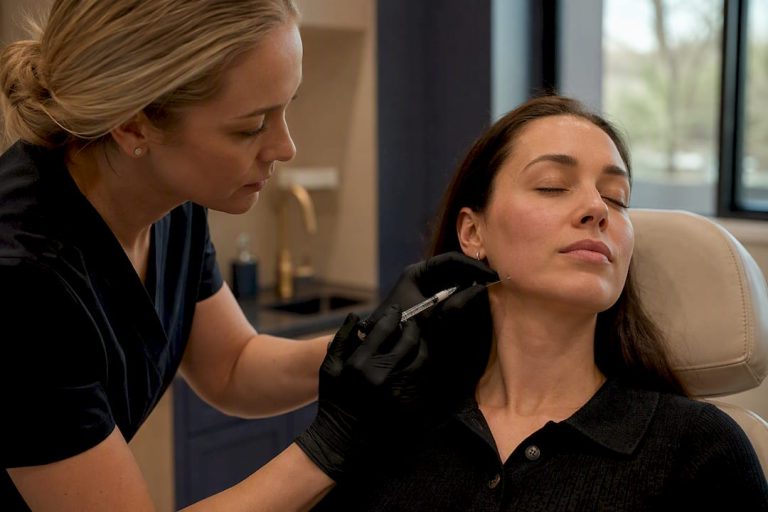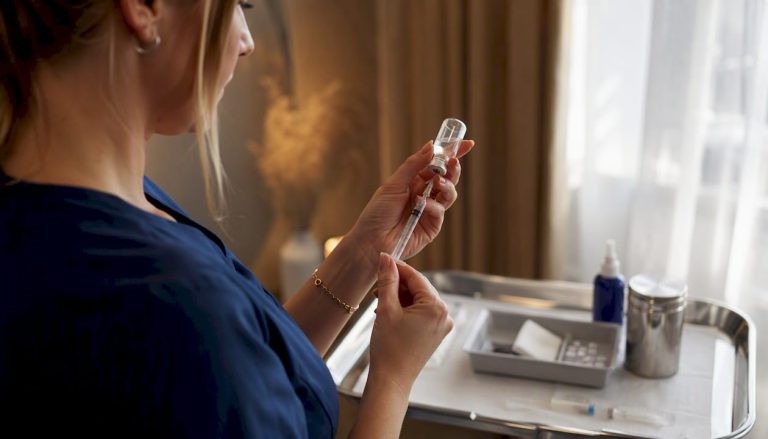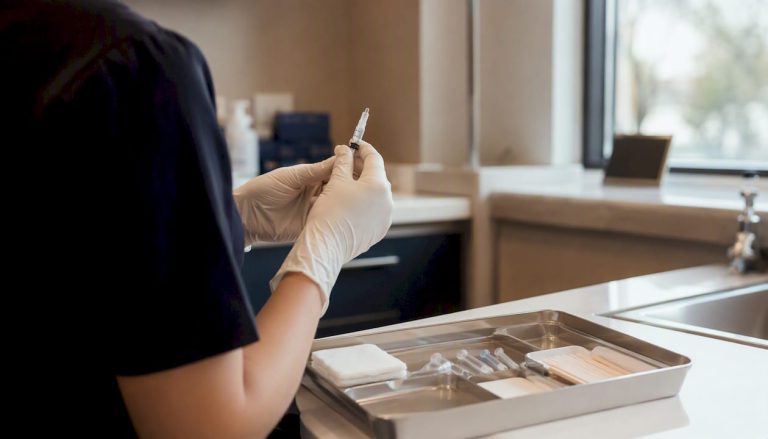
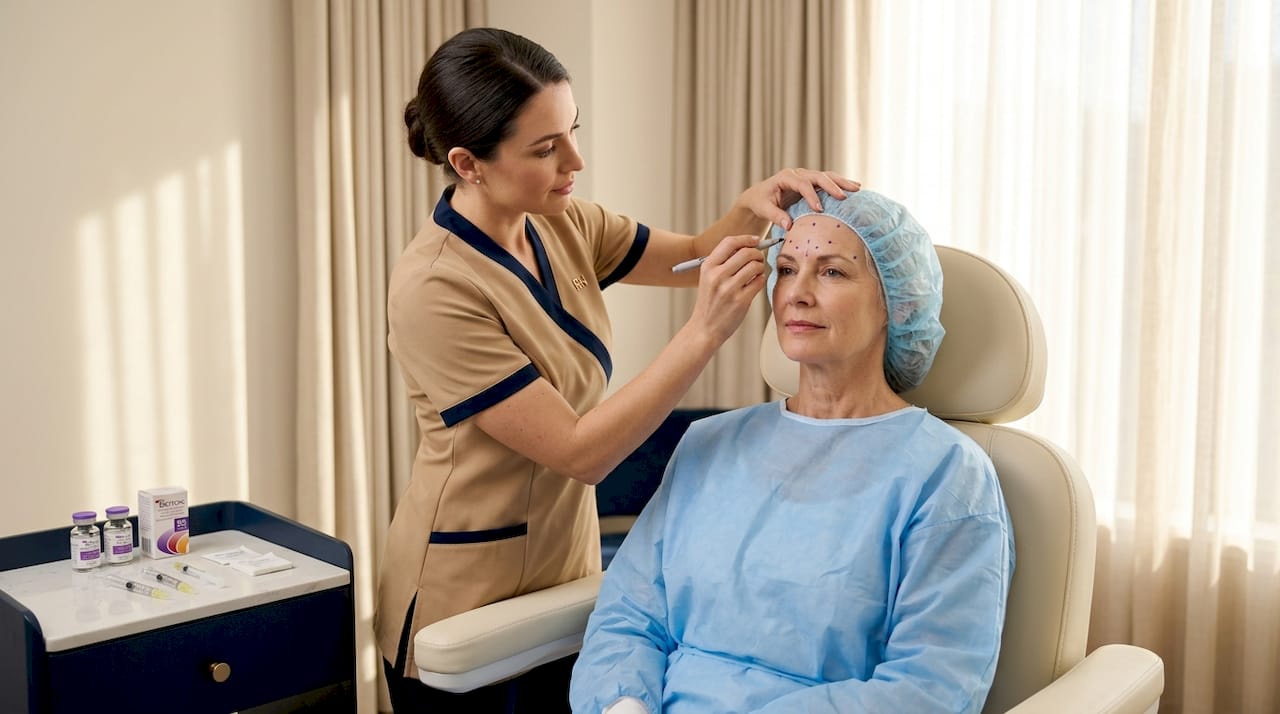
Natural-looking Botox is defined as a neuromodulator treatment that softens dynamic wrinkles while preserving your facial expressions, so you look refreshed rather than frozen. In clinical terms, the active ingredient in Botox Cosmetic is onabotulinumtoxinA, a purified protein that temporarily relaxes targeted muscles. Results typically last about three months before the effects gradually wear off. The goal of subtle Botox is never to erase every line. It is to reduce the lines that bother you most while keeping your face fully expressive and recognisably yours.
What is natural-looking Botox and what makes it different?
Natural-looking Botox means softening dynamic wrinkles while preserving the muscle movement that gives your face character. Dynamic wrinkles are the lines that appear when you smile, squint, or frown. They are different from static wrinkles, which are visible even at rest. Targeting only the muscles responsible for those movement lines, rather than immobilising the entire area, is what separates a natural result from an overdone one.
Botox Cosmetic is FDA-approved for temporary improvement of moderate to severe frown lines, forehead lines, and crow’s feet. That approval is based on a specific dosing range and injection technique. When a practitioner stays within those parameters and adjusts for your individual anatomy, the outcome is a face that looks rested and smooth without appearing stiff or artificial.
The key distinction between Botox versus a natural appearance comes down to dose and placement. Too many units in the wrong location creates the “frozen” look most people want to avoid. The right amount, placed precisely, lets you raise your eyebrows, show surprise, and laugh freely. That balance is the entire point of what is sometimes called subtle Botox.
Which facial areas are treated to achieve natural Botox results?
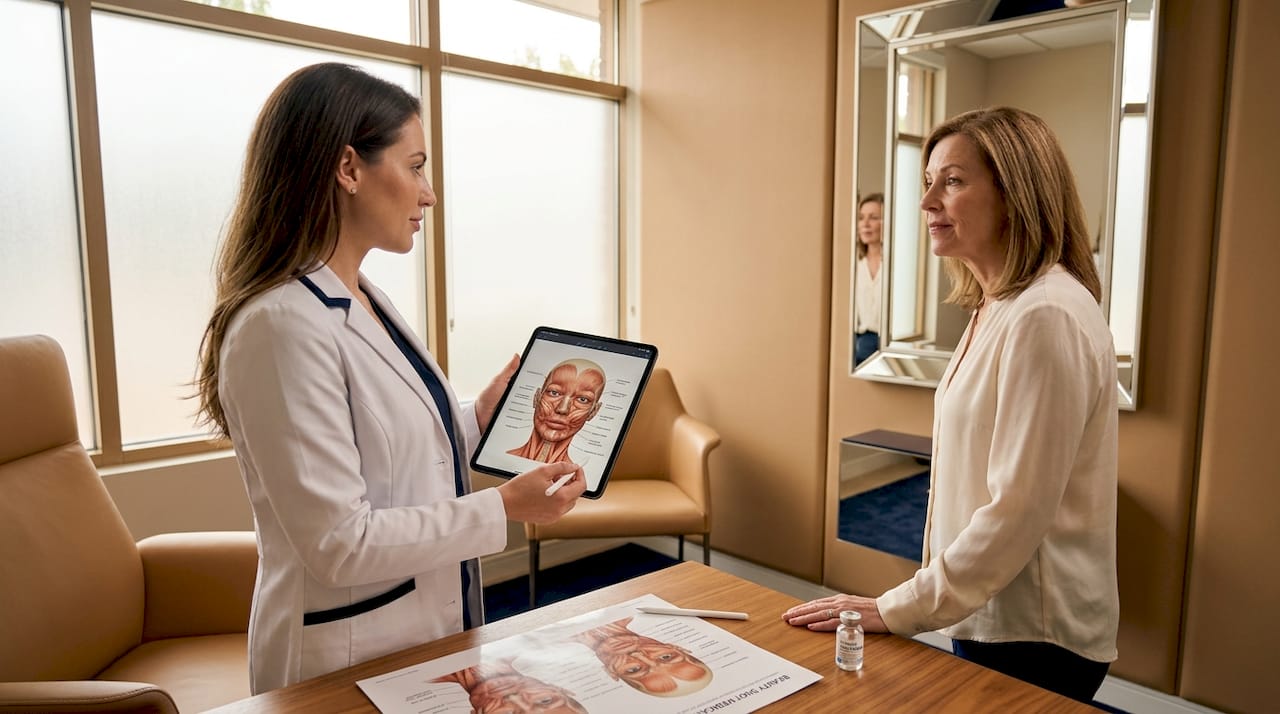
The three primary treatment zones for natural Botox results are the forehead, the glabellar region (the “11 lines” between your brows), and the crow’s feet at the outer corners of your eyes. Each area involves different muscle groups, different movement patterns, and different dosing considerations. Treating all three together often produces the most balanced, harmonious outcome.
Here is how each zone contributes to a natural appearance:
- Forehead lines form when the frontalis muscle contracts as you raise your brows. Treating this area with a conservative dose softens horizontal lines while still allowing upward movement.
- Glabellar frown lines are caused by the corrugator and procerus muscles pulling the brows inward and downward. Relaxing these muscles reduces the appearance of anger or tension at rest.
- Crow’s feet develop from the orbicularis oculi muscle contracting during smiling and squinting. Light treatment here softens the lines without affecting your smile.
- Brow position can be subtly lifted or shaped depending on where units are placed along the brow line. A well-placed eyebrow lift with Botox can open the eye area without looking surgical.
Selective muscle targeting is what preserves natural movement. A practitioner who treats only the muscles driving your specific concerns, rather than blanketing an entire region, gives you control over your expression while still reducing the lines you dislike. Overtreatment, by contrast, restricts too many muscles at once and produces the stiffness that makes Botox obvious.
Pro Tip: Ask your injector to assess your face while you are making expressions, not just at rest. The movement patterns you show during that assessment directly inform which muscles need treatment and which should be left alone.
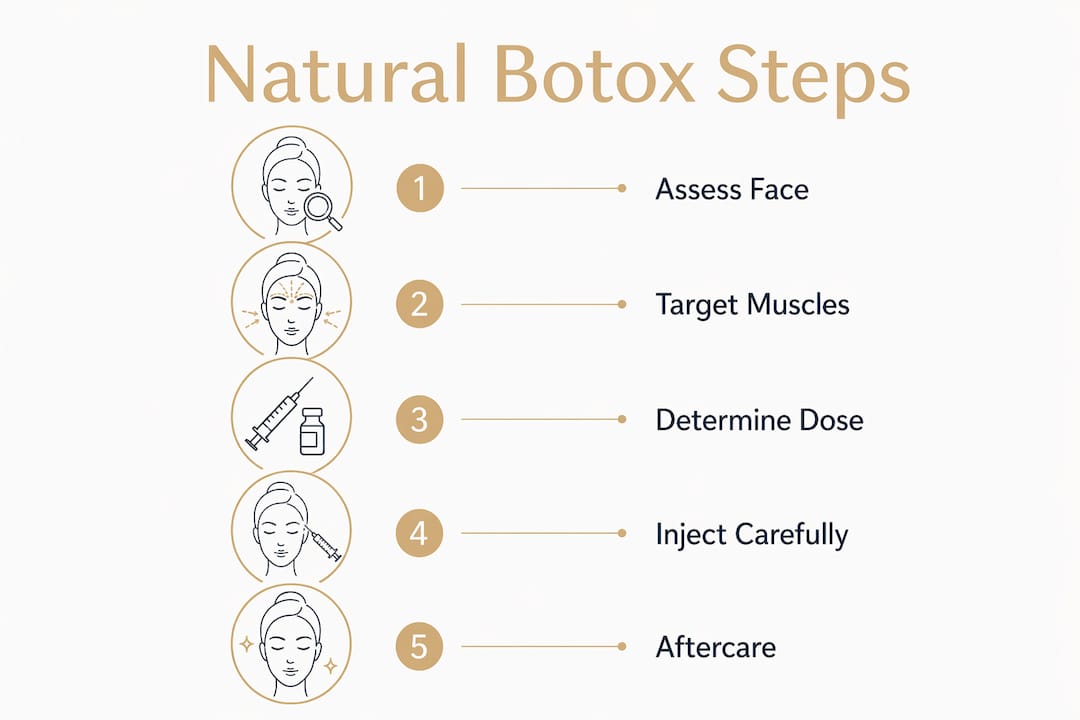
Every treatment plan should vary based on your anatomy and goals. Someone with a strong frontalis muscle will need a different dose than someone with a delicate brow structure. There is no universal map for natural results.
How do practitioners determine the right Botox dose for natural results?
Dosing is the single most important technical factor in achieving natural Botox results. First-time patients typically need about 60 units across the upper face, but that number shifts significantly based on muscle mass, sex, facial anatomy, and the degree of correction you want. That starting point is a guideline, not a prescription.
Practitioners who specialise in natural aesthetics follow a structured approach to dosing:
- Dynamic facial assessment. Your injector observes your face in motion, watching how your muscles contract during conversation and expression. Injection plans individualised by anatomy and expression patterns produce far more natural outcomes than a fixed dosing chart.
- Conservative first treatment. Starting with a slightly lower dose reduces the risk of over-correction. You can always add more at a follow-up; you cannot remove units that have already been injected.
- Two-week follow-up. Staged dosing with follow-up adjustments allows your clinician to assess how your muscles responded and add units precisely where needed. This is standard practice for achieving subtle, personalised results.
- Ongoing reassessment. At each subsequent appointment, your injector reviews how the previous treatment settled, whether your movement patterns have changed, and whether the dose should be adjusted up or down.
The risk of under-treating is minimal effect. The risk of over-treating is stiffness, brow heaviness, or an expressionless appearance that can last the full duration of the treatment. That asymmetry is exactly why the staged approach exists.
Pro Tip: Before your appointment, prepare for your Botox session by noting which expressions concern you most. Showing your injector a photo of yourself laughing or frowning gives them a clearer picture of your muscle activity than a static consultation alone.
The balance between too little and too much is not a fixed line. It shifts with your age, muscle strength, and how your body metabolises the toxin over repeated treatments. A skilled practitioner tracks those changes and adjusts accordingly.
What aftercare practices support natural-looking Botox outcomes?
Aftercare directly affects how evenly Botox settles into the treated muscles. Avoiding rubbing, pressure, heavy exercise, heat, and alcohol in the 24 hours following treatment reduces the risk of product migration. Migration means the toxin moves away from the intended muscle and into an adjacent area, which can cause unintended weakness or asymmetry.
Follow these aftercare guidelines to protect your results:
- Stay upright for at least four hours after your appointment. Lying flat too soon increases the chance of the product shifting from the injection site.
- Avoid touching or massaging your face in the treated areas. Even gentle pressure can displace the toxin before it fully binds to the muscle.
- Skip intense exercise for 24 hours. Elevated heart rate and increased blood flow can accelerate migration away from the target site.
- Avoid saunas, hot baths, and direct sun exposure on the day of treatment. Heat dilates blood vessels and may affect how the product settles.
- Hold off on alcohol for at least 24 hours. Alcohol thins the blood and can increase bruising at injection sites.
Proper aftercare does more than prevent side effects. It actively supports the even, smooth settling that produces the natural appearance you are aiming for. Detailed guidance on maximising your Botox results through post-treatment care can make a measurable difference in how your outcome looks at the two-week mark.
Most people see the full effect of their treatment between days seven and fourteen. Knowing how soon results appear after injection helps you set realistic expectations and avoid judging your outcome too early.
What safety considerations ensure natural Botox is effective and risk-minimised?
Safety and natural aesthetics are not separate goals. They are the same goal approached from two directions. Botulinum toxin can spread beyond the injection site, causing rare but serious side effects including muscle weakness, drooping eyelids (ptosis), and in very rare cases, difficulty swallowing or breathing. These risks are minimised through proper patient screening, precise injection technique, and appropriate dosing by a qualified medical professional.
The table below outlines the key safety factors and what each one means for your outcome:
| Safety factor | What it means for you |
|---|---|
| Qualified injector | A trained medical professional reduces the risk of incorrect placement and dosing errors. |
| Medical history disclosure | Disclosing medications, neuromuscular conditions, and allergies allows your practitioner to screen for contraindications. |
| Appropriate dose | Staying within evidence-based dosing ranges minimises the risk of toxin spread and unintended muscle weakness. |
| Injection site precision | Accurate placement targets the correct muscle and reduces the chance of migration to adjacent structures. |
| Follow-up appointment | A scheduled review allows early identification of any asymmetry or unintended effect before it becomes a concern. |
Natural Botox outcomes should never compromise patient safety. Proper training, dosing, and screening matter most. Choosing a practitioner based on price alone, or receiving treatment in a non-medical setting, significantly increases the risk of both poor aesthetic results and genuine medical complications. The safety of Botox is well-established when administered correctly, but that qualifier carries real weight.
Key takeaways
Natural-looking Botox requires precise muscle targeting, conservative dosing, and consistent aftercare to soften wrinkles while preserving full facial expression.
| Point | Details |
|---|---|
| Definition of natural Botox | Subtle relaxation of targeted muscles softens lines without freezing expression or movement. |
| Treatment areas | Forehead, glabellar frown lines, and crow’s feet are the primary zones for balanced results. |
| Dosing approach | Staged dosing with a two-week follow-up allows fine-tuning and prevents over-correction. |
| Aftercare matters | Avoiding heat, pressure, and exercise for 24 hours protects even settling of the product. |
| Safety is non-negotiable | Qualified medical administration and full medical history disclosure are required for safe outcomes. |
What I have learned from watching patients choose subtlety over time
Over the years, the most consistent pattern I have observed is this: patients who start Botox in their late twenties or early thirties almost always prefer less than they initially think they want. They come in having seen dramatic before-and-after photos online, and they leave their first appointment relieved that nobody noticed. That relief is the result.
Repeated treatments remain effective but require ongoing balance to maintain naturalness and facial expressivity over time. This is something I think gets underemphasised in most conversations about Botox. The goal is not to freeze a face at a single moment in time. It is to age gracefully, with a face that still moves and communicates. That requires adjusting the approach as your anatomy changes, your muscle patterns shift, and your aesthetic goals evolve.
The patients who get the best long-term results are the ones who stay in dialogue with their practitioner. They report what they liked, what felt too strong, and what they want to preserve. That ongoing conversation is what makes the difference between a treatment that looks natural at three months and one that still looks natural at three years. If your injector is not asking those questions, find one who does.
— Felix
Achieve natural Botox results at Beautyshotmedicalclinic
Beautyshotmedicalclinic in Woodbridge, Vaughan, offers Botox treatments performed by an advanced cosmetic Registered Nurse who specialises in subtle, personalised results. Every treatment begins with a thorough consultation, a dynamic facial assessment, and a dosing plan built around your anatomy and goals. The focus is always on looking refreshed and balanced, never overdone. If you are ready to explore what natural Botox can do for you, book your consultation at Beautyshotmedicalclinic and take the first step toward results you will actually love.
FAQ
What does natural-looking Botox actually mean?
Natural-looking Botox means the treated muscles are relaxed enough to soften wrinkles but not so immobilised that your face loses expression. The result is a rested, refreshed appearance rather than a frozen or artificial one.
Is natural Botox possible for first-time patients?
Natural results are absolutely achievable for first-time patients. Starting with a conservative dose and scheduling a two-week follow-up for fine-tuning is the standard approach for achieving subtle, personalised outcomes safely.
How long do natural-looking Botox results last?
Results typically last about three months before the effects gradually wear off. Consistent maintenance appointments help sustain the smooth, natural appearance over time.
What are the signs that Botox looks natural?
The signs that Botox looks natural include full range of facial expression, no visible heaviness around the brows, smooth but not shiny skin texture, and the ability to raise your eyebrows and smile without restriction. If nobody asks whether you have had anything done, the result is working.
How do I find a practitioner who specialises in natural results?
Look for a qualified medical professional, such as a Registered Nurse or physician, who performs a dynamic facial assessment during consultation and uses a staged dosing approach. Reviewing before-and-after photos from their actual patients and reading what to expect from the Botox procedure beforehand will help you ask the right questions.
Recommended
- Eyebrow Lift with Botox: Achieving a Natural Look – Beauty Shot | Botox Fillers Woodbridge Vaughan
- Eyebrow Lift with Botox: Achieving a Natural Look – Beauty Shot | Botox Fillers Woodbridge Vaughan
- First-Time BOTOX? Here’s What You Need to Know Before You Go! – Beauty Shot | Botox Fillers Woodbridge Vaughan
- The Science Behind Botox: How Does It Work? – Beauty Shot | Botox Fillers Woodbridge Vaughan